In short
- Small tattoos usually cost the shop minimum, often €60–200 in Europe or $80–250 in the US. A palm-sized piece is typically €200–600 ($250–700), a half sleeve €1,000–2,500 ($1,000–3,000), a full sleeve or back piece several thousand.
- Most of the price is time. Experienced artists in Western Europe and the US often charge around €80–200 or $100–250 per hour; small pieces and flash are often priced per piece.
- Style, detail, colour, placement, the artist’s demand and the city move the price. A deposit of about €50–200 is usually taken off the total, and tipping is customary in the US but optional in most of Europe.
- Very cheap work can cost more later: a cover-up or laser removal usually costs far more than the difference you saved.
In this article 11
Lena had saved the same design for months: a sprig of eucalyptus about the size of her palm, for the outside of her forearm. She asked three studios what it would cost. The first said €120 and could do it on Saturday. The second said around €350, about two and a half hours at their hourly rate. The third, an artist whose fine botanical work she had followed for years, quoted €600 and a date four months away.
Same idea, same size, three prices five times apart. None of them was a scam. Tattoo prices are not fixed anywhere, and the number you hear depends on how the artist charges, how long the work really takes, where the studio is and how in demand the artist is. This guide explains how pricing works, gives typical ranges by size, style and country, and covers the parts people forget: deposits, tips, touch-ups and what a cheap tattoo can cost later.
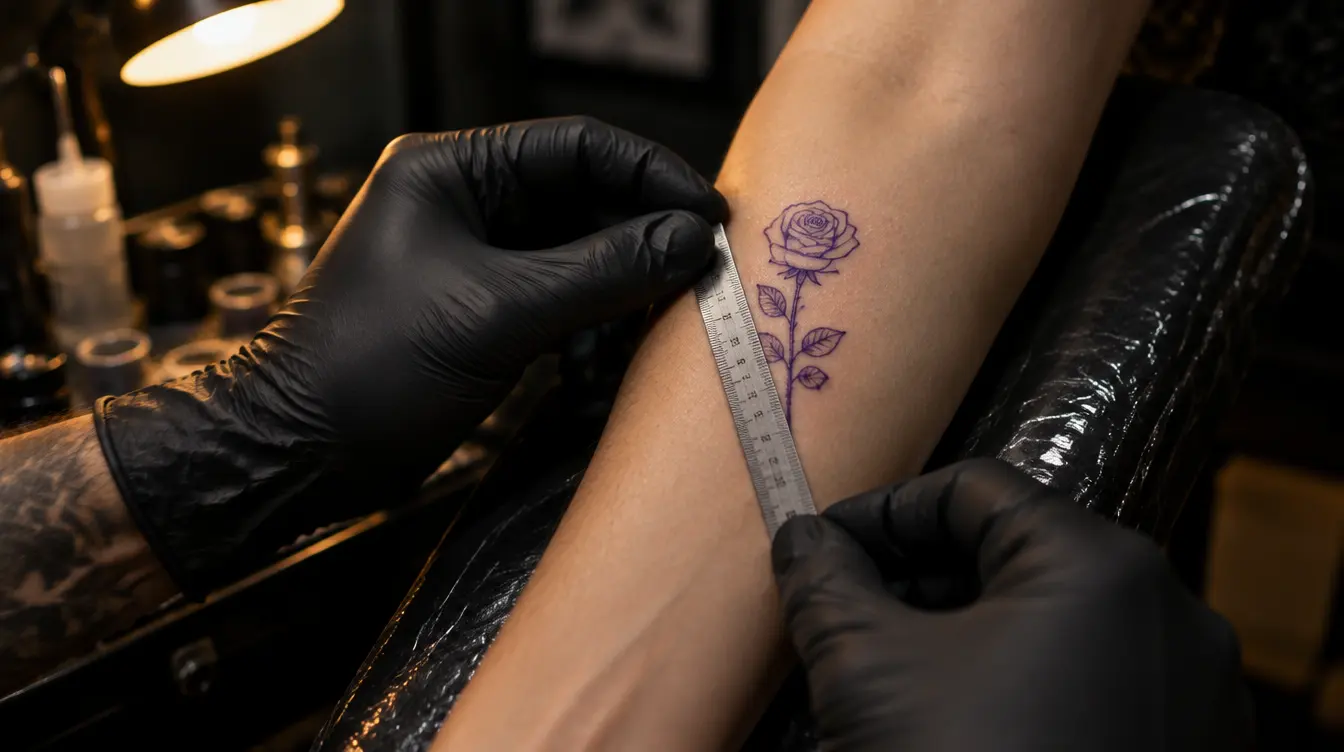
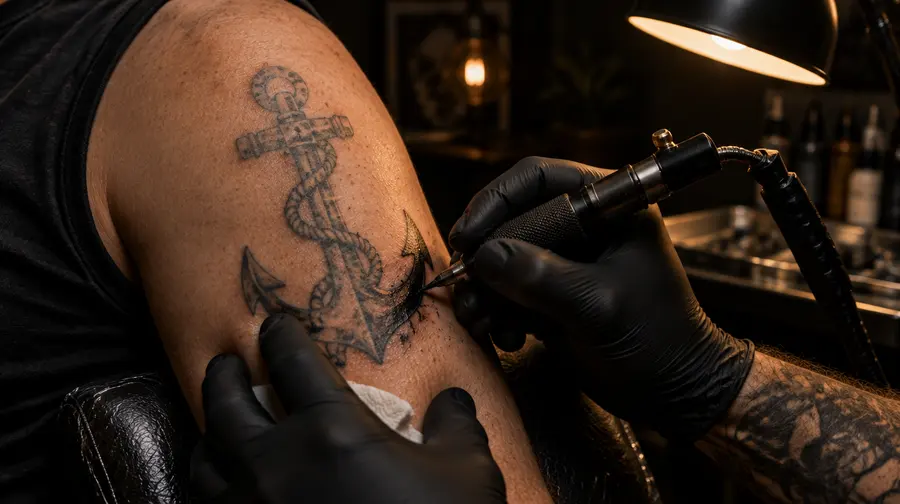
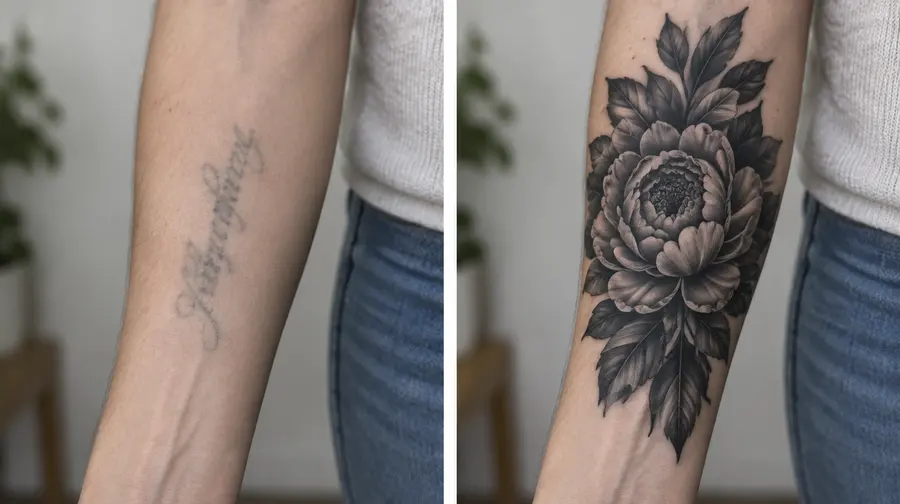
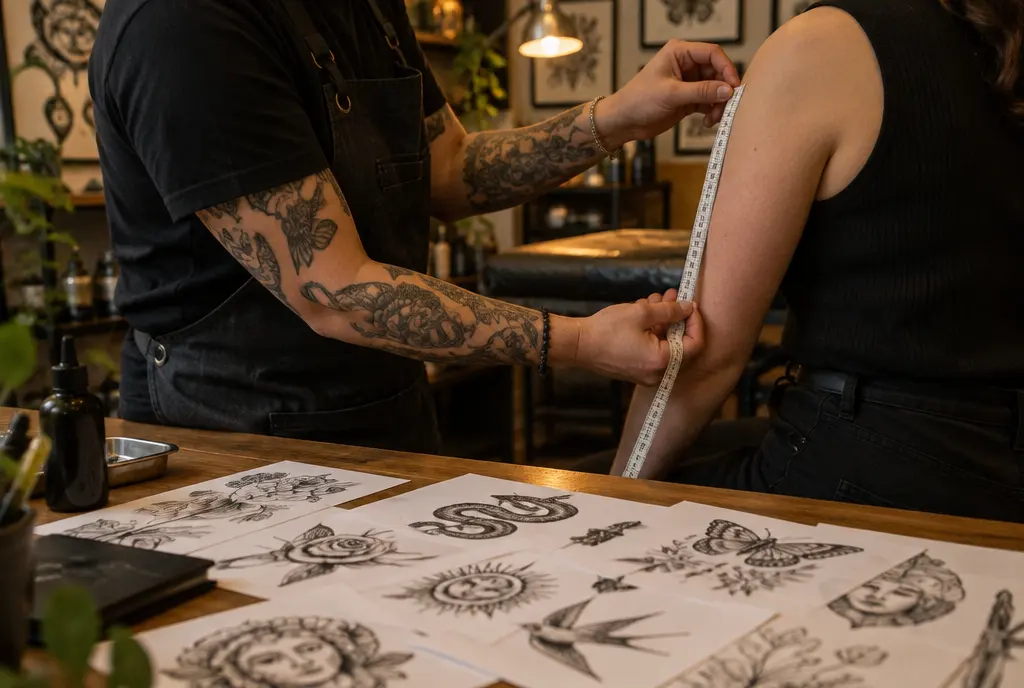
> A note on the numbers and pictures: the prices here are rough ranges collected from studio price lists, price guides and calculators published in 2025–2026. They vary a lot by country, city and artist, and they are not quotes. Ask the artist for a price for your design. The images are illustrations made to show typical situations. They are not photos of real people or real tattoos.
The short answer
A small, simple tattoo usually costs about the shop minimum, often €60–200 in Europe or $80–250 in the US. A palm-sized piece is typically €200–600 ($250–700), a half sleeve €1,000–2,500 ($1,000–3,000) and a full sleeve or back piece several thousand. Most of the difference comes from time: experienced artists in Western Europe and the US typically charge somewhere around €80–200 or $100–250 per hour, and in-demand artists more.
On top of the price itself, plan for a deposit when you book (usually taken off the total), a tip if you are in a country where tipping is expected, and aftercare. If the work spans several sessions, you usually pay as you go.
Read alsoYour first tattoo: a checklist before you bookHow artists charge
There are four common ways to price a tattoo, and most studios mix them.
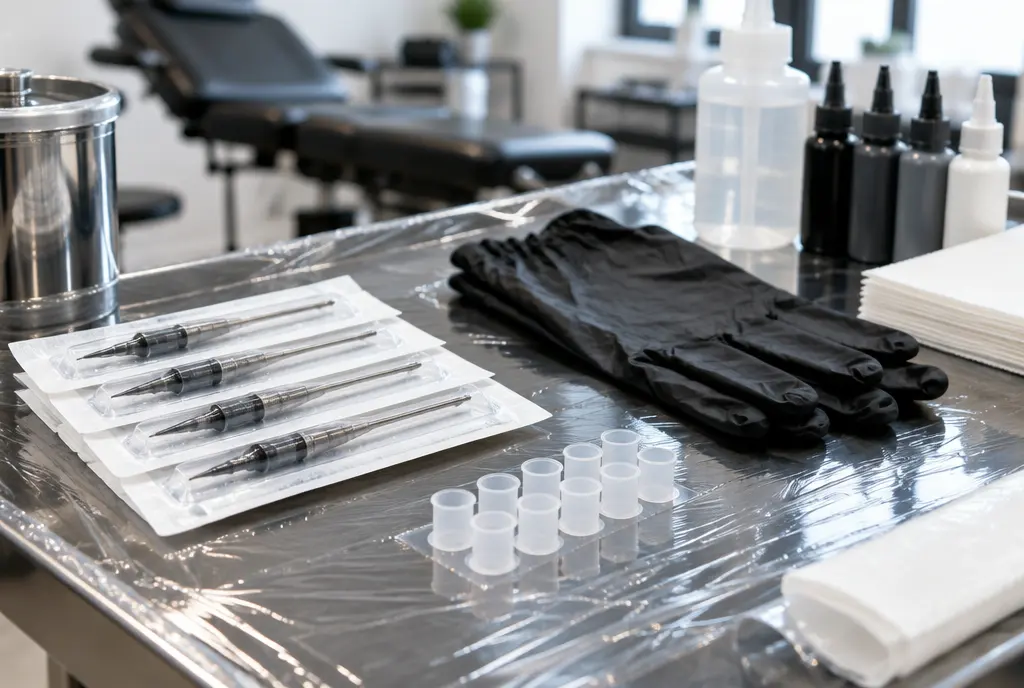
- Shop minimum. Almost every studio has a lowest price, whatever the size. It covers the sterile setup, needles, ink, gloves, cleaning and the time to prepare the stencil. Minimums of about €50–150 are common in Europe and about $80–200 in the US; well-known studios in big cities can ask much more. A tiny heart on your wrist often costs exactly the minimum.
- Hourly rate. Common for medium and large work. You pay for the time the artist spends tattooing, and sometimes for drawing time as well. Typical rates for experienced artists are around €80–200 per hour in much of Western Europe, about £80–150 in the UK and around $100–250 in the US, with apprentices below that and sought-after artists well above.
- Per piece. The artist quotes a fixed price for the whole design. This is common for small and medium tattoos and for flash, the ready-made designs many artists draw and sell. You know the total in advance, and the artist carries the risk if it takes longer.
- Day rate. For long sessions on big projects, many artists charge a fixed price for a working day of about five to eight hours. In the UK, for example, guides mention around £500 in the north of England and £600–800 in the south.
Design time is handled differently too. Many artists include the drawing in the price; some charge a design fee for complex custom work, often taken off the final price. If an artist asks for money before drawing anything, that is normally the deposit, which is covered below.
Typical prices by size
Size is the easiest way to estimate, because it predicts how many hours a tattoo will take. The ranges below are typical for Western Europe and the US for an experienced professional artist. They are a starting point, not a quote.
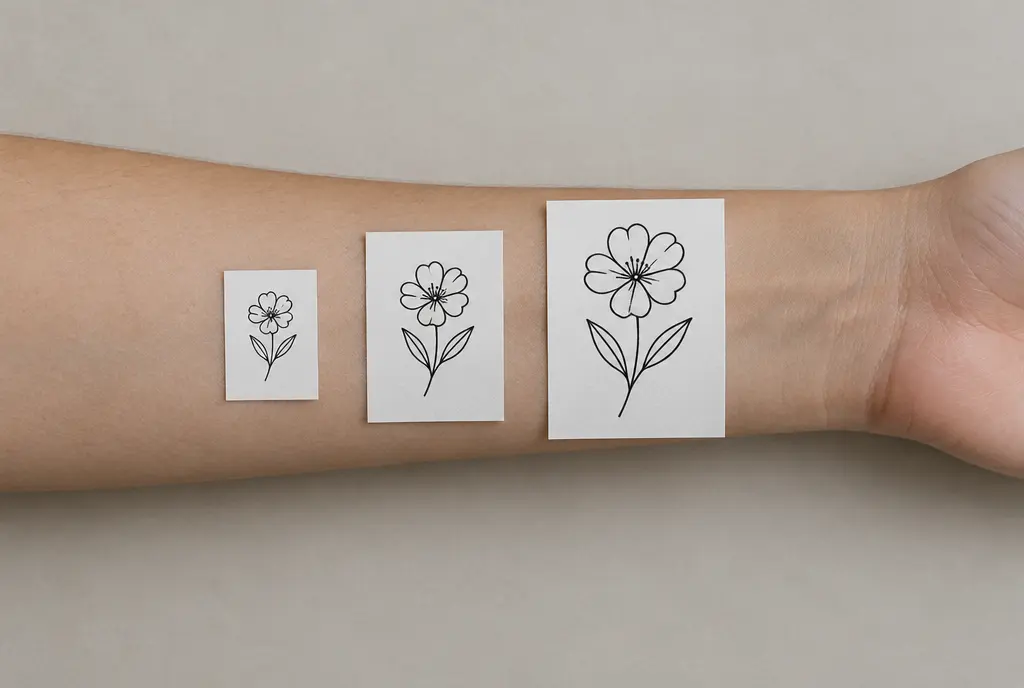
- Tiny to small, up to about 5 cm (a symbol, a word, a small flower): usually the shop minimum, about €60–200 or $80–250.
- Palm-sized, about 10 cm: about €200–600 or $250–700, more for a realistic portrait or dense illustration.
- Large piece, about 15–25 cm (half a forearm, a calf, a shoulder blade): about €400–1,200 or $500–1,500, often one long session.
- Half sleeve (shoulder to elbow or elbow to wrist): about €1,000–2,500 or $1,000–3,000, usually over two to four sessions.
- Full sleeve: about €2,500–6,000 or $2,500–7,000, and more for detailed realism or Japanese work. Expect several sessions spread over months.
- Back piece: from about €2,000 for a simpler design to €10,000 or more for a full, detailed back; in dollars roughly $2,500 to well over $10,000.
Two tattoos of the same size can still differ a lot in price. A 10 cm outline of a cat may take an hour; a 10 cm photorealistic portrait of the same cat can take four. If you are unsure what size suits your idea and placement, settle that before you ask for quotes, because it changes every number above.
What pushes the price up
Style and detail
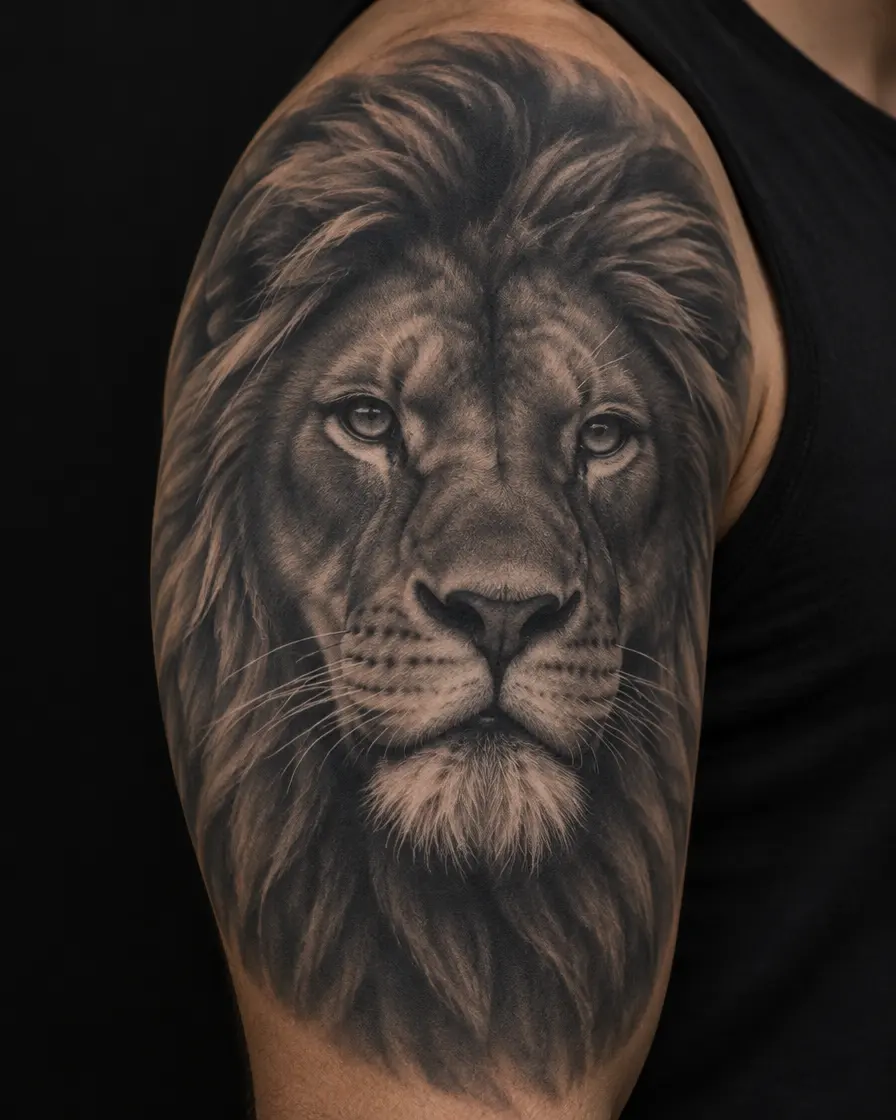
Time is the real price driver, and some styles simply take longer. Simple line work, small script and bold traditional designs with clear outlines are usually the quickest. Fine line work looks simple but needs a slow, steady hand. Realism, portraits, dense dotwork, ornamental patterns and Japanese work with full backgrounds are among the most time-consuming, and the artists who do them well often charge the highest rates.
Colour
Colour often adds time: each colour has to be packed into the skin evenly, and smooth blends take several passes. A colourful piece can take noticeably longer than the same design in black and grey, so it often costs more, even when the hourly rate is the same.
Placement
Ribs, stomach, neck, hands, feet and the inner elbow are harder to tattoo. The skin is thinner, stretchier or moves more, the client needs more breaks, and the artist has to work more slowly. Some artists charge more for these spots or plan extra time. Hands and fingers also fade faster, which matters later for touch-ups.
The artist’s demand
An apprentice or newer artist may charge well under the local average while building a portfolio, usually under supervision. Established artists charge the going rate. Artists with long waiting lists, a strong following or awards can charge two or three times the average and still be booked out months ahead. You are paying for skill, but also for scarcity.
City and country
Rent, wages and local demand show up in the price. Capital cities and tourist areas are usually the most expensive, and London is often quoted at 20–30% above other UK regions. Between countries the gap can be large. As rough examples from 2025–2026 price guides:
- United States: about $100–250 per hour for experienced artists, with top artists in big cities charging far more.
- United Kingdom: about £80–150 per hour; London rates around £150 per hour are common.
- Germany and France: often around €80–150 per hour, with sought-after artists higher.
- Spain and Italy: commonly €80–150 per hour, with lower prices outside the big cities.
- Poland: often 250–750 zł per hour; a small 5 × 5 cm tattoo usually starts at about 200 zł.
- Norway and Sweden: around 1,000–1,500 kr per hour at many studios.
- Japan: in Tokyo, about ¥10,000–15,000 per hour for machine work is often mentioned; traditional hand-poked tebori costs more.
Travelling abroad for a cheaper tattoo can work, but add the trip, the risk of misunderstandings in another language and the fact that a big piece needs several sessions weeks apart. Touch-ups also mean going back.
Deposits
Most artists ask for a deposit to book a date or to start drawing a custom design. It protects their time: if a client does not show up, the slot is lost and the drawing was done for nothing.
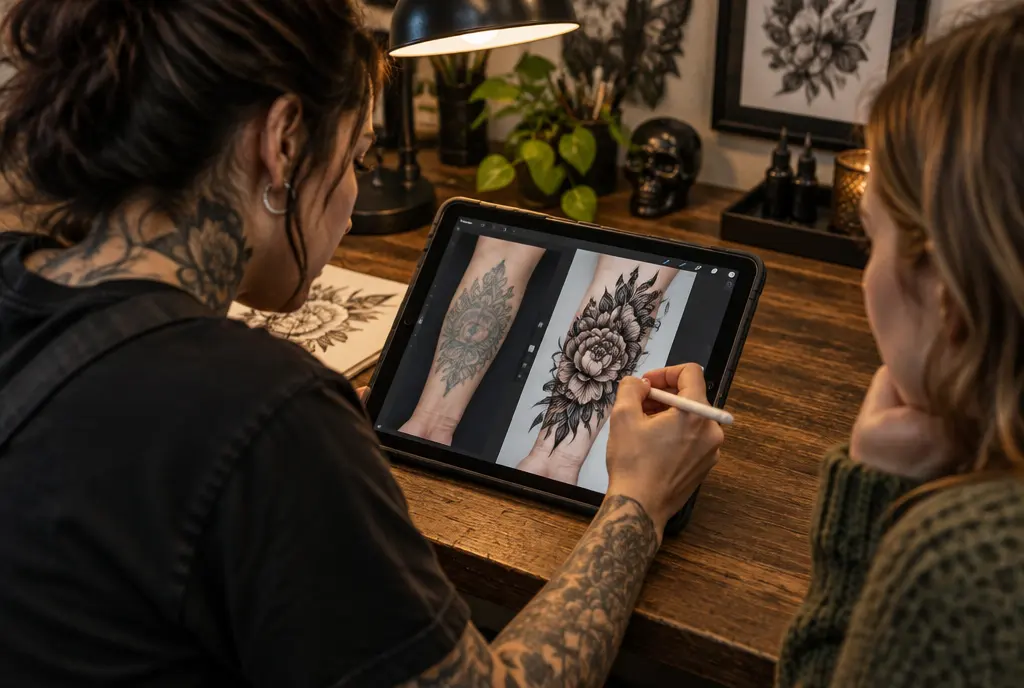
- How much: often a fixed amount of about €50–200 or $50–200, or about 20–30% of the estimated price for bigger work. For projects over several sessions, some artists keep the deposit until the last session.
- Taken off, not added: in most studios the deposit is deducted from the final price, usually at the last session.
- Usually non-refundable: if you cancel late or miss the appointment, you normally lose it. Most artists let you move the date with enough notice, often 48 to 72 hours.
- Get it in writing: a message or receipt that states the amount, what it covers and the rescheduling rules is enough.
How to find the right artist and write a booking message that gets a reply is covered step by step in the guide on how to book a tattoo.
Tipping: it depends on the country
Tipping is the part that confuses travellers most, because the custom is so different from place to place.
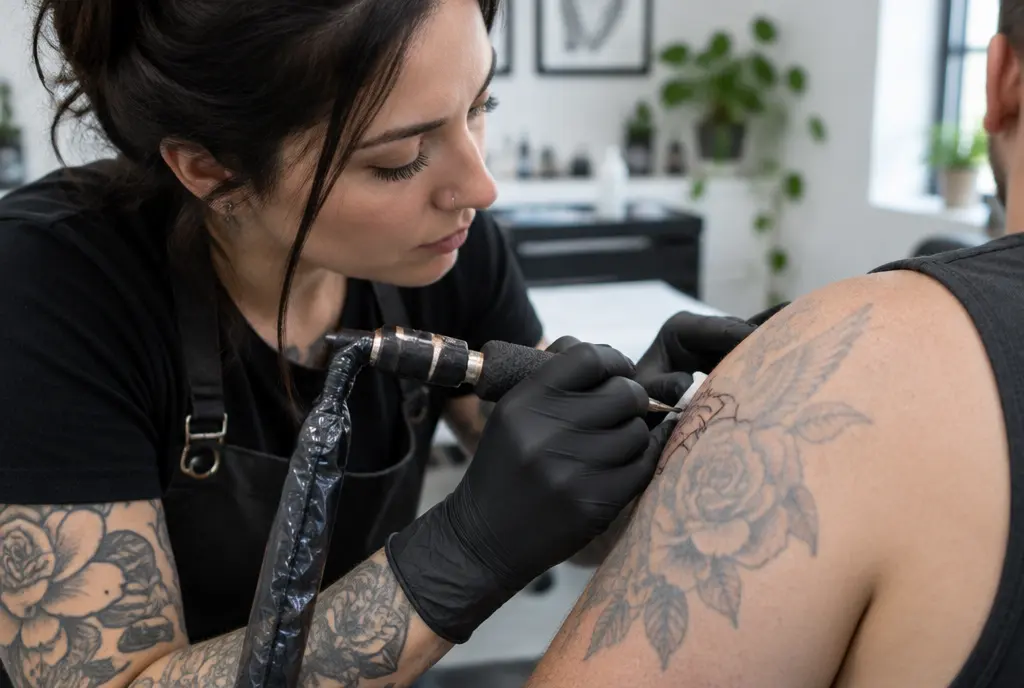
- United States: tipping is customary, usually 15–20% of the price, sometimes more for long or complex work. Many artists count on it as part of their income.
- Germany and much of continental Europe: a tip is not expected but welcome. German consumer guides mention 10–20% as a guideline if you want to tip; rounding up, or €10–20 on a small piece, is a kind gesture.
- United Kingdom: not compulsory, but appreciated when you are happy with the work.
- Norway and other Nordic countries: generally not expected; paying the agreed price is normal.
- Japan: tipping is not part of the culture, and offering cash can cause confusion. A sincere thank-you and coming back for your next tattoo mean more.
For work over several sessions, you can tip after each session or once at the end. There are other ways to say thank you as well: a good review, tagging the artist when you post the healed photo, or recommending them to a friend.
Touch-ups
Even good tattoos sometimes heal with a small patchy spot, especially on hands, feet or areas that rub against clothes. Many artists include one touch-up in the first few months after healing, as long as you followed their aftercare advice. Ask about this before you book, because policies vary.
Later touch-ups are a different matter. Refreshing a tattoo that has faded from years of sun, or reworking lines that have softened with age, is usually charged as new work, at least the shop minimum. Hand and finger tattoos are often left out of touch-up policies because they fade so quickly.
Why cheap can be expensive later
Back to Lena’s €120 quote. It may well have been a fair deal; plenty of skilled artists charge modest prices. But when a price is far below the local average, it is worth asking why. Something usually has to give: experience, time, hygiene or the quality of the materials.
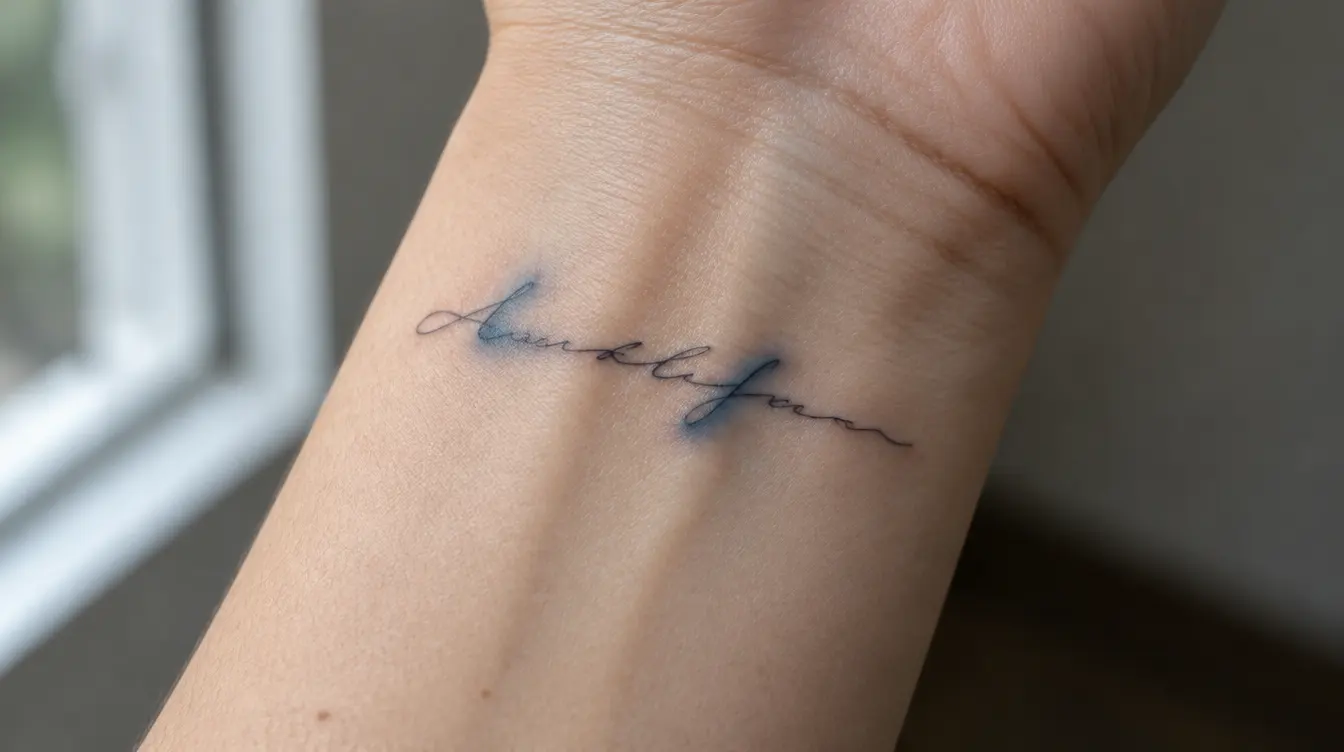
- Lines that spread or wobble. Ink placed too deep can blur under the skin, a so-called blowout. Shaky lines and patchy shading do not improve with time; they get worse as the tattoo ages.
- A cover-up costs more than the original. Covering an unwanted tattoo needs a larger, darker design and an experienced artist. Cover-ups often cost noticeably more than the tattoo they hide, and sometimes need laser fading first.
- Laser removal is the most expensive fix. A small tattoo often costs about €50–150 or $100–300 per laser session, and many professional tattoos need around 6 to 12 sessions. A €120 tattoo can easily turn into a removal bill of several hundred euros or dollars.
- Health risks. An unlicensed setup or reused equipment can mean infections. Treatment, time off and scars are costs no discount covers.
A cheap tattoo can turn out to be the most expensive one you ever get.
That does not mean the most expensive artist is always the right one. It means the price should make sense: a clear explanation of how it is calculated, a portfolio of healed work in the style you want, and a clean studio that is registered or licensed where your country requires it.
How to get a fair quote and stay on budget
- Send the details in one message: the idea, placement, size in centimetres or inches, black or colour, and reference images. Vague requests get vague prices.
- Ask how the price is calculated: hourly, per piece or day rate, and what happens if it takes longer than planned.
- Compare like with like. A quote from a fine line specialist and one from a general walk-in studio are not the same product.
- Budget the whole cost: the price, the deposit, a tip where it is customary, aftercare products and possibly a touch-up later.
- Change the design, not the quality. If the price is too high, make the design smaller or simpler, or split a big piece over several months. Pushing a good artist to do the same work for less rarely ends well.
- Save up rather than settle. Waiting a few months for the artist you really want usually costs less in the long run than settling for someone you are not sure about.
Lena, in the end, went with the second studio. The artist sent a sketch, asked for an €80 deposit that came off the final price, and finished in a little under three hours. With the tip she chose to leave, the total was close to €400. The €600 artist went on her list for the next one.
Read alsoHow to book a tattoo: finding the right artist, the first message, deposits and pricesWhat it means for you
There is no single price for a tattoo. The cost is mostly time multiplied by the artist’s rate, with a minimum for small work and fixed quotes for many designs. Size, style, colour, placement, the artist’s demand and the city decide where you land in the range. Add a deposit, a tip where it is customary and a possible touch-up, and you have the real budget.
A tattoo is also a long-term purchase: you will look at it for decades, and how well it ages depends partly on the size, detail and placement you pay for today. If you want to see how a design might look in ten or twenty years before you commit, InkAge can show you a preview from a photo.
Frequently asked questions
How much does a small tattoo cost?
Usually the shop minimum. In Europe that is often about €60–200, in the US about $80–250, depending on the city and the artist. Very fine or detailed small work can cost more, because it takes longer than it looks.
Do tattoo artists charge by the hour?
Many do for medium and large pieces, typically around €80–200 or $100–250 per hour for experienced artists. Small tattoos and flash are often priced per piece, and big projects can have a day rate. Always ask how your price is calculated.
How much is a tattoo deposit, and do I get it back?
Often about €50–200 or $50–200, or 20–30% of the estimate for big work. It is usually taken off the final price, but it is normally non-refundable if you cancel late or do not show up. Most artists let you move the date with 48 to 72 hours’ notice.
How much should I tip my tattoo artist?
In the US, 15–20% is customary. In Germany and much of Europe a tip is welcome but not expected; 10–20% or simply rounding up is generous. In Norway and other Nordic countries it is generally not expected, and in Japan tipping is not part of the culture.
How much does a full sleeve tattoo cost?
Roughly €2,500–6,000 or $2,500–7,000, and more for detailed realism or Japanese work. A sleeve is usually done over several sessions spread across months, so you pay session by session rather than all at once.
Sources
Written by the InkAge editorial team from widely accepted tattoo-care practice. Figures are rules of thumb, not measurements. This is general information, not medical advice — ask your artist or a dermatologist about your own skin.
Last updated: 10 November 2026