In short
- Bony, thin-skinned and nerve-rich areas hurt most: ribs, sternum, spine, feet, hands, knees, elbows and the armpit.
- Fleshy areas with thicker skin are the gentlest: outer upper arm, outer thigh, calf, forearm and the upper back.
- How much it hurts also depends on you that day: sleep, food, stress, alcohol and the length of the session all matter.
- Pain does not predict how well a tattoo ages: the ribs hurt but age well, while fingers hurt and also fade fast.
In this article 10
- Why does it hurt more in some places?
- Pain chart: the least painful places
- Moderately painful places
- The most painful places
- What does it actually feel like?
- What else affects how much it hurts?
- How to make the session easier
- What happens afterwards?
- Pain isn’t everything: how the spot ages
- Frequently asked questions
It is the first question almost everyone asks before sitting in a tattoo chair for the first time: how much is it going to hurt? Your friends will probably tell you completely different things. One says it feels like a cat scratch; another says the three hours on their ribs were the longest afternoon of their life. Both can be right – because tattoo pain depends heavily on where it goes, how big it is and whose skin it is on.
In this article we go through the body area by area: where it hurts most and least, why, what it actually feels like, and what you can do to make the session as easy as possible. At the end we also look at why it is not a good idea to choose a spot based on pain alone.
Why does it hurt more in some places?
The needles of a tattoo machine pierce the top layers of the skin thousands of times a minute to reach the dermis, where the ink stays. How unpleasant that is depends mainly on three things:
- How much flesh there is between skin and bone. Where bone sits right under the skin – ribs, sternum, spine, ankles, kneecaps – the vibration of the needle almost rattles through the bone. Many people find this the most unpleasant feeling of all.
- How thin the skin is. Thin, delicate skin – the inner arm, the armpit, the back of the knee – is more sensitive than the thick skin of the thigh or the back.
- How many nerve endings there are. Hands, fingers, feet, the face and the lips are full of nerve endings, so every pass of the needle is felt more strongly there.
So the pain map is no secret: if you press on the spot you have in mind and feel bone almost straight away, or the skin is very thin and soft, expect a stronger sensation.
Pain chart: the least painful places
If you are planning your first tattoo, or simply have a low pain threshold, start with these spots. Most people put them at 1–4 on a scale of ten.
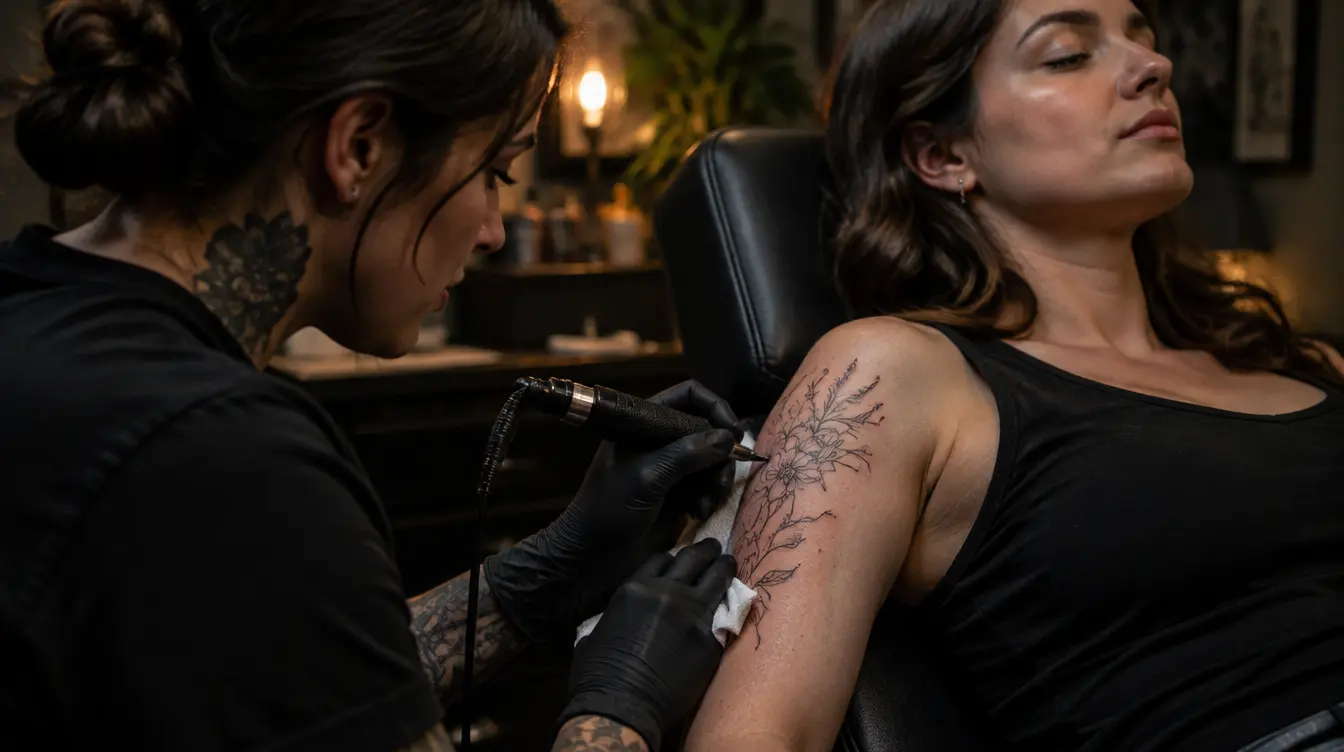
- Outer upper arm and outer shoulder: thick skin, plenty of muscle, few nerve endings. It is no accident that this is the classic “first tattoo” spot.
- Outer and front thigh: a large, fleshy area where even bigger designs are quite bearable. The inner thigh is more sensitive.
- Calf: a muscular, cushioned area. Towards the shin, though, the sensation quickly gets stronger.
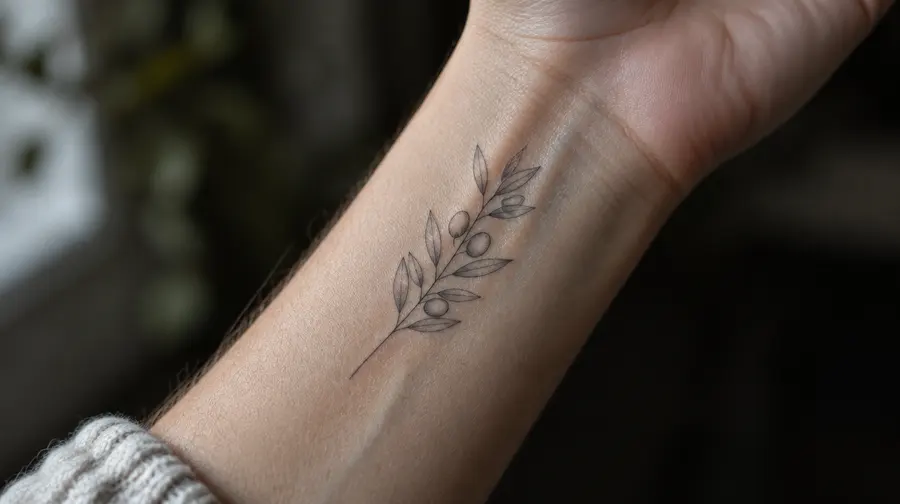
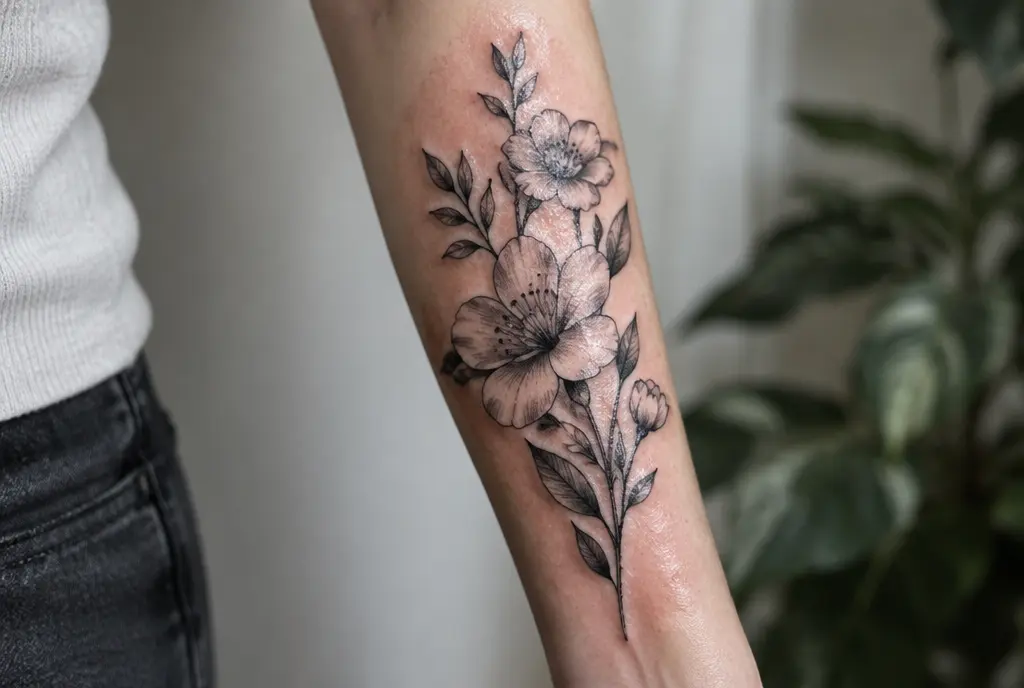
- Outer forearm: most people find it surprisingly easy. The inner forearm is a notch more sensitive, and near the elbow considerably so.
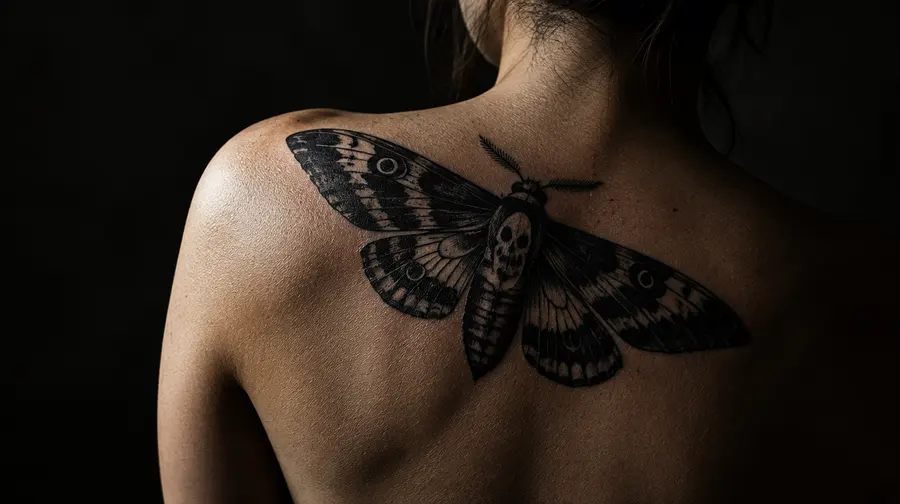
- Upper back and shoulder blade: very manageable on the fleshy part of the shoulder blades, stronger towards the spine and the bony edge of the blade.
- Buttocks: few tattoos go here, but in terms of pain it is one of the gentlest areas.
Moderately painful places
In these places the discomfort is noticeably greater, but most people sit through a medium-sized design without trouble. They usually rate around 4–6 on the scale.
- Inner upper arm: thinner skin and many nerves – noticeably sharper than the outer side.
- The muscular part of the chest: bearable over the pectoral muscle, stronger towards the collarbone and the sternum.
- Inner thigh: sensitive, thin skin, but cushioned – many people find it more unpleasant than they expected.
- Back of the neck and nape: the area close to the spine and around the hairline is sharper.
- Stomach: varies a lot from person to person. Where the skin is taut it is easier; where it is looser it is harder to work on, and many people find it more sensitive.
The most painful places
These are the places most horror stories are about. Most people rate them 7–10. They are not impossible – plenty of people choose them – but it is worth arriving prepared.
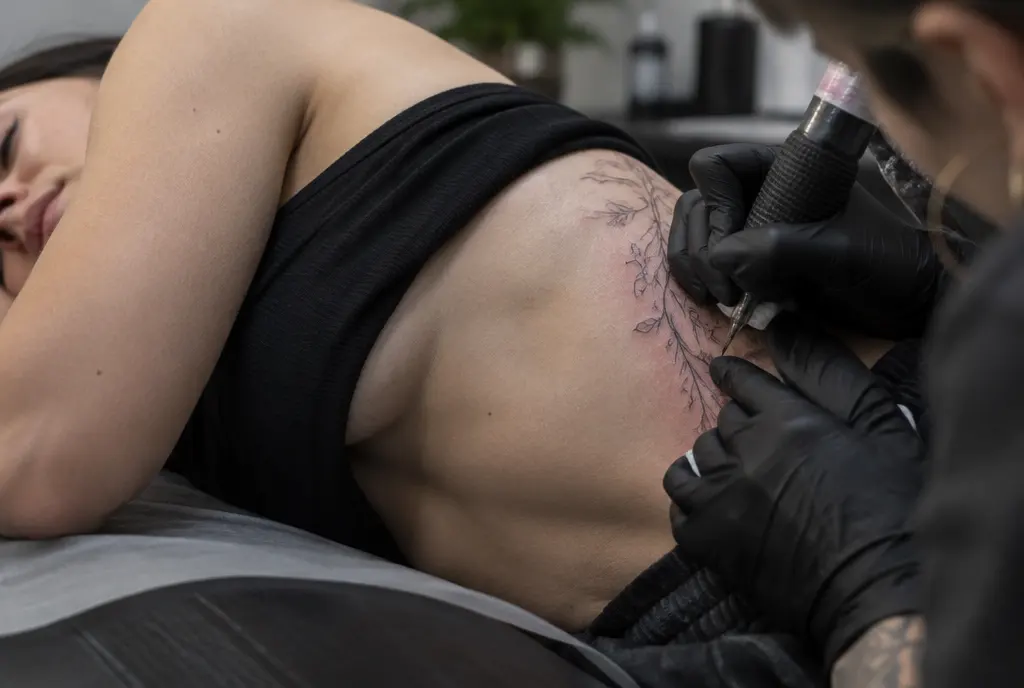
- Ribs and sides: thin skin directly over bone, and the surface moves with every breath. Many tattooed people say this is the hardest spot of all.
- Sternum and centre of the chest: almost straight onto bone, and the vibration is felt through the chest.
- Spine: over the vertebrae, the vibration of the needle runs along the back.
- Armpit: one of the most sensitive areas, with many nerve endings and lymph nodes.
- Knee, back of the knee and elbow: difficult because of the bone on the kneecap and the point of the elbow, and the thin, constantly moving skin in the creases.
- Top of the foot, ankle and shin: bone under the skin and hardly any padding. The foot is also packed with nerve endings.
- Hand and fingers: bony, rich in nerves, and the skin is always moving.
- Head, face and lips: bone right under the skin and a great many nerves. The inside of the lip is especially sensitive.
The most painful places have one simple thing in common: little flesh between skin and bone, and a lot of nerves.
What does it actually feel like?
The word “hurt” covers many different sensations, and the feeling does not stay the same throughout a tattoo. Most people describe it like this:
- Outlines (line work): a sharp, stinging, scratching sensation, as if someone were drawing a line with a hot needle or a small blade. Most people find this the sharpest part.
- Shading and filling: a duller, burning, abrasive feeling, more like a bad graze or sunburn. Less sharp, but more tiring after a while, because the needle goes over the same skin several times.
- Over bone: a strong vibration that you seem to feel in the bone itself. Not necessarily sharper, but many people find it the most unpleasant.
Time plays a part too. In the first minutes the body releases endorphins, which dull the pain – many people are surprised how easily the start goes. After an hour or two, though, the skin becomes more sensitive, the area turns red and swells, and the same movement is felt more and more strongly. Many people talk about hitting a “wall” somewhere between the second and third hour.
What else affects how much it hurts?
The location is only one factor. The same design in the same place can hurt differently on two different days – and much of that is up to you.
- Sleep: a tired body is more sensitive to pain. Get a good night’s sleep before the session.
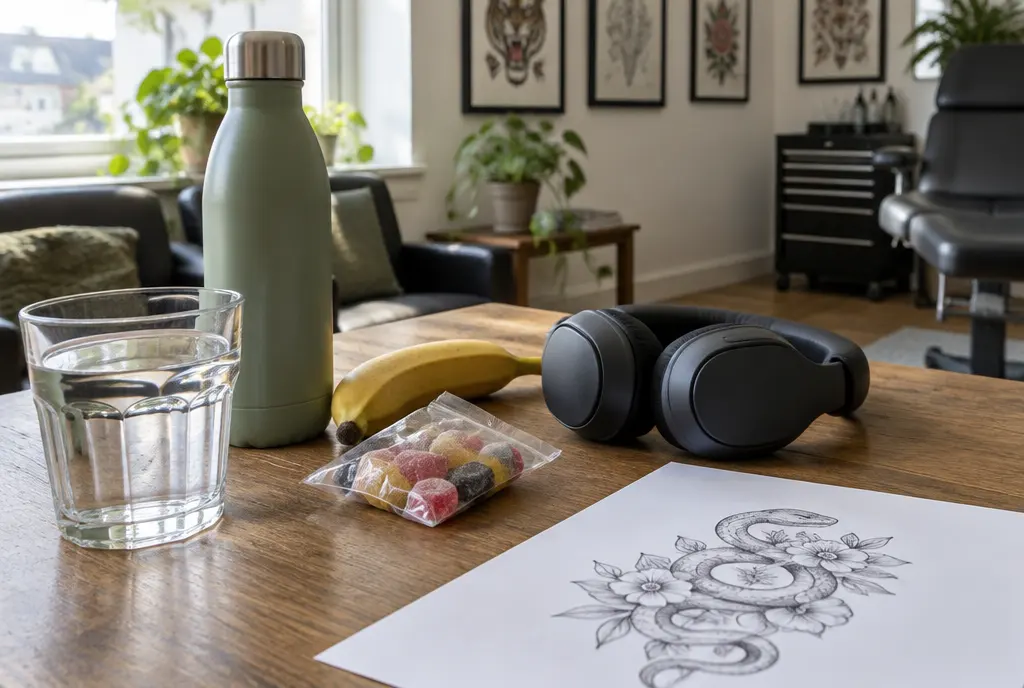
- Food and drink: on an empty stomach you are more likely to feel faint or have your blood sugar drop. Eat a proper meal beforehand, and bring water and something sweet.
- Alcohol and hangovers: alcohol does not meaningfully dull the pain, but it can thin the blood, which can mean more bleeding and poorer healing. Avoid it for at least a day before.
- Stress and anxiety: when you are tense, your body tenses too, and the pain feels stronger. That is why it helps to have sorted out everything with your artist in advance.
- Length of the session: a one-hour piece is a completely different experience from a six-hour one. In long sessions, the pain comes more from fatigue and building sensitivity.
- Style: lots of filling, solid black and heavy colour packing take longer and are more tiring than a simple line design.
- The artist’s hand: an experienced artist works evenly and no deeper than necessary. That not only hurts less, it also heals better.
- Your cycle: many people report being more sensitive in the days before and during their period. If you can, plan the appointment around it.
How to make the session easier
Pain cannot be removed completely, but there is a lot you can do to keep it manageable. These are the steps that make the most difference:
- Choose size and placement wisely. For a first tattoo, a medium-sized design in a gentler spot is a much better experience than a large piece on the ribs.
- Rest, eat and drink. A good night’s sleep, a proper meal an hour or two before, and plenty of water in the days leading up to it. It is the simplest thing, yet it matters most.
- Avoid alcohol and – without medical advice – blood-thinning medicines. If you take any medication regularly, ask your doctor or pharmacist beforehand, and never stop prescribed medication on your own.
- Dress comfortably. Choose clothes that give easy access to the area and that you can sit or lie in comfortably for hours.
- Breathe. Slow, steady breathing – especially breathing out – helps your body relax. If you hold your breath, your body tenses and it hurts more.
- Ask for a break if you need one. A good artist expects it. A few minutes’ pause, a sip of water and a little stretch work wonders.
- Distract yourself. Music, a podcast or conversation – ask your artist beforehand what works with their process.
- Split large pieces into several sessions. A big back or rib piece does not have to be finished in one day. Several shorter sessions are often less draining, and better for the skin too.
Talk to your artist
Don’t try to suffer through it heroically in silence. If you feel dizzy, nauseous or the pain is very strong, say so. Your artist sees this every day, and it is much better for them too if they can react in time than if you suddenly turn pale in the chair. Most people say afterwards that it was much easier than they expected – the fear is often bigger than the pain itself.
What happens afterwards?
After the session, the area usually feels like sunburn: tender, warm, red and slightly swollen. This is strongest in the first 2–3 days and then gradually eases. Itching and flaking follow during healing – and that is when you must not scratch.
If the pain gets worse instead of better after a few days, the skin becomes hotter and redder, there is pus, or you develop a fever, don’t wait: see a doctor. These are not part of normal healing.
Pain isn’t everything: how the spot ages
It is easy to decide on pain alone, but the location decides not only how those few hours will feel – it also decides how the tattoo will look in 10, 30 or 50 years. And the two don’t always point in the same direction.
- The ribs are painful, yet they age well: they rarely see the sun and there is little friction.
- Fingers and hands both hurt and fade fast: constant washing, friction and thin skin make the ink spread quickly.
- The foot and ankle are painful, and friction from shoes wears them down faster too.
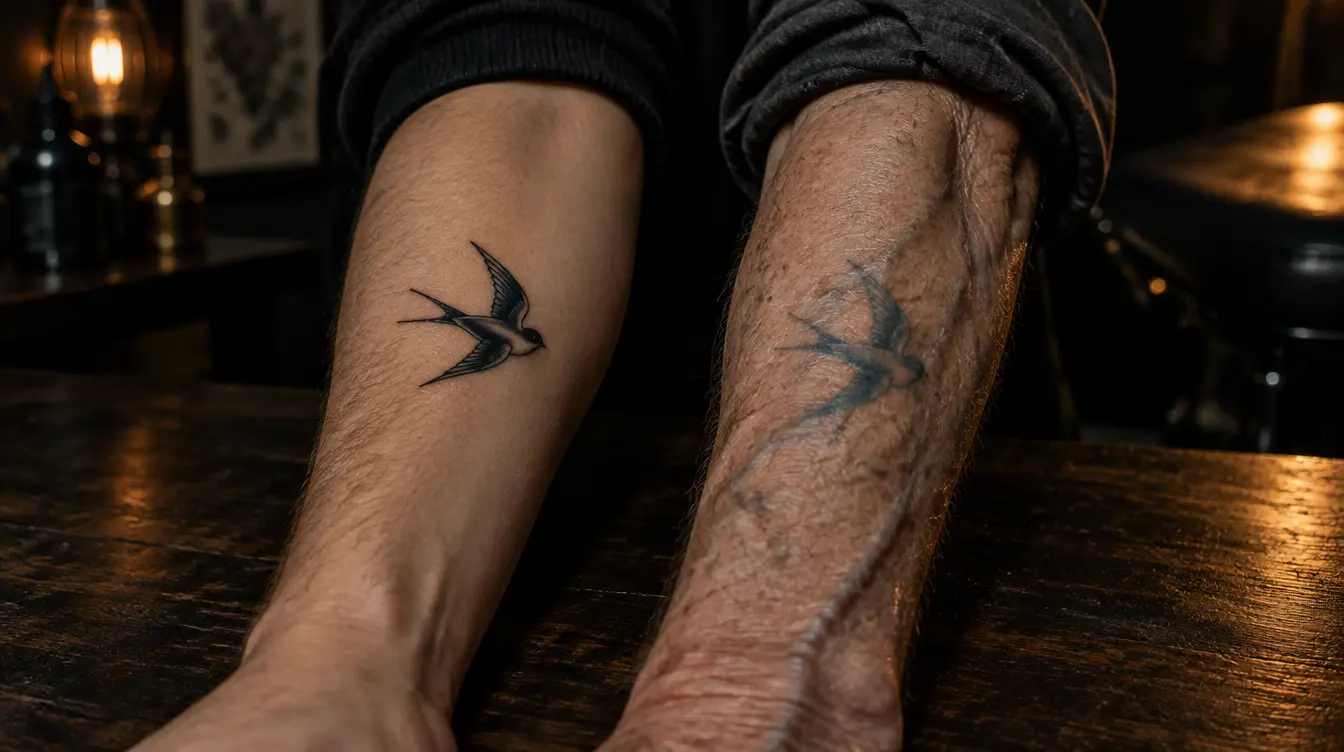
- The outer upper arm and upper back are gentle, and one of the best choices in the long run as well.
If you are torn between two spots, weigh up both questions: which one can you handle more easily, and which one will stay beautiful for longer? With InkAge you can upload a photo of the spot you have in mind and see the design on your own skin at 10, 30 and 50 years – so your decision is about the decades ahead, not just the day of the session.
Frequently asked questions
Where does a tattoo hurt the least?
On fleshy areas with thicker skin and fewer nerve endings: the outer upper arm and shoulder, the outer thigh, the calf, the outer forearm and the upper back. These are the best spots for a first tattoo.
Where does a tattoo hurt the most?
Where bone sits right under thin skin or there are many nerves: the ribs, sternum, spine, armpit, knees and elbows, feet, ankles, hands, fingers, face and lips.
What does getting a tattoo feel like?
Line work feels like a sharp, stinging scratch; shading feels more like a burning graze or sunburn. Over bone you mostly feel a strong vibration. It usually gets more sensitive after the first hour or two.
Can I use numbing cream?
Only after discussing it with your artist. Some work with numbing creams and some don’t, because they can change how the skin takes ink. Never apply one without asking, and always follow the instructions.
How long does it hurt after the tattoo?
Usually it feels like sunburn for 2–3 days, then eases. Itching and flaking follow while it heals. If the pain gets worse, the skin gets hotter and redder or you get a fever, see a doctor.
Written by the InkAge editorial team from widely accepted tattoo-care practice. Figures are rules of thumb, not measurements. This is general information, not medical advice — ask your artist or a dermatologist about your own skin.
Last updated: 20 October 2026