In short
- Choose a design you still like just as much after weeks – even months – of looking at it, and let the artist draw their own version.
- In an artist’s portfolio, healed work is what counts; in the studio, sealed single-use needles, gloves and covered surfaces.
- Size and placement matter as much as the design itself: fine detail needs room, or the years will blur it together.
- Prepare for the day (eat, sleep, no alcohol), plan your aftercare in advance, and spend your budget on quality, not on a discount.
In this article 12
- Start with the “why”, not the picture
- The weekly test: do you still like it weeks later?
- Size and placement: the two quiet decisions
- Choosing an artist: healed work is the real portfolio
- Hygiene: what to check in the studio
- Consultation, deposit, price
- Age, health, paperwork
- The day before and the big day
- Aftercare: plan it in advance
- How InkAge helps you decide
- The one thing to take away
- Frequently asked questions
It’s Friday night, and your phone holds twenty-seven saved pictures of a little swallow, a fine-line flower and a date that once felt hugely important. Your friend says “just go and get it done”, and a studio’s Instagram is advertising discounted slots for next week. Your thumb is already hovering over the booking button – and somewhere in the back of your mind a question is nagging: are you sure this is what you’d happily wear on your skin fifty years from now?
This article helps make your first tattoo not a snap decision but a calm, well-considered choice. We’ll go through the design, size and placement, choosing an artist, studio hygiene, the consultation and deposit, the legal and health basics, what to do before the big day, and aftercare. Each part comes with a short list you can tick off, so that by the end you really know: you’re ready to book.
Start with the “why”, not the picture
Most first tattoos start with an image you saw somewhere. But it’s worth taking a step back and asking yourself: what do you want this tattoo to mean or express? It might be a memory, the close of a chapter, or simply that you find a shape beautiful. Every one of these is a perfectly good reason – they just lead to different designs. Once you’re clear about your own reason, it becomes much easier to decide whether a particular image really suits you or is simply popular right now.
There’s nothing wrong with trends, but it helps to know that they come and go. What appears in every second feed today can easily become “that summer’s tattoo” a few years from now. That isn’t necessarily bad – plenty of people love that their tattoo preserves a period of their life. The point is to choose consciously, not because everyone else is getting it.
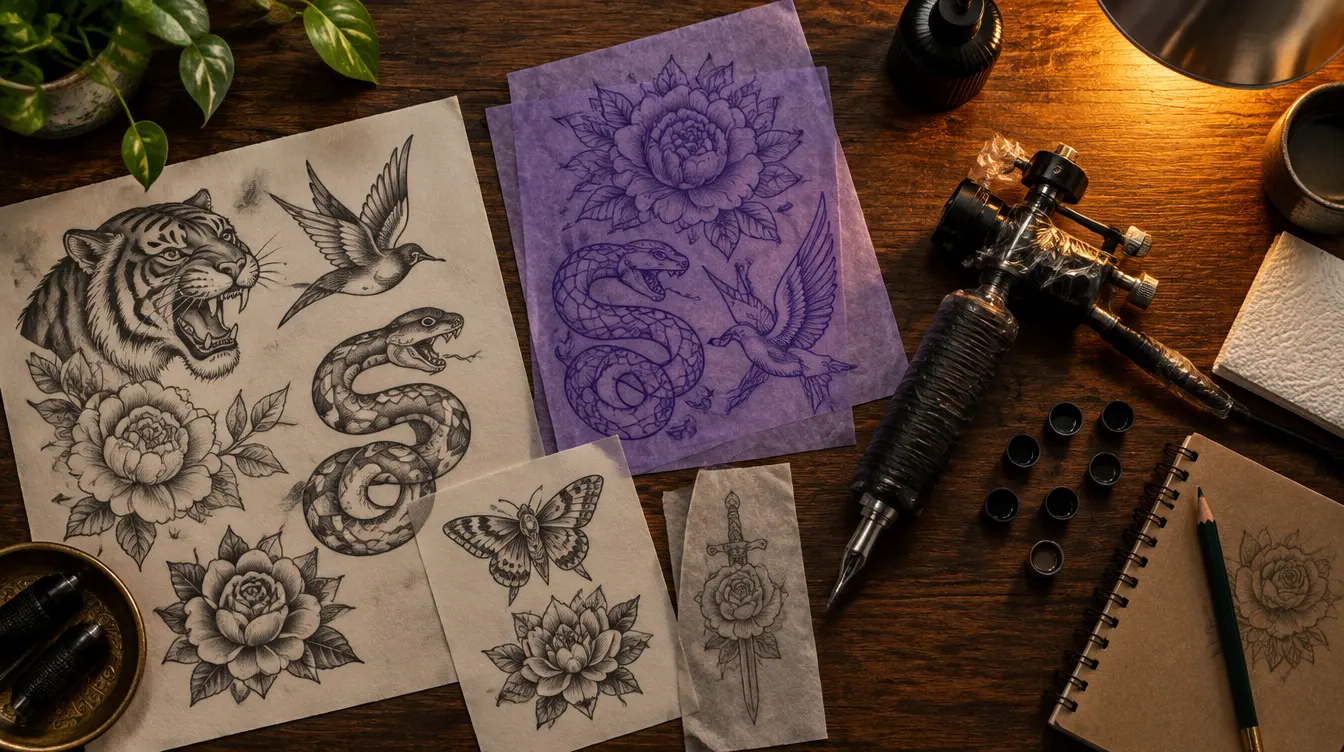
If you found someone else’s artwork, don’t ask for an exact copy. It’s disrespectful to the original creator, and it rarely turns out well anyway: a design was made for a specific body part at a specific size. Bring references and ask the artist to draw their own version – that way the design is shaped to your body, your skin and their style, and it usually ages more gracefully too.
- Write down in one sentence why you want this tattoo.
- Collect 3–5 reference images and note what you like about each (line, shape, mood).
- Save the original source so you can show it to the artist.
- Ask yourself: would you still like it if nobody else ever saw it?
The weekly test: do you still like it weeks later?
One of the simplest and most effective filters: set the design as your phone wallpaper for a few weeks. If it still feels good to look at after two or three weeks, and you haven’t started hunting for small flaws, that’s a good sign. If it gets boring or bothers you within the first week, it probably isn’t the one – and it’s far cheaper to find that out now than a year from now.
It’s just as useful to print the design at the planned size and tape it, or draw it with a marker, on the spot you have in mind. Wear it like that for a day or two. Look at it in the mirror, look at it with different clothes, notice how it distorts when you move. This is often when people realise that a slightly bigger or smaller size, or a spot a few centimetres over, would work much better.
If you grow more attached to a design during the test, you’re halfway there. But if you sense you’re rushing for some reason – because a discount is expiring, because someone is pushing you, because you “feel like it right now” – that’s an important signal too. With a good artist, this week is usually not the last free slot of your life.
Size and placement: the two quiet decisions
Most people agonise over the design for weeks, then decide size and placement in the studio in five minutes. Yet in the long run these two shape how your tattoo will look in twenty years at least as much. Ink particles in the skin spread slightly over time, so lines slowly thicken and small details can merge together. A tiny face or a miniature script squeezed into a palm-sized space can easily look like a smudge years later.
Ask the artist openly: what is the smallest size at which this design will still age well? An experienced artist will give you an honest answer, and if they say it needs to be bigger or simpler, that isn’t a sales trick – it’s professional advice. It’s also a good sign if they suggest leaving more “breathing room” between the lines.
What to weigh up for placement
- Visibility: how much do you want it to show at work, at family events or in summer? How easily do you want to be able to cover it?
- Friction and sun: hands, fingers, the sides of the feet and areas often exposed to the sun fade faster.
- Change: the stomach, hips, sides and upper thighs change more with weight or pregnancy than the forearm, calf or upper back.
- Pain: bony, thin-skinned areas (ribs, ankles, collarbone) are usually more sensitive – for a first tattoo many people prefer a less painful spot.
- Your own view: do you want to see it every day, or are you more the “only now and then” type?
For a first tattoo many people choose the forearm, the outer upper arm or the calf: relatively stable areas that tattoo well, are easy to cover and easy to look after. That’s not a rule, of course, just a safe starting point. What matters is choosing the placement as deliberately as the design.
Choosing an artist: healed work is the real portfolio
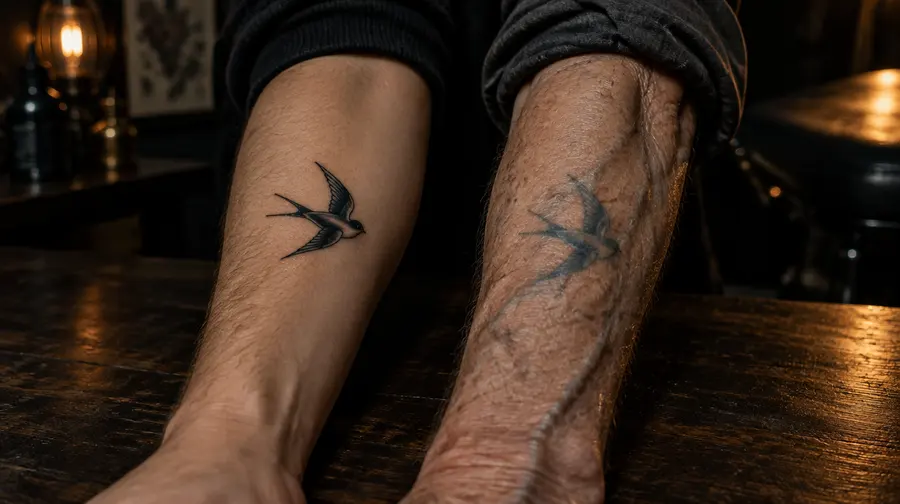
A photo of a freshly finished tattoo almost always looks stunning: crisp lines, saturated colours, slightly flushed skin, good lighting. But a tattoo’s true face only shows weeks, months and years later. So look specifically for healed work in the portfolio – many artists highlight it separately, or are happy to show some if you ask.
Check whether the lines stayed even and clean after healing, whether there are any blown-out, blurry areas, and whether the colours are consistent. It matters just as much that the artist’s style matches what you want: someone who makes superb realistic portraits isn’t necessarily the best choice for a minimalist line design, and vice versa.
A checklist for your artist
- Go through their portfolio and find at least a few healed pieces in the style you want.
- Look at how consistent the quality is – not just the best three pictures.
- Read reviews from several places, not only on the studio’s own page.
- Message them and notice how they communicate: do they ask questions back, do they give honest advice on size and placement?
- If you can, talk to someone they’ve tattooed – ask how their piece healed.
A fresh tattoo is the artist’s shop window – a healed tattoo is their real calling card.
Don’t be afraid to say “no” if something feels off. If the artist rushes you, brushes off every question or won’t show healed work, look for someone else. A good professional is usually glad when a client arrives prepared.
Hygiene: what to check in the studio
Tattooing breaks the skin, so hygiene isn’t a detail – it’s a basic requirement. A good studio looks clean and tidy at first glance, but it’s worth consciously checking a few specific things. Asking isn’t rude; in fact, a professional artist will gladly explain how they work.
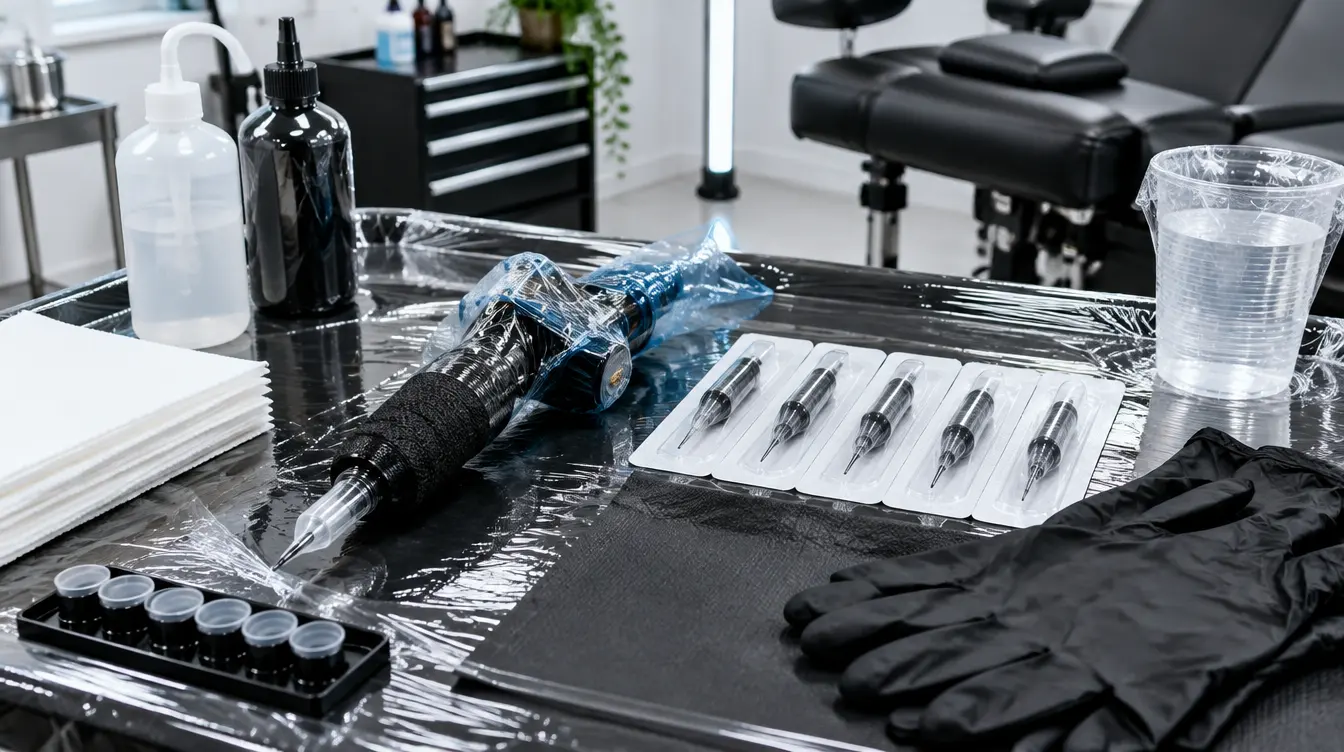
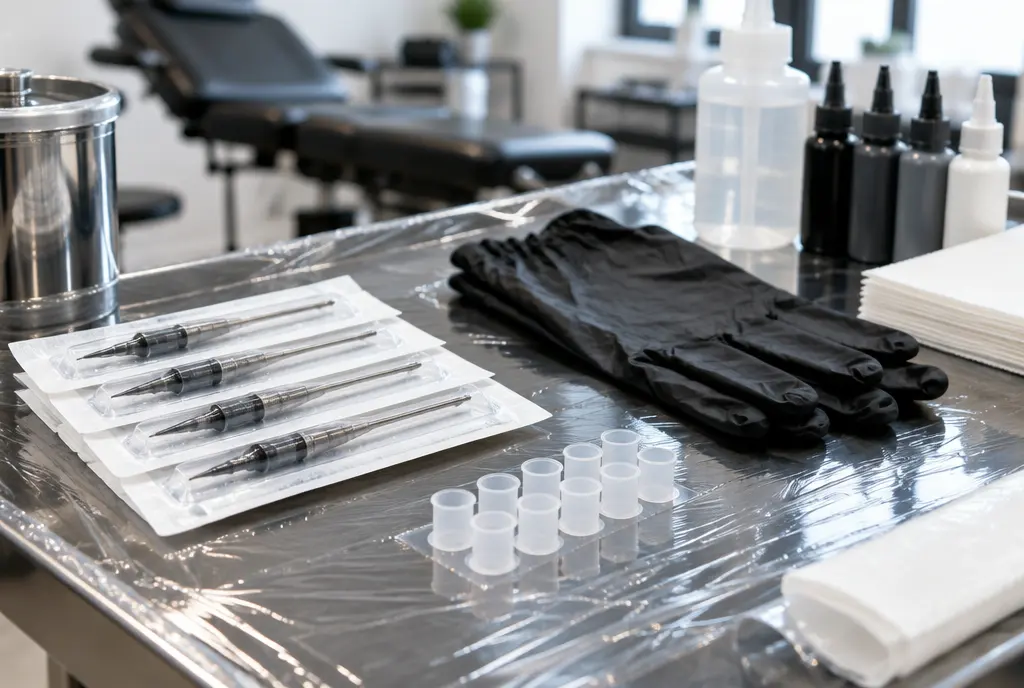
- Sealed single-use needles: the packaging is opened in front of you and thrown away after use.
- Gloves: the artist works in gloves and changes them after touching other surfaces.
- Covered surfaces: the machine, cable, bottles and work surface are wrapped in film or single-use covers.
- Single-use ink caps: ink is poured into small caps and never poured back.
- A tidy, clean workspace, with separate places for sterile and used equipment.
- Written aftercare instructions you can take home.
If you’re unsure about any point, ask. If the answer is evasive or irritated, that’s an answer too. Feel free to stand up and leave – a bad experience or an infection costs far more than a lost deposit.
Consultation, deposit, price
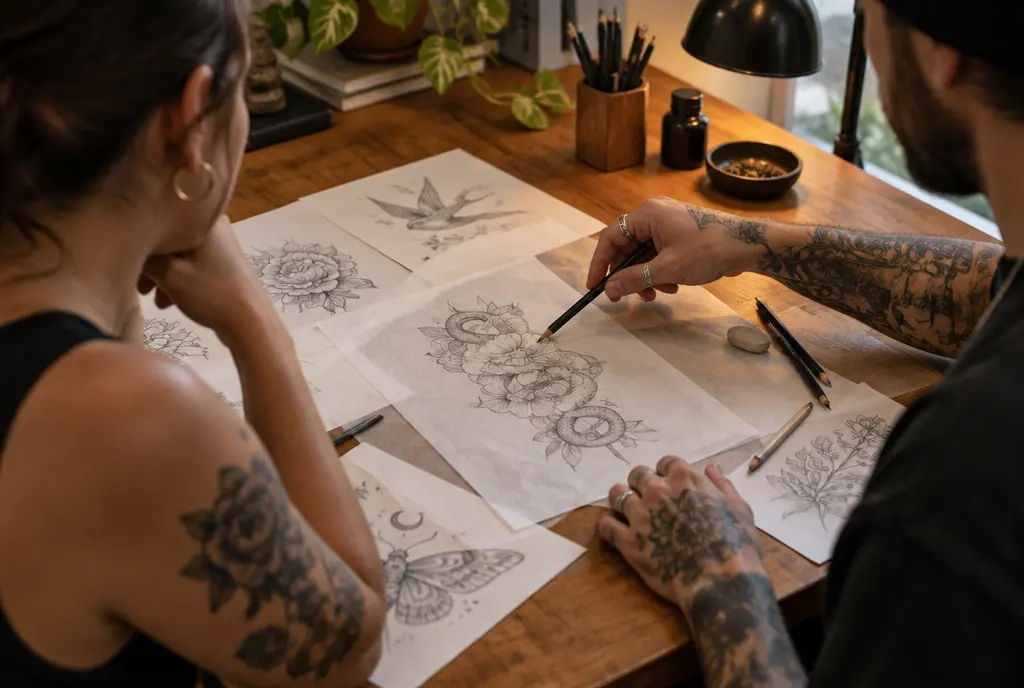
Many artists hold a consultation – in person or online – before giving you a date. This is your chance to explain what you want, show your references, and talk through size, placement and style. A consultation isn’t a commitment to buy; it’s a mutual introduction. You get to decide whether the chemistry is right, too.
It’s common to be asked for a deposit when booking. It usually secures the slot and the design work, and is often deducted from the final price. Ask in advance what happens if you need to move or cancel the appointment, and how much notice you need to give. It’s worth seeing the terms in writing, even just in a message thread.
Questions for the consultation
- At what size do you think this design works in the long run?
- Would you recommend this spot, or is there a better alternative?
- How long should I expect it to take, and will it be one session or several?
- How much is the deposit, and what’s the cancellation policy?
- Is a possible touch-up after healing included in the price?
- What aftercare do you recommend, and will I get written instructions?
As for price: a tattoo is that rare purchase you wear for the rest of your life. The price reflects the artist’s experience, the design time, the materials and the hygiene supplies. A strikingly cheap offer often saves on exactly these. Better to wait a few months and save up than to compromise on quality. If a bigger piece doesn’t fit your budget right now, ask whether it can be split across several sessions.
Age, health, paperwork
In Hungary you can generally get tattooed on your own decision over 18; for younger people the rules and studio practices can differ, and many studios won’t work on anyone under 18 at all. Because the exact regulations can change, always ask the studio, and expect to be asked for ID. You’ll usually also sign a consent form that includes health questions.
It’s worth answering those questions honestly. If you have a skin condition, a known allergy, a blood-clotting problem, diabetes or a heart condition, or you take medication regularly, talk it over with your doctor in advance, and tell your artist too. The same goes if you’re pregnant, breastfeeding, or if a skin injury is still healing on the planned area. In these cases, waiting is often the better decision.
Remember: your artist isn’t a doctor and doesn’t need to be. Their job is to work safely; yours is to know your own health and to seek a professional’s opinion when needed.
The day before and the big day
Preparing isn’t only about the design. Your body copes better with a tattoo when you’re rested and well fed. Get a proper night’s sleep the night before, and don’t drink alcohol – alcohol can increase bleeding and makes you feel worse, too. Avoid blood-thinning medicines such as aspirin unless a doctor prescribed them; if you take one regularly, never stop it on your own – ask your doctor.
Checklist for tattoo day
- Eat a proper, filling meal 1–2 hours beforehand.
- Bring water and a small snack, especially for a longer session.
- Wear clothes that give easy access to the area and that you don’t mind getting a bit messy.
- Your skin should be intact: no sunburn, fresh scratches or rash.
- Bring your ID and your references.
- Bring headphones or a friend if you like – but ask first whether a companion is allowed.
During the session, feel free to speak up if you need a break, feel dizzy or are uncomfortable in your position. That’s completely normal, and artists expect it. At the end, before it’s covered, take a good look at the tattoo – now is still the time to ask questions.
Aftercare: plan it in advance
A tattoo is only half finished in the studio – you complete the other half at home, while it heals. A badly cared-for fresh tattoo can lose its beauty even if the artist did perfect work. So it’s worth planning aftercare before you book, and ideally choosing a date when the following weeks don’t hold a beach, a sauna or a long seaside holiday.
- Plan roughly two weeks without swimming, baths, sauna or sunbathing.
- Keep the tattoo clean and moisturise it lightly, following your artist’s instructions.
- Don’t scratch it, and don’t pick off flaking skin.
- Wear loose, soft clothing that won’t rub the area.
- Protect it from the sun after it heals, too: this is one of the most important things for keeping its colour in the long run.
Every artist may recommend slightly different aftercare, and that’s fine. It’s best to follow their written instructions, and if you notice anything unusual – strong, increasing pain, swelling, fever, pus – don’t wait: see a doctor.
How InkAge helps you decide
With a first tattoo, the hardest part is imagining how the design will look on your skin, on your body part, in your proportions – and what will happen to it over the years. In InkAge you can upload your own photo and place the design on it. It’s worth trying more than one version: put the same design on two or three different spots and sizes, and look at them side by side.
For each version you can see how it looks fresh and then after 1, 10, 30 and 50 years, and you get an ink longevity score from 0 to 100. It isn’t a prophecy but an estimate that helps you compare: if the same design scores much better in one spot than another, take that seriously. If you’re unsure, your friends can use a vote link to tell you which version they like best – sometimes an outside eye helps a lot.
Once you have your favourite, you can take the PDF to your consultation. It contains the design, the placement, the size and the ageing preview – so the artist sees exactly what you have in mind, and you can talk concretely about what’s worth changing. The final word, of course, belongs to the artist’s professional judgement and your own feeling.
The one thing to take away
With a first tattoo, the goal isn’t to get it as soon as possible, but to have a design, in a place, from hands that you’ll still wear proudly decades from now – and for that, a few weeks of patience, a good checklist and a little foresight are worth more than any discounted slot.
Frequently asked questions
How do I choose an artist for my first tattoo?
Look for an artist whose portfolio includes healed work in the style you want. Pay attention to hygiene and to how they communicate: a good professional gives honest advice on size and placement. If they rush you or dodge your questions, look elsewhere.
Should I bring my own design or leave it to the artist?
Bring references and explain what you like about them, but let the artist draw their own version. That way the design is tailored to your body and the chosen size, and it usually ages better. Don’t ask for an exact copy of another creator’s work.
From what age can you get tattooed in Hungary?
Generally you can get tattooed on your own decision over 18, and many studios don’t take younger clients at all. Exact rules can change, so always ask the specific studio, and expect to be asked for ID.
What should I keep in mind the day before?
Get a good night’s sleep, skip alcohol, and eat a filling meal before the session. Avoid blood-thinning medicines such as aspirin unless a doctor prescribed them – but never stop regular medication on your own; ask your doctor.
Why do studios ask for a deposit, and is it refundable?
A deposit usually secures your slot and the design work, and is often deducted from the final price. Whether it’s refundable depends on the studio’s policy – ask about cancellation and rescheduling terms in advance, ideally in writing.
Written by the InkAge editorial team from widely accepted tattoo-care practice. Figures are rules of thumb, not measurements. This is general information, not medical advice — ask your artist or a dermatologist about your own skin.
Last updated: 13 October 2026