In short
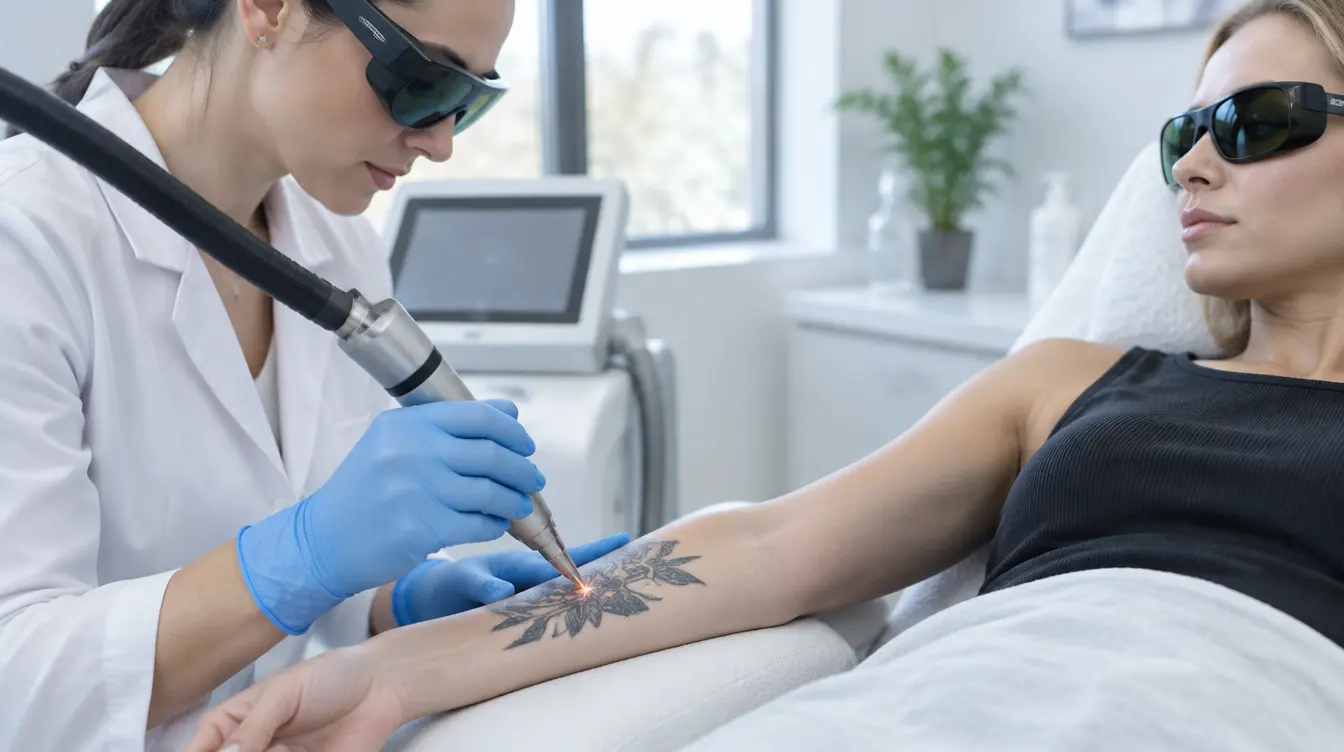
- Most professional tattoos need somewhere between about 5 and 15 laser sessions, spaced weeks apart. The exact number depends on the tattoo and on you.
- The Kirby–Desai scale, published in 2009, scores six factors: skin type, location, colours, amount of ink, scarring and layering. The total is a rough estimate of the sessions needed.
- Placement matters more than most people expect: a tattoo on the head or neck often clears faster than the same design on a foot or wrist.
- Treat any number as a starting estimate, not a promise. A qualified clinic should assess your tattoo in person.
In this article 11
Mia had her answer ready before the consultation even started. She had read online that laser removal takes “about six sessions”, she had a small black word on her wrist, and she had already pencilled in a free summer to have it gone by. Then the practitioner looked at the tattoo, asked her four or five questions, did a bit of quiet maths on a form, and said: “I’d plan for around ten. Maybe a couple either way.”
Ten. For a word the size of her thumbnail. Mia’s first thought was that she was being upsold. Her second, more useful thought was: how did they get that number? This article is the answer. We will walk through the scoring system many clinics use to estimate laser sessions, explain why each factor matters, and work through four real-life examples so you can make your own rough estimate before you book.
The short answer
For most professional tattoos, full removal with modern lasers usually takes somewhere between about 5 and 15 sessions, with each session spaced several weeks apart, typically at least six to eight. Small, black, amateur tattoos on well-supplied skin can clear in fewer. Large, colourful, densely packed pieces on hands or feet can take more, and some colours may never disappear completely.
That range is honest but not very helpful. The good news is that you can narrow it down a lot, because the factors that decide it are well known.
What is the Kirby–Desai scale?
In 2009, dermatologist Dr William Kirby and colleagues published a simple scoring system in the *Journal of Clinical and Aesthetic Dermatology* to help clinics and patients estimate how many laser treatments a tattoo would need. They scored six factors, added the points together, and found that the total roughly matched the number of sessions their patients needed, give or take a few.
It was built in the era of Q-switched lasers, and newer picosecond lasers may change the numbers somewhat. It is also an estimate from a fairly small group of patients, not a law of physics. But it remains the most widely used way to turn “it depends” into an actual number, and it explains clearly *why* two tattoos that look similar can take very different amounts of time.
The score is not a promise. It is a way of turning “it depends” into a number you can plan around.
The six factors, point by point
1. Skin type (1–6 points)
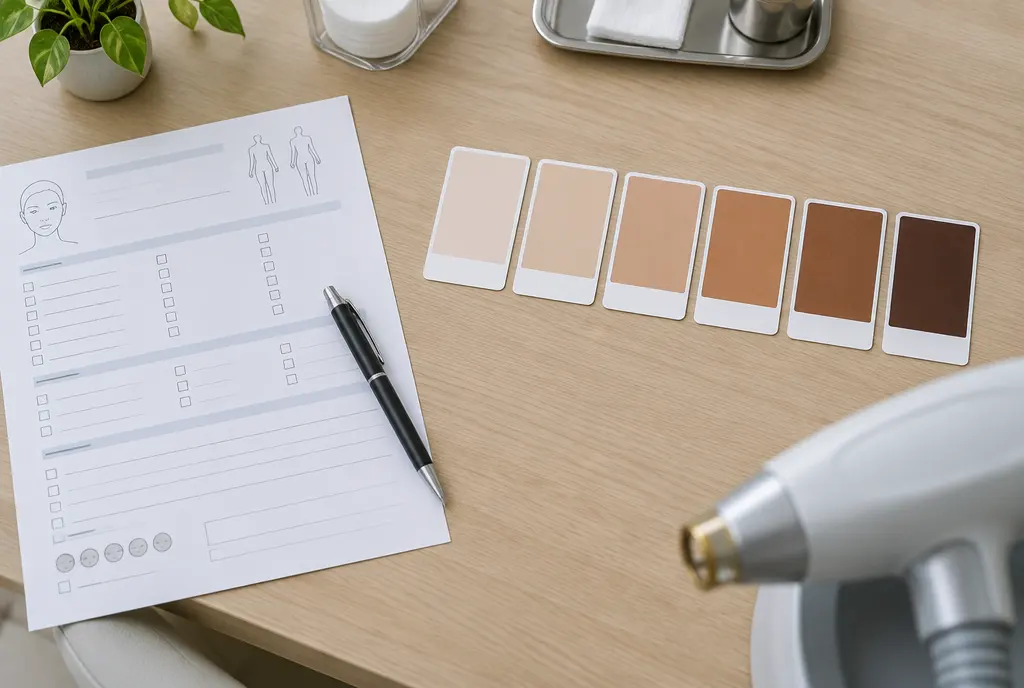
The scale uses the Fitzpatrick skin types, from type I (very fair skin that always burns) to type VI (deeply pigmented skin that rarely burns). Type I scores 1 point, type II 2 points and so on up to 6 for type VI. Darker skin isn’t harder to treat because of the tattoo itself, but because the laser can also be absorbed by the skin’s own pigment. Practitioners use gentler settings and longer gaps to protect the skin, which means more sessions.
2. Location (1–5 points)
- Head and neck: 1 point
- Upper trunk (chest, upper back, shoulders): 2 points
- Lower trunk (stomach, lower back, hips): 3 points
- Upper arm or thigh: 4 points
- Forearm, wrist, hand, lower leg, ankle or foot: 5 points
The further a tattoo is from the centre of the body, the more slowly it tends to clear. The authors linked this to blood and lymph supply: the laser breaks the ink into fragments, and the body’s own transport system carries them away. Where that system is busier, clearance is faster.
3. Colours (1–4 points)
- Black only: 1 point
- Mostly black with some red: 2 points
- Mostly black and red with some other colours: 3 points
- Multiple colours: 4 points
Black absorbs a wide range of laser light and responds well. Other colours need specific wavelengths, and some shades, especially certain greens, blues and light colours, can be stubborn.
4. Amount of ink (1–4 points)
- Amateur: 1 point
- Minimal (for example, thin line work): 2 points
- Moderate: 3 points
- Significant (dense shading, solid fills, saturated colour): 4 points
Amateur tattoos usually contain less ink, placed less evenly and often more shallowly, which is why they often clear faster than professional work.
5. Scarring or tissue change (0–5 points)
- None: 0 points
- Minimal: 1 point
- Moderate: 3 points
- Significant: 5 points
Scar tissue can trap ink and make it harder for the laser to reach and for the body to clear.
6. Layering (0 or 2 points)
If the tattoo is a cover-up over an older one, add 2 points. There is simply more ink, sitting at different depths.
How to estimate your own score
You will need a few honest minutes and, ideally, a photo of your tattoo in daylight.
- Find your skin type. Think about how your skin reacts to an hour in strong summer sun without protection. Always burns and never tans is type I; tans easily and rarely burns is type IV or higher.
- Pick the location from the list above.
- Count the colours. Be strict: a little red in a mostly black piece counts.
- Judge the amount of ink. Fine lines and lettering are usually minimal; solid black areas and saturated colour are significant.
- Check for scarring. Raised or textured areas, or a tattoo that healed badly, count here.
- Add 2 if it is a cover-up.
Add the points together. The total is a rough estimate of the number of sessions, give or take a couple. Now let’s try it on four real-life tattoos.
Four worked examples
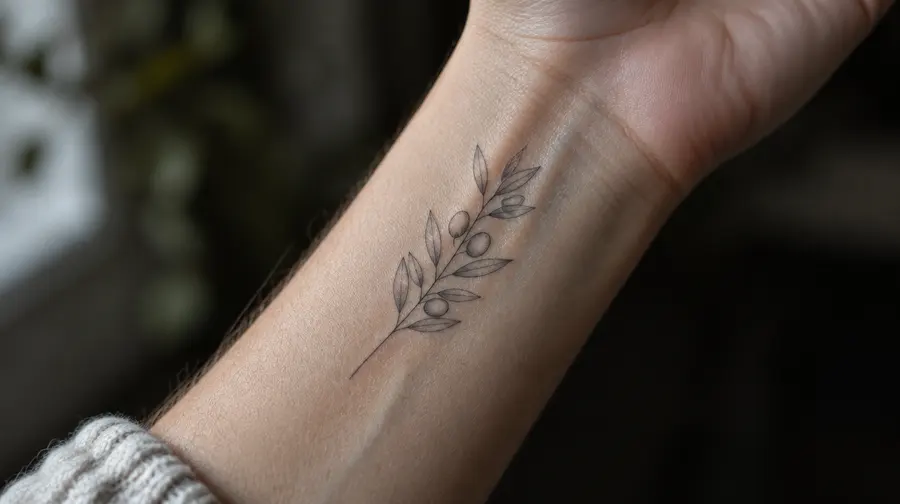
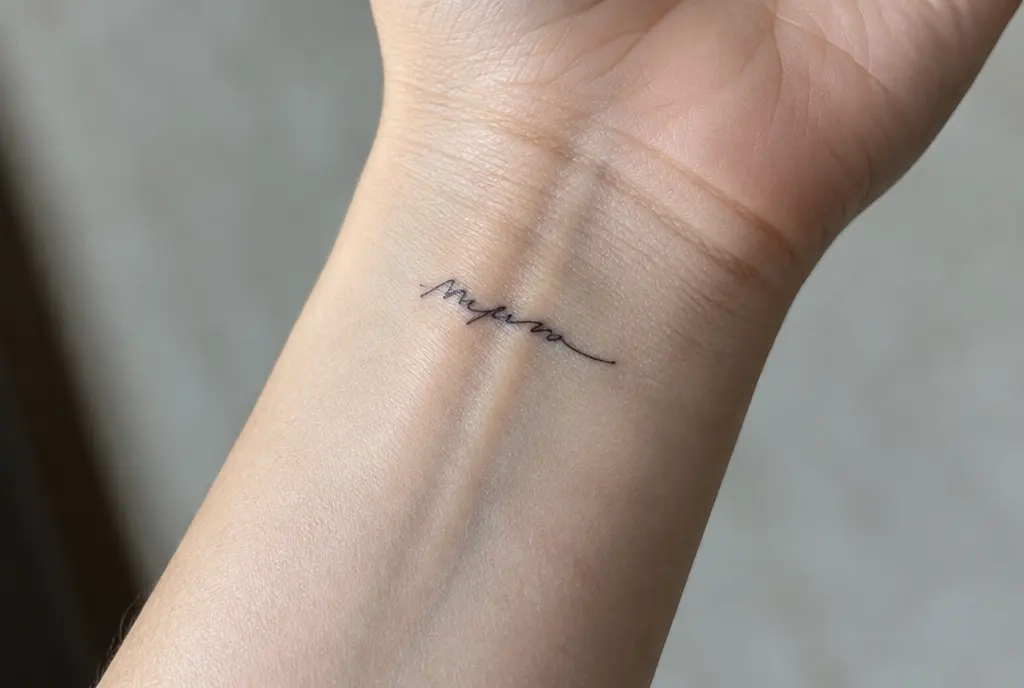
Example 1: a small black word on the inner wrist
This is Mia’s tattoo: professional fine line lettering, black only, on fair skin that burns easily but tans a little.
- Skin type II: 2
- Wrist (distal extremity): 5
- Black only: 1
- Minimal ink: 2
- No scarring: 0
- No layering: 0
Total: 10 sessions. The location alone accounts for half of the score. The same word behind the ear would score 6.
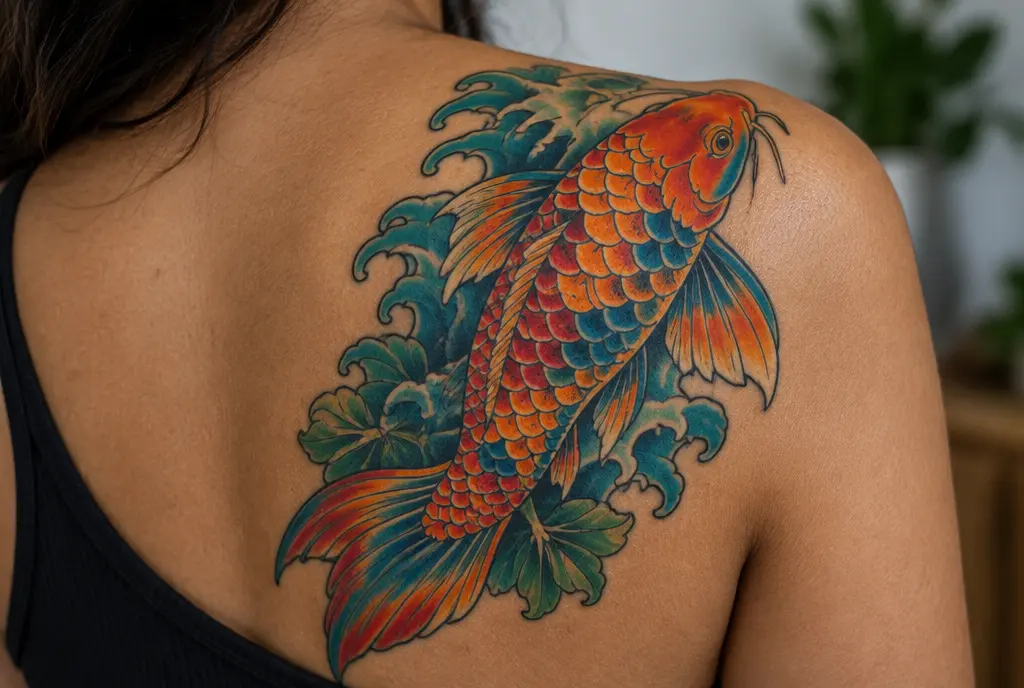
Example 2: a colourful koi on the shoulder blade
A densely saturated, multicoloured piece with a black outline on olive skin that tans easily.
- Skin type III: 3
- Upper back (upper trunk): 2
- Multiple colours: 4
- Significant ink: 4
- No scarring: 0
- No layering: 0
Total: 13 sessions. A good location helps, but colour and ink density more than cancel it out. Some of the colours may also fade more than they disappear.
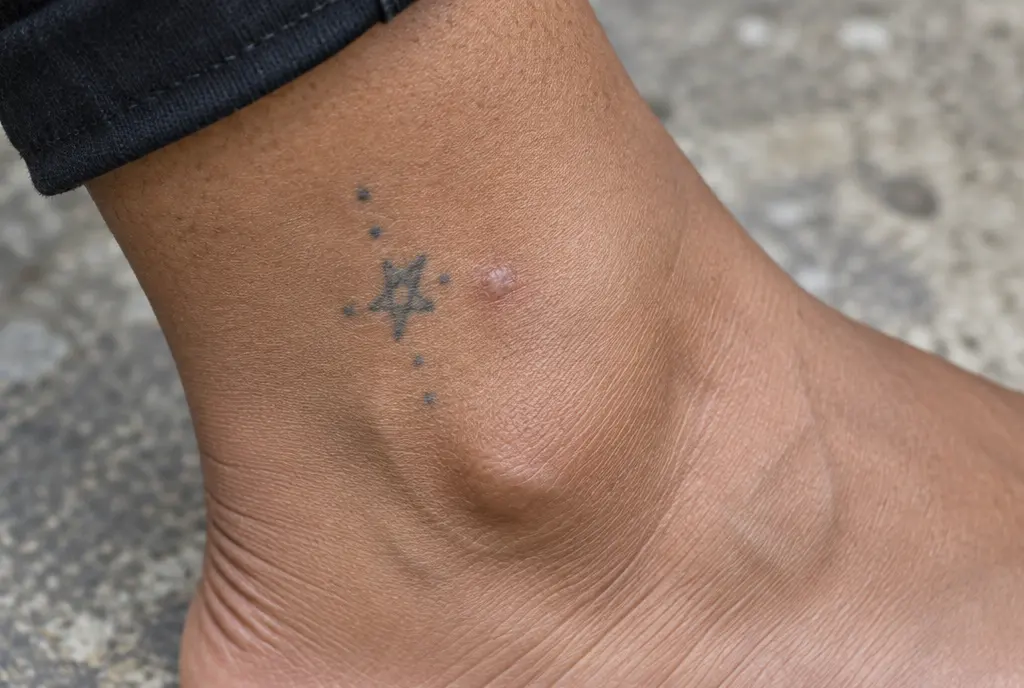
Example 3: an old stick-and-poke star on the ankle
A small amateur tattoo done at a party twenty years ago, on medium brown skin that rarely burns, with a little raised scar beside it.
- Skin type IV: 4
- Ankle (distal extremity): 5
- Black only: 1
- Amateur: 1
- Minimal scarring: 1
- No layering: 0
Total: 12 sessions. The amateur ink helps, but skin type and placement push the estimate up. A careful practitioner may use gentler settings here, which is exactly what the extra points reflect.
Example 4: a black-and-grey cover-up on the upper arm
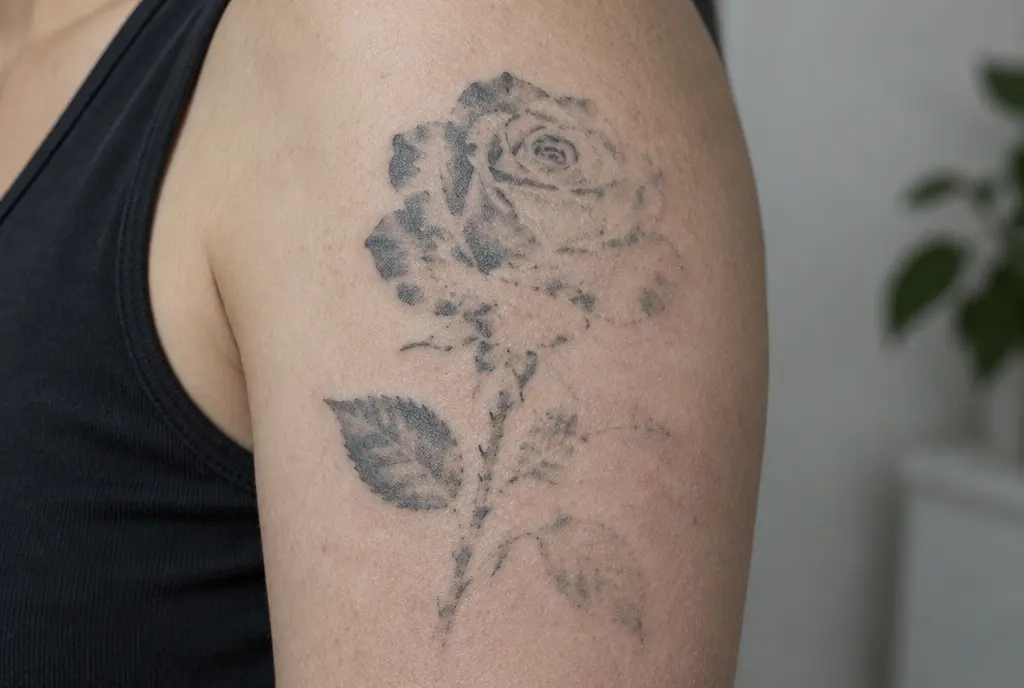
A professional black-and-grey piece that was itself done over an older tattoo, on very fair skin.
- Skin type I: 1
- Upper arm (proximal extremity): 4
- Black only: 1
- Moderate ink: 3
- No scarring: 0
- Layering (cover-up): 2
Total: 11 sessions. Fair skin and black ink are on your side; the hidden older tattoo underneath is not.
What the score can’t tell you
The scale is a good starting point, but real results move around it. A few things it doesn’t capture:
- The laser and the operator. Picosecond lasers and the right wavelengths for each colour can change the count, and experience matters as much as equipment.
- The ink itself. Brands and pigments differ, and nobody can see that from the outside.
- Your body. Clearance depends on your immune system, and healthy habits help. Smoking, for example, has been linked to slower results in some studies.
- Patience between sessions. Ink keeps clearing for weeks after each treatment. Rushing the gaps doesn’t speed things up; it mainly raises the risk to your skin.
Full removal or fading?
Not everyone needs the tattoo gone completely. If you are planning a cover-up, fading the old design enough for an artist to work over it often takes only a few sessions instead of a full course. That can save a lot of time and money, and it is worth discussing with both the clinic and your tattoo artist before you start.
How long will it all take?
Multiply your estimate by the gap between sessions. Ten sessions at six to eight weeks apart is roughly a year and a half to two years; longer gaps are fine and sometimes better. That is the part most people underestimate, and why the best time to think about removal is, honestly, before the tattoo.

See it before you decide
If you are still choosing a design, InkAge can show you how it is likely to age on your own skin at 10, 30 and 50 years. If you already have the tattoo, the laser preview shows what it might look like after 3, 6 and 10 sessions, so you can picture fading versus full removal before you book a consultation. It is a visual estimate, not a medical assessment, and the decision about treatment always belongs with a dermatologist or qualified laser specialist.
The short version
Mia’s ten sessions weren’t an upsell. They were six questions and some honest arithmetic. Score your own tattoo, treat the result as a range rather than a promise, and take it with you to a proper consultation. Knowing why the number is what it is makes the long road a lot easier to walk.
Frequently asked questions
How many sessions does laser tattoo removal usually take?
For most professional tattoos, roughly 5 to 15 sessions spaced at least six to eight weeks apart. Small black amateur tattoos often need fewer; large, colourful or densely shaded pieces on hands, wrists or feet often need more.
What is the Kirby–Desai scale?
A scoring system published in 2009 by Dr William Kirby and colleagues. It adds up points for skin type, location, colours, amount of ink, scarring and layering; the total is a rough estimate of how many laser sessions a tattoo will need.
Why do tattoos on the hands and feet take longer to remove?
Tattoos further from the centre of the body tend to clear more slowly. The scale’s authors linked this to blood and lymph supply, which carries away the ink fragments the laser creates.
Can I speed up laser tattoo removal by going more often?
Not really. Ink keeps clearing for weeks after each session, and the skin needs time to heal. Shorter gaps mostly increase the risk of skin damage. Your practitioner will set the interval for your skin.
How many sessions do I need just to fade a tattoo for a cover-up?
Often only a few, because the old design just needs to be light enough for the new tattoo to cover. Ask both the clinic and your tattoo artist how light it needs to be before you start.
Written by the InkAge editorial team from widely accepted tattoo-care practice. Figures are rules of thumb, not measurements. This is general information, not medical advice — ask your artist or a dermatologist about your own skin.
Last updated: 29 October 2026