In short
- Choose the style first, then look for artists who tattoo that style every week, and judge them by photos of healed work, not only fresh pieces.
- A clean studio uses single-use needles and gloves, opens sealed packs in front of you and, where the law requires it, is registered or licensed.
- A good booking message gives the idea, placement, size in centimetres or inches, colour or black, reference images and your availability in one go.
- Most artists take a deposit that is deducted from the final price. Prices are hourly or per piece and vary a lot by country and artist; rescheduling usually needs 48 to 72 hours’ notice.
In this article 13
- The short answer
- Step 1: Choose the style before the artist
- Step 2: Judge the portfolio by its healed work
- Step 3: Check hygiene and the licence
- Step 4: Write a booking message artists want to answer
- Consultations: what happens and what to ask
- Deposits: how they work
- How tattoo pricing works
- Waiting lists and “books open”
- Getting ready for the day
- Rescheduling and cancelling: the etiquette
- What it means for you
- Frequently asked questions
Nora had wanted the same tattoo for two years: a sprig of wild olive running along the inside of her forearm. One evening she finally opened Instagram, found five artists near her and sent each of them the same message: “Hi, how much for a small flower tattoo?” One replied a week later with a price list. The other four never answered.
It was not that the artists were rude. They simply had nothing to work with. No size, no placement, no picture, no dates. A month later Nora tried again, this time with one artist whose healed fine-line work she had studied for weeks, and a message that answered every question before it was asked. She had a reply the same day and a consultation the following week.
Booking a tattoo is not hard, but it has its own unwritten rules. This guide walks you through them in order: finding the right artist, checking that they are safe, writing a message that gets answered, and what to expect with deposits, prices, waiting lists and the day itself.
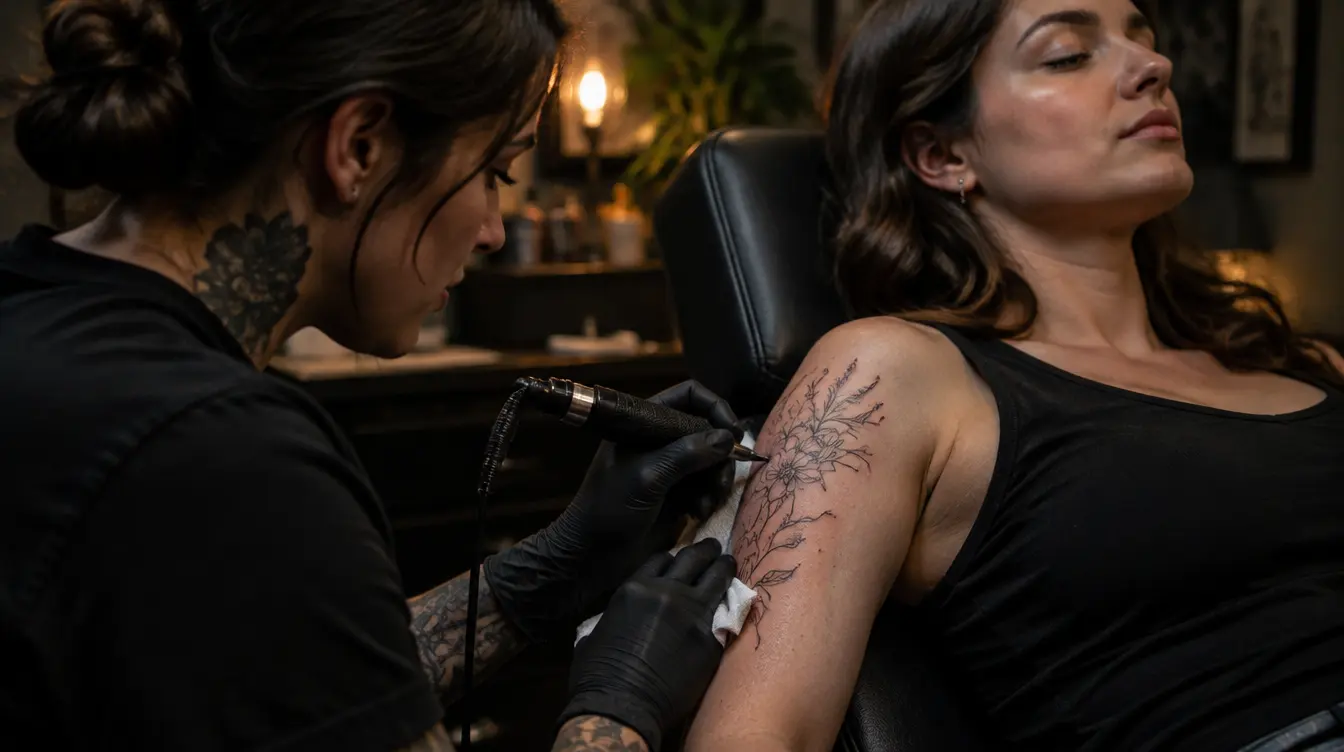
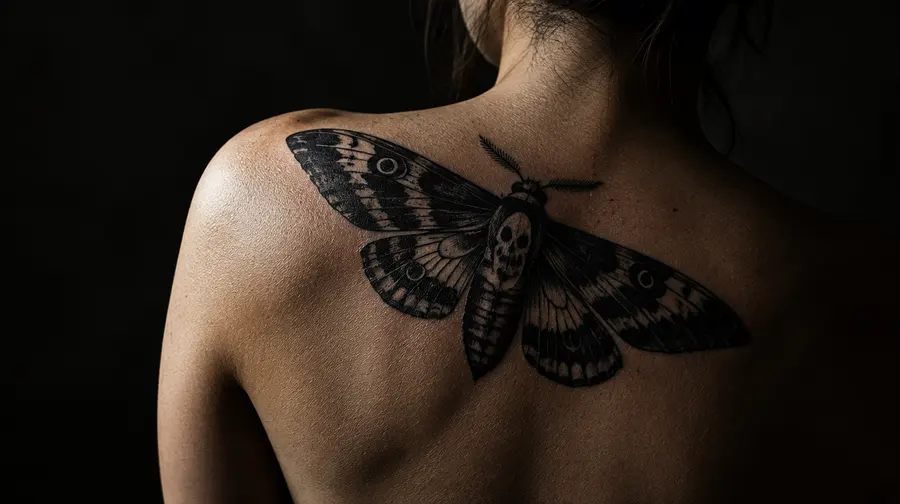
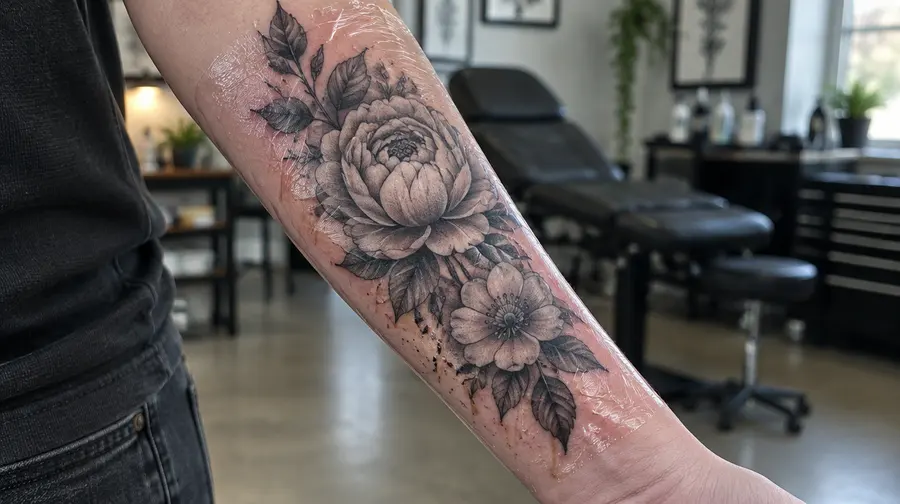
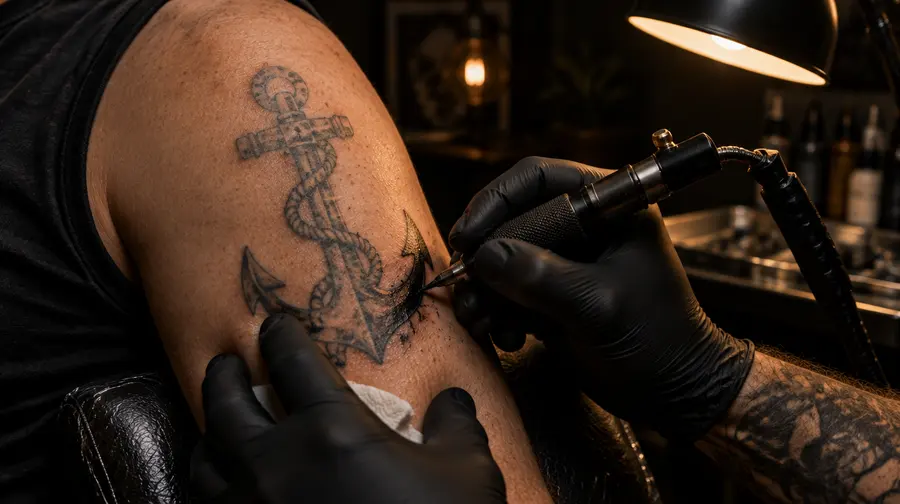
> A note on the pictures: the images in this article are illustrations made to show typical situations. They are not photos of real artists, studios or clients.
The short answer
Pick the style, find artists who specialise in it, check their healed work and their hygiene, then send one clear message with the idea, placement, size, colour, references and your availability. Expect to pay a deposit to secure the date, to get a price either per hour or per piece, and to give at least two or three days’ notice if you need to move the appointment.
Everything else is detail. But the details are where most first bookings go wrong, so here they are.
Read alsoYour first tattoo: a checklist before you bookStep 1: Choose the style before the artist
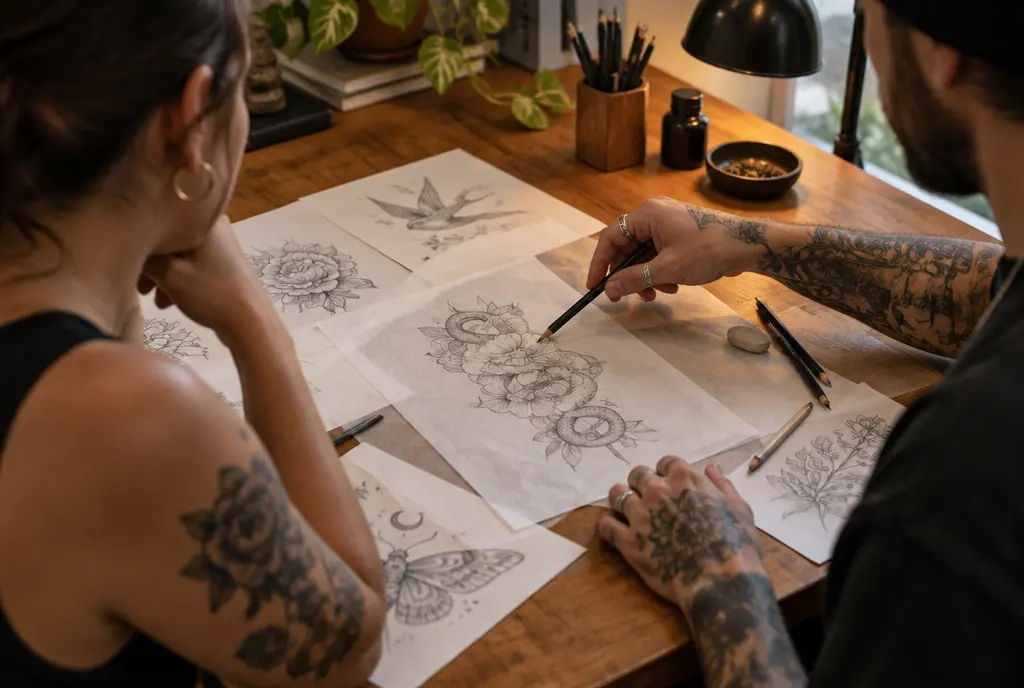
Most good tattoo artists are specialists. Someone who does beautiful bold traditional work may not be the right person for a delicate single-needle portrait, and an excellent realism artist may not want to draw lettering. Before you search for a name, try to name the style: fine line, traditional, neo-traditional, blackwork, realism, illustrative, lettering, ornamental, Japanese, and so on.
If you are not sure, save twenty or thirty tattoos you love and look for what they have in common. Thick or thin lines? Black only or colour? Lots of detail or simple shapes? That pattern is your style, and it is the best search term you will have.
Then search for artists who tattoo that style regularly. Instagram, studio websites, booking platforms and recommendations from people whose tattoos you like are all good starting points. Searching for the style plus your city usually works better than searching for “best tattoo artist near me”.
Step 2: Judge the portfolio by its healed work
A fresh tattoo photographed minutes after it was finished almost always looks perfect: the skin is slightly red, the lines are sharp, the black is glossy and the photo is often edited. What matters is how the work looks once it has healed, and how it holds up after a year or two.
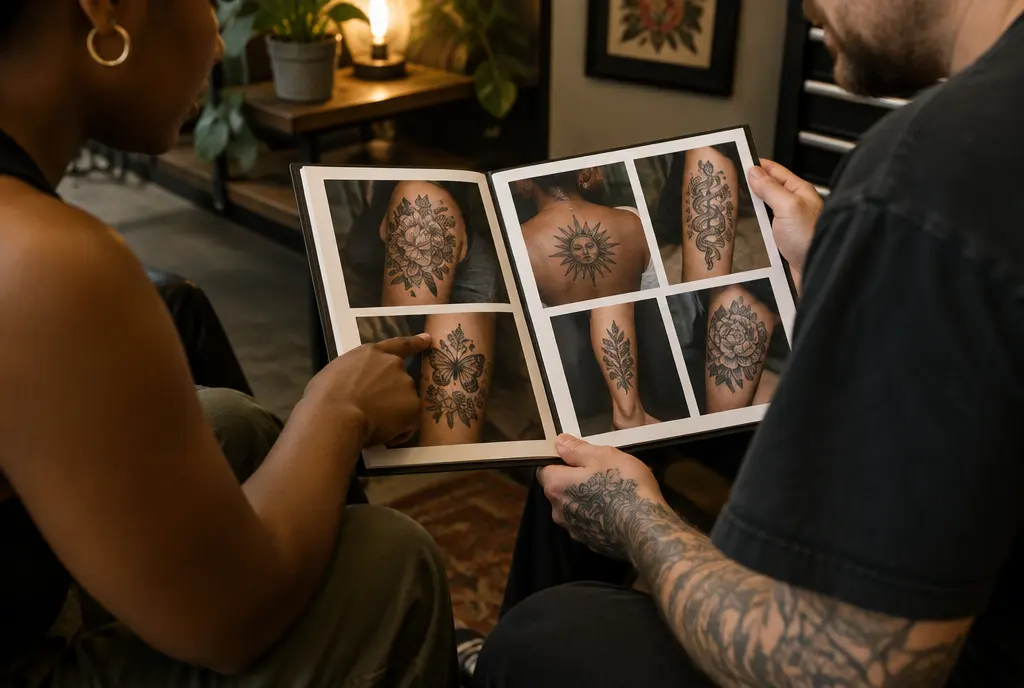
Here is what to look for when you scroll through an artist’s page:
- Healed photos. Many good artists post them, often marked “healed”. If you cannot find any, ask for some. A confident artist will be happy to show them.
- Clean, steady lines. Lines should be even in thickness, without wobbles, and should not look blurred or spread out in healed photos.
- Solid fill. Black and colour areas should look even, not patchy, once healed.
- Work like yours. Look for several pieces in the same style, size and body area as the one you want, not just one lucky example.
- Consistency. A portfolio where every piece is good tells you more than one where a few are spectacular and the rest are not.
Fresh tattoos show you what an artist can draw. Healed tattoos show you what they can do in skin.
Reviews help too, especially ones that mention how the healing went and how the artist handled questions. A handful of honest reviews is more useful than a large number of very short ones.
Step 3: Check hygiene and the licence
A tattoo breaks the skin thousands of times, so the studio’s hygiene matters as much as the artist’s talent. You do not need to be an expert to spot the basics. Look at the studio’s photos, and if you can, visit before you book.
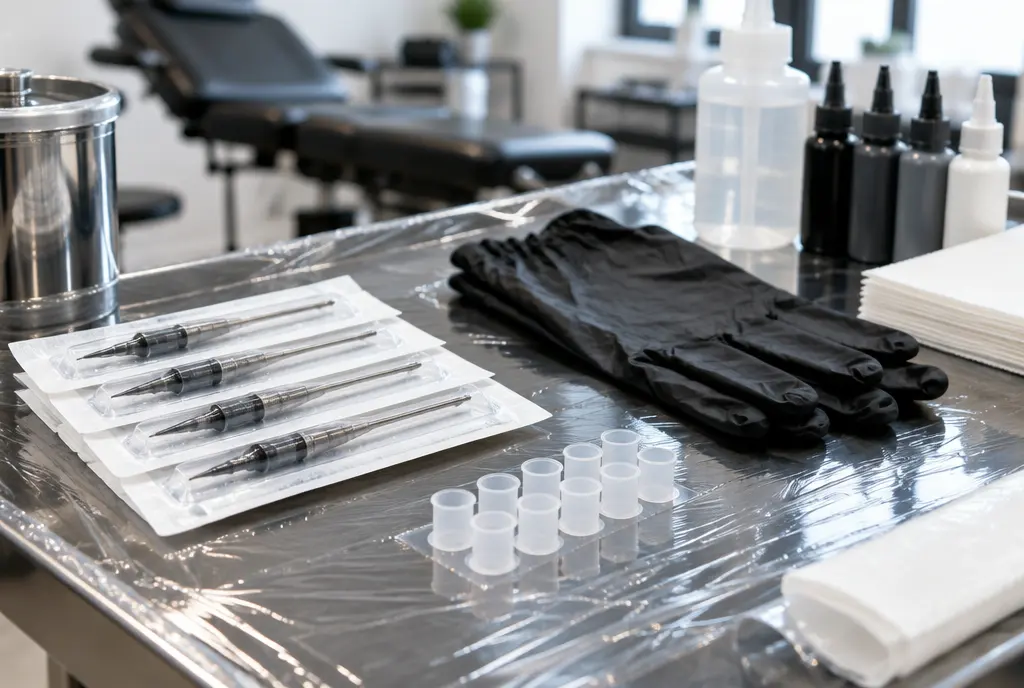
- Single-use needles and cartridges, opened from sealed packs in front of you and thrown away afterwards.
- Fresh gloves, changed whenever the artist touches something that is not part of the clean setup, such as a phone.
- Covered surfaces. Bottles, the machine cord and the work surface are usually wrapped in plastic film that is replaced for each client.
- Ink poured into small single-use caps, not used straight from the bottle for several people.
- A clean, tidy room that is separate from the waiting area, with a proper sharps bin and a sink for hand washing.
The legal side depends on where you live. In England and Wales, for example, tattooists and their premises must be registered with the local council, and it is illegal to tattoo anyone under 18, even with a parent’s consent. Many US states and counties require a licence or permit, and in many European countries studios must be registered with a health authority. In the EU, tattoo inks have also had to meet chemical safety rules since 2022. If your country has a registration or licence, a professional studio will usually display it or show it when asked.
Step 4: Write a booking message artists want to answer
Popular artists receive dozens of messages a week. The ones that get quick replies are the ones they can price and plan without having to ask five follow-up questions. Many artists have a booking form or a short list of what they need; if they do, use it and fill in every field.
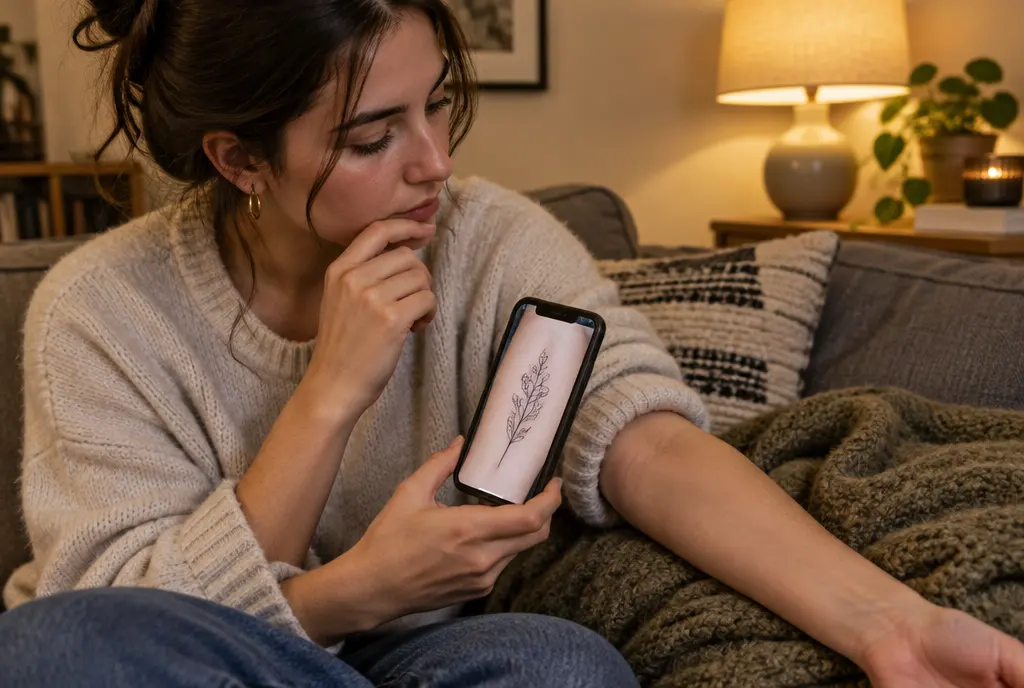
If there is no form, a good first message contains these things:
- The idea in one or two sentences. What it is, and what it means to you if that helps the artist understand the mood.
- Placement. The exact body part, for example the inside of the left forearm, running from the wrist towards the elbow.
- Size. An approximate height and width in centimetres or inches. Hold a ruler against the spot and take a photo if you can.
- Black or colour, and how much detail you imagine.
- Two to four reference images, including some of the artist’s own work you like. Say what you like about each one.
- Your availability and any deadline, plus your budget if you have a firm one.
Put together, it might read something like this. “Hi, I love your healed fine-line botanical work, especially the lavender piece from March. I would like a sprig of wild olive on the inside of my left forearm, about 15 cm long and 4 cm wide, black only, fairly delicate but not tiny. I have attached three references and a photo of my arm with a ruler. I am flexible on weekdays from next month and happy to come for a consultation first. Could you let me know if this is something you would like to do, and roughly what it would cost?”
That is short, polite and complete. It also tells the artist you have looked at their work, which matters more than people think. Avoid sending the same copy-pasted message to ten artists at once, asking for a price on a design that does not exist yet, or sending another artist’s tattoo and asking for an exact copy. Most artists will happily draw something inspired by a reference; very few will copy someone else’s work line for line.
Consultations: what happens and what to ask
For anything larger than a small, simple piece, many artists suggest a consultation. It can be a short visit to the studio or a video call, and it is usually where size, placement and the final idea are agreed. Some artists charge a small fee for it or take the deposit at this point.
Use the time well. Bring your references, wear clothes that give easy access to the area, and ask the questions that matter to you:
- How long will it take, and will it be done in one session or several?
- Is this size right for the amount of detail, so that it still reads well in ten or twenty years?
- Will I see the drawing before the day, and how many changes are included?
- How do you price it, and what does the deposit cover?
- What aftercare do you recommend, and is a touch-up included?
A good artist will be honest if your idea needs adjusting, for example if very fine detail would blur at the size you want, or if the placement will stretch or rub a lot. That is advice worth listening to.
Deposits: how they work
Almost every professional artist asks for a deposit to book a date. It protects their time: if a client does not turn up, the artist has lost a day of work and often several hours of drawing. In most studios the deposit is not an extra charge. It is deducted from the final price on the day.
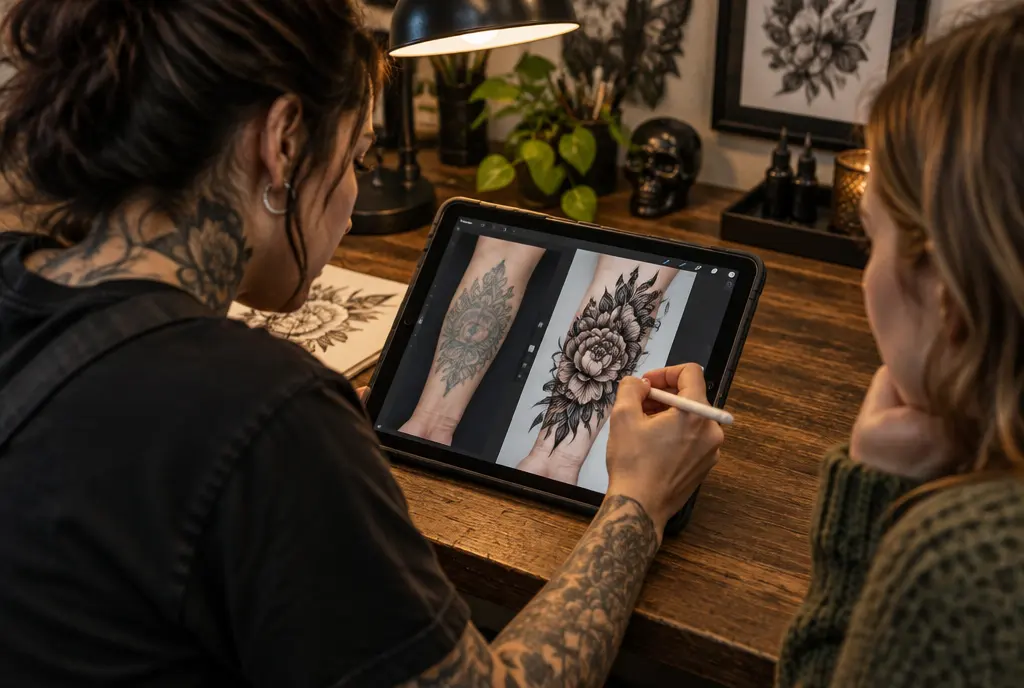
The amount varies. Small tattoos often need a flat deposit, commonly somewhere around 50 to 150 in dollars, pounds or euros. For larger work, some artists ask for a fixed share of the expected price, or a deposit per session. Deposits are usually non-refundable if you cancel, but most artists let you move the date once if you give enough notice. Read the policy before you pay, and keep the confirmation.
How tattoo pricing works
Tattoo artists usually price their work in one of three ways, and many use a mix:
- Per hour. Common for medium and large pieces, sleeves and work spread over several sessions. You pay for the time actually spent tattooing, sometimes including setup.
- Per piece. A fixed price agreed in advance. Common for small and medium tattoos and for flash designs, which are ready-made drawings the artist offers at a set price.
- Day rate. A fixed price for a full day of work, often used for big projects.
Most studios also have a shop minimum, the lowest price for any tattoo, however tiny. It covers the sterile setup, which costs the same for a small heart as for a larger piece. Minimums of roughly 80 to 150 in dollars, pounds or euros are common in many Western countries.
Hourly rates vary a great deal by country, city and how in demand an artist is. As a rough guide, many established artists in the US charge somewhere between about 120 and 250 dollars an hour, with sought-after artists in big cities above that. In the UK and much of Western Europe, roughly 80 to 200 pounds or euros an hour is common. In Central and Eastern Europe prices are often lower. Treat all of these as ranges, not quotes: the only price that counts is the one your artist gives you.
A tattoo is one of the few things you buy that stays with you for life. The cheapest quote is rarely the best value.
In the US, tipping around 15 to 20 percent is a common custom; in much of Europe a tip is appreciated but less expected. If you are unsure, it is fine to ask the studio what is usual.
Waiting lists and “books open”
Popular artists are often booked weeks or months ahead. Some take requests at any time and work through them in order; others only accept bookings during short windows, announced on social media as “books open”. When the books open, the slots can fill within hours or days.
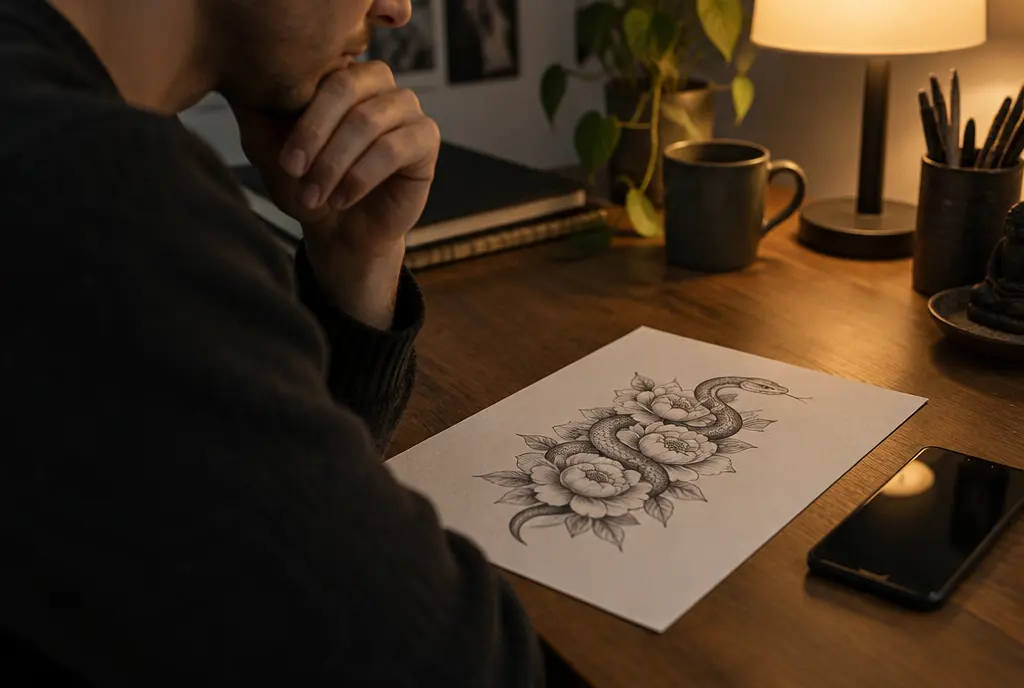
If you have your heart set on one artist, turn on notifications for their posts, read their booking rules in advance and have your message ready to send. Ask whether they keep a cancellation list: people who can come at short notice often get a date much sooner. And if the wait is long, that is not always a bad sign. It often means other people trust the same healed work you do.
If you have a deadline, such as a holiday or a special date, say so in your first message, and remember that a fresh tattoo needs a few weeks out of the sun and away from swimming pools and the sea. Booking right before a beach trip is rarely a good idea.
Getting ready for the day
Most of the preparation happens the day before. A rested, fed and hydrated body copes with the needle better, bleeds less and makes the artist’s work easier.
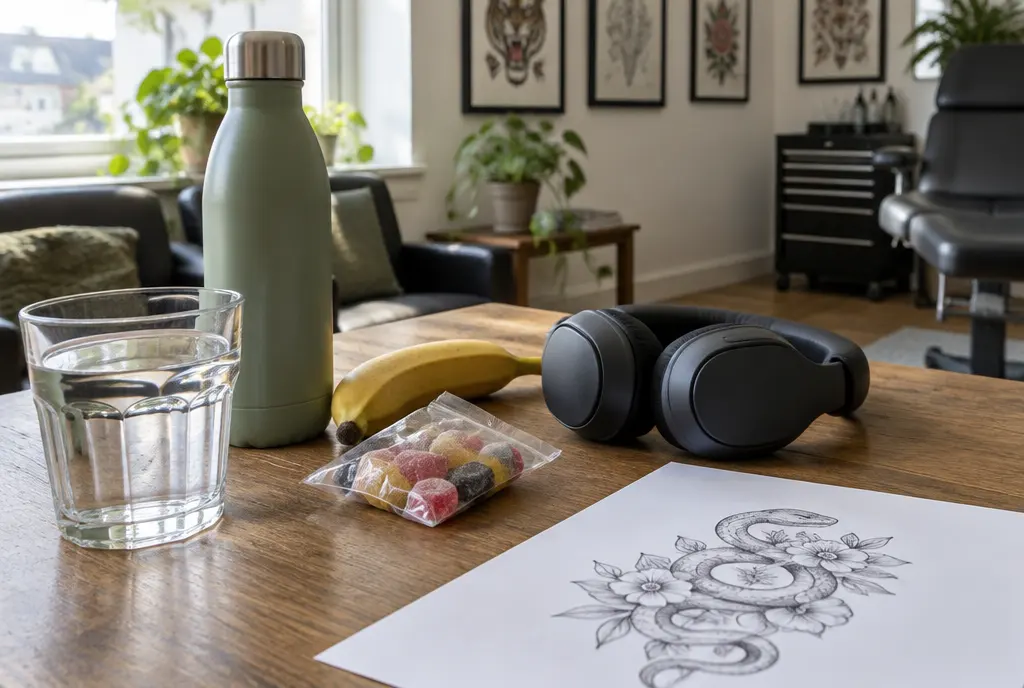
- Sleep properly the night before.
- Eat a real meal an hour or two before the appointment, and bring water and a snack for longer sessions.
- Skip alcohol the day before and on the day. Most artists will refuse to tattoo someone who has been drinking.
- Look after the skin. No sunburn, scratches or rash on the area. Moisturise it in the days before, but come with clean skin on the day.
- Wear suitable clothes that are comfortable and give easy access to the area, preferably dark ones you do not mind getting a little ink on.
- Bring photo ID. Most studios check your age before every tattoo.
- Ask before using numbing cream, and tell the artist about any medication or health condition. Do not stop prescribed medication without talking to your doctor.
On the day, take your time with the stencil. The artist will place a printed outline of the design on your skin before starting. Stand naturally, look in the mirror, and ask for it to be moved if it is not straight or not where you want it. This is the last moment when changes are easy.
Rescheduling and cancelling: the etiquette
Life happens, and artists know it. What they ask for is notice. The most common policy is that you can move your appointment once if you tell them at least 48 to 72 hours in advance; with less notice, or if you do not turn up, the deposit is usually lost and you may need a new one to book again.
- Tell them as early as possible, by the same channel you used to book.
- Do not come if you are ill. Fever, a cold or a skin infection is a good reason to move the date, and most artists would much rather you did.
- Do not simply disappear. A short message is enough. Not turning up is the one thing that can get you turned away by that artist for good.
- Be on time. Arriving late can cut into your session, and the artist may not be able to finish what was planned.
Nora, in the end, moved her own appointment once, four days in advance, because of a work trip. The artist moved the deposit to the new date without any fuss and sent her the final drawing a few days before. The olive sprig sits along her forearm now, healed, with the lines exactly as crisp as the healed pieces that made her choose that artist in the first place.
Read alsoHow big should my tattoo be? A simple size guideWhat it means for you
Booking a tattoo goes smoothly when you do the work in the right order: style first, then the artist, judged on healed work and hygiene, then one clear, complete message. Deposits, prices and cancellation rules differ from studio to studio, so read them before you pay, and give as much notice as you can if plans change.
If you are still deciding on size or placement, it can help to see how a design might look in a few decades. With InkAge you can upload a photo or a design and see how it may age over time, which is a useful thing to bring to your consultation.
Frequently asked questions
What should I write when booking a tattoo?
The idea in a sentence or two, the exact placement, the approximate size in centimetres or inches, black or colour, two to four reference images, and when you are available. If the artist has a booking form, use it and fill in every field.
How do I know if a tattoo artist is good?
Look at photos of healed work, not only fresh tattoos, and check that the lines are clean and the fill is even after healing. Look for several pieces in your style and size, read reviews, and check that the studio is clean and, where required, registered or licensed.
Is a tattoo deposit refundable?
Usually not if you cancel, but in most studios it is deducted from the final price, and many artists let you move the date once if you give 48 to 72 hours’ notice. Policies differ, so read the studio’s rules before you pay.
Do tattoo artists charge by the hour or per tattoo?
Both are common. Small tattoos and flash designs usually have a fixed price, while larger pieces and sleeves are often charged by the hour or by the day. Most studios also have a minimum price that covers the sterile setup.
How far in advance should I book a tattoo?
It depends on the artist. Some have dates within a week or two, while popular artists may be booked months ahead or only open bookings a few times a year. If you have a deadline, contact them early and ask about a cancellation list.
Sources
- Tattoo, piercing and electrolysis licence (England and Wales) – GOV.UK
- Tattooing of Minors Act 1969 – legislation.gov.uk
- Chemicals: new EU rules for safer ink tattoos across the EU – European Commission
- Tattoos and permanent makeup: fact sheet – U.S. Food and Drug Administration
- Tattoos: understand risks and precautions – Mayo Clinic
Written by the InkAge editorial team from widely accepted tattoo-care practice. Figures are rules of thumb, not measurements. This is general information, not medical advice — ask your artist or a dermatologist about your own skin.
Last updated: 8 November 2026