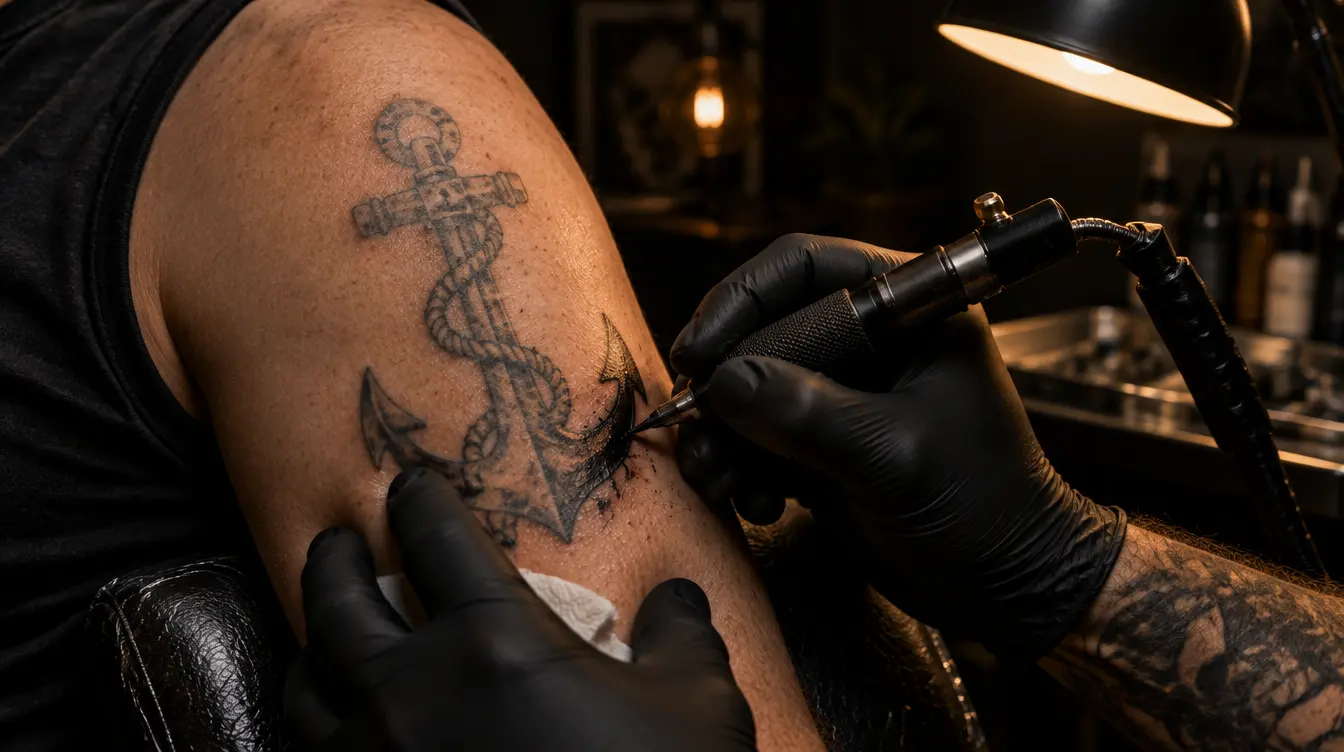
In short
- There are two kinds of touch-up: the first one 4–8 weeks after the tattoo, and a long-term refresh years later.
- Many people refresh black lines and faded colours every 8–10 years – sooner on hands, feet and sun-exposed areas.
- A touch-up can re-saturate and brighten, but lines that have already spread can never be made thin again.
- The best touch-up strategy starts on day one: size, spacing and line weight decide how refreshable a tattoo will be.
In this article 12
- Two kinds of touch-up: the fix and the refresh
- The first touch-up: why needing one is not a failure
- When is a long-term refresh due?
- What a touch-up can – and cannot – do
- Black lines, colours, shading: what refreshes well?
- How to prepare for a touch-up
- Healing and aftercare after a touch-up
- How to push back your next refresh
- Refresh, rework or cover-up?
- Planning ahead: comparing the 10- and 30-year images in InkAge
- The one thing to take away
- Frequently asked questions
Six weeks have passed since your first tattoo. Your skin has stopped peeling, the wrap and the cream have long since gone into a drawer, and one morning in the bathroom mirror you notice it: at one point in the outline, where the line curves towards your wrist, the ink seems to have skipped. A tiny spot nobody else would notice. But from then on, you look at it every day. Good news: that is exactly what the first touch-up is for, and it is completely normal to need one.
This article is about the two faces of a touch-up. One is the short-term fix after healing; the other is the refresh due years later, when the black is no longer as deep and the colours have worn. We will look at when it is worth going back to your artist, what a touch-up can and cannot do, how to prepare for one, and why the decisions you make on day one determine how refreshable your tattoo will be in twenty years.
Two kinds of touch-up: the fix and the refresh
When tattoo artists talk about a touch-up, they can mean two quite different things. One is the first touch-up, which typically happens 4–8 weeks after the tattoo, when the skin has healed and it is clear where the ink did not settle evenly. This is part of finishing the tattoo, not a separate job.
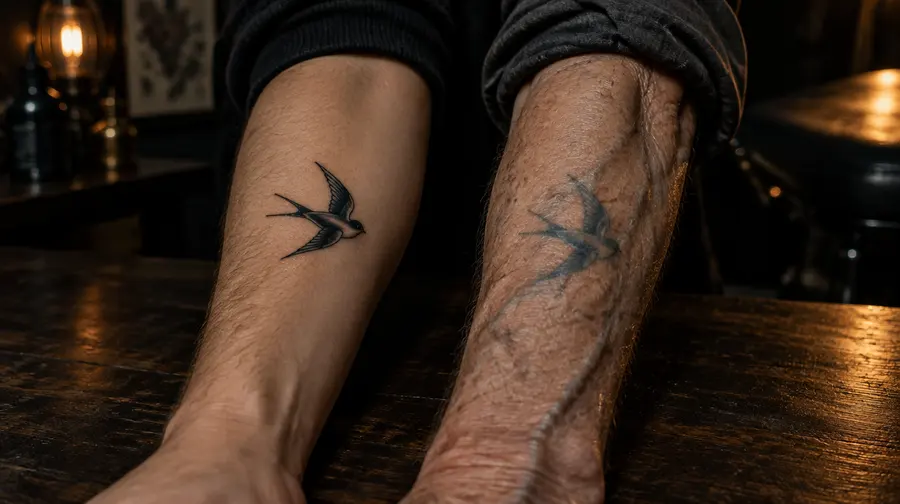
The other is the long-term refresh, which comes years later. At that point the tattoo is not faulty – it is simply ageing: sun, friction and the natural changes of the skin make the black greyer, the colours duller and the outlines softer. A refresh brings back the contrast and vibrancy.
The two happen for different reasons, at different times and often with different pricing. It is worth thinking about them separately, and talking about both with your artist before you get tattooed.
The first touch-up: why needing one is not a failure
Many people feel it is a failure if a line or fill stays patchy after healing. Yet it is common and not necessarily the artist’s fault. Every spot of skin heals a little differently, a bit of ink sometimes leaves together with the peeling skin, and on some areas – such as hands, fingers, feet, or where the skin bends a lot – pigment holds less easily.
The true look of a finished tattoo can only be judged after healing. That is why a good artist will ask you to come back after a few weeks, and many studios include the first touch-up in the price within a certain period. Terms vary from studio to studio, though, so ask before you book.
The timing is not random. If you go back too early, while the skin is still peeling or healing underneath, the artist cannot see the final result and would be working into injured skin. If you put it off for too long, the studio’s touch-up offer may expire. The 4–8 week window is usually a good balance, but your artist may say otherwise, based on their own work and your skin.
What counts as a touch-up?
- missed or uneven spots in the outline;
- patchy fill that is not evenly saturated;
- small gaps in colour transitions or shading;
- areas where too much ink left during healing.
What usually does not count: adding a completely new element, resizing the design or changing the style. Those count as new work. If you had unusual symptoms while healing, such as strong inflammation or lasting swelling, be sure to tell your artist, and see a doctor if needed before having anything re-tattooed.
When is a long-term refresh due?
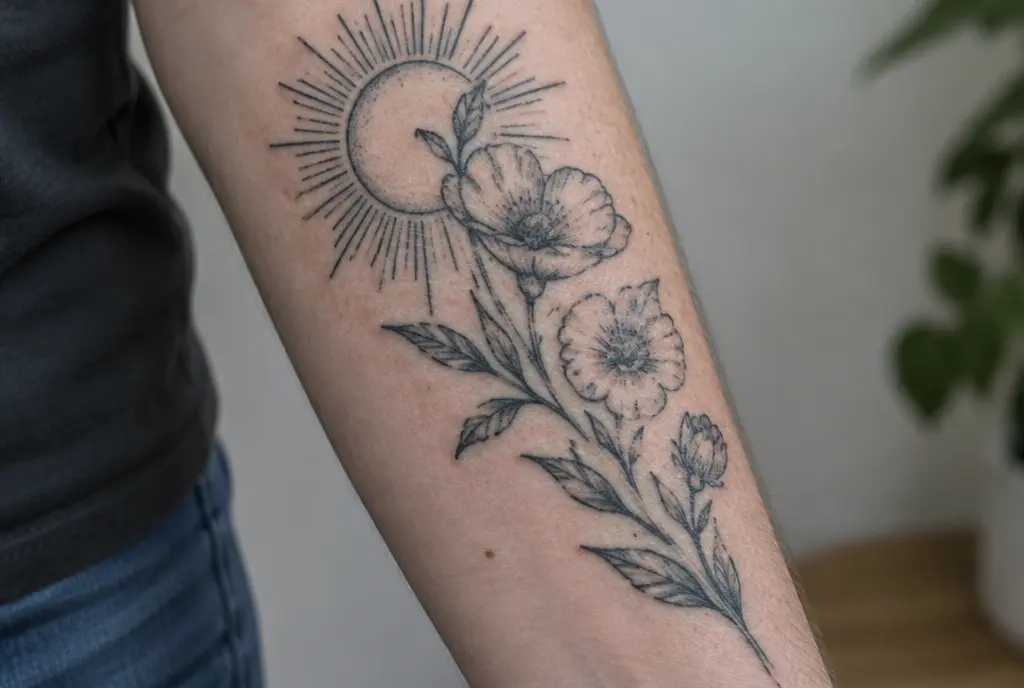
There is no single correct number, but a good rule of thumb: many people refresh their tattoo every 8–10 years. That number is not a deadline but a reference point. For some, a well-placed, bold black piece needs barely any work even after twenty years; for others, a fine, colourful design on the back of the hand starts to fade after just a few years.
The timing of a refresh is shaped mostly by:
- placement: hands, fingers, feet and ankles rub constantly, so they fade faster;
- sunlight: on sunny spots – forearm, shoulder, neck, calf – UV radiation breaks down pigment;
- colours: black lasts longest, while light colours such as yellow, pastels and white wear faster;
- line weight and density: thin, delicate lines fade and blur sooner;
- your skin and lifestyle: age, weight changes, smoking and the general condition of your skin all matter.
Another good signal is when the tattoo is no longer “readable” in dimmer light or from a few steps away. If the outline blends into the skin or the colours slide towards each other, it may be time for a refresh – provided the lines have kept their shape.
One simple habit helps a lot: once a year – say, on your birthday – photograph your tattoo in the same natural light. Month to month you see no change, but over the years the series shows exactly where the black is starting to wear and which colour fades fastest. That way you decide on a refresh based on a real comparison, not a feeling.
A tattoo is never finished just once: time keeps working on it, and a touch-up is your answer to time.
What a touch-up can – and cannot – do
A touch-up can work real wonders: greyed black can become deep again, faded red or blue can turn vivid again, and the outline can stand out from your skin tone once more. After a good refresh, many people feel as if they have got their tattoo back.
There is, however, a limit worth knowing: lines that have already spread can never be made thin again. Over the years, part of the pigment slowly spreads in the skin, lines widen and fine details merge. That process cannot be reversed. The artist can only work over the existing, wider line – which means they can at most make it bolder or rework the design.
This matters especially for fine-line, tiny-lettering and micro-detailed tattoos. If the inside of a two-millimetre letter has filled in over the years, a touch-up will not redraw it. In that case the artist either re-states the element in a bolder, simpler form, or suggests reworking the design as a larger, rethought version.
It also matters that skin cannot take endless layers. If an area is reworked too often or too heavily, the skin can harden or scar, and the ink settles less and less nicely. That is why a good artist is restrained: they suggest fewer, well-considered refreshes rather than trying to fix every bit of wear straight away.
Black lines, colours, shading: what refreshes well?
Black outlines
Black lines are generally the easiest to refresh. An experienced artist works exactly over the existing line and restores its depth. Keep in mind, though, that the refreshed line may be slightly bolder than the original, because it has to cover the old, widened line.
Colours
Faded colours can often be brightened well, especially if the outline still holds its shape. Refreshing very light colours may take more than one round, and on a skin tone that has changed over the years the result can sometimes look different than it did fresh. An artist may suggest a slightly darker or more saturated shade so it stands out better.
White highlights are a category of their own. White ink is usually among the first to fade or yellow, and many people refresh it more often than the rest of the tattoo. If a design relies heavily on white highlights, it is worth accepting from the start that those parts will need more care.
Shading and soft gradients
Soft, greyish shading is the trickiest area. If too many layers go on, the gentle transition can be lost. Here the artist’s experience matters especially, as does not trying to “bring everything back” in a single session.
How to prepare for a touch-up
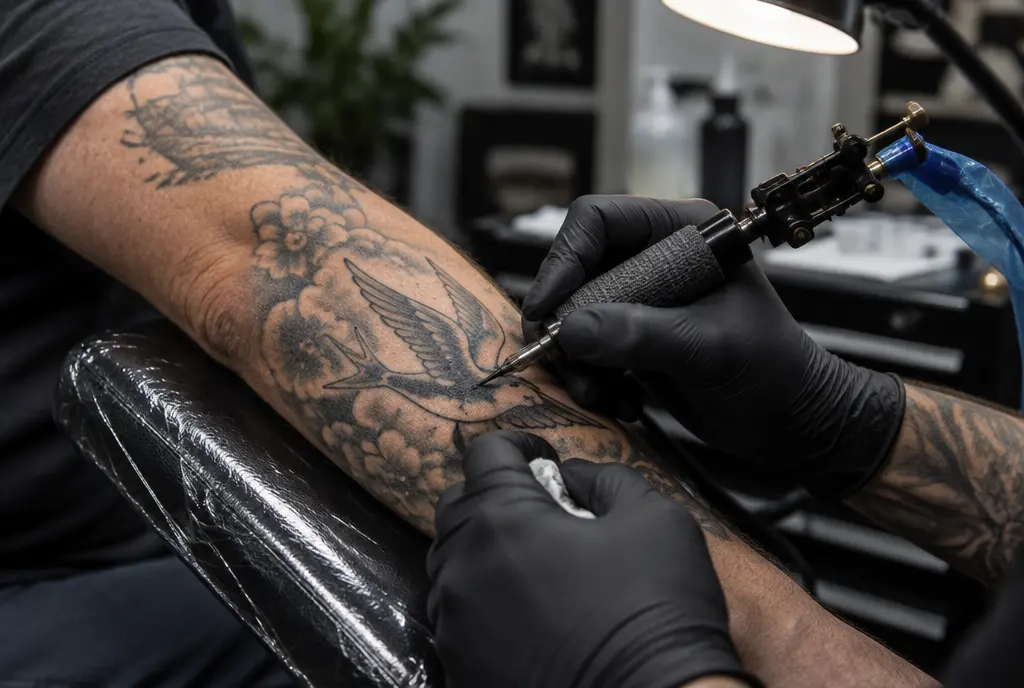
A touch-up is a tattoo just like the first session: the skin is injured, it has to heal, and the same things need attention. A few steps to get the most out of it:
- Go back to your original artist if you can. They know the design, the ink and their own technique. If that is not possible, bring a photo of the tattoo when it was fresh.
- Take fresh photos in natural light, close up and from a distance, so you can discuss the goal in advance.
- Don’t sunbathe beforehand. Tanned or sunburnt skin is harder to work on and heals worse.
- Keep your skin moisturised in the weeks before, and arrive rested and having eaten.
- Agree on the goal: just re-saturation, or a small change as well? Bolder line, brighter colour, perhaps a new element?
- Ask about pricing. A long-term refresh is no longer part of the original job, so it often comes with a separate fee. Prices vary a lot between studios and designs.
If you are recovering from an illness, regularly take blood thinners or other medication that affects your skin and healing, or are pregnant, it is worth discussing the touch-up with a doctor first. The same applies if a skin problem such as eczema or psoriasis has appeared on the tattooed area in the meantime. A touch-up can wait a few weeks or months; your health cannot.
Healing and aftercare after a touch-up
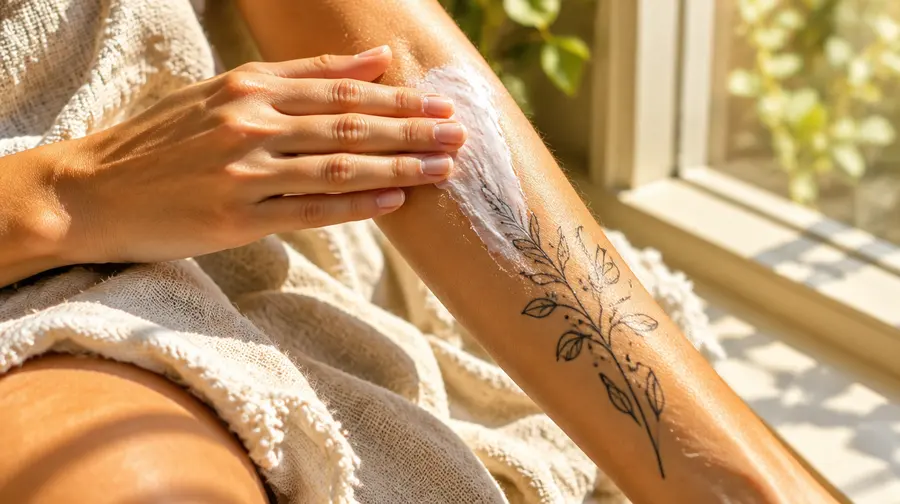
A refreshed area heals just like a new tattoo, sometimes a little faster because the surface is usually smaller. The same rules apply: keep it clean, apply thin layers, no scratching, and no pools, saunas or sunbathing until it has fully healed. Follow your artist’s instructions, because they know their own technique and recommended products.
The most important long-term step is sun protection. The sun can quickly undo the effect of a refresh if you do not protect the area after healing. A high-SPF sunscreen is the cheapest way to push your next refresh as far into the future as possible.
It is worth checking the tattoo again a month or two after the refresh, just as you did the first time. If a spot or two is still uneven, a small follow-up fix may be possible here too – clarify that with your artist in advance as well.
How to push back your next refresh
The best touch-up is the one you don’t need for a long time. A few simple habits can add years to how vivid and readable your tattoo stays:
- sunscreen on every sunny day, not just at the beach – including on the tattooed area;
- clothing or shade on summer afternoons, especially on freshly tattooed or refreshed skin;
- regular moisturising, because ink looks duller on dry, damaged skin;
- skip tanning beds, which break down pigment just like the sun;
- watch out for friction: a tight strap, watch, shoe or bag can keep wearing the same spot.
None of these is complicated, but together they make a visible difference. With a well-protected tattoo, a refresh is often more of a choice than a necessity.
Refresh, rework or cover-up?
A refresh is not the best solution for every old tattoo. If the design is basically intact and only the contrast and colour have worn, a refresh is perfect. If the lines have spread so much that the details are no longer readable, a rework may be better: the artist keeps the essence of the design but re-states it with bolder lines, simpler shapes and new shading.
And if you no longer want the design at all, a cover-up – a new, darker and larger design that hides the old one – may be the answer. Sometimes that requires a few laser fading sessions first. That is a separate decision, best made with an experienced artist and, if laser is involved, a dermatologist or certified clinic.
The three paths are not mutually exclusive. On a larger piece it is common to simply refresh the parts that have held up well, rework the details that have blurred, and cover a worn element with a new motif. A good artist then looks not just at the old design but at the whole: what should it become for the next twenty years?
Planning ahead: comparing the 10- and 30-year images in InkAge
We usually only think about touch-ups once we can see the wear. Yet it is much smarter to look in advance at what will fade. In InkAge you can see your design on your own skin fresh and after 1, 10, 30 and 50 years. Put the 10-year and the 30-year image side by side, and you will clearly see where the details start to merge first, which colour fades soonest and which line stays readable.
In practice this helps in two ways. First, you will know roughly when and where a touch-up will be needed. Second – and more importantly – you can change the design before the tattoo so that a touch-up can actually work. The longevity score and its tips show what hurts longevity: too small a size, too little spacing, lines too thin or too many light colours.
If the 30-year image shows the design blurring, you can try “Make it last”. It redraws the design with bolder lines and fewer tiny details, then shows you again how it ages on the same spot. Often surprisingly small changes – a slightly larger size, a little more breathing room between details – extend readability by decades. You can also take the finished design to your artist as a PDF, so you are talking about the same thing from the first consultation.
If you are torn between two versions – say, the original fine-line design and the redrawn, bolder one – your friends can vote on them too. It is worth showing them the 30-year image as well as the fresh one: it often turns out that the one you like a tiny bit less today works much better in the long run.
The one thing to take away
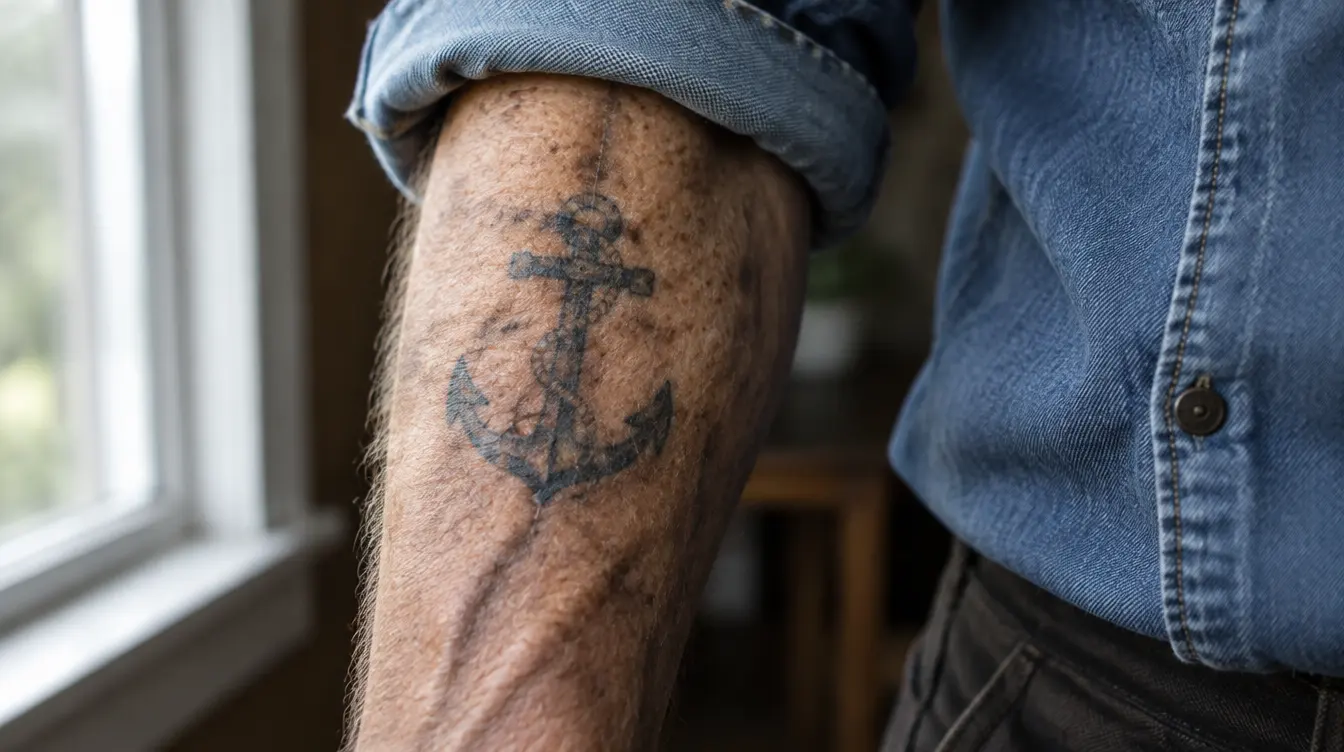
A touch-up can give back a lot of what time took away – depth, contrast, vivid colour – but it cannot bring back what spread ink has already blurred together.
That is why the best touch-up plan is not the appointment due in ten years, but the decision you make today: a large enough size, a strong enough line, enough breathing room between details. A tattoo designed like that will be a joy to refresh from time to time – and it will not need it for a long while.
A touch-up refills the ink, but it does not turn back time – longevity is decided on day one.
Frequently asked questions
Is the first touch-up free?
Many studios include one touch-up within a few months of the tattoo. The exact terms – how long you have and what counts – vary between studios. Ask before you book.
How often should I refresh a tattoo?
Roughly every 8–10 years, sooner on hands, feet and sun-exposed areas. Bold black work often needs it less, while fine lines and light colours need it sooner. Let the tattoo’s readability guide you rather than the calendar.
Can a touch-up make blurred lines sharp again?
No. Lines that have already spread cannot be made thin again. An artist can make them bolder or rework the design so it reads clearly at a larger scale.
Do I have to go back to the same artist?
It is ideal, because they know the design and their own technique, but it is not required. If you go to someone else, bring photos of the tattoo when it was fresh and discuss the goal in advance.
How long does a touch-up take to heal?
It heals much like a new tattoo, sometimes a little faster because the area is often smaller. Follow the same aftercare: keep it clean, don’t scratch, and avoid sun, pools and saunas until fully healed. Then protect it with sunscreen.
Written by the InkAge editorial team from widely accepted tattoo-care practice. Figures are rules of thumb, not measurements. This is general information, not medical advice — ask your artist or a dermatologist about your own skin.
Last updated: 13 October 2026