In short
- Itching and peeling are a normal part of healing. They usually start around the end of the first week and fade over the next one to two weeks as the damaged top layer of skin sheds.
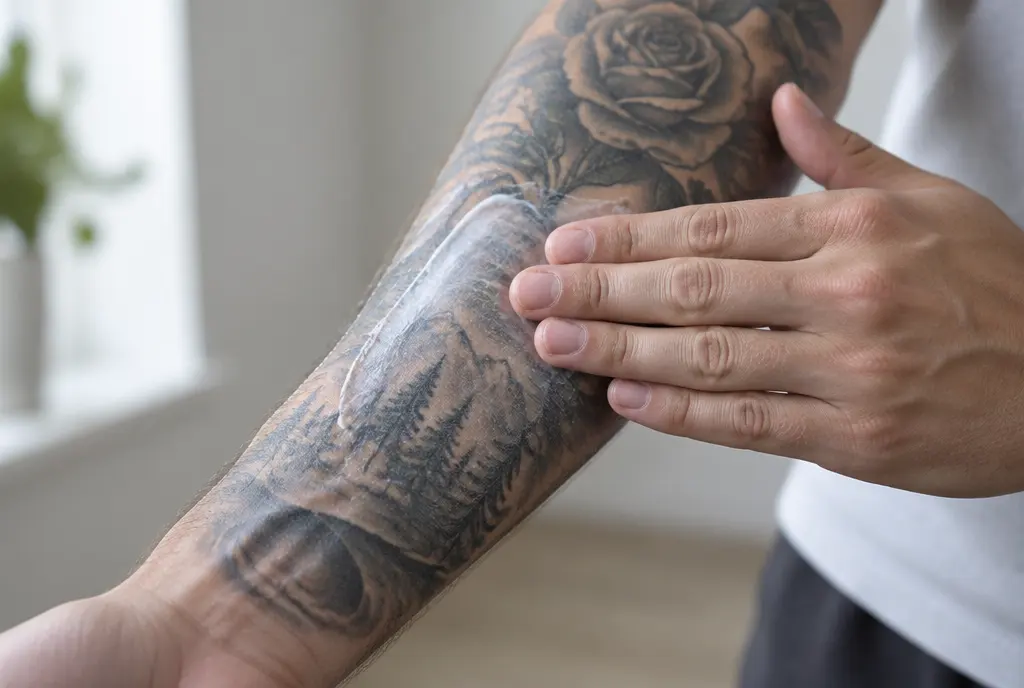
- Don’t scratch or pick. Tap or pat the area, hold a clean, cool compress on it for a few minutes and keep it lightly moisturised with a thin, fragrance-free product.
- An old tattoo that turns raised or itchy in heat, humidity or sun is common and usually harmless. A reaction limited to one colour, most often red, can be an ink allergy.
- Spreading redness, worsening pain or swelling, pus, fever or a rash that won’t settle are not normal itching. See a doctor.
In this article 11
- The short answer
- Why a healing tattoo itches
- What is normal, day by day
- Peeling: what those coloured flakes are
- How to calm the itch without scratching
- What makes it worse
- The cloudy “ghosting” stage
- When an old tattoo itches or rises years later
- Signs that need a doctor
- What it means for you
- Frequently asked questions
It was two o’clock in the morning, nine days after her first tattoo, and Nora was lying in bed with her right hand clamped around her left wrist. Not scratching. Just holding on. The fine-line peony on her forearm, which had looked so crisp in the studio, now felt as if tiny ants were marching along every petal, and the skin over it was flaking like an old sunburn.
She had read enough to know she shouldn’t scratch. What she didn’t know was whether any of this was normal, how long it would last, or what she was actually allowed to do about it. If you are reading this with a tattoo that itches, you are probably asking the same three questions. Here are the answers, stage by stage.
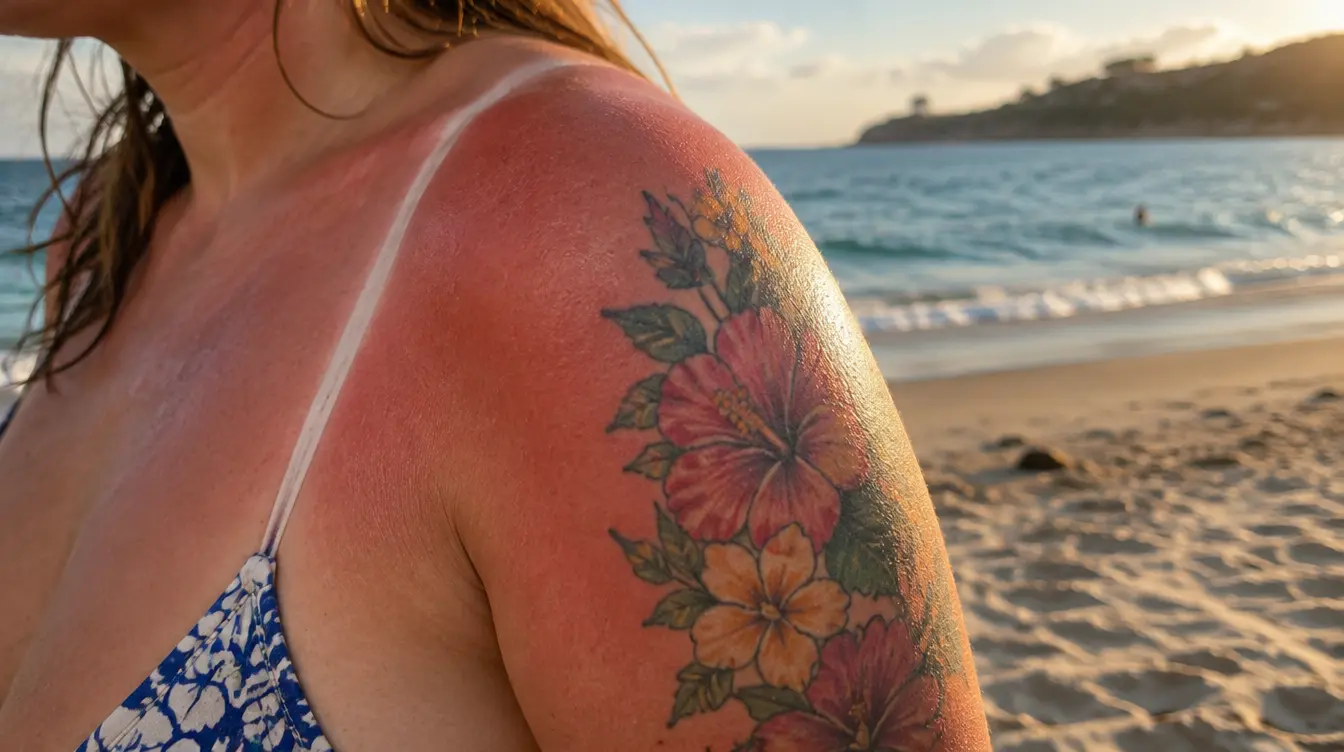
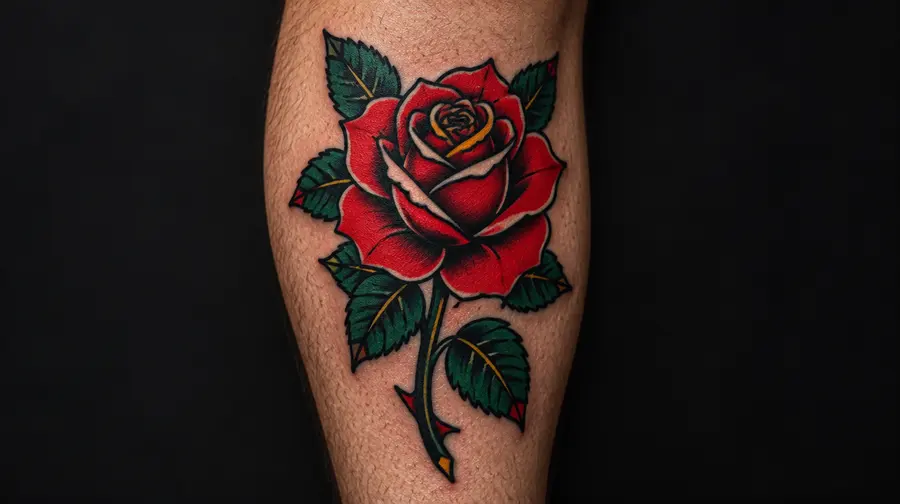
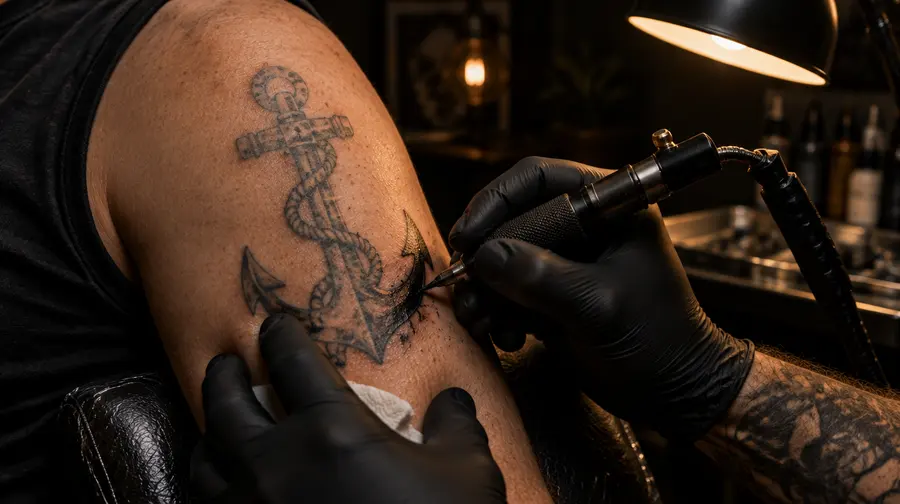
> A note on the pictures: the images in this article are illustrations made to show typical situations. They are not photos of real clients or real skin.
The short answer
Yes, an itchy, peeling tattoo is almost always a healing tattoo. For most people the itch starts somewhere around day five to seven, peaks in the second week while the skin peels, and fades by the end of week three or four. Larger pieces, heavily shaded areas and spots with a lot of movement, such as joints, can take a little longer.
What is not normal is an itch that comes with spreading redness, increasing pain, heat or pus, or a bumpy rash that stays on one colour and doesn’t go away. Those are covered further down. Everything else in this article is about getting through the ordinary kind without damaging your tattoo.
Read alsoTattoo healing stages day by day: what is normal, with pictures from day one to month threeWhy a healing tattoo itches
A tattoo needle punctures the skin thousands of times and leaves the ink in the dermis, the layer below the surface. Your body treats the area as a wound. In the first days it is inflamed and weepy. Then it closes, grows a new top layer underneath and gets ready to shed the damaged one on top.
That shedding phase is where the itch comes from. Several things happen at once:
- The old surface dries out and pulls tight. Dry, cracking skin itches on its own, as anyone with winter hands knows.
- Nerve endings are recovering. Healing skin is more sensitive than usual, and small signals that would normally go unnoticed register as itch.
- The body releases inflammatory messengers. Histamine and similar substances help the repair work, and they are also some of the main triggers of itching.
- Flakes and loose skin catch on clothing. Every rub of a sleeve or a sheet adds to the feeling.
In other words, the itch is a side effect of your skin doing exactly what it should. It is annoying, but it is a good sign.
The itch means your skin is rebuilding itself. Scratching tears up the new work.
What is normal, day by day
Every tattoo heals at its own pace, and your artist’s instructions come first. This is the rough pattern most people see. Our guide to tattoo healing stages covers every step in more detail.
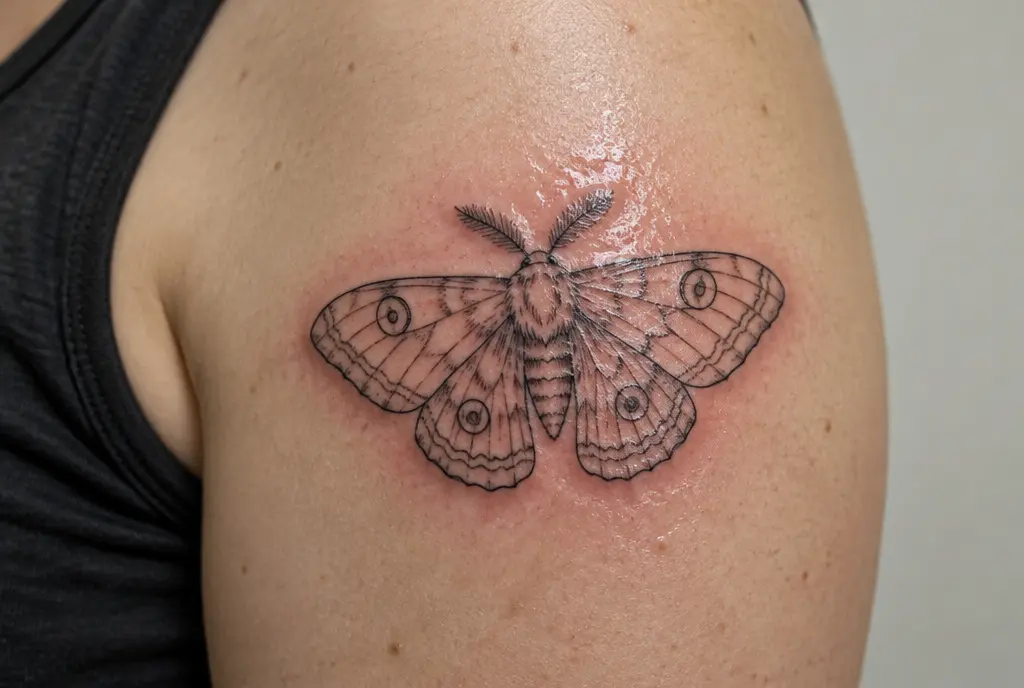
- Days 1 to 3: red, warm, slightly swollen and oozing. It feels more sore than itchy. Keep it clean and let it breathe.
- Days 4 to 6: the surface dries and tightens, thin scabs form along the lines, and the first light itch appears.
- Days 7 to 14: the main peeling and itching phase. Flakes come off like a mild sunburn, often coloured with ink. The itch can be strongest at night and when you are warm.
- Weeks 2 to 4: the flakes are gone, the surface is smooth but dull or cloudy, and the itch fades to an occasional tickle. Some dryness is common.
- Months 1 to 3: the deeper skin settles, the cloudiness clears and the tattoo looks like itself again. A brief itch now and then, especially after a hot shower or exercise, is still nothing to worry about.
Peeling: what those coloured flakes are
The flakes that come off your tattoo can look worrying, because they are often black, grey or coloured. That is not your tattoo falling out. During the session some ink ends up in the top layer of skin as well as the deeper one. When that top layer sheds, it takes its share of ink with it. The ink that matters sits deeper and stays put.
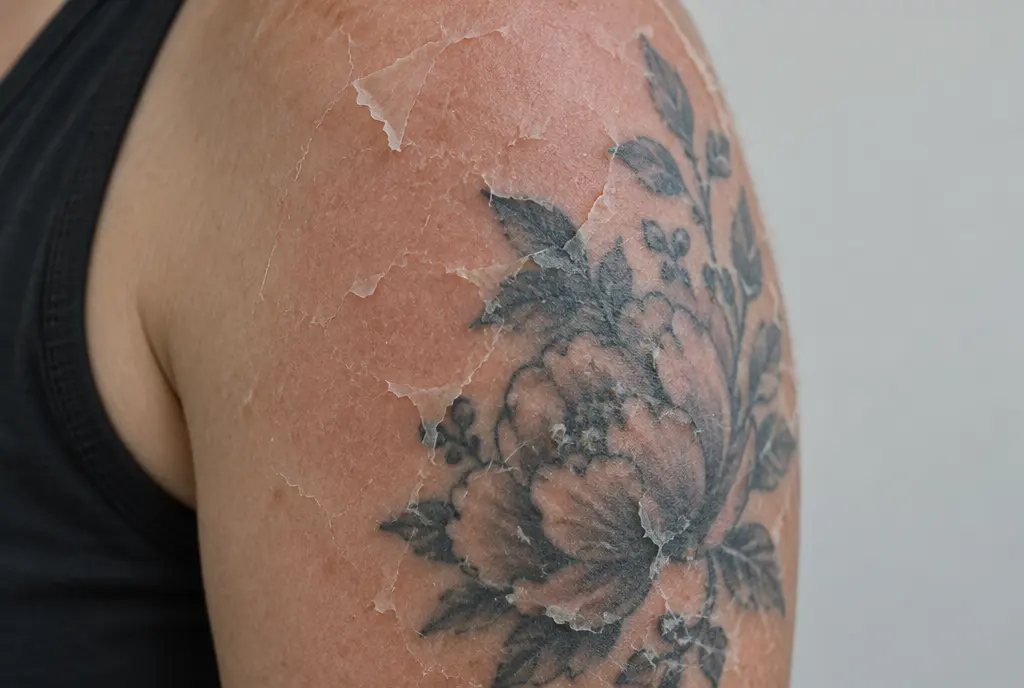
Peeling usually comes in waves: fine, powdery flakes on lighter areas, larger thin sheets where the ink is dense. Let them come off on their own, in the shower or with gentle washing. A flake you pull off before it is ready can take a little of the fresh skin underneath with it, and that is how light patches and gaps in lines happen.
How to calm the itch without scratching
These are the things that actually help. Most tattoo artists and dermatology sources agree on them, but if your artist gave you different instructions, follow those.
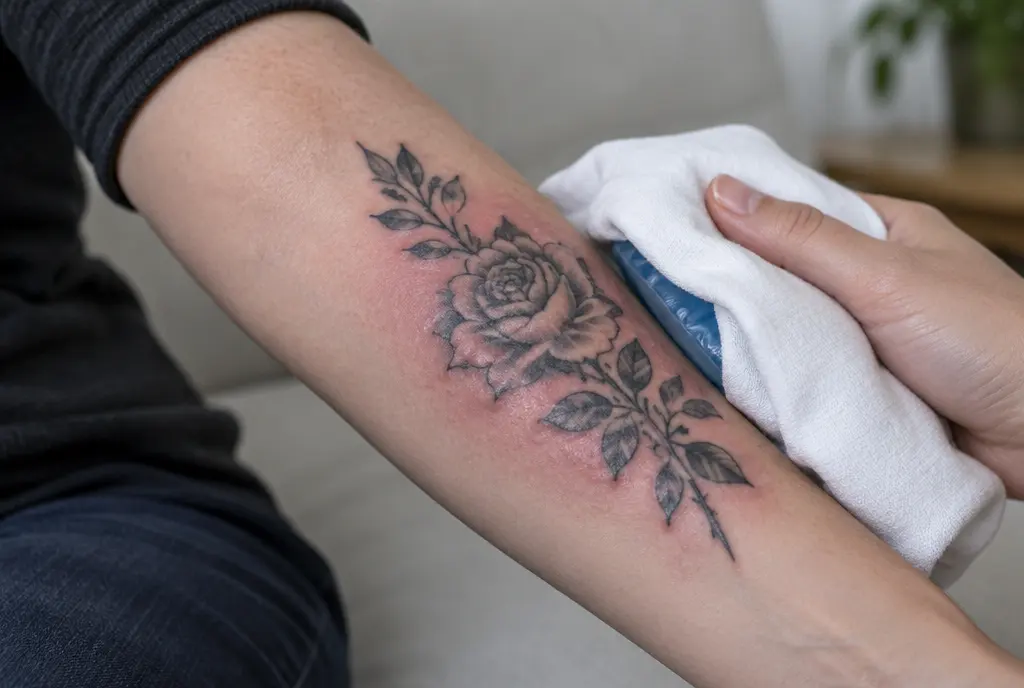
- Tap or pat instead of scratching. A few light taps with clean fingertips or the flat of your hand interrupt the itch without breaking the skin. It sounds silly, and it works surprisingly well.
- Use a clean, cool compress. Wrap a cold pack or a bag of frozen peas in a clean, thin cloth and hold it on the tattoo for a few minutes. Never put ice straight on the skin, and don’t use a compress on a tattoo that is still open or oozing.
- Moisturise thinly. A thin layer of a fragrance-free moisturiser, or whatever your artist recommends, a few times a day eases the tight, dry feeling behind much of the itch. Thin is the key word: the tattoo should look matte, not shiny or greasy.
- Wash your hands first. Every time you touch the tattoo. Healing skin is an open door for bacteria, and itchy skin gets touched a lot.
- Keep it cool. Heat makes almost every itch worse. Short, lukewarm showers, a cooler bedroom and loose, breathable clothes, preferably cotton, all help.
- Protect it at night. Many people scratch in their sleep. A loose long sleeve over the tattoo and short nails stop you from doing damage you won’t remember.
- Distract your hands. The worst itch often comes when you are idle. Keeping your hands busy for a few minutes is often enough for it to pass.
Nora ended up doing three of these at once: a cold pack wrapped in a tea towel, a thin layer of unscented lotion afterwards, and an old long-sleeved shirt to sleep in. Within four nights the worst of it was over.
What makes it worse
Some habits feel good for a moment and cost you later:
- Scratching. Nails break the fragile new skin, pull off flakes too early and let bacteria in. The result can be patchy lines, light spots, scarring or an infection.
- Picking at flakes and scabs. The same problem, just slower.
- Thick layers of ointment. A greasy layer traps heat and moisture, can soften scabs too early and may clog pores. Less is more.
- Scented lotions and random creams. Perfume and some ingredients irritate healing skin. Don’t put anti-itch or numbing creams, including hydrocortisone, on a fresh tattoo unless a doctor tells you to.
- Hot showers, baths, pools and saunas. Heat makes the itch worse, and soaking softens the healing skin and raises the risk of infection.
- Tight clothes and sweaty workouts. Friction and sweat on a peeling tattoo are a reliable recipe for more itching.
The cloudy “ghosting” stage
Just as the itching and peeling calm down, many people get a new shock. The tattoo looks faded, milky or blurry, as if it were behind frosted glass. Black looks grey, colours look washed out and fine lines seem soft. Some people call it ghosting, others the milky or cloudy stage.
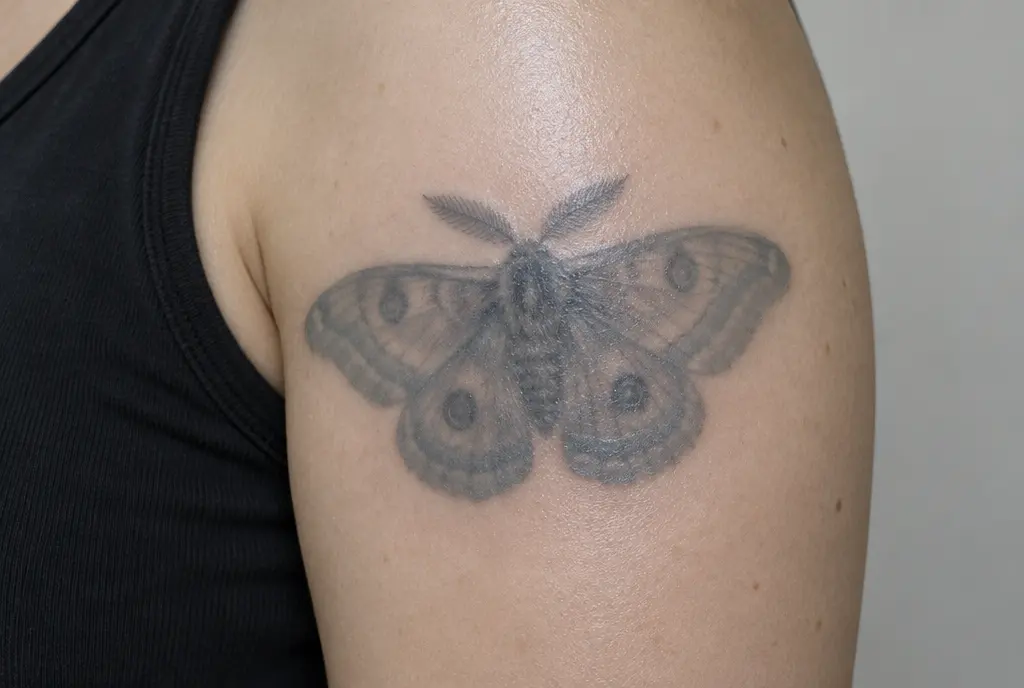
This is normal. The new top layer of skin that has grown over the ink is still thin, slightly dry and not fully transparent yet. Over the following weeks it matures and clears, and the tattoo comes back into focus. Keep moisturising if the skin feels dry, keep it out of the sun, and don’t judge the result, or book a touch-up, until the skin has fully settled, usually after one to three months.
When an old tattoo itches or rises years later
Itching does not always stop for good when healing ends. Plenty of people notice that a tattoo they have had for years suddenly feels raised, bumpy or itchy. Most of the time the reason is harmless.
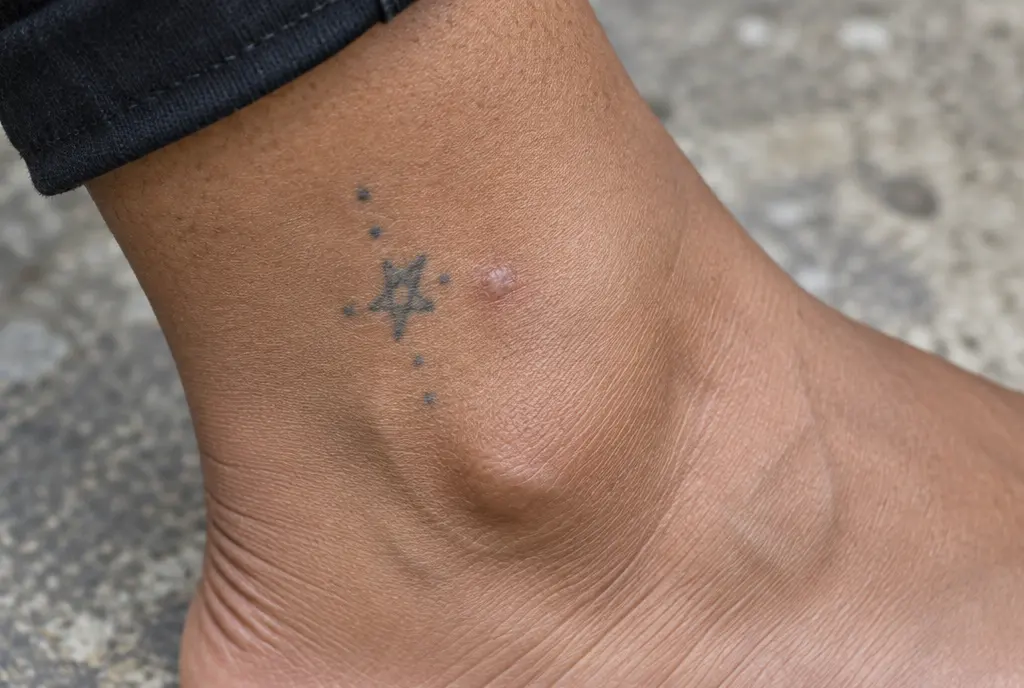
Heat, humidity and weather
Hot, humid days, long flights or a lot of standing can make the skin swell slightly, and tattooed skin, especially dense lines and areas with some scarring, can rise and itch more than the skin around it. Cold, dry winter air works differently but feels similar: dry skin itches, and tattooed skin often feels it first. This usually comes and goes with the weather and settles within hours or days. A cool shower and a fragrance-free moisturiser are usually enough.
Sun
Some people react to sunlight on their tattoo with swelling, redness or an itchy rash of small bumps, sometimes within minutes or hours. It can happen every time the sun hits the tattoo. Covering it and using a broad-spectrum sunscreen helps. If it keeps happening, it is worth showing to a dermatologist.
Ink allergy, most often to red
An allergic reaction to tattoo ink can appear soon after the tattoo, or weeks, years or even decades later. The clue is location: the itching, swelling, bumps or scaly patches stay on one colour of ink, and red is the colour most often involved, though any colour can do it. Unlike weather swelling, an allergy tends to stay rather than come and go.
This is not something to treat at home. A dermatologist can confirm what is going on, sometimes with a small skin sample, and help you manage it. Tell them which colour is affected and when the tattoo was done.
Skin conditions that show up in tattoos
Less often, conditions such as eczema, psoriasis or lichen planus appear in a tattoo, and old tattoos that become firm, lumpy and itchy can occasionally be a sign of sarcoidosis, a condition that can also affect other organs. Dermatology sources advise getting any lasting change in a tattoo checked.
Signs that need a doctor
Normal healing gets a little better every day. Contact a doctor, and let your tattoo artist know, if you notice any of these:
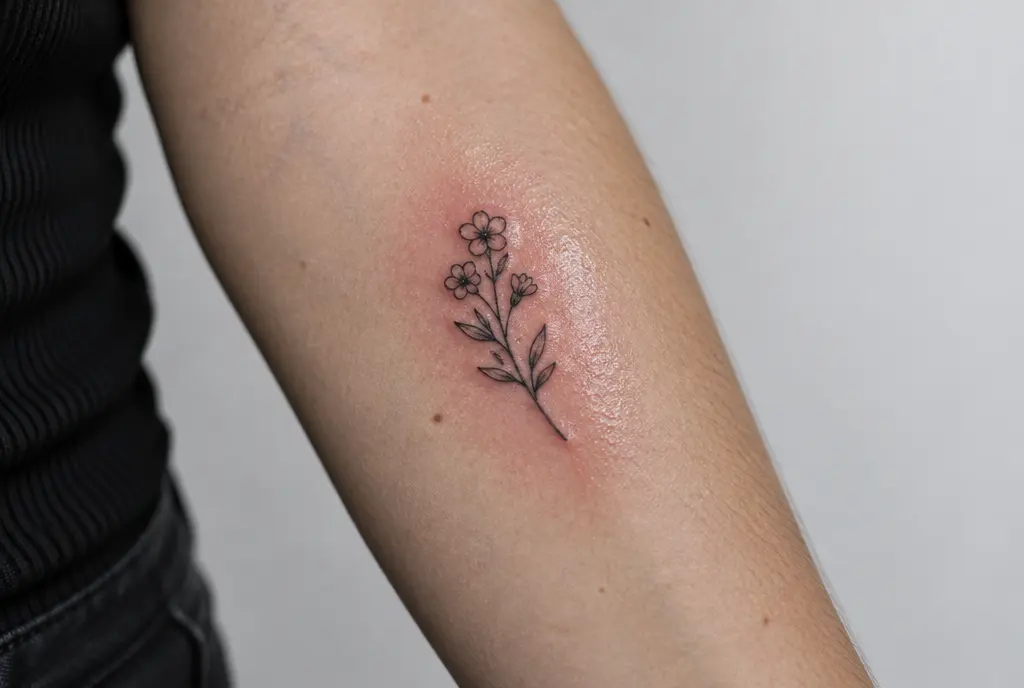
- redness or warmth that spreads beyond the tattoo, or red streaks running from it
- pain or swelling that gets worse after the first few days instead of better
- yellow or green pus, an open sore or a bad smell
- fever, chills or feeling generally unwell
- an itchy, bumpy or scaly rash that stays on one ink colour, or any reaction that lasts more than a week or two
- hard lumps, or swelling in an old tattoo that doesn’t go away
What it means for you
An itchy, peeling tattoo is uncomfortable, but it is usually a sign that everything is going to plan. Keep your nails off it, tap instead of scratching, use a cool compress and a thin layer of fragrance-free moisturiser, and give the cloudy stage the time it needs. Most of the itch is over within two to three weeks.
Healing is only the first chapter in a tattoo’s life. Sun, skin changes and the years all leave their mark later. If you are curious how your tattoo might look in ten, thirty or fifty years, you can upload a photo to InkAge and see a preview of how it may age.
Frequently asked questions
How long does a new tattoo itch?
Most people feel the strongest itch between about day seven and day fourteen, while the skin peels. It usually fades over the next week or two, so by week three or four only an occasional tickle is left. Large or heavily shaded tattoos can take a little longer.
Is it bad to scratch a healing tattoo?
Yes. Scratching can break the fragile new skin, pull off flakes and scabs too early and let bacteria in, which can lead to patchy lines, light spots, scarring or infection. Tap or pat the area instead, or hold a clean, cool compress on it.
What can I put on an itchy tattoo?
While it heals, a thin layer of a fragrance-free moisturiser or the product your artist recommends is usually all you need. Avoid scented lotions, and don’t use anti-itch or numbing creams such as hydrocortisone on a fresh tattoo unless a doctor tells you to.
Why is my old tattoo raised and itchy?
Often it is the weather: heat and humidity can make tattooed skin swell slightly, and dry winter air makes it itch. This comes and goes and is harmless. If the reaction stays on one colour, especially red, doesn’t go away or comes with lumps, see a dermatologist, as it can be an ink allergy or a skin condition.
Why does my tattoo look cloudy after peeling?
After peeling, a thin new layer of skin covers the ink and isn’t fully clear yet. This cloudy or ghosting stage is normal and usually clears over the following weeks. Wait until the skin has settled, often one to three months, before judging the result.
Sources
- Tattoos: 7 unexpected skin reactions and what to do about them (American Academy of Dermatology)
- Tattoo-associated skin reactions (DermNet)
- Tattoos: Understand risks and precautions (Mayo Clinic)
- Sarcoidosis and your skin: Signs and symptoms (American Academy of Dermatology)
- Patterns of Reactions to Red Pigment Tattoo and Treatment Methods (PMC)
- Itchy tattoo: causes and treatment (Healthline)
Written by the InkAge editorial team from widely accepted tattoo-care practice. Figures are rules of thumb, not measurements. This is general information, not medical advice — ask your artist or a dermatologist about your own skin.
Last updated: 8 November 2026