In short
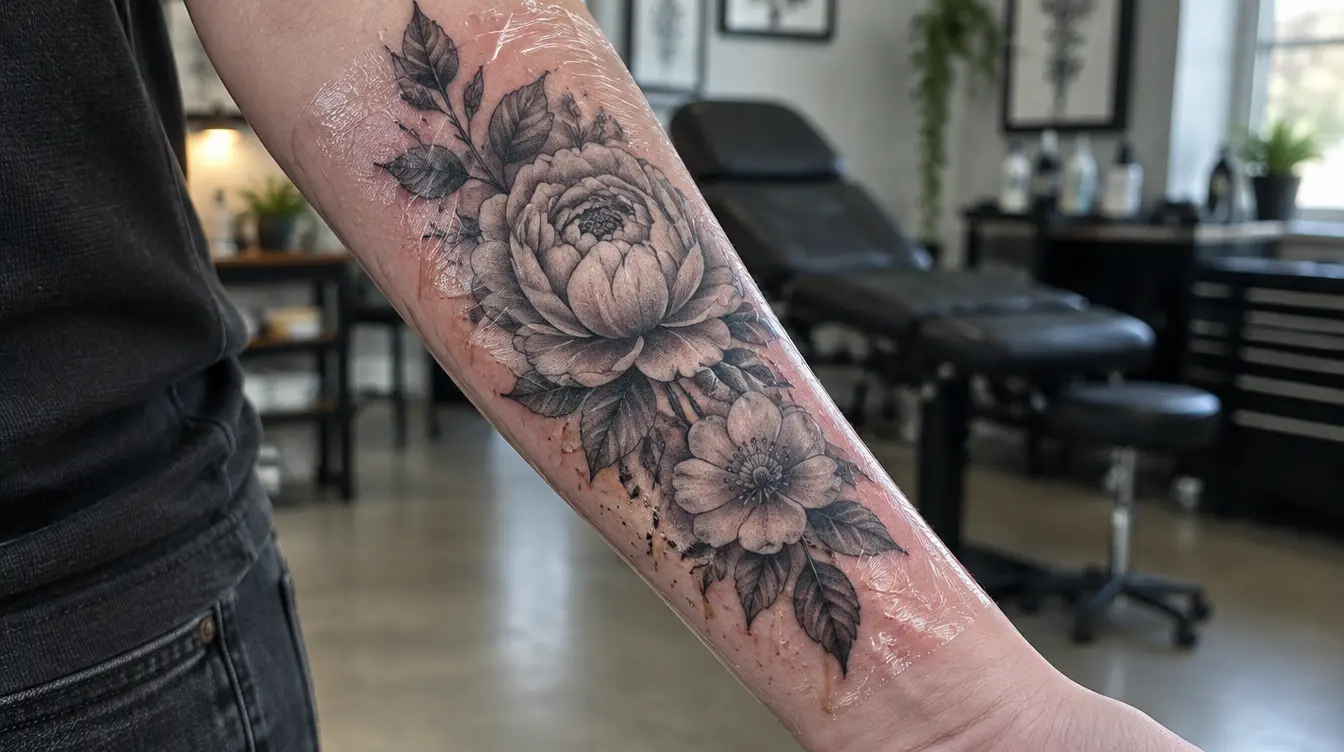
- Day 1–3: red, warm, a little swollen and oozing. Days 4–7: tight, dry, light scabs. Weeks 2–3: peeling, itching and a dull, cloudy look.
- The surface usually closes in about two to four weeks, but the deeper skin keeps settling for up to around three months. Only then do you see the real result.
- Wash gently, moisturise thinly, don’t pick or soak, and keep it out of the sun. Your artist’s instructions come first.
- Spreading redness, increasing pain or heat after the first days, pus or fever are not normal healing. Contact a doctor.
In this article 12
- Why a tattoo has to heal at all
- Stage 1: days 1 to 3, red, swollen and oozing
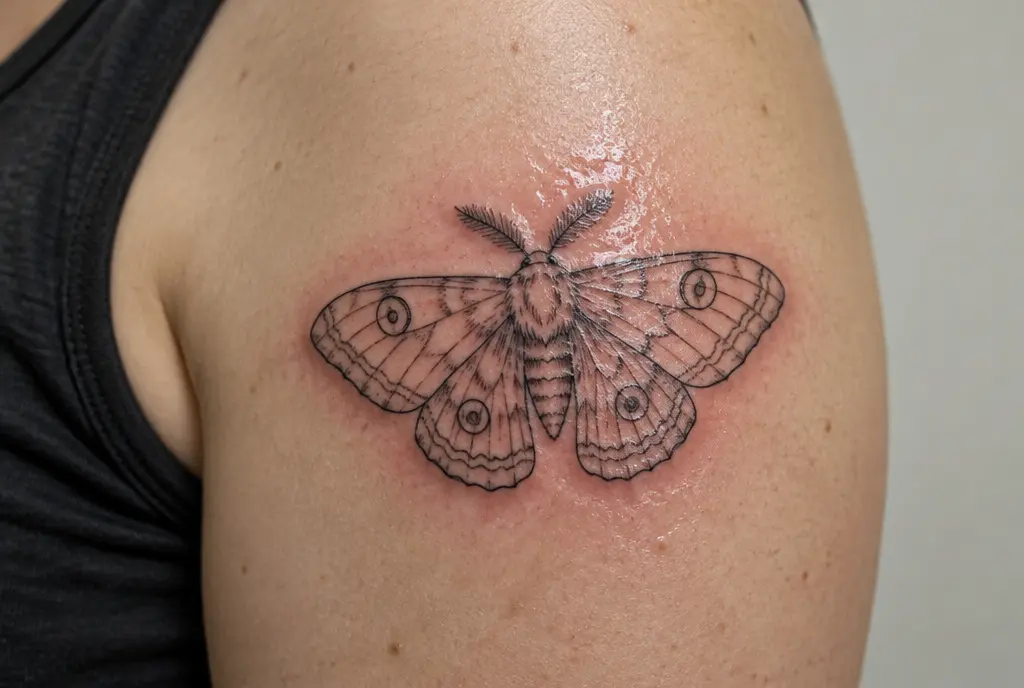
- Stage 2: days 4 to 7, tight, dry and lightly scabbed
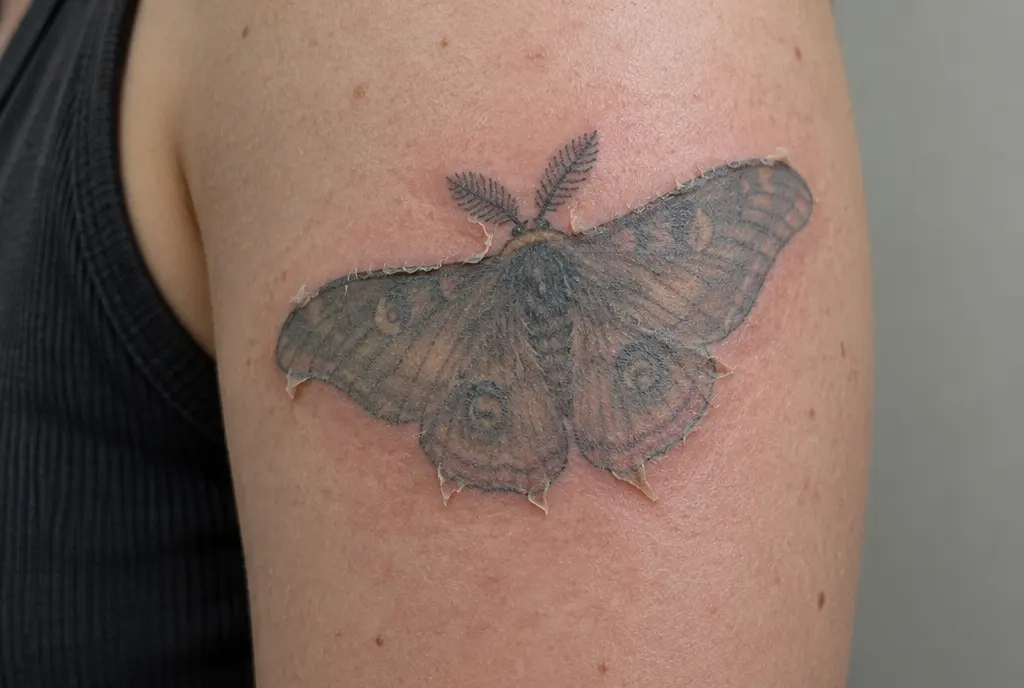
- Stage 3: days 7 to 14, peeling and itching
- Stage 4: weeks 2 to 4, the cloudy “milky” stage
- Stage 5: months 1 to 3, fully settled
- Aftercare in one list
- When healing is not normal
- How long until I can…?
- See how it will look once it has healed, and years later
- The short version
- Frequently asked questions
On the fifth night after his first tattoo, Marco took a photo of his forearm under the kitchen light and sent it to his sister with one word: “normal?” The sharp black swallow he had admired in the studio mirror now looked dull and flaky, with tiny dry patches along the lines, and one wing seemed lighter than the other. His sister, who has nine tattoos, replied with a laughing emoji and a single sentence: “Wait for the milky stage, that one is worse.”
Almost everyone goes through a version of this. A fresh tattoo changes a lot in its first weeks, and some of those changes look alarming if nobody has warned you about them. This guide walks you through the usual stages one by one, with what you are likely to see, what to do and what to leave alone. Healing varies with the size of the tattoo, the placement, the style and your skin, so treat the timings as typical ranges. And if your artist gave you different instructions, follow your artist.
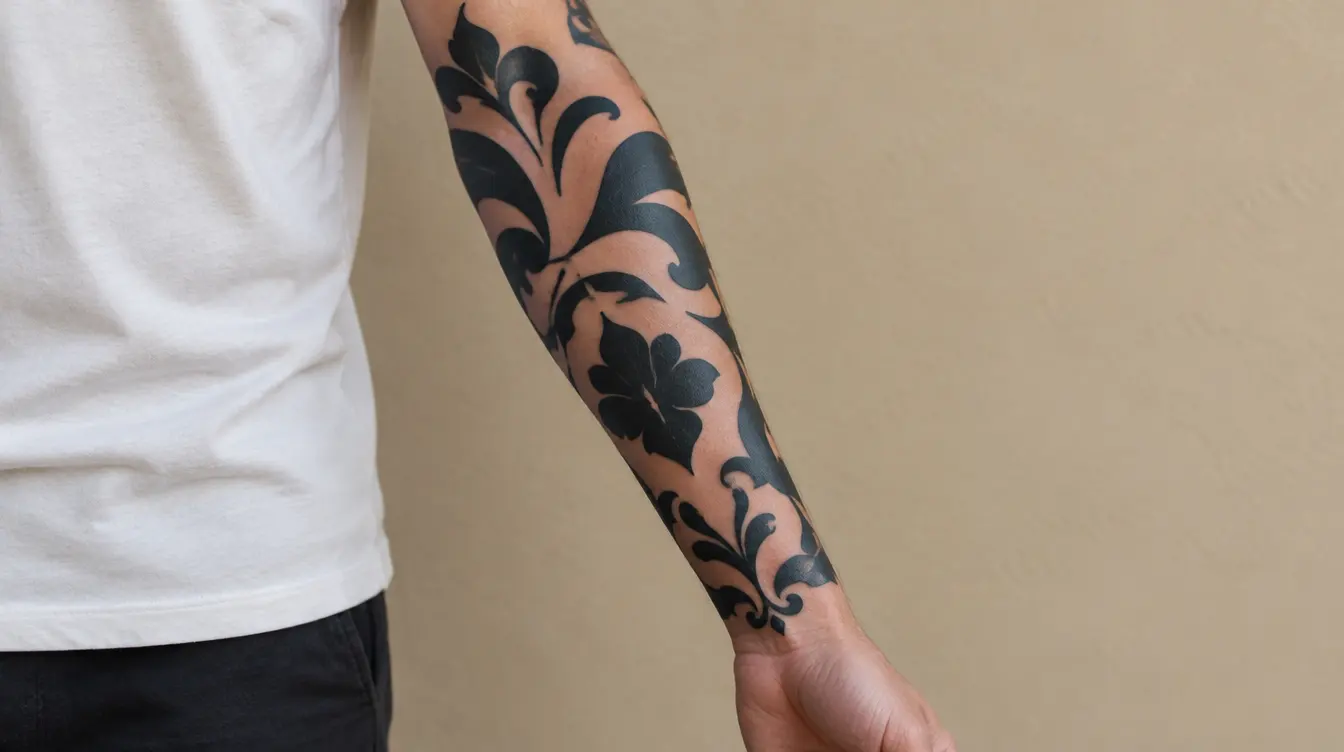
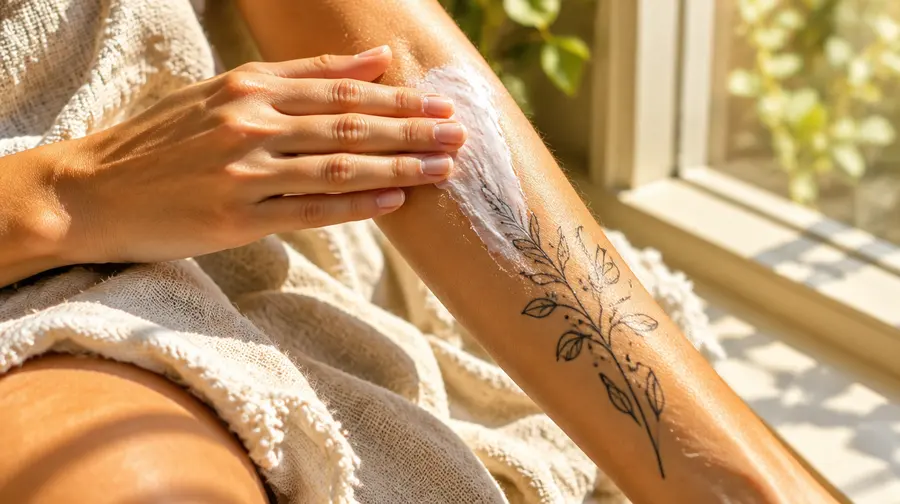
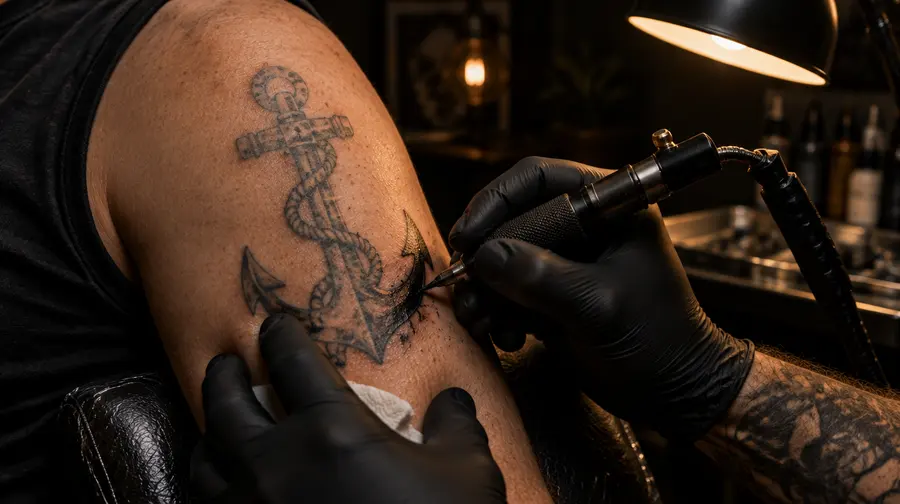
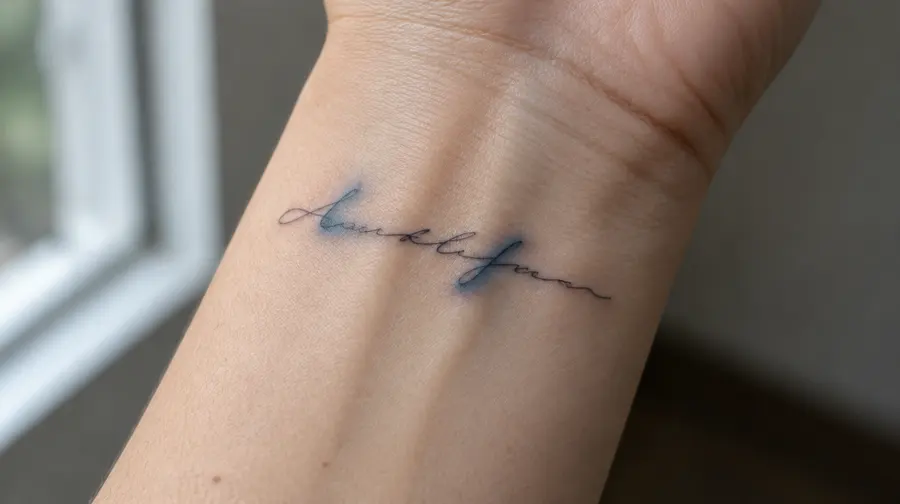
> A note on the pictures: the images in this article are illustrations made to show typical stages. They are not photos of real clients. Your own tattoo may look different at each step.
Why a tattoo has to heal at all
A tattoo machine pushes ink through the top layer of your skin, the epidermis, into the layer beneath it, the dermis. Thousands of tiny punctures later, your skin treats the area exactly like a fresh graze. It becomes inflamed, it seals itself, it grows a new top layer, and it sheds the damaged one. The ink that sits in the dermis stays put. The ink caught in the outer layer leaves with the old skin, which is why some flakes and scabs look coloured.
Two things run at different speeds. The surface heals in a few weeks. The deeper skin takes longer to settle, often around three months, and until then the tattoo can look slightly softer or duller than it will in the end.
A healing tattoo looks worse before it looks right. That is the process, not a problem.
Stage 1: days 1 to 3, red, swollen and oozing
For the first few days the tattoo is an open wound. It is usually red, warm to the touch and a little swollen, especially on bony or busy areas such as ankles, wrists and ribs. It weeps clear plasma, sometimes mixed with a little ink and blood, and it can feel like a mild sunburn.
What to do: keep the first covering on for as long as your artist said. Some use a breathable adhesive film that stays on for a few days, others a wrap that comes off after a few hours. Once it is off, wash the tattoo gently with lukewarm water and a mild, fragrance-free soap, pat it dry with a clean paper towel and let it air for a few minutes before applying a very thin layer of the ointment or lotion your artist recommends.
What to avoid: wiping hard, rough towels, tight clothes rubbing on it, and the temptation to cover it with a thick layer of cream. Skin needs to breathe.
Stage 2: days 4 to 7, tight, dry and lightly scabbed
The redness fades and the swelling goes down. The surface starts to dry out, it may feel tight when you move, and thin scabs or slightly raised dry patches form along the lines, especially where the ink is dense. This is often when the tattoo looks dull for the first time, and when people like Marco start sending photos to their siblings.
What to do: keep washing it gently once or twice a day and keep it lightly moisturised. Thin is the key word: a shiny, sticky layer can soften scabs and make them come off too early.
What to avoid: picking, scratching or peeling anything. A scab pulled off early can take ink with it and leave a light patch that needs a touch-up.
Stage 3: days 7 to 14, peeling and itching
This is the stage most people find hardest. The tattoo peels like a sunburn, often in small coloured flakes, and it can be very itchy. Lines may look uneven or patchy under the peeling skin. This is normal, and it is not a sign that the ink is falling out.
What to do: if the itch is driving you mad, lightly tap or pat the area rather than scratching it, or press a clean, cool cloth on it for a moment. Keep moisturising thinly. Loose sleeves help.
What to avoid: baths, swimming pools, the sea, saunas and hot tubs. Soaking softens the healing skin and raises the risk of infection. Short showers are fine.
Stage 4: weeks 2 to 4, the cloudy “milky” stage
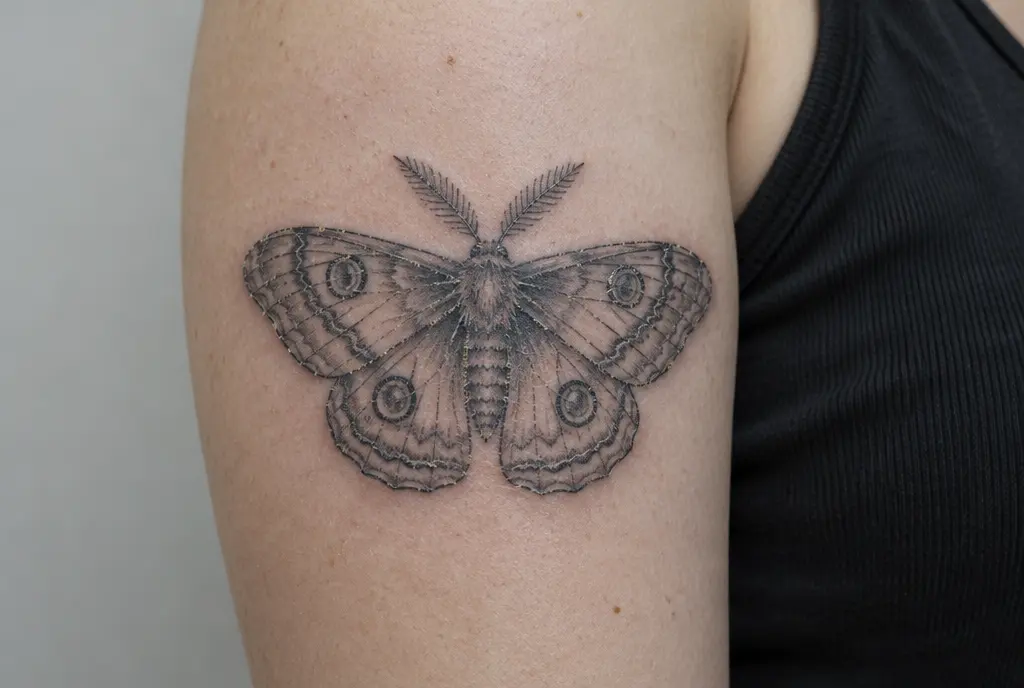
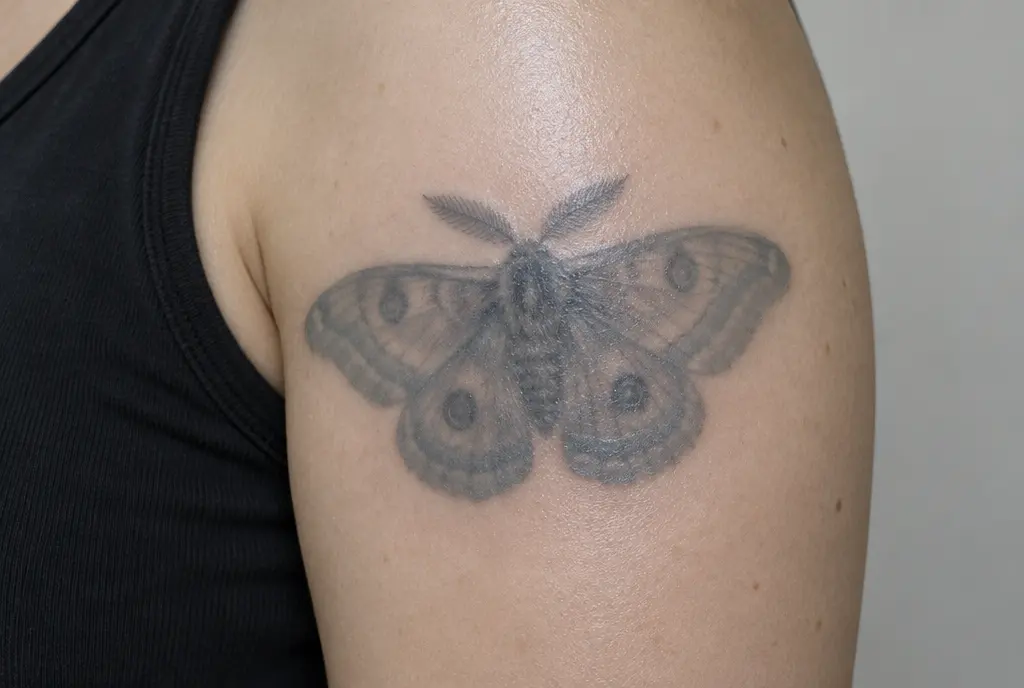
The flakes are gone and the surface feels smooth again, but the tattoo looks strangely faded, as if it were behind frosted glass. Colours seem pale, black looks grey and fine lines look soft. This is the stage Marco’s sister warned him about.
What you are seeing is a fresh, thin layer of new skin over the ink. It is still settling, slightly shiny and not yet fully transparent. Over the following weeks it clears, and the tattoo comes back to life. Many people panic here and book a touch-up straight away. Don’t. Wait until the skin has settled before you decide anything.
What to do: keep moisturising if your skin feels dry, and keep the tattoo out of the sun. New skin burns very easily.
Stage 5: months 1 to 3, fully settled
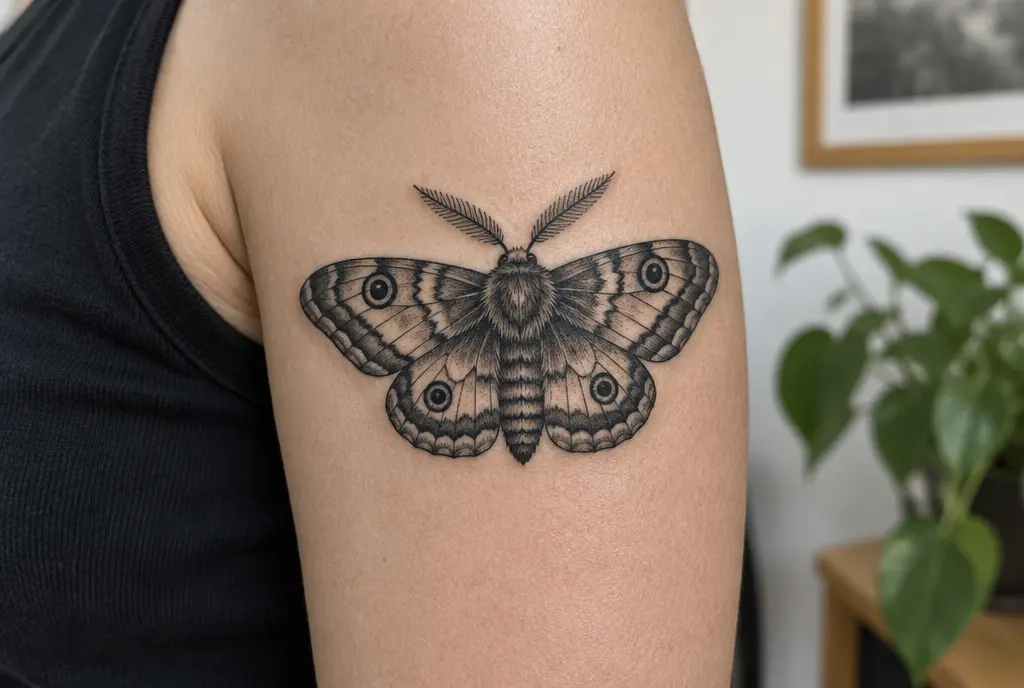
Somewhere between four weeks and three months, depending on the tattoo and your skin, the deeper layers finish settling. The tattoo looks matte rather than shiny, the colours are steady and the lines are as crisp as they are going to be. This is the version you should judge.
If a line has healed patchy or a solid area looks uneven at this point, that is what touch-ups are for. Most artists want you to wait at least a month, often longer, before they go over anything, and many include a first touch-up in the price.
Aftercare in one list
Your artist’s instructions come first, because products and methods vary. These are the habits most artists agree on.
- Wash your hands before touching it. Every time.
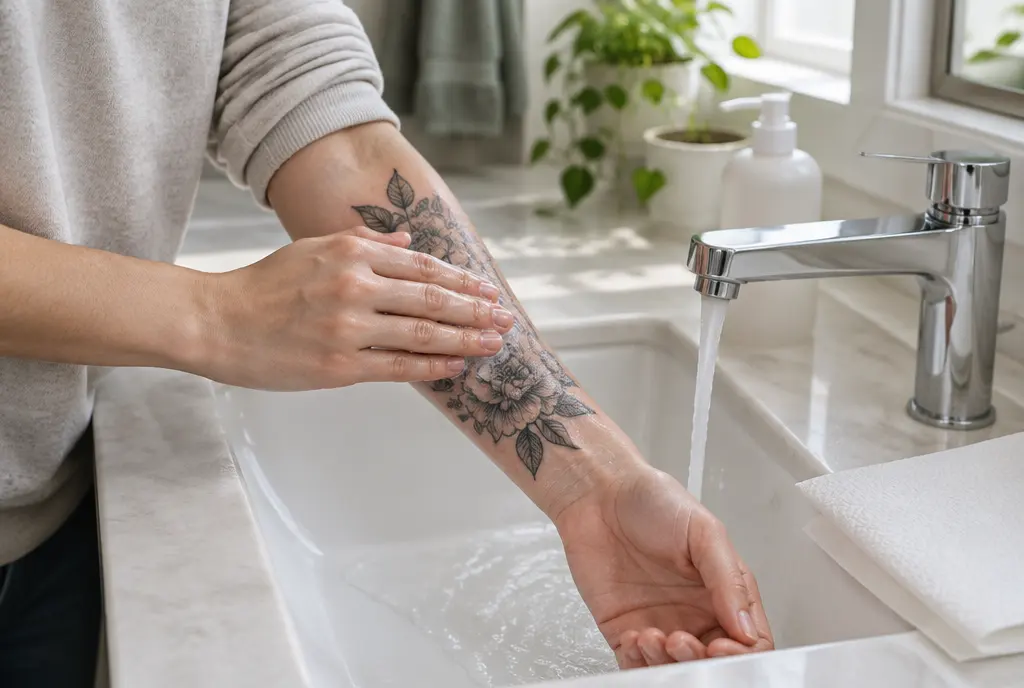
- Clean gently. Lukewarm water, mild fragrance-free soap, fingertips only, then pat dry.
- Moisturise thinly. A thin layer of what your artist recommends, a few times a day. Less is more.
- Let it breathe. Loose clothing, clean bedding, no tight straps over it.
- Don’t pick or scratch. Let scabs and flakes come off on their own.
- Don’t soak it. No baths, pools, sea or saunas until it has fully closed.
- Keep it out of the sun. Cover it while it heals, then use a broad-spectrum SPF 50 once it has healed.
- Go easy on the gym. Heavy sweating and friction can irritate it in the first days, especially on joints.
When healing is not normal
Normal healing gets a little better every day. Contact a doctor, and let your artist know, if you notice any of these:
- redness or warmth that spreads beyond the tattoo, or red streaks
- pain or swelling that gets worse after the first two or three days
- yellow or green pus, or a bad smell
- fever, chills or feeling unwell
- an itchy, bumpy rash limited to one colour of ink, which can point to an allergic reaction, most often to red
- a wound that is still open after a few weeks
If you have a condition that affects healing, such as diabetes, or take medication that affects your immune system or bleeding, talk to your doctor before you get tattooed.
How long until I can…?
These are typical answers. When in doubt, ask your artist.
- Shower: usually the same day or the next, briefly.
- Swim, take a bath or use a sauna: after the surface has fully closed, usually two to four weeks.
- Go in the sun: cover it until it has healed, then use sunscreen. Never sunbathe a fresh tattoo.
- Work out: light exercise after a couple of days; heavy, sweaty training once it has calmed down, especially for tattoos on joints.
- Get a touch-up: usually after at least four to six weeks.
See how it will look once it has healed, and years later
Healing is the first chapter of a tattoo’s life, not the last. InkAge shows you a design on your own skin fresh, healed, and as it is likely to look after 10, 30 and 50 years, so you can check before you book whether a detail is too small or a line too fine for the spot you have in mind. It is an estimate rather than a promise, but it is a good way to see past the shiny day-one photo.
The short version
Marco’s swallow went through every stage in this article. It oozed, it scabbed, it peeled, it went milky, and around six weeks later it was sharp again. The only thing he had to do was keep it clean, keep it moisturised, keep his fingers off it and keep it out of the sun. Most healing problems come from doing too much, not too little.
Frequently asked questions
How long does a tattoo take to heal?
The surface usually closes in about two to four weeks. The deeper skin keeps settling for up to around three months, so the tattoo can look slightly dull or cloudy until then. Large pieces and areas such as hands, feet and joints often take longer.
Why does my new tattoo look faded and cloudy?
Around weeks two to four a thin layer of new skin covers the ink and isn’t fully transparent yet. It is often called the milky stage. It clears over the following weeks, so wait until the tattoo has fully settled before you judge it or book a touch-up.
Is it normal for a new tattoo to peel?
Yes. Peeling usually starts around the end of the first week and can last a week or so. The flakes may be coloured because they carry ink from the outer layer. Don’t pull them off; let them come away on their own.
How do I know if my tattoo is infected?
Normal healing improves day by day. Redness or warmth that spreads, pain or swelling that gets worse after the first few days, pus, a bad smell or fever are warning signs. Contact a doctor if you notice any of them.
When can I swim or go in the sun with a new tattoo?
Swimming, baths and saunas usually have to wait until the surface has fully closed, typically two to four weeks. Keep the tattoo covered from the sun while it heals, and once it has healed, protect it with a broad-spectrum SPF 50.
Written by the InkAge editorial team from widely accepted tattoo-care practice. Figures are rules of thumb, not measurements. This is general information, not medical advice — ask your artist or a dermatologist about your own skin.
Last updated: 4 November 2026