In short
- Carbon-based black is the most light-stable tattoo ink – that’s why black lines usually outlive colour fill.
- Yellow, orange, white and pastels fade first, especially on sun-exposed skin, often within 5–10 years.
- A strong dark outline keeps a colour piece’s shape even as the fill fades; watercolour without outlines can blur.
- Sun protection and good contrast decide how long colour lasts – in InkAge you can compare black and colour side by side in the 30-year images.
In this article 12
- What happens to ink in your skin?
- Why black lasts longest
- How each colour ages
- The sun: colour’s number one enemy
- The outline is the skeleton
- Contrast: what colour can’t replace
- Skin tone and colour
- Black or colour – how to decide
- How to design a colour tattoo that lasts
- How to compare them in InkAge
- The one thing to take away
- Frequently asked questions
A summer afternoon by Lake Balaton: someone pulls off their T-shirt, and on their shoulder is a colourful phoenix done ten years ago. The red feathers are still quite vivid, but the orange and yellow flames have softened into pale, beige patches, and where there was no black outline, the bird’s shape is starting to bleed. Next to them, on their friend’s forearm, is a black-line compass of the same age – a little softer than it used to be, but exactly as it was designed.
That difference is no accident. In this article we’ll look at what happens to ink in your skin over the years, why black lasts longest, which colour fades first and why, what the sun does to pigments, and how to design a colour tattoo that still looks good in 20–30 years. Our aim isn’t to talk you out of colour – it’s to help you choose consciously.
What happens to ink in your skin?
Tattoo ink consists of tiny, insoluble pigment particles that the needle places into the middle layer of the skin, the dermis. There, most of the particles are swallowed by immune cells and held in place – which is why a tattoo stays for life. That doesn’t mean the ink stays unchanged, though. Over the years the body slowly carries some of it away, some particles drift slightly, and light keeps breaking the pigments down.
So fading comes from two things: the slow loss of pigment and the chemical breakdown of pigment. The first happens in roughly the same way for every colour. The second is very much colour-dependent: some pigments are almost insensitive to light, while others cope badly with strong sun. That’s why different colours in the same tattoo age at very different rates.
It’s worth adding that tattoo ink formulations differ between brands and manufacturers, and regulation has changed over the years – in the European Union, for example, stricter rules now apply. So what follows are general tendencies, not guarantees: your artist can always tell you the most about how a particular ink behaves.
Why black lasts longest
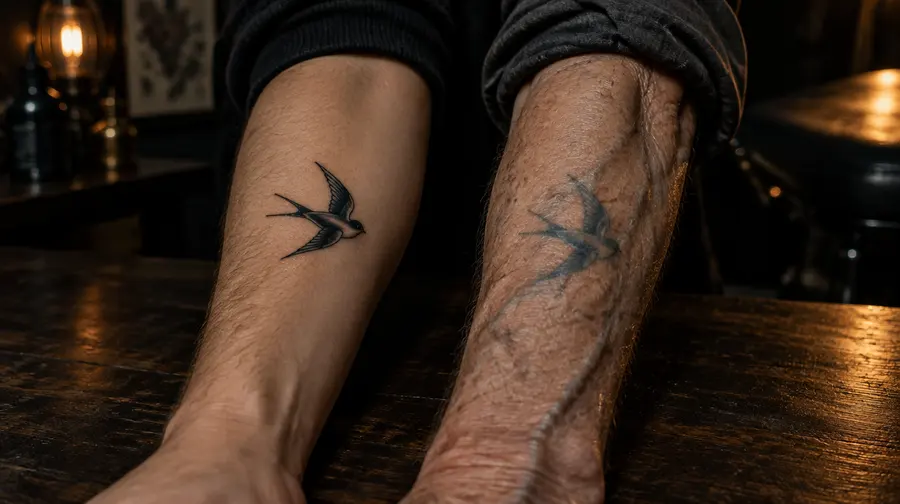
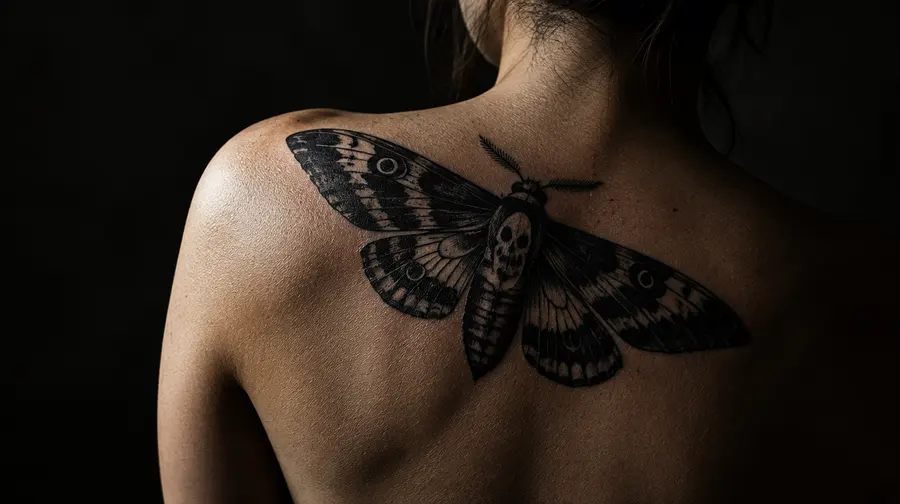
Black tattoo ink is typically a carbon-based pigment – essentially very fine soot. It’s one of the most stable materials used in tattooing: light can barely break it down, and its particles stay put in the skin for the long term. That’s why black lines are what show best on tattoos that are decades old.
Black’s other big advantage is contrast. Even when it loses some of its depth, faded black is still dark grey, which stands out clearly from the skin. A faded yellow, on the other hand, almost melts into the skin. So the same fading process is barely noticeable in black, but in light colours it can mean part of the design disappearing.
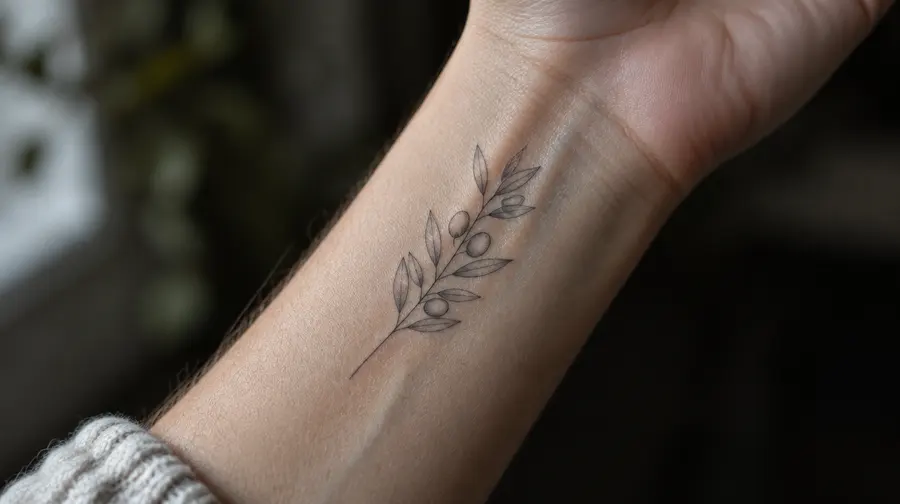
That’s why most artists also use black for outlines – and why line work usually outlives shading and colour fill. The grey tones of black-and-grey work are made from diluted black, by the way: they get lighter over time, but the pigment itself is just as stable, so the overall look tends to age predictably.
Black isn’t invulnerable, of course. It spreads slowly just like any other colour, and very dense black lines set close together can merge over time all the same. The difference is that black slowly loses its shape, not its visibility – with colours, both often happen at once.
How each colour ages
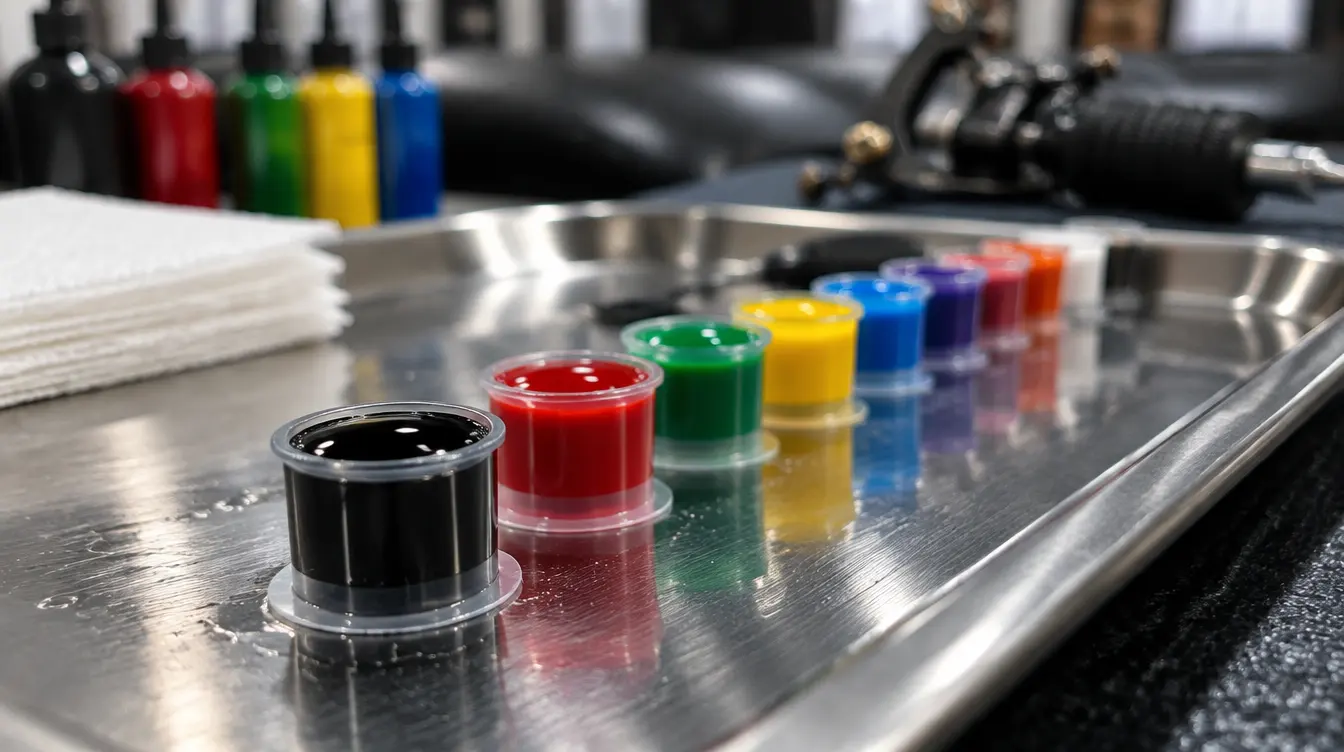
There’s no exact ranking, because ink formulations differ, and skin, placement and sunlight all matter a lot. Broadly speaking, though, artists’ experience is fairly consistent.
Red and deep blue
Red and deep blue usually hold well and keep their vibrancy for a long time. With red, it’s worth knowing that tattoo-related allergic reactions are most often linked to red inks. This is rare, but if you have sensitive skin, talk it through with your artist beforehand.
Green and purple
Green and purple vary quite a lot depending on the brand and the shade. Darker, saturated shades generally last better; light, bright tones can fade sooner.
Yellow and orange
Yellow and orange are among the fastest-fading colours. They absorb more ultraviolet light and break down faster, so on sun-exposed skin they can look washed out within 5–10 years.
White and pastels
White and very pale pastels are the least durable. Within a few years they can fade, turn yellowish, or simply blend into the skin tone. They’re fine for highlights and small points of light, but it’s rarely worth trusting them with the main element of a design.
UV-reactive, so-called “blacklight” inks deserve a special mention. They can be spectacular at a party, but there’s less experience with how they behave over the long term, and many artists are cautious with them. If you want one, ask your artist what they know about that particular ink.
The sun: colour’s number one enemy
If you had to name the single outside factor that does colour the most harm, it would be sunlight – more precisely, UV radiation. UV breaks pigments down, and this is far more visible in light colours than in black. Of two identical colour designs, the one that spends every summer uncovered in the sun will be much paler after a few years than the one kept under clothing.
That makes placement especially important for colour work. The forearm, the back of the hand, the calf, the shoulder and the neck get a lot of sun; the inner upper arm, back, thigh or ribs much less. If you’re planning a design full of bright, light colours, less sunny spots are a big advantage.
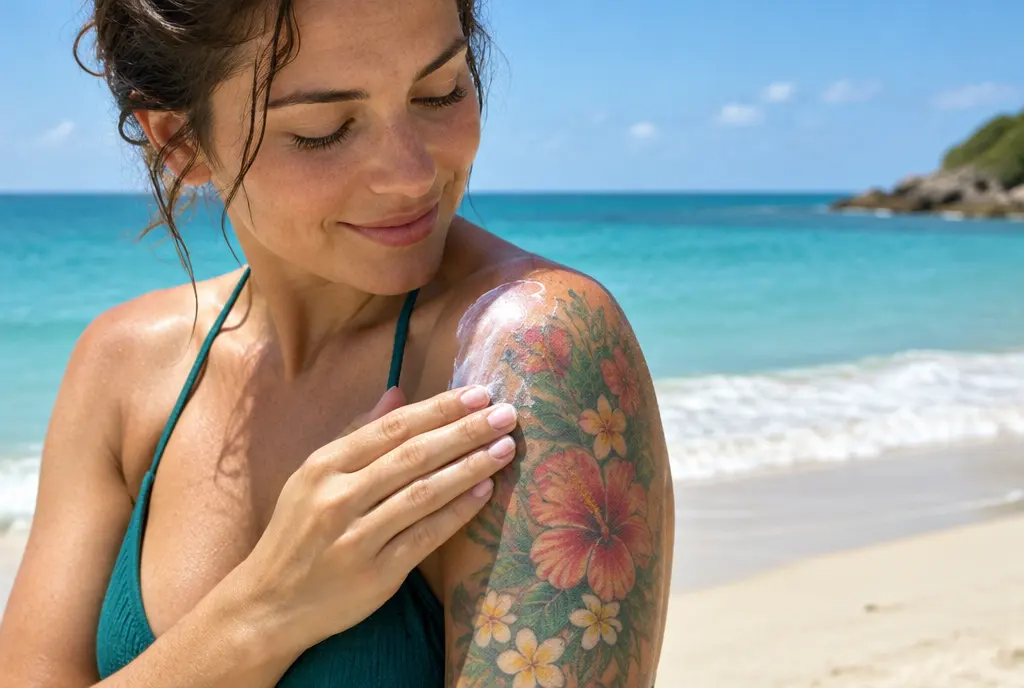
The good news is that this is largely in your hands. While it’s healing, keep a fresh tattoo out of the sun and cover it with clothing. Once it has fully healed and stopped flaking – usually after 3–4 weeks – always use a broad-spectrum SPF 50 sunscreen in the sun and reapply every two hours in strong sunshine. It’s best to avoid sunbeds altogether.
The outline is the skeleton
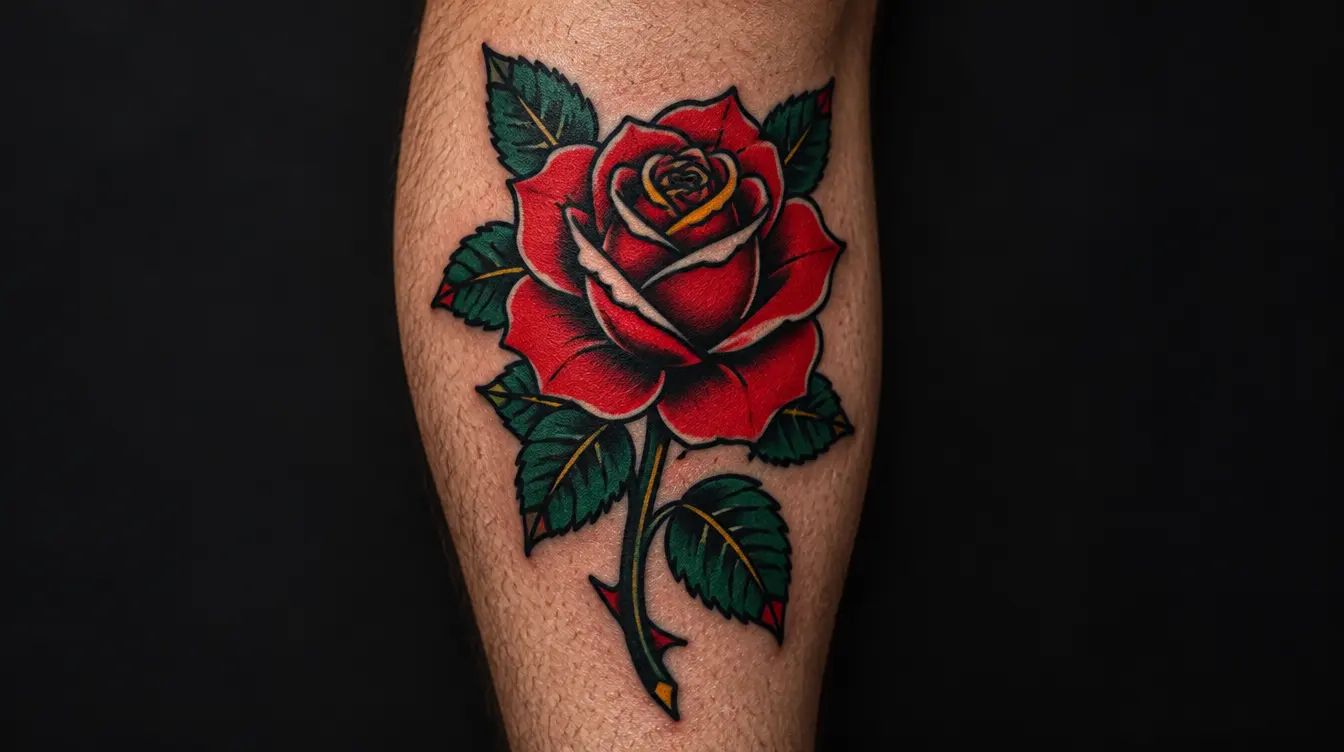
A colour tattoo’s shape doesn’t come from the colour, but from the outline. A rose drawn with a strong black outline is still a rose even when its red petals have become paler after twenty years – the lines hold the shape, and the colour just “fills” it. That’s why the classic outlined style generally ages well.
Watercolour style without outlines can be beautiful when fresh, but it’s riskier in the long run. Without a dark line to hold the shape, the edges of the colour blur as ink slowly spreads and fades, and over time the design can turn into a blurry stain. Not every watercolour tattoo goes this way, and the artist’s technique matters a lot – but it’s worth knowing the risk.
If you love a soft, painterly look, there’s a middle ground:
- ask for a fine dark outline at least around the main shapes;
- use darker values in the key areas – eyes, edges, contours;
- keep the painterly effect mainly for the background and decorative elements;
- think of a black “skeleton” that makes the design recognisable on its own.
Colour is the design’s mood, the outline its backbone – the mood may fade, but the backbone holds the shape.
Contrast: what colour can’t replace
A colour design stays readable when its colours differ not only in hue but also in lightness. Two equally light colours – say, a mid green and a mid blue – separate nicely when fresh, but as they fade and soften they increasingly merge. The difference between dark and light tones, however, survives the years.
There’s a simple test for this: look at your design in black and white. If the shapes still read well in greyscale, the design has a good chance of ageing nicely. If everything practically runs together in black and white, the design is currently held together only by its colours – and those are exactly what will fade first.
Skin tone and colour
Colours show “through” your skin tone, so the same ink looks different on lighter and darker skin. On lighter skin almost every colour shows well, including pastels – until they fade. On darker skin, deep, saturated colours – red, purple, dark blue, emerald green – can look truly beautiful, while pastels and white often barely show.
This doesn’t mean colour tattoos aren’t worth getting on darker skin – only that they need to be designed differently. A strong outline, saturated colours and larger, airier shapes help especially here. An experienced artist can show you how their work looks on similar skin tones – ask for photos of healed tattoos that are a few years old, too.
One small thing few people think about: a tan is part of your skin tone too. In summer, on tanned skin, the contrast of light colours drops, and a pastel design can almost disappear. It isn’t permanent – the skin lightens again by winter – but it shows how much of what we see in a colour depends on its background.
Black or colour – how to decide
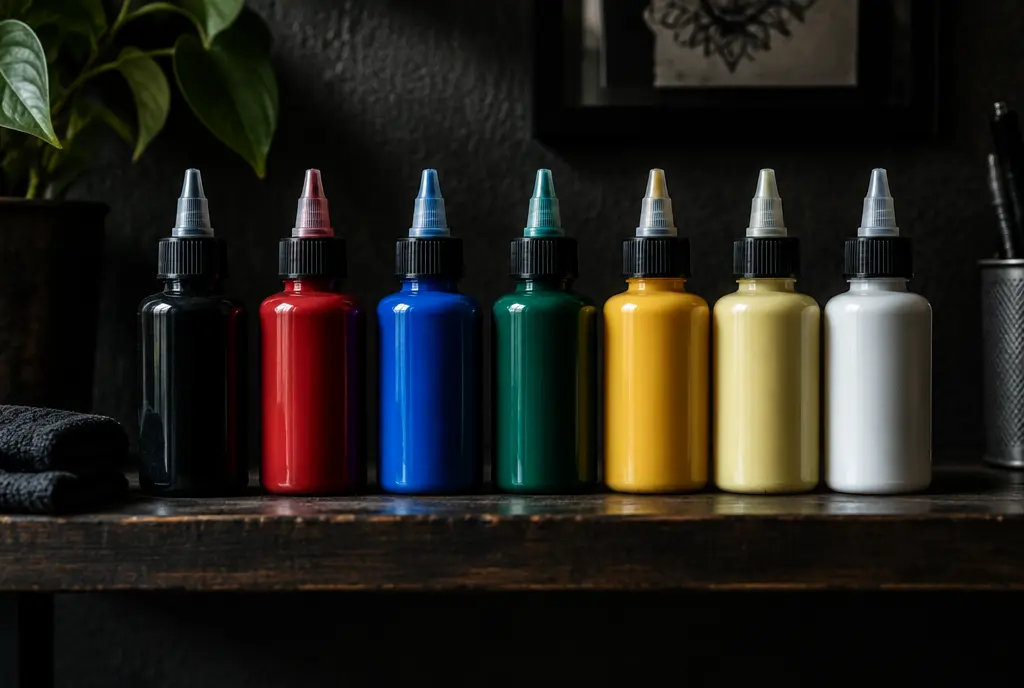
There’s no right or wrong answer: black is more predictable, colour more eye-catching but in need of more care. A few questions to help you decide which suits you:
- How much sun will it get? If you spend a lot of time outdoors and the spot isn’t covered by clothing, black-and-grey needs less looking after.
- How important is the exact colour? If the heart of the design is a particular shade (a specific blue, say), plan for an occasional touch-up.
- Are you willing to use sunscreen? A colour piece’s long life depends largely on this.
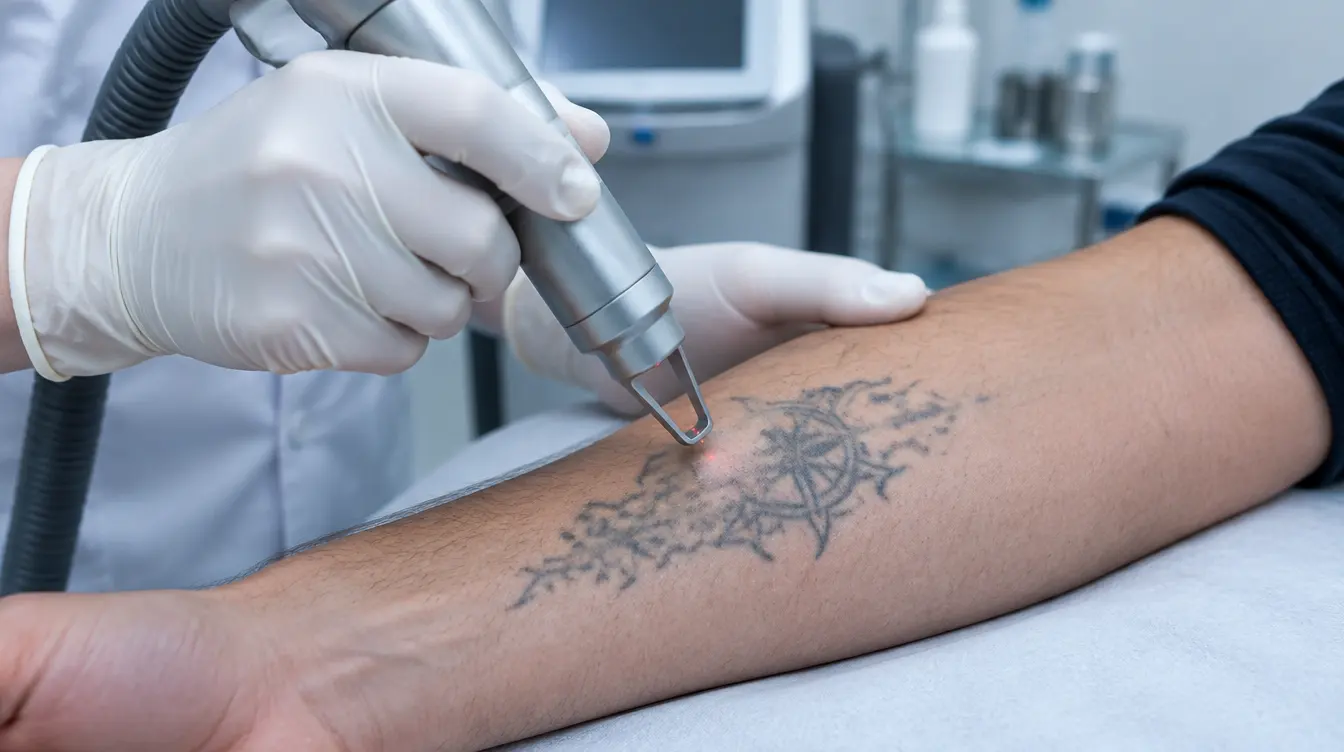
- Have you thought about removal? Black usually responds best to laser; green, light blue and yellow can be more stubborn.
- What style suits the design? A botanical or geometric design can be beautiful in black and grey, while a tropical bird might lose a lot without its colours.
Many people choose a middle ground: a black base with a few well-chosen, saturated splashes of colour. This is often the best of both worlds – the shape stays durable, and colour shines where it matters most.
It’s worth thinking about the practical side too. A large, colour-packed design usually takes longer to tattoo than a similar-sized black line piece, because the colours have to be worked evenly into the skin. That can mean more sessions, longer healing and a higher price – ask your artist up front what to expect.
How to design a colour tattoo that lasts
If you’ve decided on colour, a few deliberate steps can do a lot to keep it beautiful for decades.
- Start with a strong outline. Ask for dark lines at least around the main shapes, so the design is recognisable even without colour.
- Choose saturated, darker shades. Deeper tones generally last longer than very light ones.
- Check the contrast in black and white. If it reads well in greyscale, you’re on the right track.
- Be careful with yellow, white and pastels. Use them for highlights, not as the main element of the design.
- Think about placement. Less sunny body parts help a lot with preserving colour.
- Give the design enough size. Colour areas need room too: tiny colour details merge sooner.
- Plan for a touch-up. A colour piece can be refreshed years later, and this works best when the outline has kept its shape.
Touch-ups are a completely natural part of a colour tattoo’s life. A good artist can brighten faded colours and strengthen the outline – but the better the design has kept its structure, the simpler and nicer the result.
How to compare them in InkAge
The decision between black and colour is much easier when you can actually see the difference. In InkAge you can switch your design between black and its original colours, and for both versions see how it will look on your own skin fresh and after 1, 10, 30 and 50 years.
Comparing the 30-year images side by side is especially revealing. That’s where you really see which colours fade first, whether the outline holds the shape, and how readable the design stays in black and grey. The ink longevity score (0–100) helps too: at a glance you can see which version promises a longer life.
And if removal has crossed your mind, the laser preview shows how the design might respond after a few sessions. For the final decision, ask your friends with a vote and take the PDF to your artist – the simulation is a good starting point, but they know the most about the ink and the technique.
The one thing to take away
If you remember just one thing: black holds the shape, colour brings the mood – and colour needs the most protection. With a strong outline, good contrast and consistent sun protection, a colour tattoo can stay beautiful for decades too.
Black isn’t “boring”, and colour isn’t “short-lived” – either can be the perfect choice if you know what to expect. Look at your design from 30 years out as well, talk it over with your artist, and choose the one you’ll still love long after today’s trends have passed.
Frequently asked questions
Does black ink really last the longest?
Generally, yes. Carbon-based black pigment is very light-stable, and even when faded it stays dark grey, which stands out well against the skin. That’s why black lines show best even on old tattoos.
Does white ink last?
White and very pale colours usually fade or turn yellowish within a few years, especially in the sun. They’re good for highlights, but it’s rarely worth building the main element of a design on them.
How much does sunscreen matter for a colour tattoo?
A lot: UV radiation is what breaks down light colours the most. Once it has fully healed, use a broad-spectrum SPF 50 sunscreen in the sun and reapply every two hours in strong sunshine.
Can colour be refreshed later?
Yes, a touch-up can brighten faded colours – as long as the outline has held its shape. That’s why it’s worth designing a colour piece with a strong dark outline from the start.
Is a watercolour tattoo without outlines a bad idea?
Not necessarily, but it’s riskier in the long run: without a dark line, the colour edges can blur over time. If you love the style, ask for at least a fine dark outline around the main shapes, or darker values in key areas.
Written by the InkAge editorial team from widely accepted tattoo-care practice. Figures are rules of thumb, not measurements. This is general information, not medical advice — ask your artist or a dermatologist about your own skin.
Last updated: 13 October 2026