In short
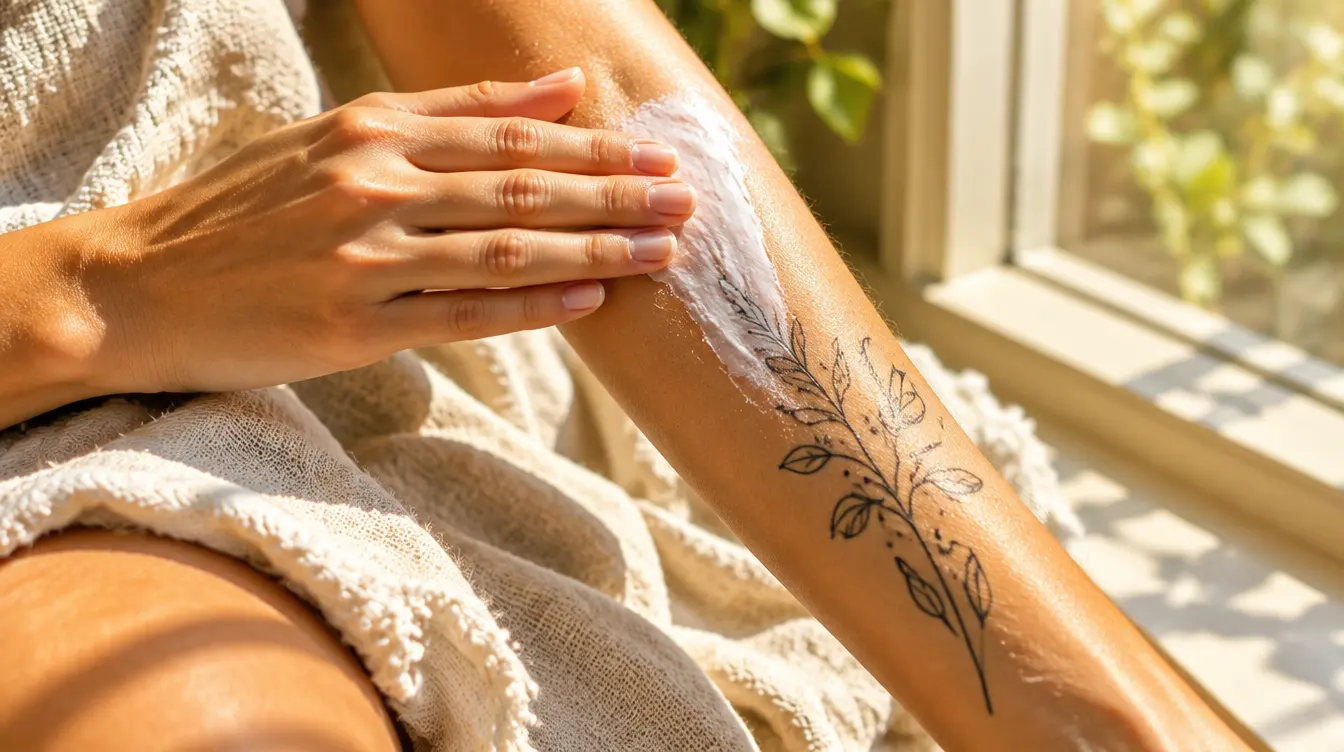
- The first 2–4 weeks matter most: gentle washing, a thin layer of unscented balm, and no picking, soaking or sun.
- Once healed, the sun is your tattoo’s biggest enemy: a broad-spectrum SPF 50, reapplied every two hours in strong sun and after swimming.
- Spreading redness, heat, pus or fever are not part of normal healing – see a doctor if you notice them.
- In the long run, regular moisturising, a stable weight and a touch-up every 8–10 years keep lines crisp.
In this article 12
- Why the first weeks matter most
- The first 24–48 hours: the wrap and the first wash
- The first two weeks: washing, balm, patience
- What to avoid until it’s fully healed
- Normal or a problem? Signs of healing
- Why the sun is your tattoo’s biggest enemy
- Sun protection in practice
- Long-term habits that add years
- How InkAge helps with aftercare
- Common aftercare myths
- The one thing to take away
- Frequently asked questions
You get home from the studio with cling film on your arm and a brand-new tattoo underneath, still throbbing a little. You’ve waited days for this, and now there’s the aftercare note from your artist and a dozen questions in your head. When can I take the wrap off? What do I wash it with? How much cream does it need? Can I go to the beach this weekend? And what if it’s already itchy tomorrow?
This article walks you through healing from the first hours all the way to the coming decades. We’ll look at what happens to your skin in the first weeks, what to do and what to avoid, how to recognise normal healing and the warning signs, and why the sun is your tattoo’s biggest long-term enemy. At the end, we’ll also cover how InkAge can help – with reminders, and by letting you see in advance what good habits get you.
Why the first weeks matter most
A fresh tattoo is really a carefully made but nonetheless open wound. The needle has delivered pigment into the deeper layer of the skin, the dermis, through thousands of tiny punctures, and now the surface has to close them up. This is the period that decides whether the ink “settles” evenly and beautifully, or leaves patchy, paler areas behind.
Healing happens in roughly three stages. In the first days the skin can be red, tender and a little swollen, and plasma and perhaps a bit of inky fluid may seep out. Then come flaking and itching, as the top layer slowly comes away. Finally the surface heals, and for a while the tattoo can look slightly milky or cloudy before it clears for good. The surface usually heals in 2–4 weeks; the deeper layers keep settling for longer.
What you do – or don’t do – in this period shows for years. A picked scab can leave a paler spot, and a sunburn can take the vibrancy out of the colours right at the start. The good news: proper aftercare isn’t complicated. It’s mostly about patience and a few simple rules.
The first 24–48 hours: the wrap and the first wash
In the studio, the artist usually covers the fresh tattoo with cling film or a special breathable film. Its job is to protect the wound from dirt and friction in the first hours. How long it should stay on depends on the type: traditional cling film usually comes off after a few hours, while some films can stay on the skin for several days. Always ask.
- Wash your hands thoroughly before touching the tattoo – this is a basic rule for the whole healing period.
- Remove the wrap gently. If it sticks, soak it with a little lukewarm water rather than ripping it off.
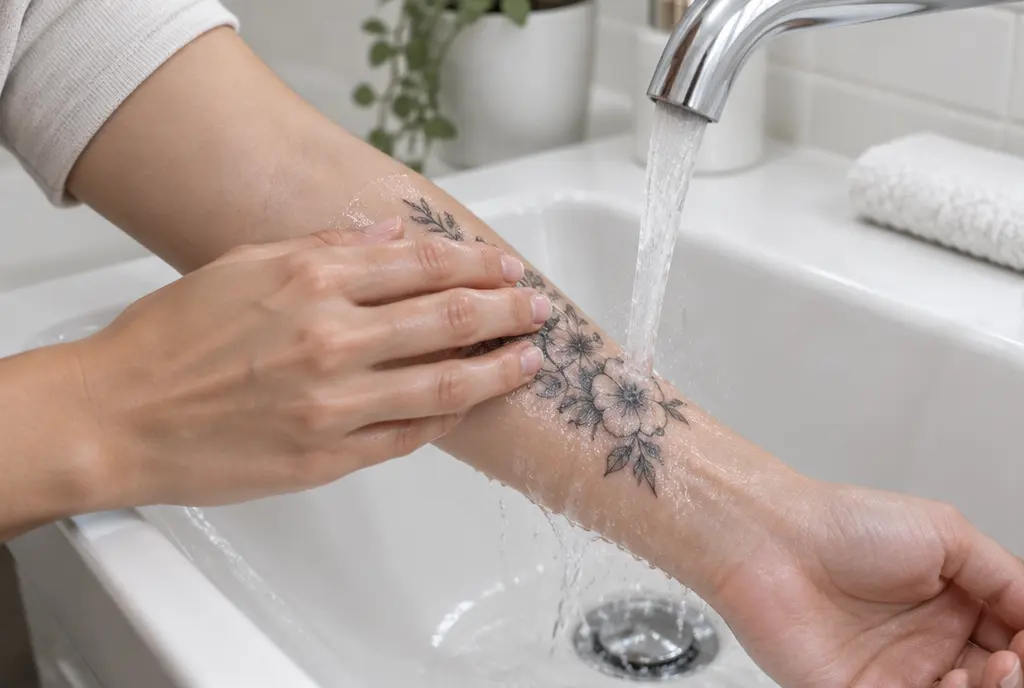
- Wash with lukewarm water and a mild, unscented soap, using only your fingertips in circular motions. No sponges, scrubbing gloves or rough towels.
- Pat it dry with clean paper towel or a freshly washed, soft towel. Don’t rub.
- Let it air for a few minutes, then apply a very thin layer of unscented cream or balm.
On the first night the tattoo may still seep and stick to your bedding. It’s worth using an old, clean sheet or T-shirt, and if it’s stuck in the morning, don’t yank it – gently soak it loose with lukewarm water.
The first two weeks: washing, balm, patience
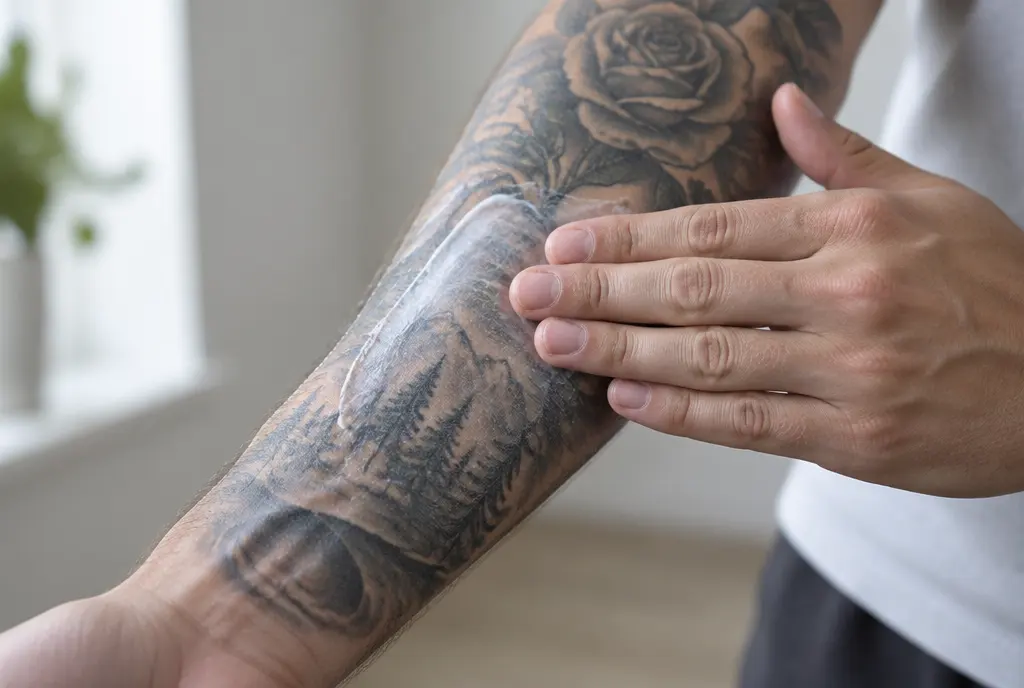
The goal in this period is simple: keep it clean, keep it lightly moisturised, and leave it alone. Most instructions suggest 2–3 gentle washes a day followed by a thin layer of balm. The point of the balm isn’t a thick coating on the skin but to stop it drying out and cracking. If the tattoo is shiny and the balm practically slides around on it, that’s too much – over-moisturising seals the skin and can slow healing.
Flaking and itching
After a few days, flaking begins, and with it the itching. This is a normal part of healing, and many people find it the hardest stage. Don’t scratch, don’t pick, and don’t pull off flaking skin or scabs, even when they’re half hanging off. If you remove them too early, some of the pigment can come away with them and leave a pale, patchy spot. If it’s very itchy, a gentle pat or another thin layer of balm can help.
Clothes and sleep
A fresh tattoo doesn’t like tight, rubbing clothes. Choose loose, soft pieces, ideally cotton, that won’t stick to the wound. Skinny jeans, a sports bra strap or a tight watch strap can rub in exactly the wrong place. For the first few nights, try not to sleep on the tattoo.
- Wash with lukewarm water and unscented soap, 2–3 times a day.
- A thin layer of unscented cream or balm – just enough to stop it drying out.
- Clean hands before every touch.
- Loose, soft clothing that doesn’t rub.
- No picking, scratching or pulling.
By the end of the second week most tattoos look much calmer: most of the flaking is done, the itching eases and the skin starts to return to normal. It’s easy to get overconfident at this point, but the layers under the surface are still working. Keep applying a thin layer of balm every day, keep avoiding soaking and sun, and ease back into sport only gradually. If some parts look paler after the flaking, don’t panic: the milky, cloudy look often clears by itself within a few weeks, and only then can you tell whether a touch-up is really needed.
What to avoid until it’s fully healed
A few things can actively harm a tattoo while it heals. Most of them come down to the same two reasons: they carry a risk of infection, or they soak, rub or strain the damaged skin for too long.
- Swimming in pools, lakes or the sea: water can carry bacteria, and chlorine and salt irritate the wound.
- Baths, saunas, steam rooms, hot tubs: long soaking softens scabs and can draw out pigment. A short shower is fine.
- Direct sunlight and tanning beds: a fresh tattoo is especially sensitive, and a sunburn can seriously harm it. At this stage, cover it with clothing rather than sunscreen.
- Intense, sweaty workouts: lots of sweat and friction can irritate the wound, and gym surfaces aren’t the cleanest. Rest for the first days, then ease back in.
- Shaving or hair removal over the tattoo until it has fully healed.
- Scented creams, body lotions and alcohol-based products: they can irritate fresh skin.
These rules generally apply until the surface has fully healed and the flaking has finished – usually 3–4 weeks. If you’re not sure the time has come, wait a few more days. One missed beach day is nothing compared with a badly healed tattoo.
Normal or a problem? Signs of healing
In the first days, almost every fresh tattoo is red, a little swollen and tender – that’s the skin’s natural response. It’s also normal for plasma or a little inky fluid to seep out, for it to feel tight and look shiny, and later to flake, itch and look milky or cloudy for a while. These signs ease gradually as the days pass.
When to see a doctor
A few signs are not part of normal healing. If you notice any of them, don’t wait, and don’t try to treat it yourself at home – see a doctor:
- redness that doesn’t ease after a few days but spreads over a larger area;
- the area around the tattoo is hot and increasingly painful;
- pus or a foul-smelling discharge appears;
- you have a fever or feel unwell;
- red streaks spread out from the tattoo.
Some people also have an allergic reaction to the ink – this can appear even weeks or months later, for example as an intensely itchy, raised area, sometimes in one particular colour. In that case it’s worth seeing a doctor too, such as a dermatologist. Let your artist know as well: they can tell you which ink they used, which can be useful for the doctor.
Why the sun is your tattoo’s biggest enemy
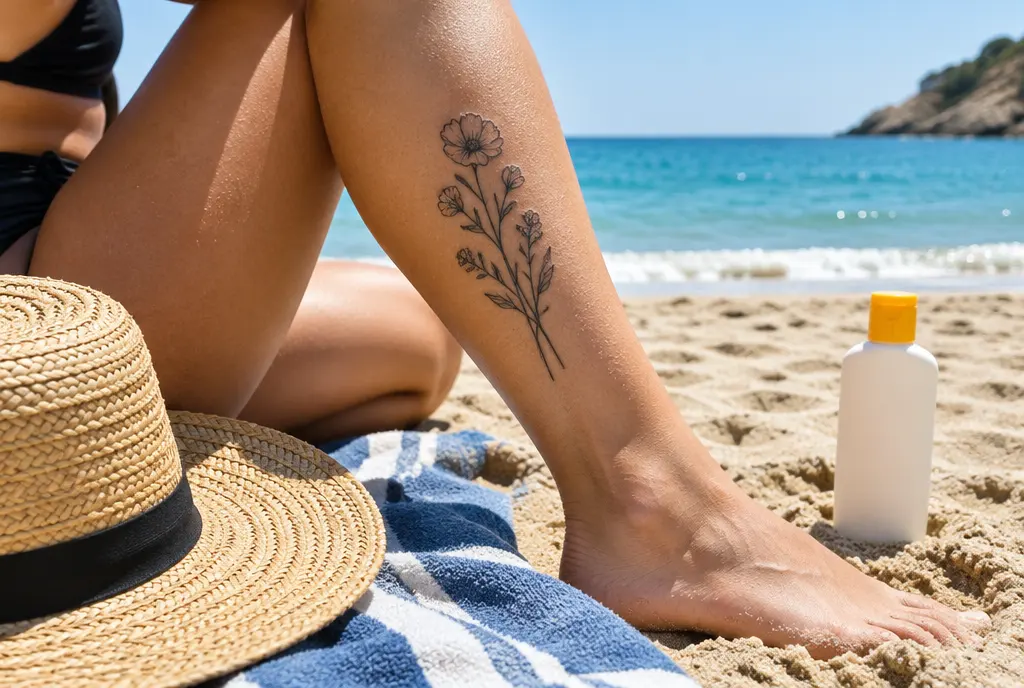
Once your tattoo has healed nicely, the biggest risk over the coming decades is no longer infection but the sun. UV light slowly breaks down pigment and ages the skin itself. It doesn’t happen in a single summer; it builds up year after year – every beach day, every afternoon of gardening, every sunny hike adds a little.
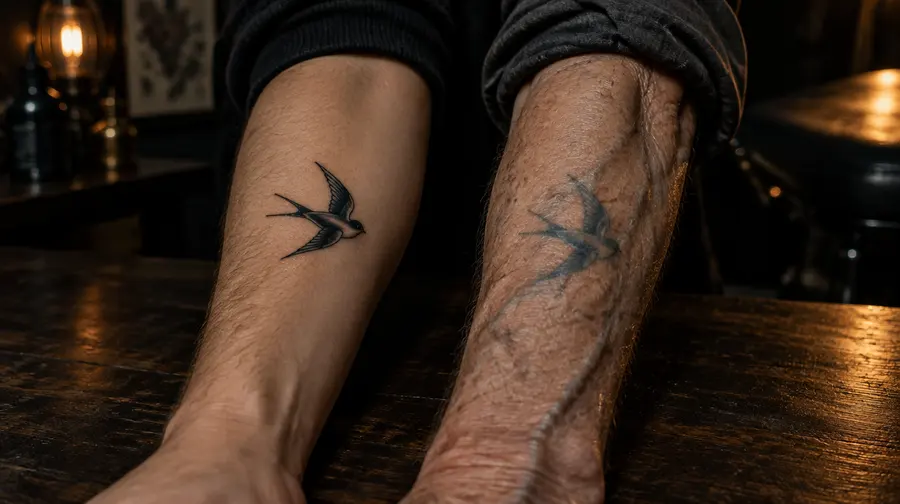
The sun doesn’t affect everything equally. Black is generally the most resistant, while lighter colours – yellow, white, pastel shades – are often more sensitive. On the most exposed body parts, like the outer forearm, the back of the hand, the back of the neck and the shoulders, the difference can be striking years later compared with a similar tattoo kept under clothing.
It’s worth knowing that UV doesn’t only reach you on scorching summer afternoons. It gets through clouds on overcast days, and while driving it can reach your arm through the side window. Sunburn is especially bad for tattooed skin: it hurts, it peels, and it can take away some of the tattoo’s vibrancy.
Your tattoo’s future isn’t decided by one big mistake, but by what you do summer after summer.
Sun protection in practice
Until the tattoo has fully healed, don’t put sunscreen on it – at that stage the best protection is clothing and shade. Once the surface has healed and the flaking is over (usually after 3–4 weeks), sunscreen can come in, and from then on it’s worth making it a lifelong habit.
Which sunscreen to choose
The best choice is a broad-spectrum SPF 50, which protects against both UVA and UVB. The format is a matter of taste: cream, lotion, spray or stick – the right one is the one you’ll actually use. For smaller tattoos a stick is especially handy, as it fits in your pocket and goes on in seconds.
How to use it
- Apply generously, about fifteen minutes before you go out into the sun. Too thin a layer gives far less protection than the bottle promises.
- Reapply every two hours in strong sun, and always after bathing, swimming or heavy sweating – even if the product says it’s water-resistant.
- Don’t forget the “invisible” sunny hours: walking, cycling, driving, gardening.
- Combine it with shade and clothing. Staying in the shade around midday and wearing a light shirt or trousers is worth even more than the best sunscreen.
It’s best to avoid tanning beds altogether: they harm both your tattoo and your skin. If you want a tan, self-tanner is a better option – just don’t put it on a fresh, unhealed tattoo.
Long-term habits that add years
After healing, you don’t need to think about your tattoo every day, but a few simple habits make a big difference. Regular moisturising helps keep skin supple and healthy, and on well-hydrated skin ink looks sharper and more vivid. You don’t need anything special: a good, unscented body lotion is enough.
Weight matters too. Large, rapid changes can stretch the skin and distort the tattoo with it. That’s certainly no reason to live your life differently because of a tattoo – it’s just good to know that a more stable weight is kinder to your ink as well.
Finally: touch-ups are part of long-term care too. Even the best-cared-for tattoo softens somewhat over the years. If you want crisp lines, plan on a touch-up roughly every 8–10 years; on hands, feet and sunny spots you may need one sooner. Many artists fix patchy areas for free or at a discount after healing, about a month later – it’s worth asking in advance.
How InkAge helps with aftercare
Good habits are much easier to keep when you can see what they get you. In InkAge you can see on your own photo how your tattoo may change over time, and it also reminds you what to watch out for and when. The preview is an estimate, not an exact prediction, but it shows very clearly how big the difference is between a well-protected tattoo and a less protected one.
- Upload a photo of the body part, in good light.
- Choose the body area on the numbered body map, so the preview knows how much sun and friction that area typically gets.
- Place the design and set its size.
- Look at the 10- and 30-year images and the 0–100 ink longevity score. In the “The same design elsewhere” comparison you can also see how much longer the same design might stay crisp on a less sunny spot.
- Add aftercare reminders to your calendar. You get a reminder for each important step of the 28-day healing period – what to watch for, when sport and sunscreen can come back – plus a sunscreen reminder every June, right at the start of summer.
The PDF for your artist includes the design, size and placement, so it’s easier to talk through at the consultation what to expect during and after healing.
Common aftercare myths
There’s a lot of well-meant but misleading advice about aftercare. A few you’ll often come across:
- “The more balm, the better.” No. A thick layer seals the skin and can slow healing. Thinly, just enough to stop it drying out.
- “Once it stops hurting, I can go to the beach.” The pain fades quickly, but the surface takes longer to heal. Wait until the flaking has completely finished.
- “It looks better on tanned skin anyway.” It may look more contrasty next to a summer tan, but meanwhile UV is slowly breaking down the pigment.
- “Black tattoos don’t need sunscreen.” Black is generally more resistant, but it too fades and blurs in the sun over time.
- “A little picking doesn’t matter.” A single picked scab can leave a pale spot in the tattoo.
The one thing to take away
If you remember just one thing: patience in the first weeks, and sunscreen after that, keep your tattoo looking new. Heal it clean, with a thin layer of balm, no picking and no soaking – and once it’s healed, give it a broad-spectrum SPF 50 every time it sees the sun.
This guide is general information, not medical advice. If your tattoo looks infected or you react to the ink, see a doctor.
Frequently asked questions
When can I put sunscreen on a new tattoo?
Once it has fully healed and stopped flaking, usually after 3–4 weeks. Until then, keep it covered with loose clothing and out of the sun. After that, a broad-spectrum SPF 50 whenever it sees the sun.
Which SPF should I use?
A broad-spectrum SPF 50 that protects against both UVA and UVB. Apply it generously and reapply every two hours in strong sun, and after swimming or heavy sweating. A stick is handy for smaller tattoos.
How much balm should I put on a fresh tattoo?
Just a very thin layer of unscented balm, enough to stop the skin drying out and cracking. If the tattoo looks shiny and greasy, it’s too much. Over-moisturising can seal the skin and slow healing.
When can I swim or go to the sauna?
Only once the tattoo has fully healed and the flaking is over – usually after 3–4 weeks. Long soaking softens scabs and can draw out pigment, and pools, lakes and the sea can carry bacteria. Short showers are fine from the start.
How do I know if my tattoo is infected?
Some redness, swelling and tenderness in the first days is normal. Redness that keeps spreading, heat, increasing pain, pus, red streaks or a fever are not – in that case see a doctor rather than treating it yourself.
Written by the InkAge editorial team from widely accepted tattoo-care practice. Figures are rules of thumb, not measurements. This is general information, not medical advice — ask your artist or a dermatologist about your own skin.
Last updated: 12 October 2026