In short
- Since 4 January 2022, tattoo inks sold or used in the EU must meet limits on about 4,000 hazardous substances under the REACH chemicals regulation.
- Pigment Blue 15:3 and Pigment Green 7 got an extra year and have been restricted since 4 January 2023, mainly because they are banned in hair dyes, not because a study showed they harm tattooed skin.
- Every bottle must carry a batch number and a full ingredient list, and the artist has to share that information with you. An inktpaspoort is simply a written record of the inks in your tattoo.
- Red is the colour most often linked to tattoo allergies, and reactions can appear months or years later. Keep your ink record so a doctor can see exactly what was used.
In this article 11
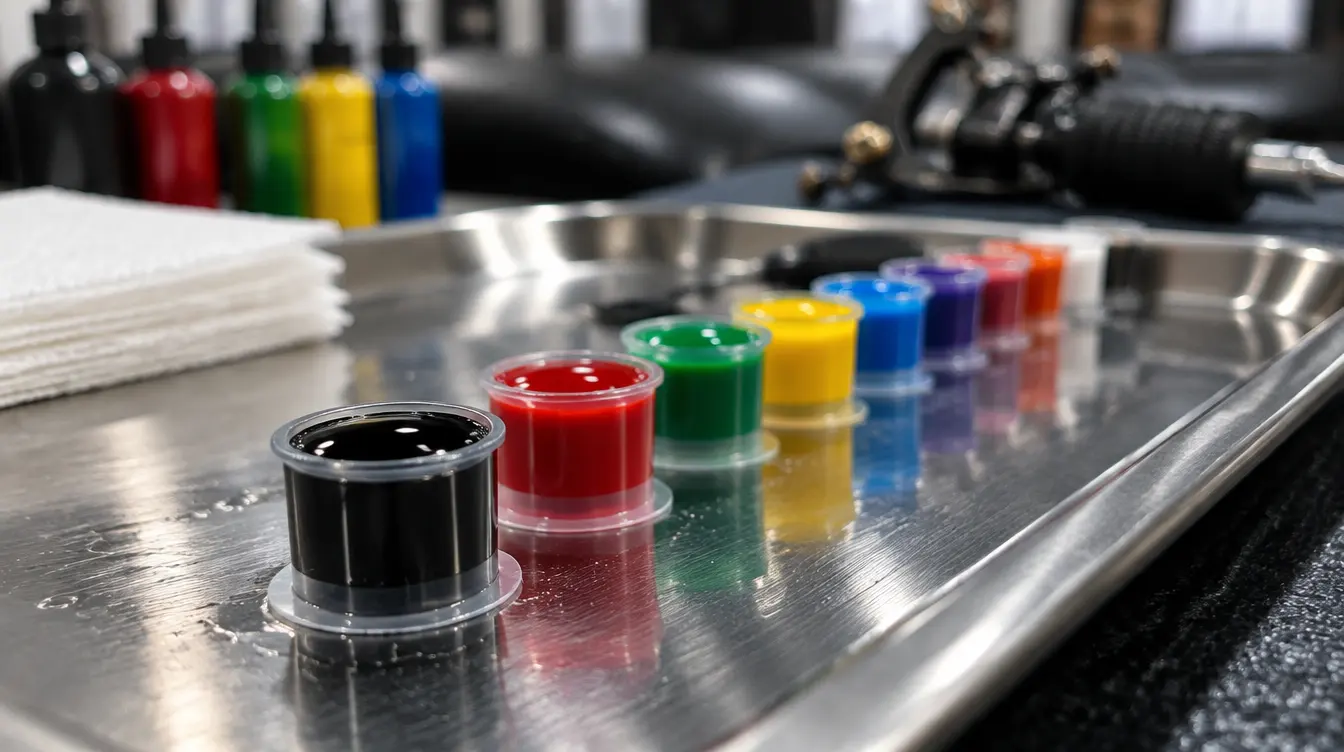
Noor was sitting in a studio in Utrecht, forearm shaved and cleaned, looking at a short row of ink bottles next to the artist’s tray: a deep red for the poppy, a soft green for the stem, black for the outline. Before starting, the artist turned one of the bottles round, showed her the label and slid a small card across the table. Brand, colour, batch number, today’s date. “Your ink passport,” he said. “Keep it somewhere safe. If you ever react to the red, a doctor will want to know exactly which one it was.”
Noor had never heard of an ink passport. Most people haven’t, and most people also have no idea that since 2022 the ink going into their skin has been covered by one of the strictest chemical rules in Europe. Here is what those rules actually say, what they changed for colours like blue and green, what an inktpaspoort is in the Netherlands, and what you can reasonably ask your artist before the needle starts.
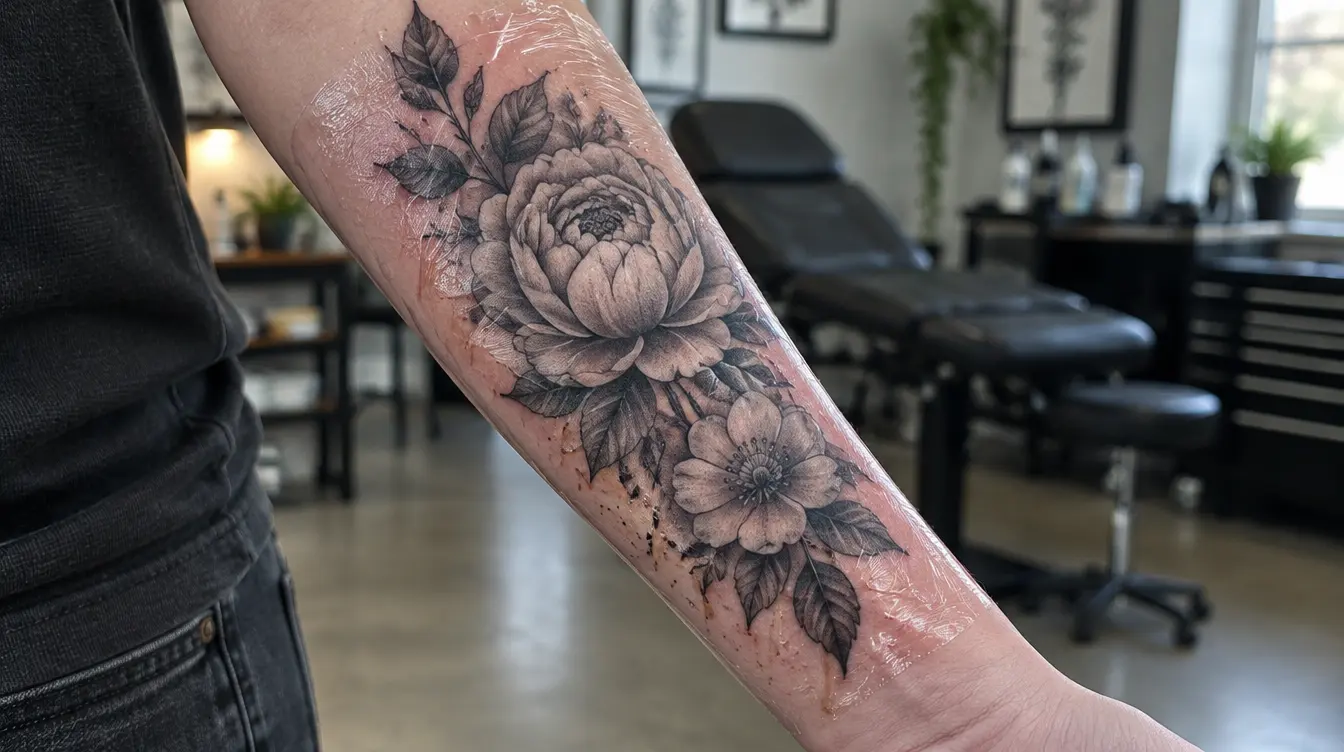
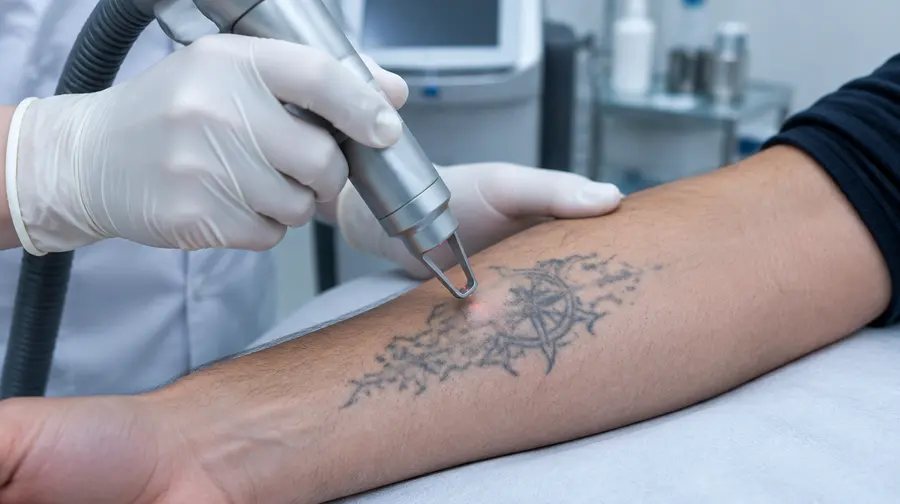
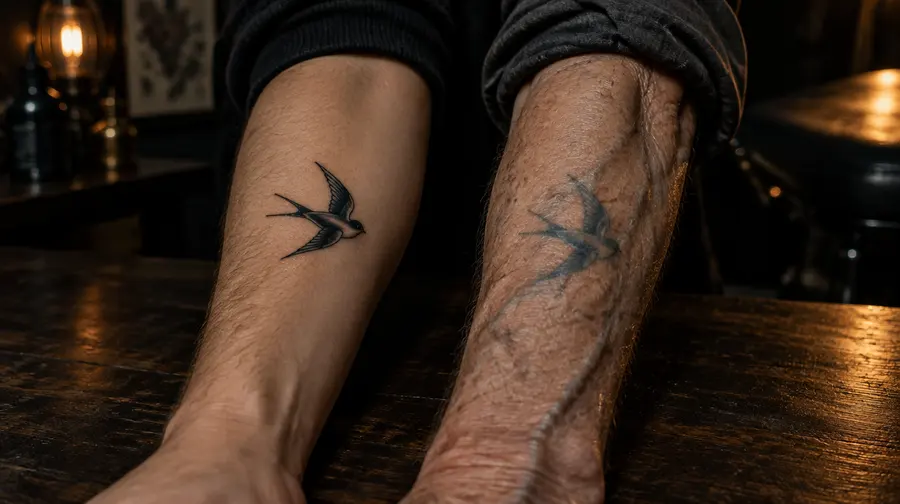
> A note on the pictures: the images in this article are illustrations made to show typical situations. They are not photos of real products, real labels or real patients.
The short answer
Since 4 January 2022, tattoo and permanent make-up inks sold or used in the EU must meet limits on about 4,000 hazardous substances under the REACH chemicals regulation. Substances that can cause cancer, damage DNA, harm fertility, trigger allergies or irritate the skin are either banned or allowed only in tiny traces. Two widely used pigments, Pigment Blue 15:3 and Pigment Green 7, got an extra year and have been restricted since 4 January 2023.
The same rules require a proper label on every bottle, including a batch number and a full ingredient list, and they oblige the person tattooing you to share that information with you before the procedure. An inktpaspoort is simply a practical way of keeping that information: a written record of which inks went into your tattoo.
Read alsoColour or black ink: which lasts longer?Why Europe needed one rule
For a long time tattoo ink sat in a strange gap. It is not a medicine, and it is not a cosmetic either, because cosmetics are meant for the surface of the skin. A tattoo puts pigment into the dermis, the deeper layer, where it is meant to stay for the rest of your life. Some countries wrote their own rules. The Netherlands introduced national legal requirements for tattoo inks in 2003, and Germany passed its own tattoo ink ordinance in 2009. Many other countries had nothing specific at all.
At the request of the European Commission, the European Chemicals Agency (ECHA) prepared a single proposal for the whole EU and submitted it in 2017. The final version, Commission Regulation (EU) 2020/2081, added tattoo inks to the restrictions in annex XVII of REACH, the EU’s main chemicals law. It applies in every EU country and in the wider European Economic Area.
What the 2022 restriction actually changed
The regulation does not publish a list of approved inks. It works the other way round: it sets maximum concentrations for groups of dangerous substances, and an ink above them may not be sold for tattooing or used on anyone. The thinking, as the German Federal Institute for Risk Assessment (BfR) summed it up, is that substances banned from use on the skin should also be banned from use under it.
The main groups, with their limits by weight, are:
- Carcinogens and substances that damage DNA: 0.00005%, which is half a milligram per kilogram of ink.
- Substances toxic to reproduction: 0.001%.
- Skin sensitisers, the substances that cause allergies: 0.001%.
- Skin and eye irritants or corrosives: 0.01%, or 0.1% when used only to adjust the pH.
- Substances banned or restricted in cosmetics: in most cases 0.00005%.
- Specific metals and impurities: for example nickel 0.0005%, lead 0.00007%, mercury and chromium (VI) 0.00005% each.

Many of the roughly 4,000 substances have never been found in tattoo ink. ECHA included them anyway so that manufacturers could not swap a banned ingredient for a close relative that happened not to be on the list. Among those that do turn up in inks are certain azo colourants, the aromatic amines they can break down into, polycyclic aromatic hydrocarbons (PAHs, which can occur in black ink made from soot), metals and methanol.
The rule does not say which inks are safe. It says which substances must not be in them, and how much is too much.
The blue and green story
No part of the regulation caused more noise than two pigments: Pigment Blue 15:3 and Pigment Green 7. Both are copper phthalocyanine pigments, very stable and very bright, and they are found in a large share of the blue and green inks used around the world. They are also the base of many mixed shades, so the debate was about far more than pure blue and green.
Their problem was not a study showing that blue or green tattoos make people ill. Both pigments are banned in EU hair dyes, and under the restriction a substance banned in cosmetics is restricted in tattoo ink too. The BfR explained in 2020 that the hair dye ban was not based on a negative health assessment but on the fact that no safety dossiers had been submitted for that use. Its own review found that the available data pointed to comparatively low toxicity, while warning that the data were too incomplete for a reliable assessment of injecting the pigments into the skin.
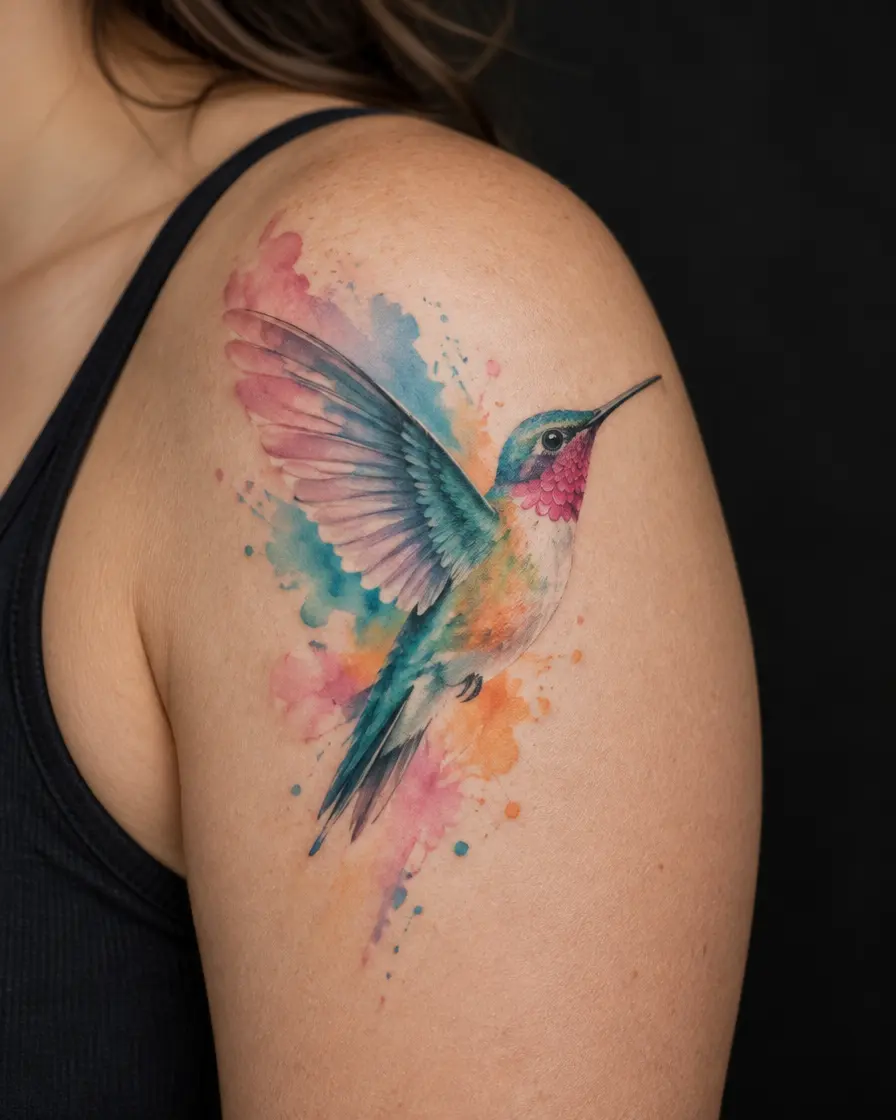
In January 2020 a German tattoo artist started an online petition against the ban, and it passed 100,000 signatures within two days. Because regulators found that safer, technically adequate alternatives were missing only for these two colourants, they received a longer transition. The general rules applied from 4 January 2022; the two pigments followed on 4 January 2023.
Since then manufacturers have reworked their ranges, and many now sell blues and greens labelled as REACH-compliant. A label is not always the whole story, though. In 2024 a research team at Binghamton University in the United States analysed blue and green inks sold in Europe as compliant and reported that nine out of ten did not meet the rules.
What the label on the bottle must show
Since January 2022, every tattoo or permanent make-up ink sold in the EU must carry the following information, clearly and indelibly, in the official language of the country where it is sold:
- The statement “Mixture for use in tattoos or permanent make-up”. An ink without it must not be used for tattooing.
- A batch reference number that identifies exactly which production run the bottle came from.
- A full list of ingredients, in descending order by weight or volume, using standard chemical names or CAS and EC numbers.
- The words “pH regulator” next to substances used only to adjust acidity.
- “Contains nickel. Can cause allergic reactions.” or “Contains chromium (VI). Can cause allergic reactions.” if either is present below the legal limit.
- Safety instructions for use, where these are not already required by the general EU labelling rules for chemicals.
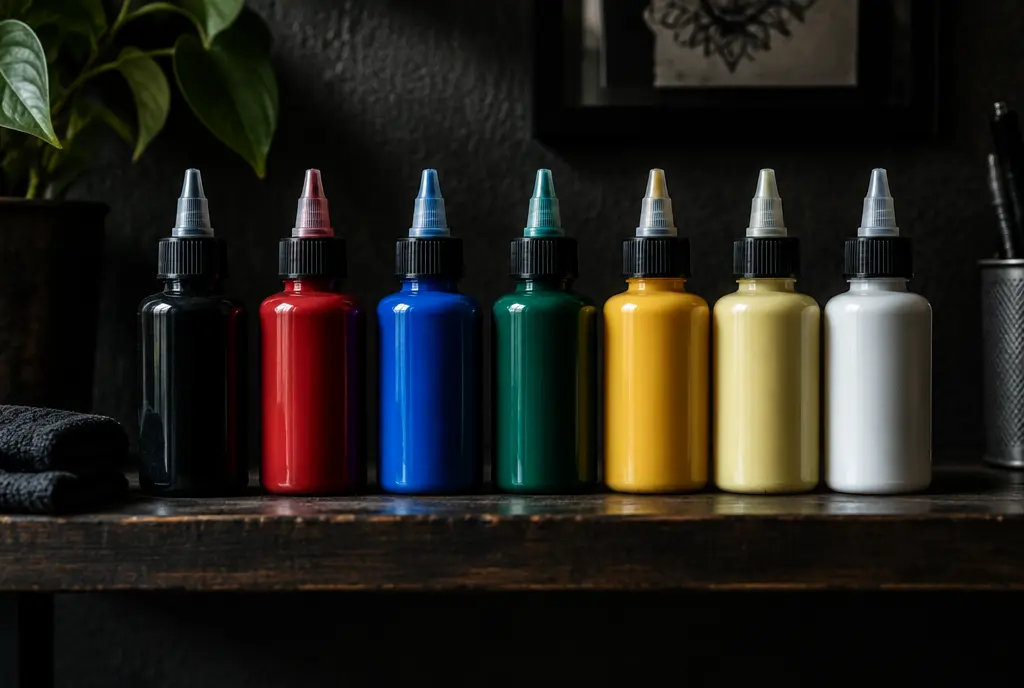
One more line in the regulation matters to you directly. Before using an ink, the person tattooing must give you the information printed on the package or in its instructions for use. You are entitled to know what is going into your skin, not just its colour.
In practice, labels have been the weak point. A Nordic enforcement project in 2023–2024 found that only about a quarter of the inks checked carried the mandatory statement correctly. In a 2024 European enforcement action, the Dutch Food and Consumer Product Safety Authority (NVWA) analysed 52 ink samples from 26 brands: 37 had at least one problem, from heavy metals and preservatives to missing or incorrect ingredient lists.
What is an inktpaspoort?
If you look up tattoo ink rules in Dutch, you will soon come across the word inktpaspoort, ink passport. It is worth being precise here: an inktpaspoort is not an official document with a law of its own. It is the everyday name, used by studios and clients, for a written record of the inks used in your tattoo.
The obligation behind it is real, though. Dutch studios need a licence from their regional public health service (GGD), renewed every three years, and to get it they must meet the European hygiene standard for tattooing, EN 17169. That standard requires the studio to record information about the inks it uses. The Dutch National Institute for Public Health (RIVM) explains why: if a reaction ever needs investigating, it matters which type of ink, which manufacturer and which batch were used. RIVM therefore tells studios that it is important to give this information to the client, and advises clients to keep it for at least seven years.

A typical record, whether it is a card, part of the consent form or a page in a studio app, contains:
- The date of the session and the artist’s name.
- A description and the placement of the tattoo.
- The brand and colour of each ink.
- The manufacturer or supplier.
- The batch or lot number of each bottle.
Outside the Netherlands you may never hear the word, but you can ask for exactly the same record anywhere. EN 17169 is a European standard, and the label information from REACH is yours to see in every EU country.
Red ink and allergies
Of all the colours, red is the one dermatologists mention most often when they talk about allergic reactions to tattoos. The reaction usually stays inside the red parts of the design: the skin there becomes raised, itchy, scaly or lumpy, while the black outline right next to it stays calm.
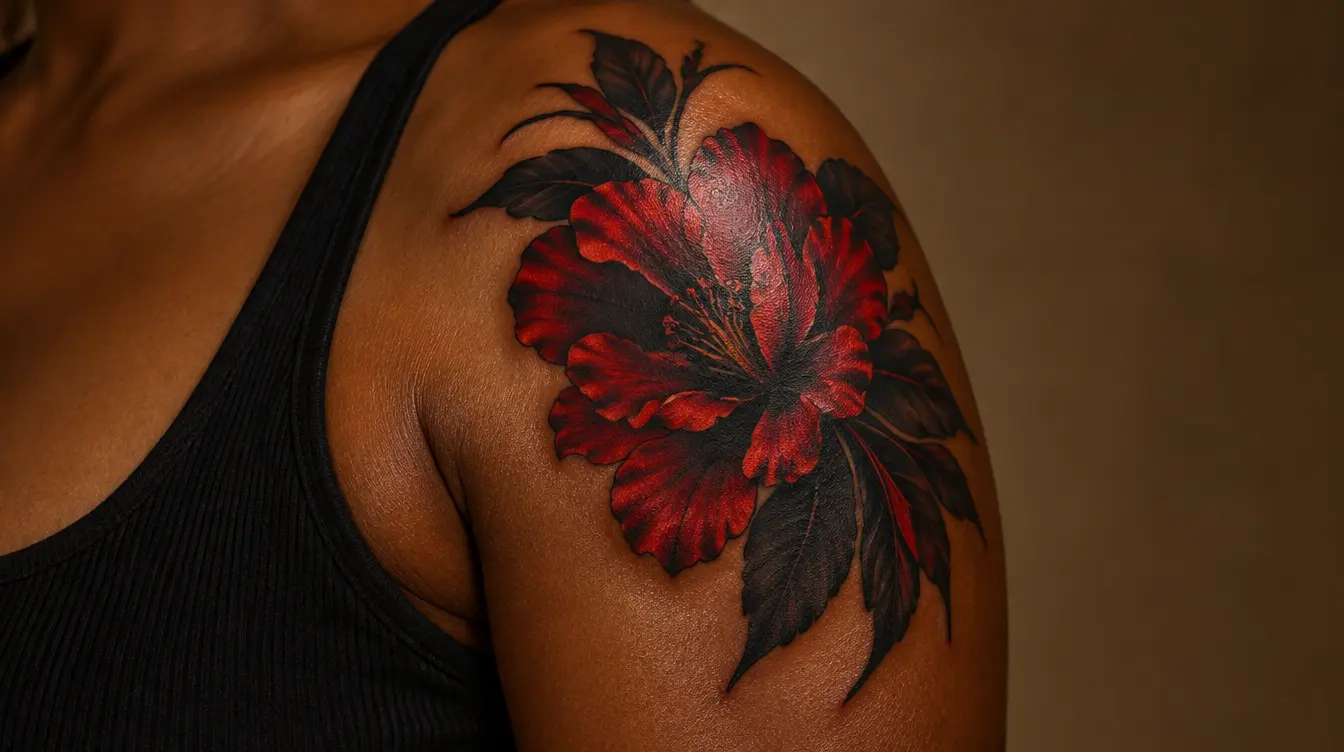
Three things make red reactions tricky:
- They can come late. Reactions have been described weeks, months and even years after the tattoo was done, long after normal healing.
- The cause is hard to pin down. Older reds often contained mercury sulphide (cinnabar). Modern reds are mostly organic pigments, such as azo pigments, and researchers suspect that in some cases a breakdown product of the pigment, not the pigment itself, triggers the reaction.
- Tests are unreliable. Standard patch tests on the surface of the skin often come back negative even when someone clearly reacts to their tattoo, so a test before the session cannot rule a reaction out.
This is exactly where an ink record earns its keep. If a red area flares up years later, a dermatologist can look up the exact brand and batch instead of guessing. Laser removal of a tattoo that is already causing an allergic reaction is approached with caution, because breaking up the pigment releases it into the body, so see a dermatologist before booking a removal clinic.
What to ask your artist
A good studio will not be offended by any of these questions. Most will be glad you asked.
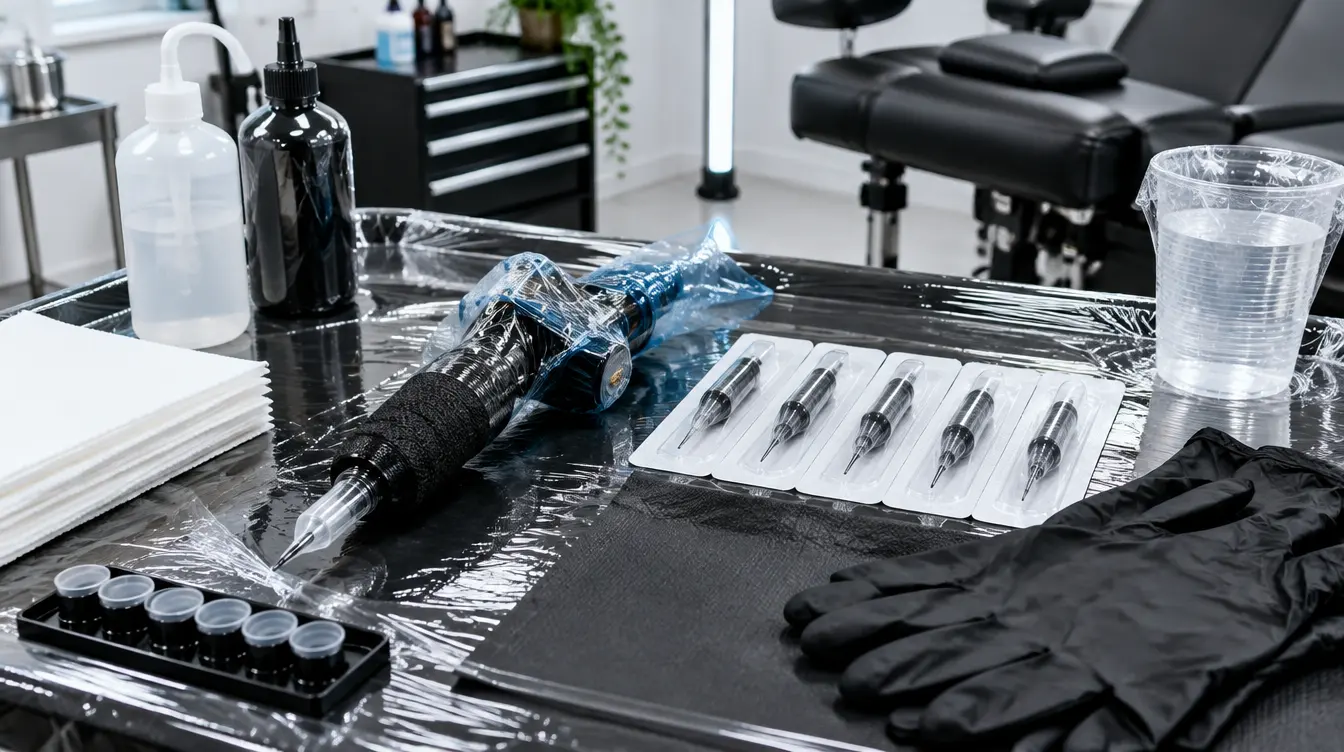
- Can I see the bottles? Look for the statement “Mixture for use in tattoos or permanent make-up”, a batch number and an ingredient list.
- Will I get a record of the inks? Brand, colour, manufacturer and batch number for every ink, on paper or digitally.
- Where do you buy your inks? Inks from the manufacturer or an official distributor are a safer bet than cheap bottles ordered from outside the EU.
- Do you pour the ink into single-use caps? The bottle itself should never touch the needle or your skin, and its opening date should be noted.
- In the Netherlands: does the studio have a GGD licence? Licensed studios are listed in a public register of safe tattoo and piercing studios.
- I have had allergies before. What do you suggest? If you react to nickel, have eczema or reacted to an earlier tattoo, say so. Some people choose black only, or keep red to a small area.
What the rules do not do
The EU restriction is a real step forward, but it is easy to read more into it than it says:
- It does not touch existing tattoos. It covers inks sold and used from 2022 onwards. Nobody has to remove an older tattoo because of it.
- It does not cover sterility. REACH limits chemicals, not bacteria. The Netherlands, for example, uses national law to require sterile inks.
- It is not a seal of approval. A legal ink can still cause an allergy in a particular person. The limits reduce the risk; they do not remove it.
- It stops at the EU’s borders. Great Britain is no longer covered by EU REACH and has been preparing a similar restriction of its own. Inks bought online from elsewhere may follow none of these rules.
What it means for you
Tattoo ink in Europe is more tightly controlled than it has ever been. You cannot check the chemistry yourself, but you can check the paperwork: a proper label, a batch number and a record of what went into your skin. In the Netherlands that record is called an inktpaspoort; anywhere else, you can simply ask for it.
Ink choice also shapes how a tattoo looks decades from now, since some colours fade faster than black. If you are weighing up colours for a new piece, InkAge can show you how a design may age over 10, 30 or 50 years, so you can decide with the long run in mind.
Frequently asked questions
What is an inktpaspoort?
Inktpaspoort, Dutch for ink passport, is the everyday name for a written record of the inks used in your tattoo: date, brand, colour, manufacturer and batch number. It is not an official document with its own law, but Dutch licensed studios must record ink information under the EN 17169 standard, and RIVM advises clients to keep it for at least seven years.
Are blue and green tattoo inks banned in the EU?
No. Two specific pigments, Pigment Blue 15:3 and Pigment Green 7, have been restricted since 4 January 2023. Manufacturers have since released reformulated blues and greens labelled as REACH-compliant, so artists in the EU can still tattoo in blue and green.
What must a tattoo ink label show in the EU?
The statement “Mixture for use in tattoos or permanent make-up”, a batch number, a full ingredient list in descending order, “pH regulator” where relevant, a nickel or chromium (VI) allergy warning if either is present, and safety instructions, all in the local official language.
Which tattoo ink colour causes the most allergies?
Red is the colour most often linked to allergic reactions in tattoos. Reactions usually stay within the red areas and can start weeks, months or even years after the tattoo. Patch tests are often negative, so keep a record of the exact ink and see a dermatologist if a red area becomes raised or itchy.
Do the EU tattoo ink rules affect my existing tattoo?
No. The REACH restriction covers inks sold and used from January 2022 onwards. It does not require anyone to remove or treat an older tattoo.
Sources
- Commission Regulation (EU) 2020/2081 on substances in tattoo inks or permanent make-up – EUR-Lex
- Tattoo inks and permanent make-up – European Chemicals Agency (ECHA)
- Tattoo inks: risk assessment for Pigment Blue 15:3 and Pigment Green 7 – German Federal Institute for Risk Assessment (BfR)
- Explanation of the NEN-EN 17169 tattooing standard – RIVM
- Supervision of tattoo inks and dyes 2024 – Netherlands Food and Consumer Product Safety Authority (NVWA)
- Tattoo-associated skin reactions – DermNet
Written by the InkAge editorial team from widely accepted tattoo-care practice. Figures are rules of thumb, not measurements. This is general information, not medical advice — ask your artist or a dermatologist about your own skin.
Last updated: 8 November 2026