In short
- The spine is one of the more painful spots on the back: the skin over the vertebrae is thin and the needle runs close to bone. The muscles on either side are noticeably easier.
- No spine is perfectly straight. A good artist places the stencil while you stand naturally and checks it in the mirror, sometimes several times, so the design looks straight on your body, not on a ruler.
- Healing is awkward because you cannot see or reach it. Plan help with washing and cream, sleep on your front or side, and choose loose tops without a strap across the fresh ink.
- The back is well protected from sun and friction, so spine tattoos often age well. The weak point is very thin lines and tiny lettering, which soften over the years; slightly bolder lines and larger letters last longer.
In this article 8
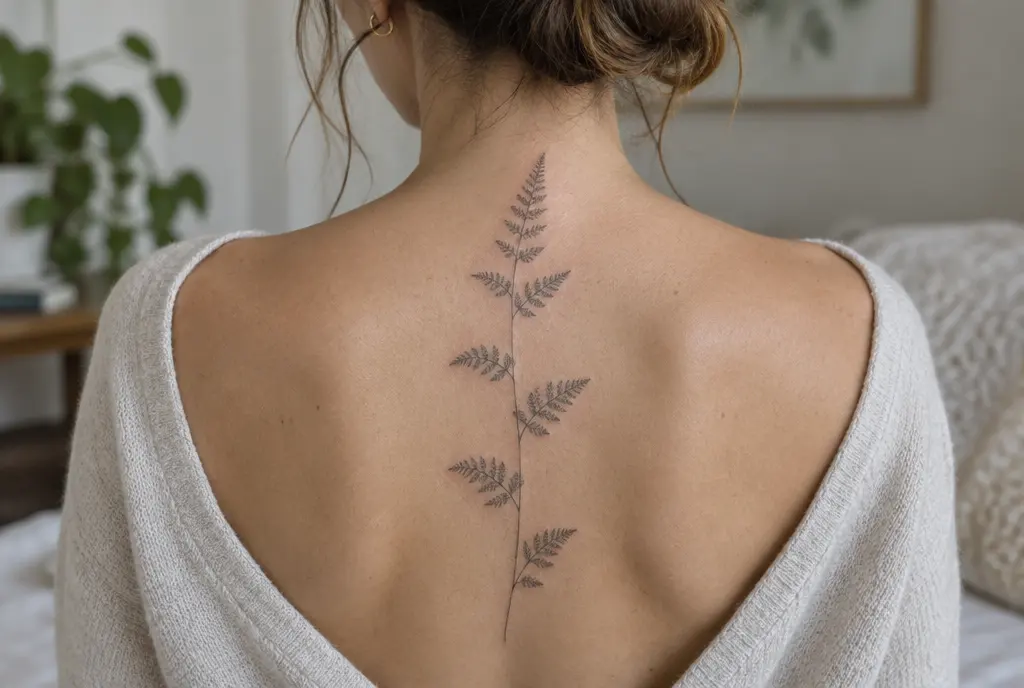
Noor had saved the picture for two years: a single fern, fine and airy, running from between her shoulder blades almost to the small of her back. On the day of the appointment the artist printed the stencil, pressed it on, and asked her to look in the mirror. It looked crooked. Not by much, a few millimetres at the bottom, but enough. The artist wiped it off and placed it again. And then a third time, with Noor standing with her arms loose and her weight on both feet. “Your spine isn’t wrong,” the artist said. “Nobody’s is straight. We just have to make the fern straight on you.”
Spine tattoos are among the most saved and shared designs online, especially in fine-line style: botanical stems, a column of small symbols, a word or a sentence running down the back. They are also one of the placements people know least about before they book. This guide covers what really matters: how much it hurts, how an artist handles a body that is not a straight line, how to heal a tattoo you cannot see, and how those delicate lines look after ten or twenty years.
> A note on the pictures: the images in this article are illustrations made to show typical situations. They are not photos of real people or real results.
How much does a spine tattoo hurt?
Honestly: more than most of the back. The skin directly over the vertebrae is thin, there is very little fat or muscle between it and the bone, and the needle’s vibration travels along the bone in a way many people describe as a deep, rattling buzz rather than a scratch. On most pain charts the line of the spine sits in the upper range, together with ribs, ankles and the top of the foot.
It is not the same along its whole length, though:
- Between the shoulder blades: often the sharpest part, because the bone sits closest to the surface here.
- The middle of the back: still bony, but many people find it more manageable once the first minutes have passed.
- The lower back: usually the easiest part of the spine, with a little more padding over the bone.
- Just beside the spine: the long muscles on either side are much kinder. A design that runs slightly off-centre, or crosses the spine only briefly, hurts noticeably less.
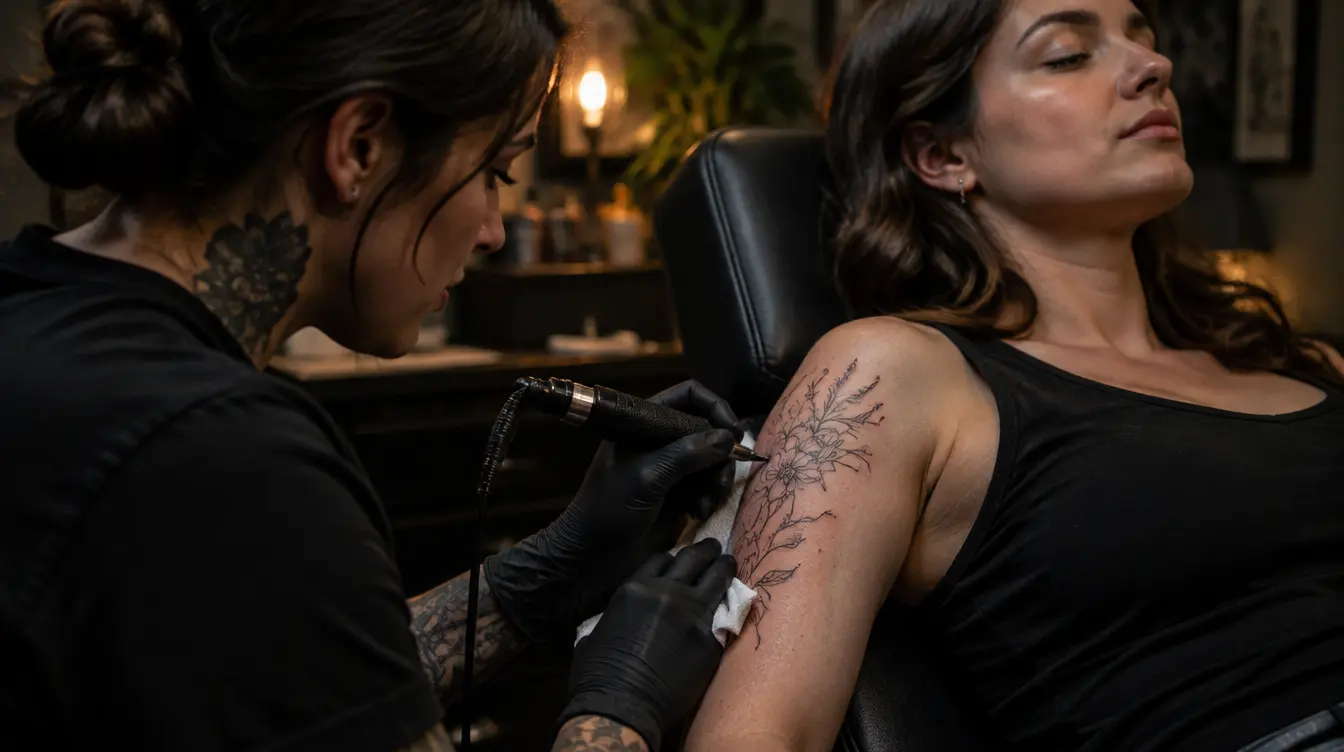
Most fine-line spine pieces take between one and three hours, which helps: it is a long stretch of skin, but rarely a full day in the chair. Eat beforehand, bring something to drink, and tell the artist when you need a short break. Breathing slowly and deliberately into your stomach, not your chest, keeps your back from tensing, and tensed muscles make it hurt more.
Read alsoRib tattoos: how much they hurt, how they age and how to get through the sessionThe spine hurts more than the rest of the back. The design does not have to sit right on it.
Why getting it straight is harder than it looks
This is the part that surprises most people. A spine is not a straight line. It has natural curves seen from the side, and seen from behind many people have small sideways bends, a higher shoulder, or a hip that sits slightly differently. Most of this is completely normal and invisible in daily life, until a long, thin, perfectly symmetrical line is placed on top of it.
On top of that, the skin of the back moves. Lift your arms, roll your shoulders or lean forward, and the shoulder blades slide and the skin shifts by centimetres. A design placed while you are hunched on a chair can look straight on the table and crooked when you stand up.
That is why experienced artists do a few things that can feel slow but make all the difference:
- The stencil goes on while you stand. Feet apart, weight on both legs, arms hanging loose, looking straight ahead. Not leaning on anything.
- They check it from a distance and in the mirror, often with a photo, and compare it with your shoulders, your hips and the natural line of your body.
- They move it if needed. Two or three tries are normal, not a sign that something is wrong.
- They straighten the design to your body, not to the spine. Sometimes that means following a slight curve rather than forcing a ruler-straight line that would look bent on you.
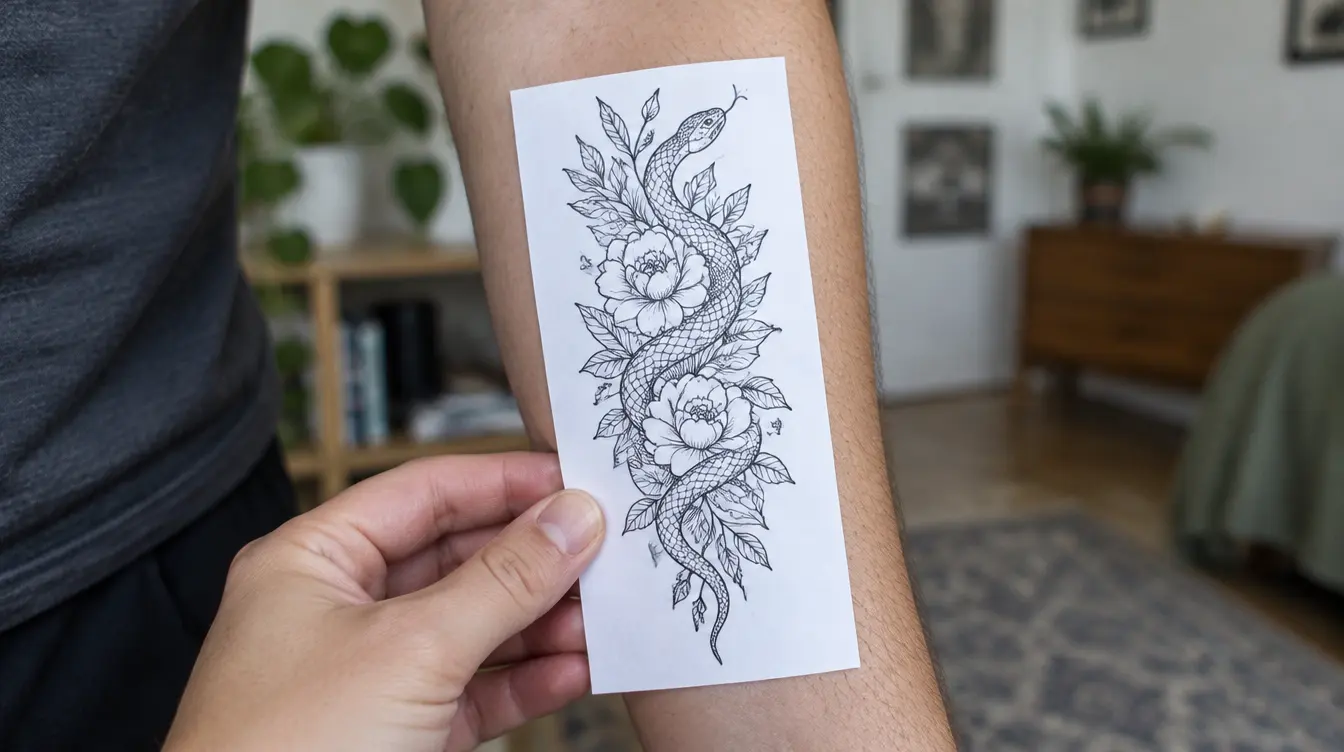
You have an important job here too. Look at the stencil yourself, in the mirror and in a photo, and only say yes when you are happy. It is far easier to move a stencil five times than to fix a crooked line later. If the design contains lettering, check the spelling letter by letter and decide which way it should read: most spine scripts read from top to bottom, but it is your choice.
Healing a tattoo you cannot see
A spine tattoo heals like any other: a few days of oozing and tenderness, then flaking and itching, then a dull, cloudy phase before the skin settles after a few weeks. The difference is practical. You cannot see it properly, and you can barely reach it.

A few things make the first two weeks much easier:
- Get help. Ask someone to wash it gently with mild soap and lukewarm water and apply a thin layer of aftercare cream once or twice a day. Clean hands only.
- Sleep on your front or your side. Lying on your back presses the fresh tattoo into the sheets, which can stick to it and pull at the healing skin. Fresh, clean bedding helps.
- Choose loose, soft tops. Bra bands, backpack straps, tight waistbands and seams running down the middle of the back all rub exactly where the ink is. A loose cotton shirt is the easiest choice; some people wear a bralette or skip the bra for the first days.
- Watch your chair. Leaning back into a car seat or office chair for hours causes friction and heat. Sit a little forward when you can.
- Tie up long hair. Hair rubbing and sticking to the area is more irritating than most people expect.
- No pools, baths, saunas or sea until the surface has fully closed, usually two to three weeks.
Because you cannot see it, ask someone to take a photo every couple of days. Healing changes are easier to judge in pictures than by feel, and you will notice early if something looks red, swollen or hot instead of simply flaky.
How spine tattoos age
Here is the good news. The back is one of the more forgiving places on the body. Most of the year it is covered by clothes, so it gets far less sun than hands, forearms or ankles. It does not rub against desks, shoes or bags all day. And the skin along the spine stretches less with weight changes than the stomach or hips. All of that helps a tattoo stay sharp for a long time.
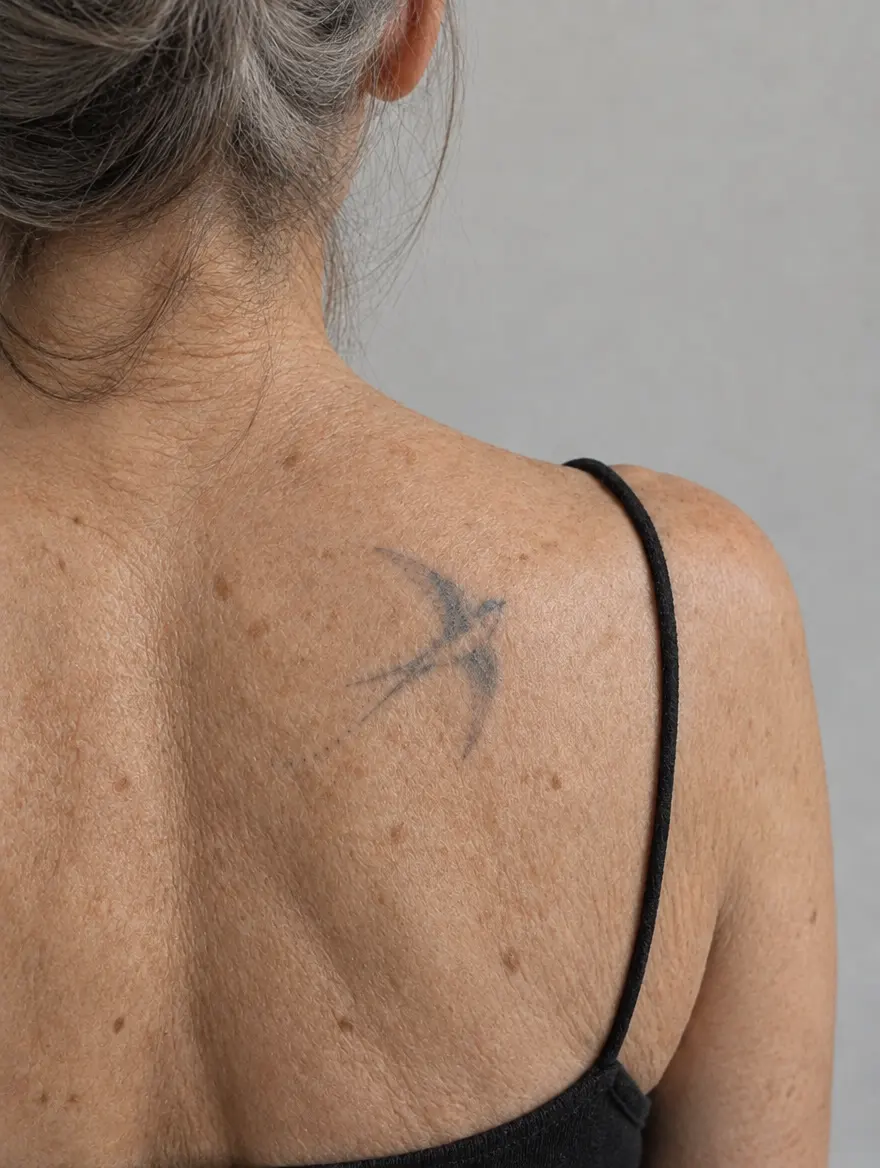
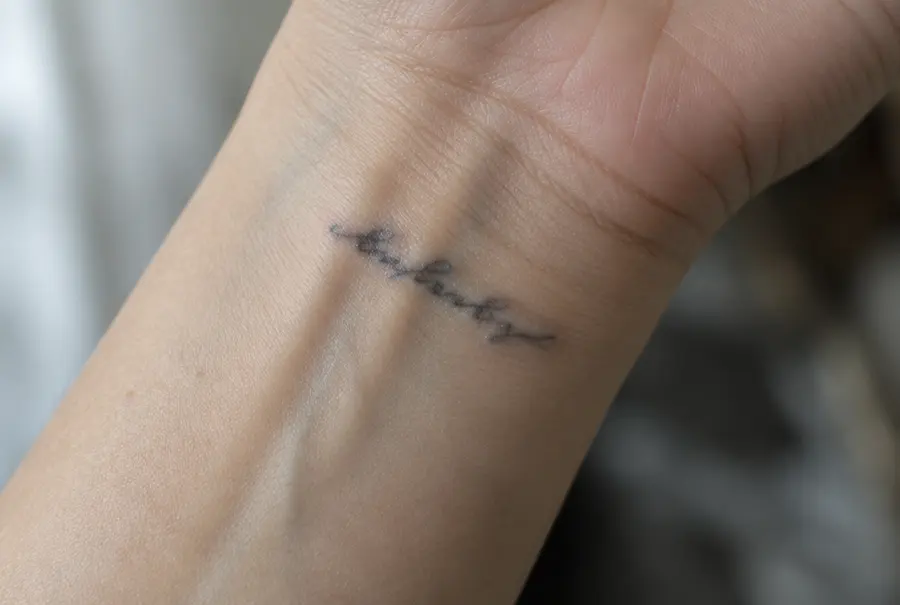
The weak point is not the place but the style. Over the years, every tattoo softens a little as the ink particles slowly spread in the skin. On a bold design you barely notice. On a needle-thin line, the spread is a larger share of the line, so it can look fainter, a bit blurred, or patchy where the line was very light to begin with. Tiny lettering is the most sensitive of all: when the gaps inside letters like e, a or s are very small, they can close up over time.
That does not mean fine-line spine tattoos are a bad idea. It means a few design choices make a big difference:
- Slightly bolder main lines. A fine design can keep a delicate look with a confident outline and finer details inside it.
- Larger lettering. For script, letters that are at least as tall as a fingertip age far better than tiny ones. Ask your artist what size they would choose for your word.
- Space between elements. Leaves, dots or symbols that almost touch can merge into one shape. A little breathing room keeps them readable.
- Fewer, clearer details. A fern with fifteen clear leaves will look better in twenty years than one with forty microscopic ones.
Bolder ideas for the spine
Not every spine tattoo has to be fine line. The long vertical shape suits bolder styles just as well, and they tend to hold up even better over time.
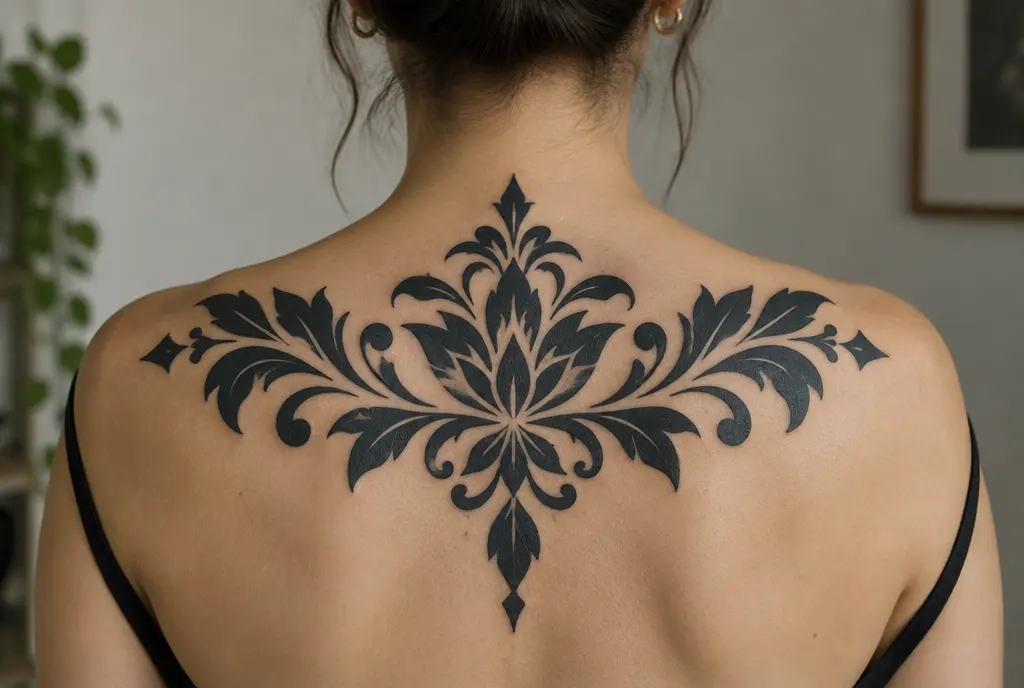
Ornamental blackwork, a row of geometric shapes, a dotwork column, a Japanese-inspired stem or a bold botanical design with solid leaves all follow the spine beautifully. Another option is a design that spreads out at the top or bottom, across the shoulders or the lower back, which makes the line of the spine part of a bigger composition and is more forgiving if your body is not perfectly symmetrical.
Sun, backless clothes and touch-ups
Even a well-protected back sees the sun: on the beach, in a swimsuit, in a backless dress at a summer wedding. That is when a spine tattoo fades fastest. Use a high-factor sunscreen on it whenever it is uncovered, and reapply after swimming. Those few summer days a year matter more than the rest of the calendar.

If a line healed lighter or patchy, a touch-up after it has fully healed, usually after four to six weeks, is normal and often included by the artist. Many people also get a small refresh years later to bring back the darkest lines. On the spine, ask a friend or your artist to look at it closely from time to time, since you rarely see it yourself.
Read alsoNeck tattoos: pain, aging and which styles work on the front, side, back and behind the earWhat it means for you
A spine tattoo is a beautiful choice, and on the back it often ages better than on many other places. Expect it to hurt more than the rest of your back, expect the stencil to move a few times before it is right, and plan your healing around a spot you cannot reach. Choose lines and lettering that are bold enough to last, and protect it from the sun when it is on show.
If you want to see how your design might look in ten, twenty or fifty years before you commit, you can upload a photo or design to InkAge and preview how it may age. On a long, fine design along the spine, that preview often shows exactly which details to make a little bolder.
Frequently asked questions
Does a spine tattoo hurt more than other places?
Yes, for most people the line of the spine is one of the more painful spots on the back, because the skin over the vertebrae is thin and close to bone. Between the shoulder blades is often the sharpest part; the lower back and the muscles beside the spine are easier.
How do tattoo artists make a spine tattoo straight?
They place the stencil while you stand naturally with your arms down, check it from a distance and in a mirror, and move it until it looks straight on your body. Since no spine is perfectly straight, the design is aligned to how your back actually looks, not to a ruler.
How do you sleep after a spine tattoo?
On your front or your side for the first one to two weeks, on clean bedding. Lying on your back presses the fresh tattoo into the sheets, which can stick to it and irritate the healing skin.
Do fine-line spine tattoos fade?
All tattoos soften over the years, and very thin lines and tiny lettering show it most. The back is well protected from sun and friction, which helps. Slightly bolder main lines, larger letters and a little space between details keep a spine tattoo readable for longer.
Can I wear a bra after a spine tattoo?
If the band or strap would cross the fresh tattoo, it is better to avoid it for the first days or choose a soft bralette that sits away from the ink. Friction and tight elastic over a healing tattoo slow down healing and can pull at the skin.
Sources
Written by the InkAge editorial team from widely accepted tattoo-care practice. Figures are rules of thumb, not measurements. This is general information, not medical advice — ask your artist or a dermatologist about your own skin.
Last updated: 12 November 2026