In short
- A thin line holds less ink, so fading and spreading show more – softening often becomes noticeable after 5–10 years.
- Fine lines closer than 1 mm can merge within 10–15 years, so leave at least 1–2 mm between them.
- Go slightly bigger, ask for stronger key lines and choose a protected spot.
- An experienced artist, careful healing and sun protection matter even more here than with other styles.
In this article 12
- What counts as a fine line tattoo?
- Why does it look perfect in the first few days?
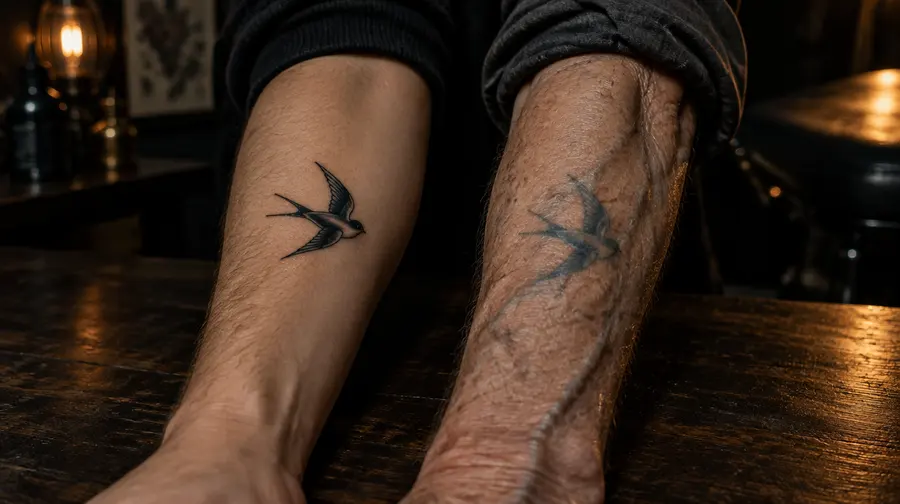
- What happens to a thin line over the years?
- The artist’s hand: depth, blowouts and fallout
- Which fine line designs age well, and which don’t?
- Size: the most common mistake
- Placement: where does it hold up best?
- What to ask your artist
- Healing and aftercare: where a lot is decided
- Preview how your design will age
- The one thing to take away
- Frequently asked questions
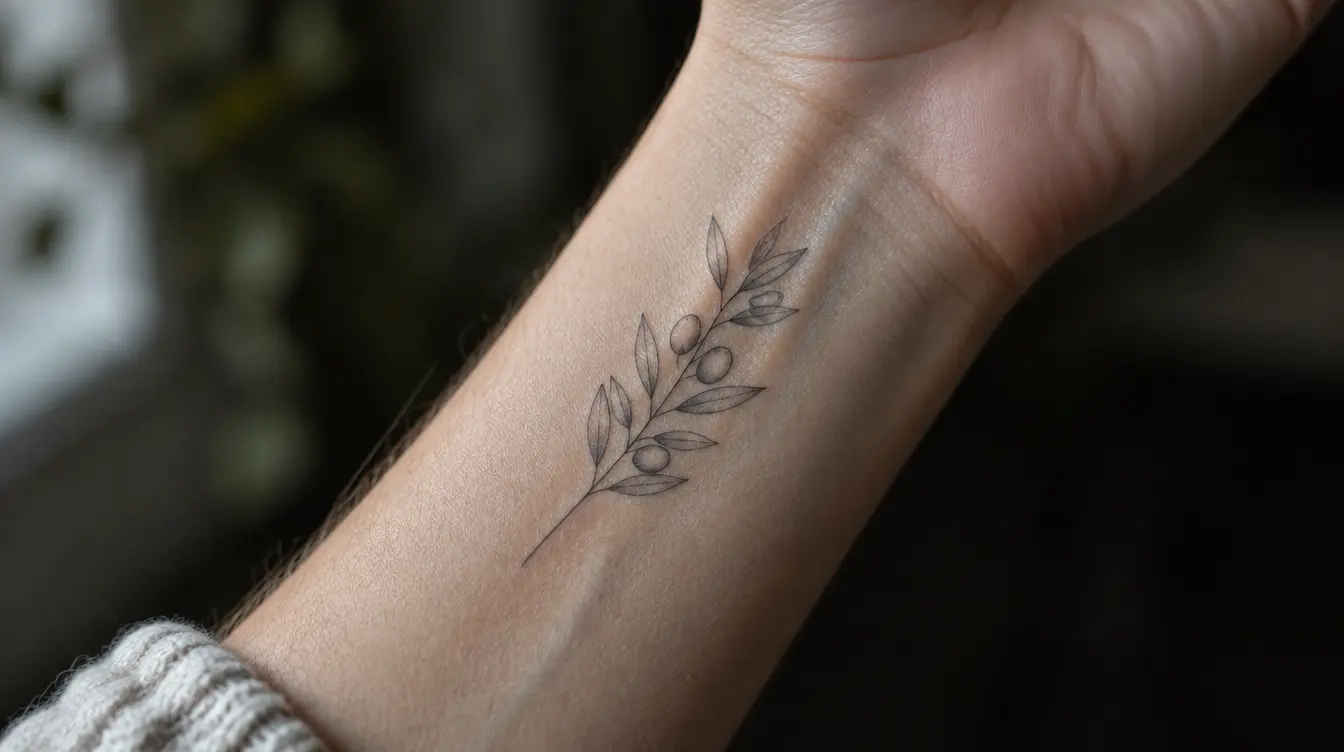
It’s late and you’re scrolling Instagram when an image stops you: a slender, graceful olive branch on a wrist, or a word in hair-thin script, barely a few centimetres long, on someone’s ribs. Perfect and delicate, as if drawn with a pen. You save it, then another, and soon there are twenty similar pictures in your folder. You’ve already picked out the studio, and only the booking button stands between you and making one of them yours.
Before you tap it, it’s worth asking a question most of these photos don’t answer: how will this look in five, ten or thirty years? This honest guide isn’t here to talk you out of a fine line tattoo. Instead, we show you why it ages faster, which designs hold up well over time and which don’t, what to ask your artist, what to watch for while it heals, and how to preview it on your own skin so you’ll still be happy to look at it decades from now.
What counts as a fine line tattoo?
Fine line is a style built on very thin lines. It is typically made with a single needle or a very small needle grouping, with little or very subtle shading, mostly in black or grey ink. It includes minimalist line drawings, handwritten script, botanical designs, tiny symbols and highly detailed so-called micro-realistic images.
Its popularity is easy to understand. It is elegant and understated, fits into a small space, and freshly made pieces look stunning in photos. Many people choose it because, as a first tattoo, small and delicate feels less intimidating, less “permanent” than a large, bold design. It is also easier to cover at work and suits a clean, minimalist taste.
Let’s be clear: fine line is neither worse nor better than other styles – it simply ages by different rules. The trade-off is durability, and if you know that in advance, you can plan smartly. Most disappointments don’t come from the style itself, but from designing for the fresh photo rather than for healed skin years later.
Why does it look perfect in the first few days?
The vast majority of fine line photos you see on social media are taken right after tattooing. That’s when the design is at its sharpest: ink is still present close to the surface, the skin is slightly swollen and glossy, the lighting is studio-grade, and the photo is often posted with a filter or boosted contrast. It isn’t cheating – it’s just a record of a very short moment.
During healing – roughly the first month – the epidermis renews itself, some of the surface ink is shed, and the line becomes a little softer and lighter. This happens with every style, but on a bold line it is barely noticeable, while on a hair-thin one it is clearly visible. That’s why a healed fine line tattoo is almost always more subdued than the fresh photo.
That in itself isn’t a problem – in fact, it’s what makes many healed fine line pieces look natural, as if they had always been part of your skin. Just know in advance that your saved images show a snapshot, not your tattoo’s long-term face.
What happens to a thin line over the years?
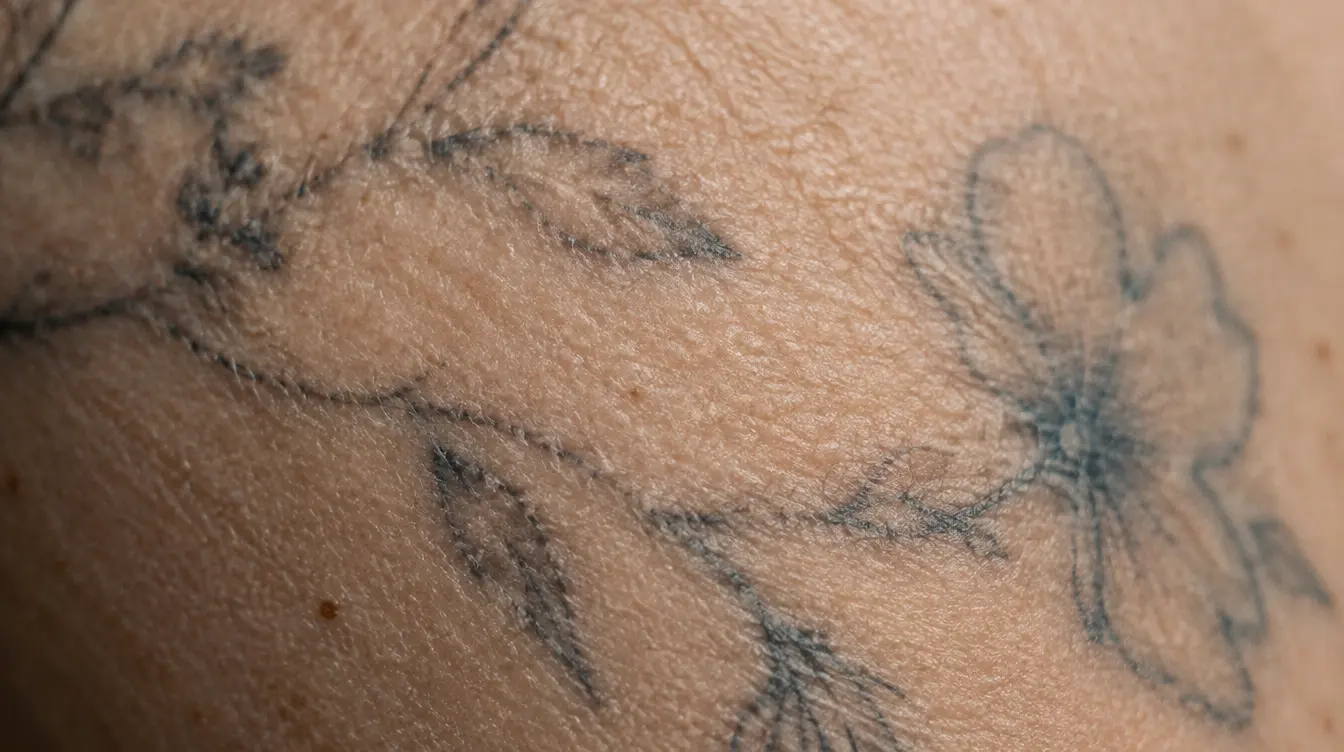
The ink in every tattoo slowly drifts. Immune cells in the dermis called macrophages swallow the pigment; when they die, the ink is released and captured again by new cells – a 2018 mouse study (Baranska and colleagues, Journal of Experimental Medicine) described exactly this cycle. Along the way, a little pigment always shifts. Many artists use the rule of thumb that lines spread by roughly a tenth of a millimetre per decade. It is an estimate, not a precise measurement, but it shows the proportions well.
Here comes fine line’s biggest challenge. A bold line contains a lot of ink, so fading and spreading are proportionally small. A thin line contains less ink, so the same fading is more visible, and the same spread is a much bigger change relative to the line’s width. A very thin line that spreads by a tenth of a millimetre over ten years becomes proportionally much thicker and softer-edged, while on a two-millimetre line the same change is almost imperceptible.
A simple example in numbers
Picture two parallel fine lines with a 1-millimetre gap between them. If both spread outwards, the gap closes from both sides. Within 10–15 years the difference is clearly visible, and lines drawn too close together often merge. That’s why it’s said that fine lines closer than 1 mm typically run together within 10–15 years. With a 2 mm gap, the same process can take decades.
In practice, this means a fine line tattoo often starts to soften visibly after 5–10 years – depending on size, placement and sun. Larger, airier designs keep their character much longer.
Fading shows up differently, too. A bold black line stays black for years, at most turning slightly greyer. A hair-thin line, however, holds so little ink that even a small loss can turn it grey and in places almost translucent. This is especially true of shaded areas made with diluted grey ink: these often become lighter than you expected within the first few years.
The artist’s hand: depth, blowouts and fallout
Fine line is one of the hardest techniques because the margin for error is tiny. Ink belongs in the dermis: if the needle works too shallow, the pigment falls out in patches as the skin heals and the line becomes broken. Too deep, and the ink can spread in the layer beneath, leaving a bluish, blurry halo around the line – known as a blowout.
Both mistakes are far more noticeable on a fine line. A bold outline can hide a small irregularity; a hair-thin line shows everything. What’s more, these flaws often only become visible after healing, when they are harder to fix: missing sections can be filled in, but a blowout usually stays and can at most be covered.
That’s why with fine line it is especially important to choose an artist who is specifically experienced in this style, and whose healed work you have seen. Price is a much worse deciding factor here than the portfolio: a cheaper line made by an unsteady hand can remind you for years of where you tried to save money.
Which fine line designs age well, and which don’t?
Not every fine line design is equally fragile. Whether a design ages well depends mostly on how much breathing room it has and how much it relies on tiny details.
Hold up well over time
- simple, clean line drawings with plenty of open space
- larger botanical designs – branches, leaves, flowers – where the lines aren’t crowded
- geometric shapes with few inner details
- black-ink work where the key lines are a little stronger
Riskier
- tiny handwritten script where the inner spaces of letters are very small
- micro-realistic portraits and very small, highly detailed images
- dense dotwork or fine shading in a tiny area
- white ink, pastels and light colours without a black outline
This doesn’t mean riskier designs are off-limits. It means you should expect faster change, more frequent touch-ups, and a thirty-year version that is much further from today’s.
A fine line tattoo doesn’t last because it’s thin – it lasts because it has room to be thin.
Size: the most common mistake
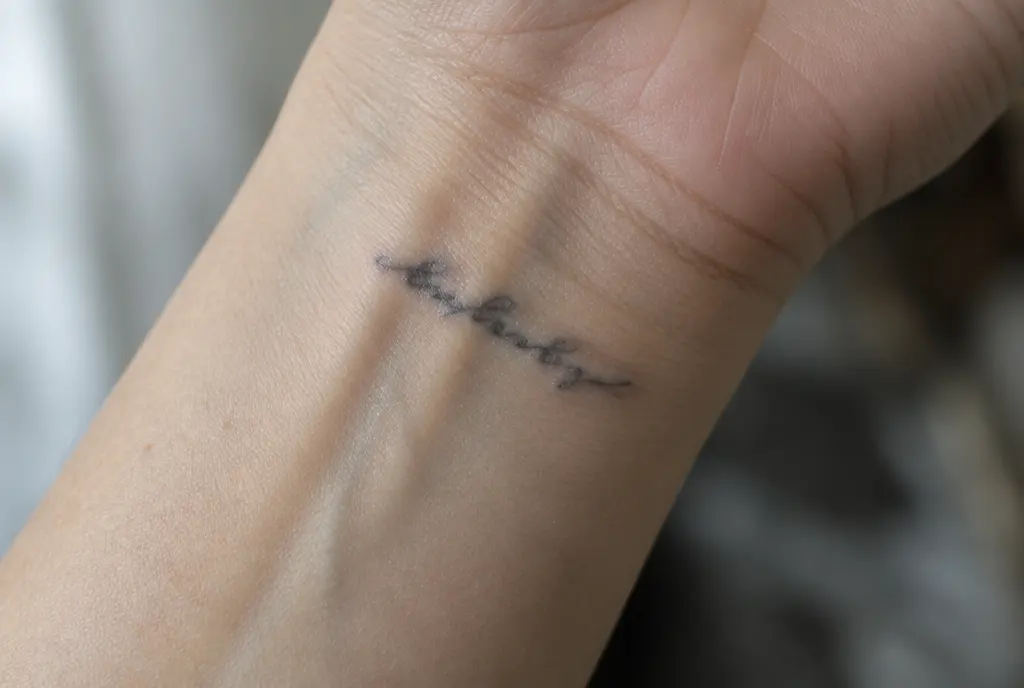
Most fine line disappointments aren’t about the style but about size. The instinct is often “make it small and discreet”, but small and detailed together age badly. If a design has a lot of detail, it needs space, or the details will slide into each other.
As a rule of thumb: go slightly bigger than your first instinct, especially for script and small symbols. With letters, the inner spaces fill in first, so a word just a few millimetres tall can become hard to read after a few years. If you’re unsure, ask your artist what minimum letter size they consider safe for that spot.
There’s another good approach: instead of increasing the size, reduce the detail. A smaller design can still become a lasting tattoo if you simplify it – fewer leaves, fewer lines, bigger gaps. It’s worth talking this through with your artist, because they know what works on skin and what only works on paper.
A simple test at home
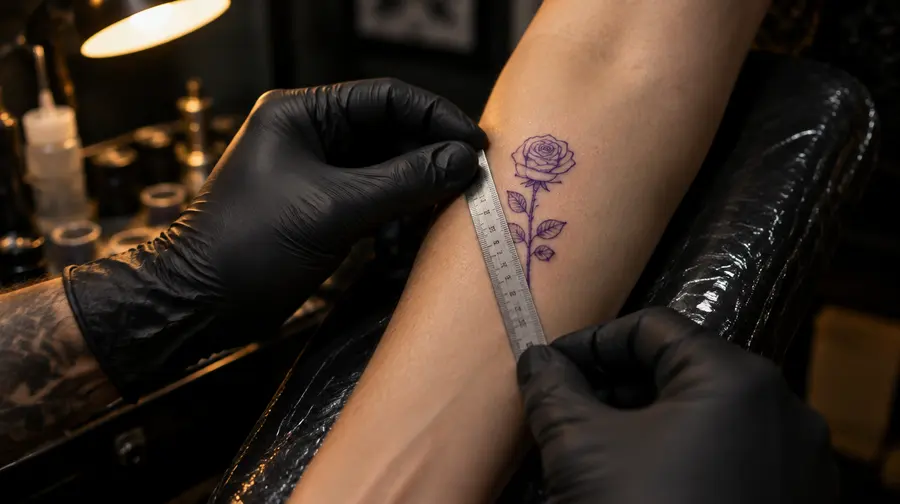
Print the design at its real size, cut it out and tape it to the spot you have in mind. Stand in front of a mirror one or two metres away – the distance from which other people will see it. If you can no longer read the script from there, or the details turn into a single grey blur, the design is already too small – and in a few years it will be even more so.
Placement: where does it hold up best?
Three things wear tattoos down: friction, sun and stretching. Fine lines are more sensitive to all three, so choosing the spot matters even more.
- Good choice: inner forearm, upper arm, shoulder, upper back, ribs, thigh. They are mostly covered, see little friction and the skin stays fairly stable.
- With care: the outer forearm and the back of the neck get a lot of sun, but can be well protected with consistent sunscreen.
- Wears fast: fingers, the sides of the hands, the back of the hand, feet. Because of constant washing and friction, thin lines here may need a touch-up within a year.
The wrist is a popular fine line spot and works well for many people, but because of bending and frequent sun it is especially worth avoiding tiny details there. If you’re unsure, compare two possible spots side by side – often a few centimetres make a big difference.
Think about body changes too. Skin on the belly, hips and chest can stretch more with weight changes or pregnancy, which can distort a delicate, strictly regular design more visibly. The upper arm and back are more predictable in this respect as well.
What to ask your artist
A good artist is glad when you arrive prepared and don’t just show a picture, but ask about the long term too. These requests can do a lot for durability:
- Ask to see healed work – ideally some that is 1–3 years old.
- Ask for a slightly thicker needle on the key outlines, keeping the finest lines for decoration.
- Ask for at least 1–2 mm between lines, especially in lettering and dense details.
- Use black ink for the structural elements; keep white and pastels as accents only.
- Ask honestly: how do they think this design will look in ten years, in this spot, at this size?
If your artist suggests going bigger or simplifying the design, don’t take it as an insult – it usually means they’re thinking about your tattoo’s future, not just today’s photo. An artist who agrees to everything isn’t necessarily looking out for you.
Healing and aftercare: where a lot is decided
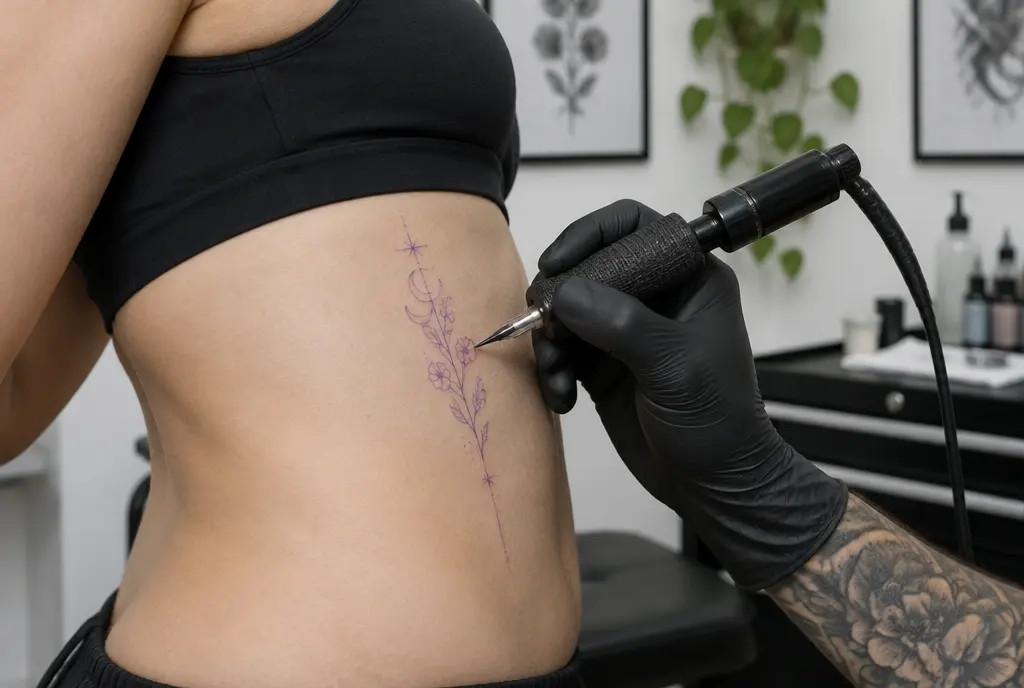
Fine lines are less forgiving of poor healing. If you pick the scabs, soak the fresh tattoo too early at the beach or in the bath, or it gets infected, a thin line breaks up and goes patchy more easily than a bold one. Follow your artist’s aftercare instructions exactly – they know their own technique and the materials they use.
Keep it out of the sun while it heals: cover it with clothing and skip the tanning bed. Don’t put sunscreen on a fresh, open wound. Sunburn is especially harmful in this period, because it hits the skin just as the ink is still settling.
After healing comes the long-term habit: whenever the tattoo is exposed, always use SPF 50. Many studios offer a free or discounted touch-up a few weeks after the session – if a line healed incompletely, that is the best moment to fill it in. If you notice unusual symptoms while healing, such as strong swelling, pus or fever, see a doctor.
In the long run, well-hydrated, healthy skin also works in your tattoo’s favour: a simple, fragrance-free body lotion helps keep skin from getting dry and flaky. It’s not a miracle cure and won’t stop the ink from drifting, but the design looks fresher and more vivid on it.
Preview how your design will age
These rules are useful, but the combination of your design, your skin and your chosen spot is unique. In InkAge you can see it concretely before you decide anything:
- Upload a photo of the body part where you plan the tattoo – in natural light, sharp.
- Place the fine line design and set it to exactly the size you planned with your artist.
- Look at the 10- and 30-year images: where do lines start to merge, is the script still readable, do the fine details survive?
- Check the ink longevity score: the 0–100 value quickly flags whether the size or placement is risky.
- Tap “Make it last”: InkAge redraws the design in a more durable version, with stronger key lines and bigger gaps, so you can see the two side by side.
Once you have both versions, you can take them to your artist as a PDF, or ask your friends to vote. The preview is an estimate, not a guarantee – but it is very good for making the most important decisions about size, placement and detail before you book.
The one thing to take away
Do fine line tattoos last? Yes, if you give them room. A slightly bigger size, slightly stronger key lines, at least 1–2 mm between lines, a protected spot, an experienced artist and consistent sun protection – with these, a fine line design can still look beautiful decades from now.
Expect it to soften, and plan a touch-up every 8–10 years. The goal isn’t for it to stay forever as it looks in the fresh photo, but for you to feel the same thing when you look at it thirty years from now.
Frequently asked questions
How long does a fine line tattoo stay crisp?
Often 5–10 years before softening is noticeable, depending on size, placement and sun. Larger, airier designs last much longer. Tiny, dense details blur first.
Is a fine line tattoo a bad idea?
No – just give it room. Ask for slightly stronger key lines and fewer tiny details, choose an experienced artist, and check the 30-year preview before you book.
Can a fine line tattoo be touched up?
Yes, an artist can retrace faded or broken lines. Keep in mind that each touch-up adds a little ink, so the line may get slightly thicker over time. If possible, go back to the artist who knows the original work.
Does fine line work on darker skin?
It can, but a thin line has less contrast on darker skin, so fading may reduce its visibility sooner. Black ink, slightly stronger key lines and an airy design matter especially here. Choose an artist whose portfolio includes healed work on similar skin tones.
Is a fine line tattoo easier to remove with a laser?
Because it holds less ink, fewer sessions are often enough, but that isn’t guaranteed: depth, ink and skin all play a role. InkAge’s laser preview helps you picture the process. Always discuss removal with a dermatologist or a qualified specialist.
Written by the InkAge editorial team from widely accepted tattoo-care practice. Figures are rules of thumb, not measurements. This is general information, not medical advice — ask your artist or a dermatologist about your own skin.
Last updated: 12 October 2026