In short
- The neck is four placements in one. The back of the neck is usually the easiest, the side is moderate, behind the ear is short but buzzy over the bone, and the front of the throat is one of the most painful spots on the body.
- The neck gets sun almost every day, the skin is thin at the front and it folds every time you turn or look down. Bold lines and shapes that follow the curve of the neck age better than fine detail across the throat.
- Blackwork, bold script and small, simple fine line behind the ear or on the nape are the safest choices. Tiny lettering and delicate shading on the front wear fastest.
- A neck tattoo is hard to hide. Opinions are changing, but surveys still show that many people, especially older ones, see face and neck tattoos differently from other visible ink.
In this article 10
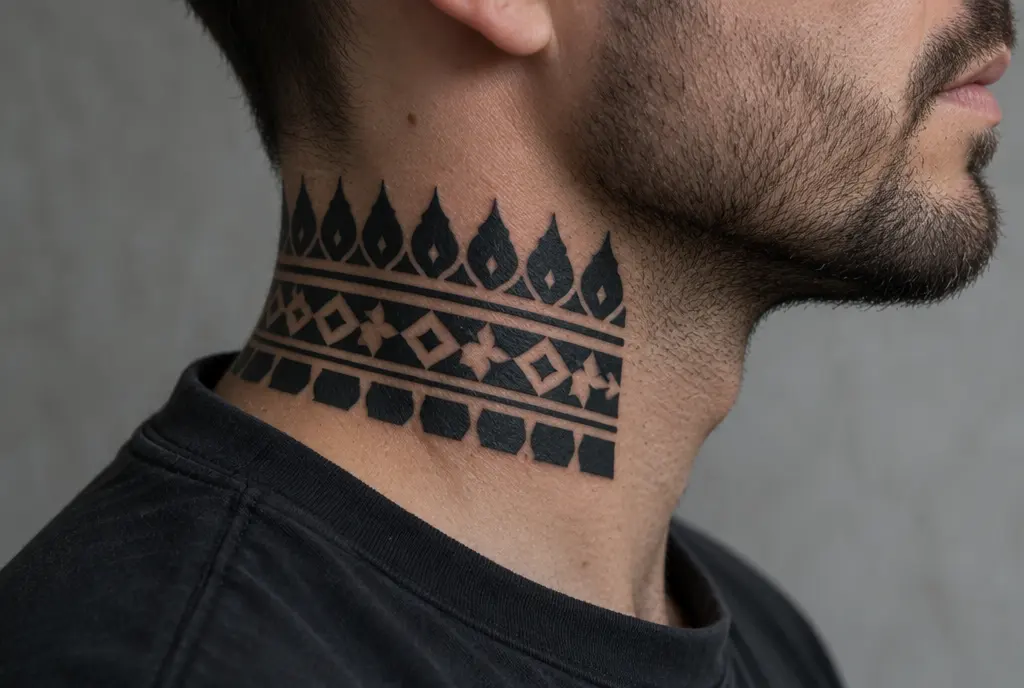
Marco had been planning it for two years: a black ornamental piece on the side of his neck, running from just below the ear down towards the collarbone. He had the design, he had the artist, and he had the slightly nervous feeling that comes with a placement you see in every mirror. The night before, he searched three things in a row: how much does a neck tattoo hurt, will it still look good in twenty years, and what will people at work say.
Those are exactly the right three questions. The neck is one of the most striking places for a tattoo, and one of the most demanding. This guide goes through the different parts of the neck one by one, how much each hurts, how the skin there treats ink over the years, which styles hold up, how healing works when you cannot cover the area, and what to think about before you commit.
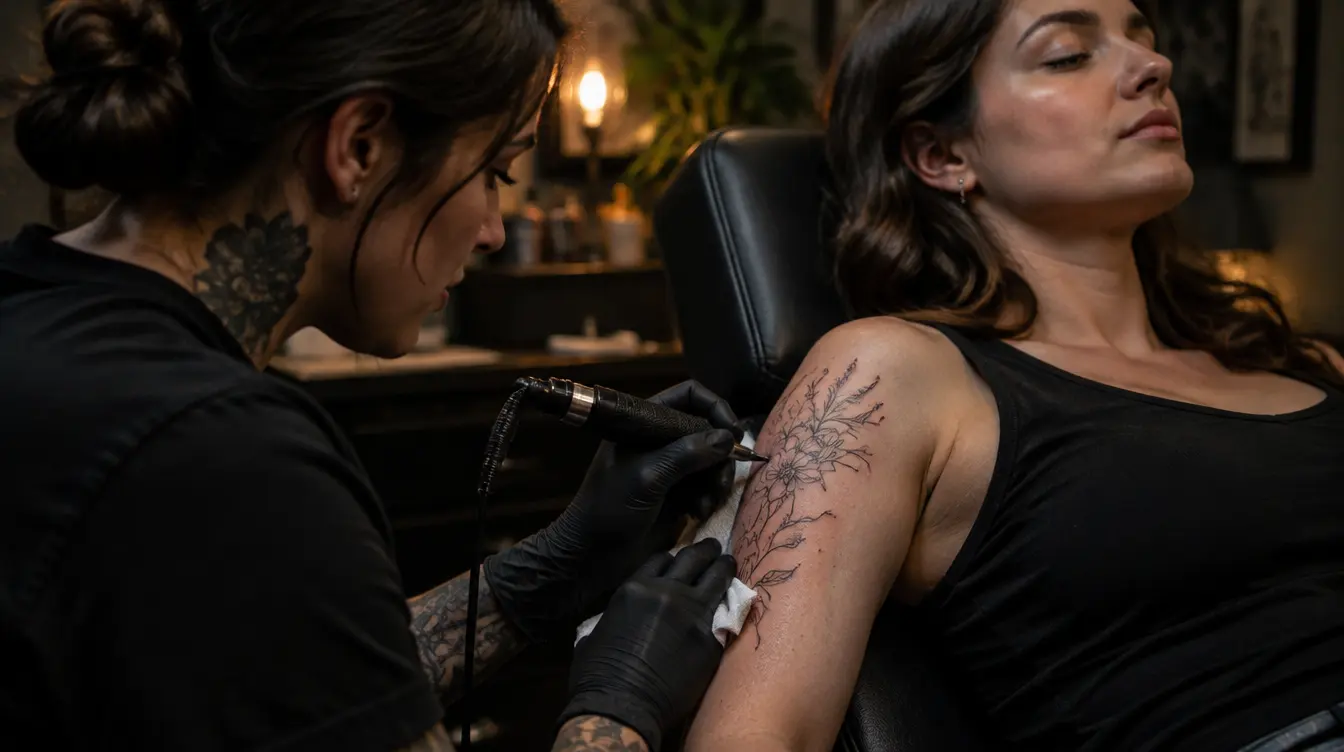
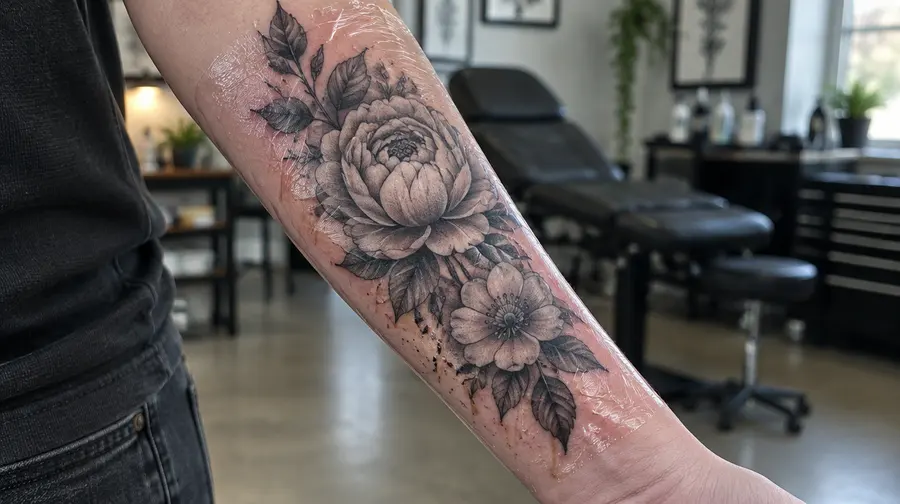
> A note on the pictures: the images in this article are illustrations made to show typical situations. They are not photos of real people or real results.
The neck is four placements, not one
When people say “neck tattoo”, they can mean very different things. The skin, the movement, the sun and the pain are not the same all the way around, so it helps to split the neck into four areas.
- The back of the neck (nape). The skin is relatively thick, it moves less than the front, and long hair or a collar can cover it. It is the gentlest neck placement in almost every way.
- The side of the neck. A popular spot for larger pieces that wrap from the ear towards the shoulder. Moderate pain, a lot of movement when you turn your head, and plenty of sun.
- Behind the ear. A small area over the bone behind the ear. Good for small designs, quick to tattoo, and easy to hide with hair.
- The front of the throat. Thin skin, constant movement when you swallow and talk, folds when you look down, and the most sun. It is the hardest part of the neck to tattoo, to heal and to keep sharp.
How much does a neck tattoo hurt?
Pain is personal, and there is no scientific ranking of body parts, so take any number you see online as a rough guide. That said, tattoo artists and pain charts agree on the overall order fairly well.
Back of the neck: usually the easiest
Most people find the nape one of the more bearable spots on the upper body. There is more padding here than at the front, and the skin is less sensitive. Expect a scratchy, warm feeling that gets sharper only close to the spine and the hairline.
Side of the neck: moderate, with sharp spots
The side is in the middle. The fleshy part below the ear is usually fine; it gets sharper towards the throat, the collarbone and the jaw. Large side pieces take several hours, and the long session is often harder than the pain itself.
Behind the ear: short but buzzy
Behind the ear the needle works right above the bone. Many people describe it less as pain and more as a loud, vibrating buzz that you seem to hear inside your head. Because designs here are small, it is usually over in well under an hour.
Front of the throat: among the most painful spots
The throat is consistently ranked among the most painful places to tattoo. The skin is thin, there is little padding, and the area is full of nerve endings. Some people find it hard not to swallow while the needle is working, which is one reason artists work in short passes here and ask you to keep still and breathe calmly.
The back of the neck and the front of the throat are only a few centimetres apart, but for pain, healing and aging they are almost different body parts.
How neck tattoos age
Every tattoo softens over time: the ink particles slowly spread in the skin, lines get a little wider and contrast drops. The neck speeds up some of this for three reasons.
1. Sun, almost every day
The neck is one of the most sun-exposed places on the body. Unless you wear high collars all year, it catches UV on every walk, every bike ride and every summer afternoon. UV light breaks down tattoo pigment and also ages the skin around it, so over the years the ink fades and the skin loses firmness. The back of the neck, in particular, gets a lot of sun when you bend forward or wear your hair up.
2. Thin, moving skin
Especially at the front, the skin is thinner than on the forearm or the back, and it stretches and folds with every swallow, word and turn of the head. Thin skin makes it easier for ink to spread a little too far during tattooing, which is called a blowout, and it gives fine lines less room to stay crisp.
3. Creases
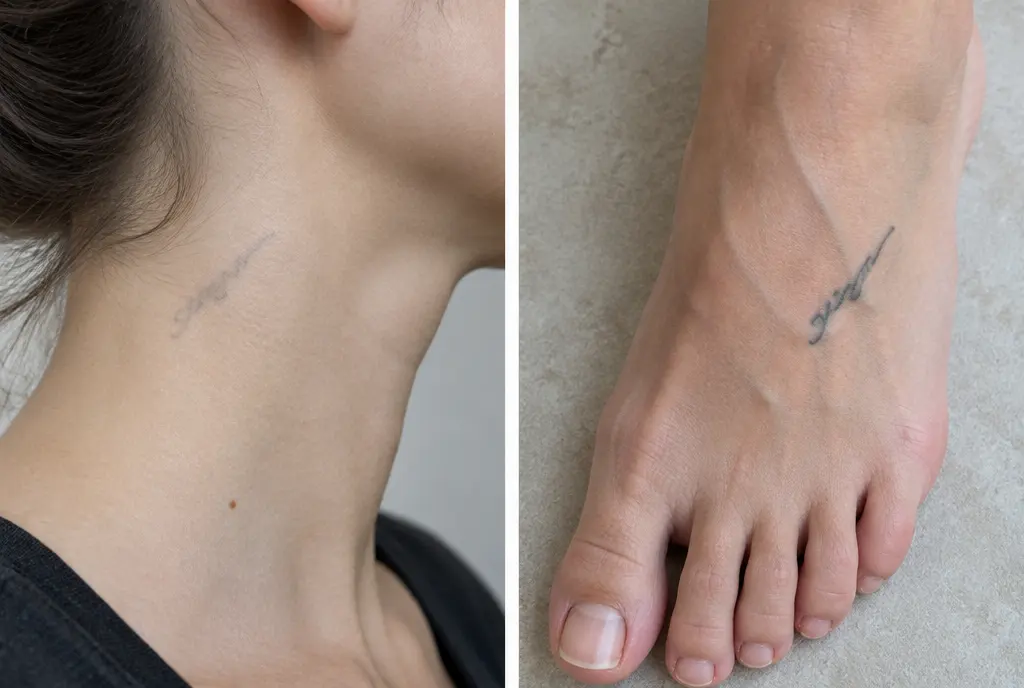
Everyone develops horizontal lines on the neck over the years, and they usually show first at the front and sides. A design that runs across those lines will bend with them. Tiny letters or fine details in the middle of the throat are the first to become hard to read.

None of this means a neck tattoo will look bad. It means the design has to be made for the neck: bold enough, open enough and shaped to the body.
Which styles work on the neck
Some styles are naturally suited to a placement that moves, folds and catches sun. Others need more care.
Blackwork
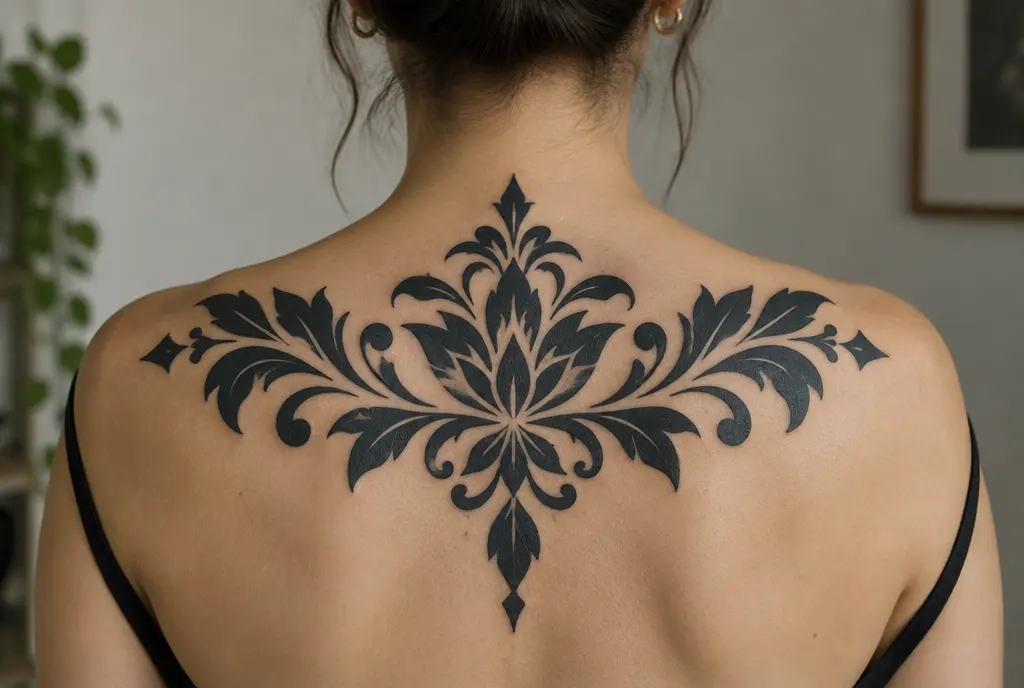
Blackwork is one of the best matches for the neck. Black ink is the most stable pigment, and bold shapes, ornamental bands and patterns stay readable even when the edges soften. Designs that wrap around the side of the neck, or sit as a shape on the nape, tend to age especially well. If you are looking at a blackwork neck tattoo, ask your artist to leave some skin between the black areas, so the design does not turn into one dark patch decades later.
Script and lettering
Words on the neck are popular, both along the side and across the nape. The rule is simple: the bigger and bolder, the longer it lasts. Letters need space inside them, so an e or an a does not close up. Very small handwriting across the front of the throat is the version most likely to blur first.
Fine line and small designs behind the ear
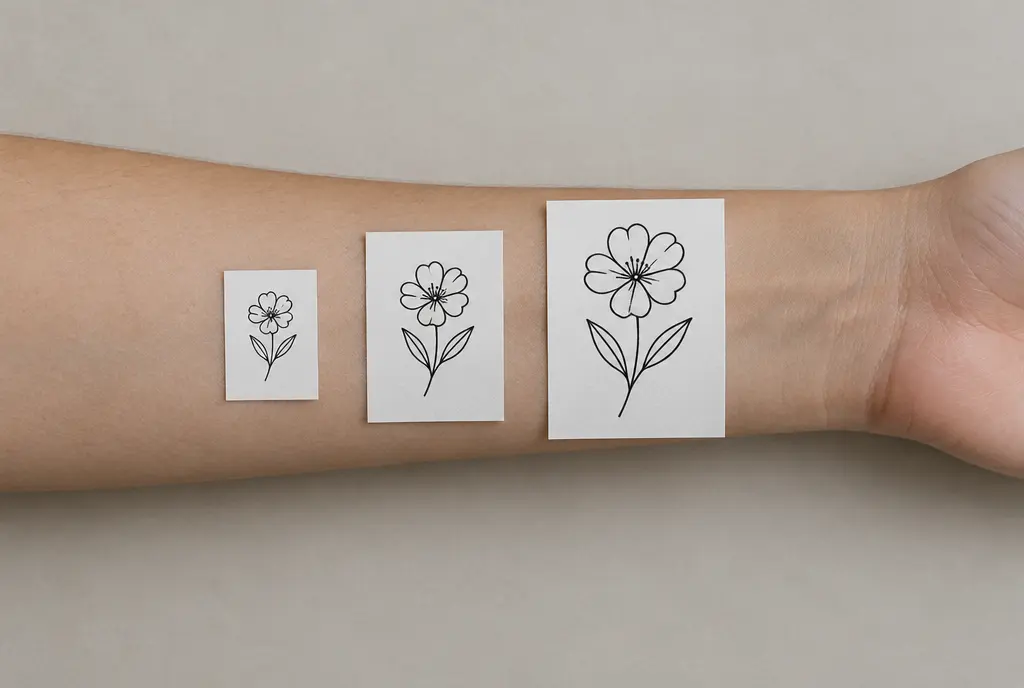
Fine line looks beautiful fresh, and behind the ear it is a natural choice: a small star, a moon, a few initials or a tiny flower. Keep it simple, with few lines and generous spacing, and do not go too tiny. A design the size of a fingernail with three or four lines will hold up far better than a miniature with twenty.
Styles that need more care
Realistic portraits, soft grey shading and pale colours are possible on the neck, but they fade fastest here because of the sun. If you love them, the back of the neck is a better choice than the throat, and touch-ups should be part of the plan.
Size and placement tips
A good neck tattoo is designed around the neck, not just placed on it. A few rules that most experienced artists follow:
- Follow the curve. Shapes that run along the neck, from the ear down to the collarbone or along the spine on the nape, move with you. Straight horizontal designs across the throat fight the anatomy.
- Avoid the centre of the throat for detail. If you want the front, consider a design that is open in the middle or frames the throat from both sides.
- Do not go too small. On the side and nape, a few centimetres of extra size often makes the difference between a design that lasts and one that blurs. Behind the ear, think fingernail size, not grain-of-rice size.
- Think in both directions. A side piece that looks perfect while you look straight ahead can bend oddly when you turn your head. Ask your artist to check the stencil with your head turned both ways and tilted down.
- Decide how visible you want it to be. The nape and behind the ear can be covered by hair or a collar. The side and front are on show almost all the time.
Healing a neck tattoo
The basic aftercare is the same as for any tattoo: gentle washing, a thin layer of the cream your artist recommends, no picking, no swimming and no sun until it has healed. The surface usually closes in about two to four weeks, while the deeper skin keeps settling for a while longer. The neck adds a few specific challenges.
- Collars and scarves. Stiff shirt collars, hoodies, scarves and necklaces rub exactly where the fresh tattoo is. Plan the first two weeks around soft, open necklines.
- Sleeping. Side and behind-the-ear tattoos get pressed into the pillow all night. Sleep on the other side or on your back if you can, and use a clean pillowcase.
- Hair and products. Hair touching the area, hair spray, dry shampoo and perfume on the neck all irritate healing skin. Keep long hair tied away from it and spray perfume elsewhere.
- Glasses, earbuds and phones. Behind the ear, the arms of your glasses, earbuds, helmets and phone calls press against fresh skin. Switch sides or use a speaker for a couple of weeks.
- Sun. The neck is hard to cover, and a healing tattoo should not get sun at all. Stay in the shade, wear a loose collar and do not put sunscreen on open or scabbing skin. Start with sunscreen only once it has fully closed.
- Sweat. Hard workouts and saunas make the neck sweat and rub. Take it easy for the first one to two weeks.

Work, family and visibility
This part is not about whether neck tattoos are right or wrong. It is simply something worth thinking about, because the neck is harder to cover than almost any other placement.
Attitudes have changed a lot, and in many jobs visible tattoos are now completely normal. Neck tattoos sit in a slightly different category, though. In a YouGov survey in Britain, about 63% of people said face and neck tattoos look unprofessional, while most people did not see other visible tattoos that way. Age made a big difference: about four in five people over 55 felt that way, while under-35s were split. Results differ by country and industry, so treat this as a general picture, not a rule.
In practice, people who get neck tattoos tend to weigh a few questions:
- Can I cover it when I want to? The nape and behind the ear can disappear under hair or a collar; the side and front usually cannot.
- What does my field expect? Creative fields, hospitality and many tech jobs rarely care. Some client-facing roles, uniforms and certain countries are stricter.
- Will I still want to show it in ten years? Not because tastes must change, but because the neck is the one placement you cannot quietly forget about.
Marco, in the end, kept his side piece but moved the lower end up a few centimetres, so a normal shirt collar covers the bottom while the ornament under his ear stays visible. A small compromise that made the decision easy.
If you change your mind: removal
Laser removal on the neck works in the same way as anywhere else, but the area needs extra care. The skin is thin, it gets a lot of sun, and the front of the neck can be more sensitive to light or dark patches after treatment. Most black tattoos need somewhere between six and twelve sessions, spaced six to eight weeks apart or longer, so removal usually takes one to two years.
Cost depends mainly on size. As a rough guide in Europe, a small tattoo costs about €50–150 per session and a palm-sized one about €100–250, so a small neck tattoo can end up at a total of several hundred euros and a larger side piece at well over a thousand. In the US prices are usually higher. Lightening a tattoo enough for a cover-up takes fewer sessions than full removal.

That is not a reason to avoid a neck tattoo, just a reason to plan one with the same care you would give any long-term decision.
Read alsoBlackwork tattoos on the neck, hand, forearm and back: how each placement heals and agesBefore you book
A neck tattoo can look striking for decades if it is placed well, designed bold enough and protected from the sun. The back of the neck and behind the ear are the gentlest places to start; the side suits larger flowing pieces; the front of the throat is for people who are sure, and for designs made specifically for it.
If you want to see how a design might look on your own neck in ten, thirty or fifty years before you decide, InkAge can show you an aged preview from a photo. It is an estimate, not a promise, but it can make it easier to choose the size, the style and the exact spot.
Frequently asked questions
Which part of the neck hurts least to tattoo?
For most people, the back of the neck. The skin there has more padding and is less sensitive than at the front. Behind the ear is also manageable because designs are small, although the buzz over the bone surprises many people. The front of the throat is usually the most painful.
Do neck tattoos fade faster than other tattoos?
Often, yes, mainly because the neck gets sun almost every day and the skin at the front is thin and moves a lot. Bold black designs on the side or back of the neck can still last very well, especially with daily sunscreen once healed.
Is blackwork a good choice for a neck tattoo?
Yes, it is one of the best. Black ink is the most stable pigment, and bold shapes stay readable as lines soften. Shapes that follow the curve of the neck, with some skin left between the black areas, age best.
How long does a neck tattoo take to heal?
The surface usually closes in about two to four weeks, and the deeper skin keeps settling for a while after that. Collars, pillows, hair products and sun can slow it down, so keep the area free and out of the sun until it has fully healed.
Can a neck tattoo be removed with a laser?
Yes. It works like removal anywhere else, but the thin, sun-exposed skin needs a careful clinic. Most black tattoos need six to twelve sessions over one to two years, and in Europe a small tattoo costs about €50–150 per session.
Sources
- YouGov: Britons don't see tattoos in general as being unprofessional, although they disapprove of face and neck tattoos
- Healthline: Behind-the-ear tattoos, pain and what to expect
- Authority Tattoo: How much do neck tattoos hurt?
- MD Anderson Cancer Center: How to protect tattoos from sun exposure
- Stories & Ink: Tattoo aging with the tattooed derm
Written by the InkAge editorial team from widely accepted tattoo-care practice. Figures are rules of thumb, not measurements. This is general information, not medical advice — ask your artist or a dermatologist about your own skin.
Last updated: 8 November 2026