In short
- Three things wear a tattoo down: friction, sun and skin stretch. The less of each a spot gets, the longer it stays crisp.
- The upper back, shoulder blade, upper arm and outer thigh age best; fingers, palms, the sides of hands and feet, and lips fade fastest.
- Size and style matter alongside placement: the same fine design can hold for years on the upper arm and blur within a year on a finger.
- A “difficult” spot is not off-limits – it just needs more care, more sun protection and more frequent touch-ups.
In this article 12
- Why do tattoos fade at all?
- The three main factors: friction, sun and stretch
- The best spots: where ink lasts for decades
- The worst spots: where ink fades fast
- The middle ground: where care makes the difference
- Your skin and your lifestyle matter too
- Size, style and placement together
- How to check it on your own body
- If you choose a “difficult” spot anyway
- Questions worth asking your artist
- The one thing to take away
- Frequently asked questions
You’re standing in front of the bathroom mirror, scrolling through the design you’ve been saving for weeks. The question is no longer what to get, but where. On the side of your finger, where it’s discreet but always in view? On your wrist, where your best friend got hers? Or on your shoulder blade, where it peeks out now and then in summer? At first it feels like a matter of taste, but it has at least as much to do with how your tattoo will look in ten, thirty or fifty years.
In this guide we go through why tattoos fade at all, which three factors matter most, which parts of the body age beautifully and where ink disappears surprisingly fast. We’ll also cover the middle ground, where the outcome is up to you, how size and style interact with placement, and how you can see all of this on your own photo before you decide anything.
Why do tattoos fade at all?
An artist doesn’t put ink into the top layer of your skin but beneath it, into the dermis. The epidermis, the outermost layer, renews itself constantly and is replaced over a matter of weeks – if the pigment sat there, it would simply wear off. The dermis is far more stable, which is why ink stays there for decades. Stable doesn’t mean motionless, though: the skin’s immune cells slowly and continuously try to “clear away” pigment particles, and over time they do carry a small part of them off.
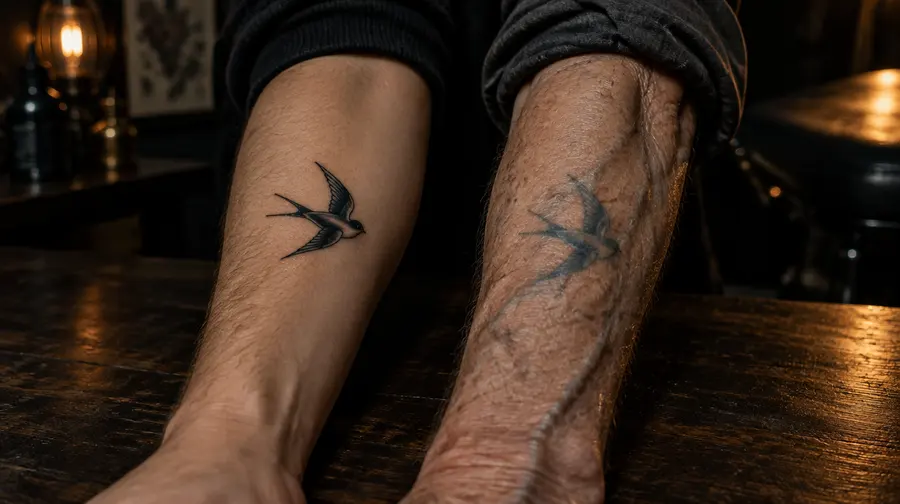
Then the outside world joins in. UV light gradually breaks down pigment, friction and frequent washing wear the skin’s surface, and stretching and creasing distort the lines. The result is two slightly different things: fading, when colours and even black become paler, and blurring, when lines slowly spread and small details run together. Together they create the “old tattoo” look we’ve all seen.
The good news is that this doesn’t happen at the same speed everywhere on the body. The same ink, from the same artist, can look surprisingly clean after thirty years in one place and need a touch-up after a few years in another. Most of that difference comes down to placement.
The three main factors: friction, sun and stretch
If you remember just one thing from this article, make it this: friction, sun, stretch. Every body part is worth thinking through on these three counts. The less of each a spot gets, the longer the ink stays crisp.
Friction and wear
Anything that regularly rubs the skin speeds up wear: shoes, socks, bag straps, the seams of your jeans, hand-washing and soap. Hands and feet are especially exposed because they’re how we touch the world – on an average day you wash your hands dozens of times and your feet spend hours in shoes. Where the skin is also thicker and renews faster (like on the palms and soles), ink has an even harder time holding on.
Sunlight
UV light is a tattoo’s quiet enemy. It doesn’t ruin it in a day, but year after year, a little more each summer. The body parts that are almost always uncovered – the outer forearm, the back of the hand, the back of the neck, the neck and the tops of the shoulders – get far more UV than a back or thigh covered by clothes. With colour tattoos it can be even more noticeable, as some lighter shades tend to be more sensitive to sun than black.
Stretch and movement
Skin isn’t a rigid canvas. Around the joints – elbows, knees, wrists, knuckles – it creases and stretches with every movement, and the skin on the stomach and hips can stretch considerably with weight change or pregnancy. Where skin moves a lot, lines are more likely to distort and spread, and healing can be harder too, because the fresh wound is constantly “working”.
The best spots: where ink lasts for decades
The body parts that age best are mostly under clothing, rub against little and have skin that stays fairly firm and stable with age. These spots aren’t only kind to ink – they’re usually easy for the artist to work on, too: large, flat surfaces where lines can go into the skin evenly.
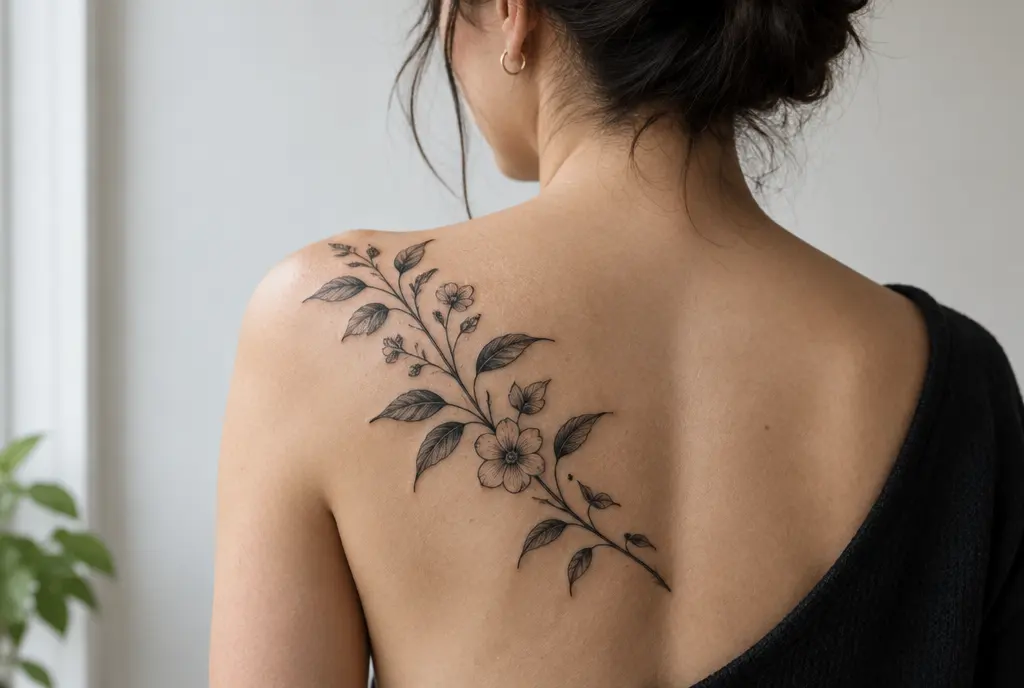
- Upper back and shoulder blade: perhaps the safest choice. A large, flat surface that rarely sees sun, barely rubs against anything, and skin that changes relatively little over the years.
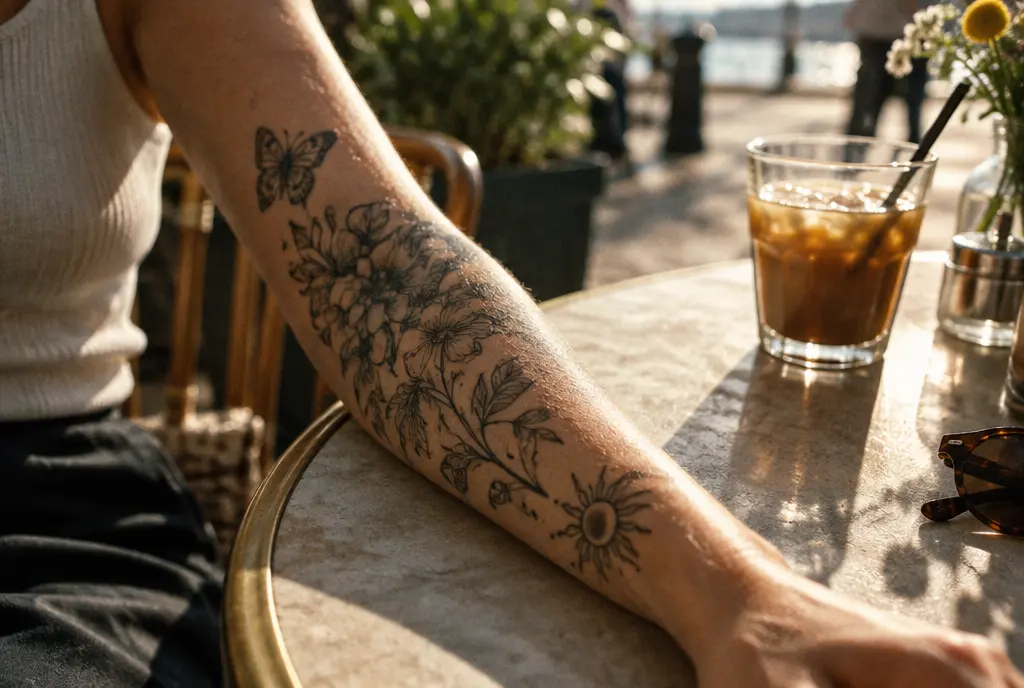
- Upper arm (outer and back side): easy to show if you want, easy to cover if you don’t. Little wear, and the skin stays firm here for a long time.
- Shoulder: a lovely curved surface, but it can get a lot of sun in summer, so sunscreen matters especially here.
- Outer thigh: a large, stable area that’s usually covered, ideal for bigger, more detailed designs.
- Calf: holds ink well, though it sees more sun in shorts season and there can be some friction near the top of your socks.
- Inner forearm: gets less sun than the outer side and relatively little friction. A popular first-tattoo spot, and not by accident.
The ribs hold ink well too, since they rarely see sun and get little friction, but many people find them one of the more painful spots, and weight changes can show here as well. The chest and lower back can also be good choices if the size and style of the design suit the surface.
The worst spots: where ink fades fast
Some body parts are almost guaranteed to fade faster, however skilled the artist and however careful you are. That isn’t the artist’s fault; it’s the nature of the skin and of everyday use. It’s worth knowing about them in advance so nothing comes as a surprise.
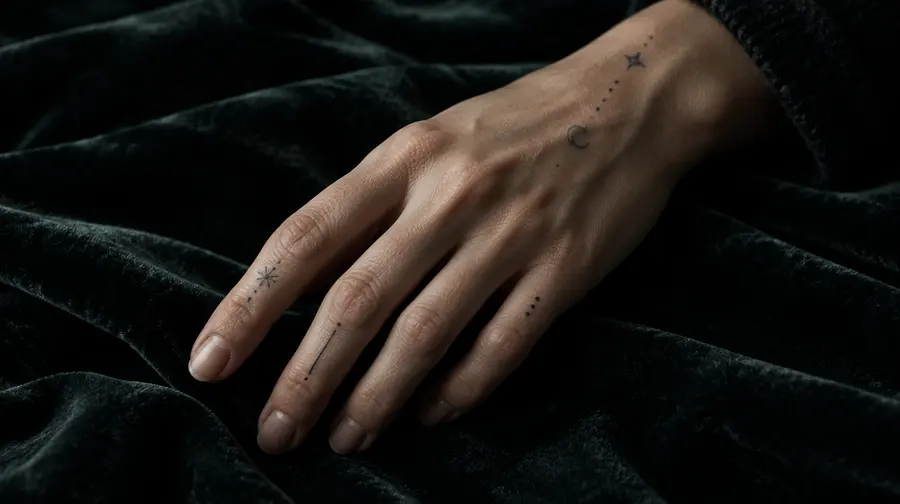
- Fingers, especially the sides: constant hand-washing, soap and touching make ink fade fastest here. Many finger tattoos need a touch-up within a year, and fine lines often turn patchy.
- Palms and the sides of the hands: thick, fast-renewing skin and a huge amount of friction. Many artists are very cautious with these areas, or tell you up front that the result is unpredictable.
- The top and sides of the feet, and the soles: shoes and socks rub them constantly, and healing on the feet can be slower and fussier, too.
- Lips (especially the inside): the mucous membrane renews very quickly, so a tattoo here often fades significantly in a short time.
- Elbows and knees: the skin creases and stretches constantly here, and it’s thicker and more wrinkled, so lines may hold less evenly.
This isn’t a list of forbidden zones. Plenty of people deliberately choose a finger or a foot and are happy with it – they simply do it knowing that this tattoo will need more care and more frequent touch-ups. The problem comes when someone picks a spot like this expecting it to stay unchanged for decades.
The middle ground: where care makes the difference
Many popular spots sit somewhere in between. On these body parts a tattoo can last beautifully, but it’s much more sensitive to how you treat it – above all, to how much sun it gets.
Outer forearm and back of the hand
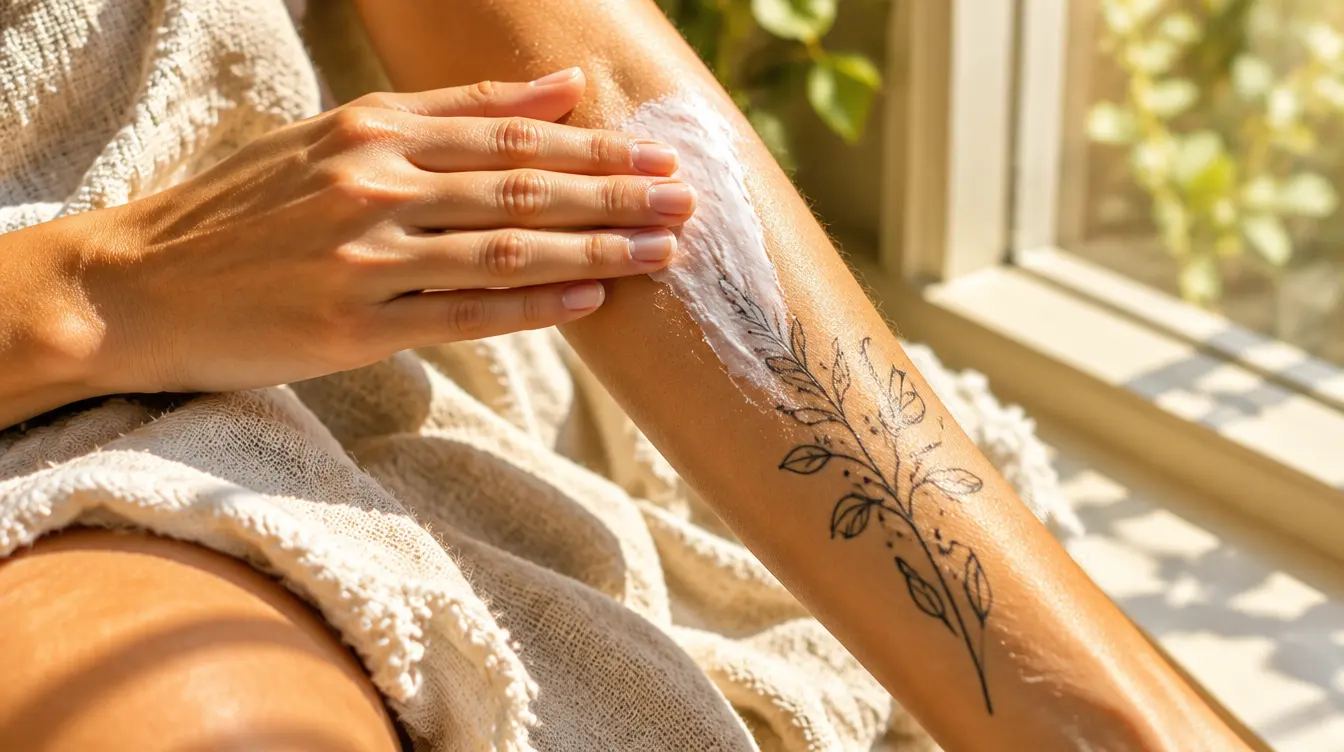
The outer forearm is one of the most visible spots, but also one of the sunniest: from spring to autumn it’s almost always uncovered, and while driving, light reaches it through the window too. With sunscreen it can age beautifully; without it, it may fade considerably faster than the inner side. The back of the hand holds better than the sides of the fingers or the palm, but washing and sun still take a real toll.
Neck, back of the neck and wrist
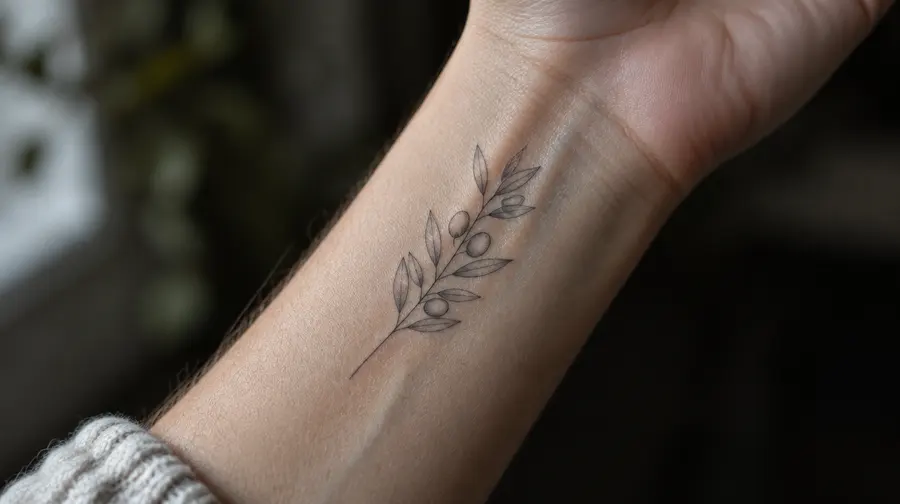
The neck and the back of the neck get a lot of sun, the skin is thinner, and the front of the neck can become more lined over the years. The wrist is a favourite for small designs, but watches, bracelets and movement mean more friction than on the inner forearm, so very fine lines can soften sooner here.
Stomach and hips
The stomach and hips rarely see sun and get little friction – the main question here is stretch. With weight change or pregnancy the skin can change considerably and the design can distort. If something like that is likely in the coming years, it’s worth factoring in, or choosing a design that can carry a little distortion gracefully.
Your skin and your lifestyle matter too
Even the same body part doesn’t behave the same way for everyone. Your skin type, your job, how you exercise and how much time you spend outdoors all affect how quickly your tattoo changes. A gardener’s or a construction worker’s outer forearm takes a completely different load from that of someone who spends all day in an office.
It’s worth thinking honestly about your own days. Do you swim a lot? Then chlorinated water and sunny beaches will be regular visitors. Do you run, cycle or hike? Then your calves, shoulders and arms may get a lot of sun. Do you work with your hands, sanitise them often, or work in healthcare or hospitality? Then hand and finger tattoos can wear especially fast.
Skin tone plays a part too, but not in the sense that some skin types “aren’t worth” tattooing. On darker skin, contrast works differently: strong black lines and well-chosen colours usually stand out better than very pale shades. That affects the choice of design and colours more than where the tattoo goes.
Size, style and placement together
Placement never matters on its own. A simple, bold-lined symbol can stay readable even on a less-than-ideal spot, while a tiny, needle-thin fine line design will soften over time even in the best one. Most problems start where small size, fine detail and an exposed spot meet – a tiny, multi-line script on the side of a finger, for instance.
Lines slowly spread over the years. That happens with every tattoo, but in a larger design the “breathing room” between details absorbs the change, while in a small one the lines touch and the design blurs. That’s why artists say a detailed design needs space: if it wants to show a lot, give it a bigger area and a more stable body part.
There’s a difference between colour and black, too. Black is generally the most durable; lighter colours – such as yellow, white or pastel shades – often fade sooner, especially on a sunny spot. If you’re planning a colour design for a place that gets plenty of sun, expect it to need more care.
- Small, simple design: can go into the middle ground, but avoid the most exposed spots if you want it crisp for a long time.
- Medium, detailed design: upper arm, inner forearm, calf, shoulder blade.
- Large, shaded or realistic work: back, thigh, upper arm – where there’s enough surface and stable skin.
How to check it on your own body
General rules help a lot, but a design always looks different on your own skin than on a screen or on someone else’s arm. That’s exactly what InkAge is for: so you don’t just imagine it, but see how the same tattoo may change over time, on your own photo. The preview is an estimate, not a prophecy, but it’s very good for putting two options side by side.
- Upload a photo of the body part where you’re planning the tattoo – in good light, straight on, ideally with natural skin tone.
- Choose the body area on the numbered body map. This matters because the preview and the score take into account how much friction, sun and stretch that area typically gets.
- Place the design on the photo and set its real size.
- Look at the 10- and 30-year images. This is where you really see whether the fine details hold or run together.
- Check the ink longevity score (0–100) and the “The same design elsewhere” comparison, which shows how the same tattoo would do on another body part.
If you’re torn between two spots, this is the quickest way to make sure the decision isn’t made on feeling alone. Many people realise here that the inner forearm instead of the wrist, or the back of the hand instead of a finger, is a much better compromise. And once you’ve decided, the PDF for your artist keeps all the important details in one place, and you can add aftercare reminders to your calendar for the healing period.
If you choose a “difficult” spot anyway
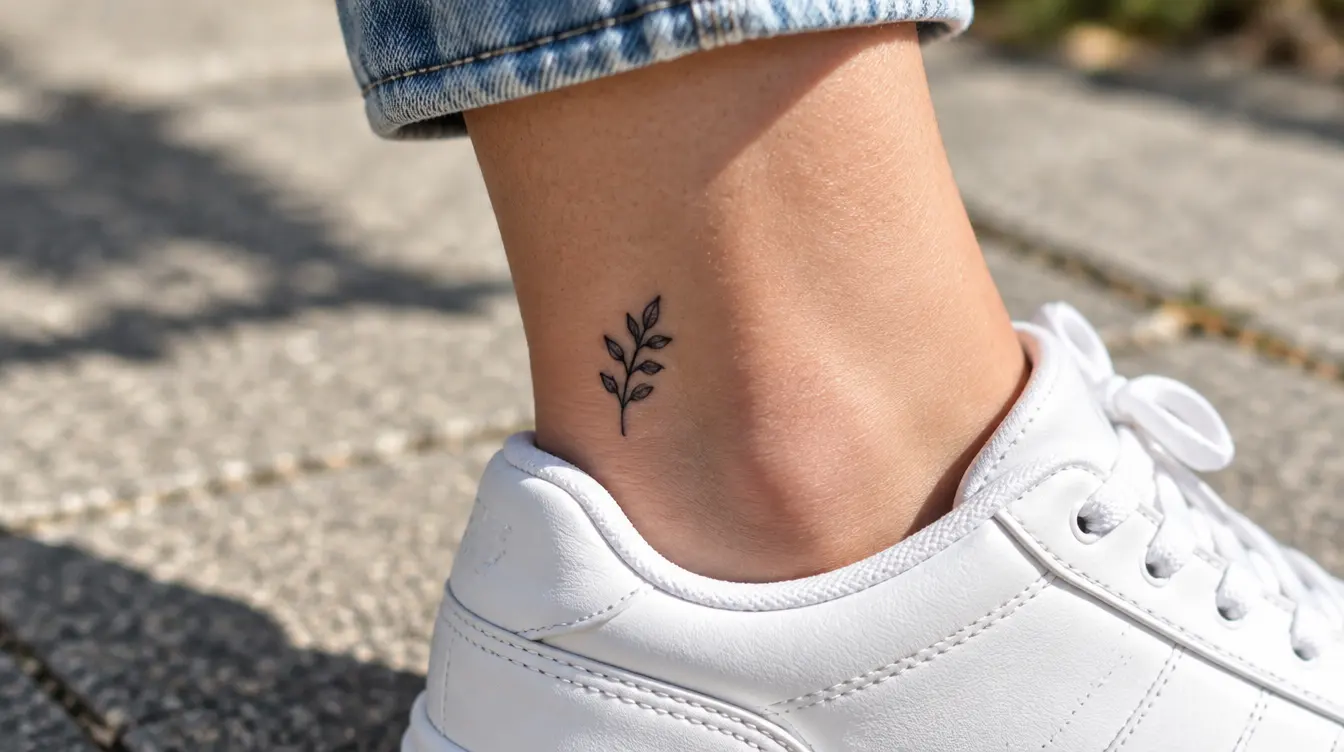
Maybe after all this you still want the tattoo on your finger, ankle or foot – and that’s completely fine. The aim isn’t to talk you out of it, but to help you decide consciously and get the most out of it. A few things can help a lot.
- Choose a simpler, bolder design. Thicker lines and larger, open shapes stand up to wear far better than hair-thin details.
- Give it a little extra size. Even a few millimetres can make a big difference to whether it’s still readable years later.
- Plan for touch-ups. Many artists fix patchy areas after healing, and on exposed spots it’s worth knowing up front that you may need it again later.
- Protect it from the sun. With clothing where you can, and after healing with a broad-spectrum SPF 50.
- Go easy on it while it heals. For a foot, that might mean comfortable, loose shoes and less walking in the first days.
A fast-fading spot isn’t a bad choice – it’s simply a choice that asks for more attention.
Questions worth asking your artist
A good artist knows exactly how each body part behaves, and usually tells you honestly. Asking at the consultation doesn’t only get you information – it also shows you how seriously they take the long-term result.
- How does this design usually age in this spot? Do you have healed work from a few years ago in a similar place?
- Is this size big enough for the details to still show in years to come?
- Would you suggest bolder lines or simpler details for this spot?
- When does a touch-up usually become necessary, and is the post-healing touch-up included in the price?
If the artist says they wouldn’t put the design in a particular spot the way you imagined it, listen to their reasons. Usually they’re not trying to avoid the job – they’re trying to stop you being disappointed two years from now.
The one thing to take away
Before you choose a spot, ask yourself: how much friction, sun and stretch does this body part get in an average year? If little of each, your tattoo has a good chance of looking beautiful for decades. If a lot of any one of them, that’s fine too – just know it in advance and plan for it: a bigger size, bolder lines, sunscreen and touch-ups.
In the end, the most beautiful tattoo is the one you’re still happy to look at in thirty years. You don’t need the perfect spot for that – just a conscious choice.
Frequently asked questions
Which places age best?
The upper back, shoulder blade, upper arm and outer thigh. They get little sun and little friction, and the skin there stays fairly stable over the years. The inner forearm and calf are also good choices.
And which fade fastest?
Fingers, palms, the sides of the hands and feet, and lips. These areas are washed, rubbed or renewed so often that ink leaves them faster. Many finger tattoos need a touch-up within a year.
Is the wrist a good spot for a small tattoo?
It can be, but it’s in the middle ground. Watches, bracelets and constant movement add friction, so very fine lines may soften sooner than on the inner forearm. A slightly bolder line or a few extra millimetres in size help a lot.
Does a tattoo in a sunny spot fade faster even with sunscreen?
Sunscreen helps a great deal, but a spot that’s almost always exposed will still usually get more UV over the years than one under clothing. A broad-spectrum SPF 50, reapplied regularly, is the best you can do – and clothing or shade adds even more protection.
How can I compare two placements before I decide?
Upload a photo to InkAge, choose the body area on the body map and place the design. The 10- and 30-year images and the “The same design elsewhere” comparison show how the same tattoo may age in another spot. It’s an estimate, but it makes the difference easy to see.
Written by the InkAge editorial team from widely accepted tattoo-care practice. Figures are rules of thumb, not measurements. This is general information, not medical advice — ask your artist or a dermatologist about your own skin.
Last updated: 12 October 2026