In short
- A first tattoo that lasts usually has three things: a meaning that does not depend on one person or one season, a shape you can recognise from across the room, and a size and spot that give the ink room to age.
- Small symbols, single botanicals, animal silhouettes, short script, open line art and meaningful objects are the six safest families. Each works best at a certain size, mostly 3–15 cm, on the outer forearm, outer upper arm, calf or shoulder blade.
- As a first, think twice about tiny detailed pieces, a partner’s name and whatever design is everywhere this year. They are the ideas people most often blur, outgrow or regret.
- Bring your artist a short brief: one sentence of meaning, three to five references with notes, the spot, the size in centimetres, black or colour, and what you do not want. Then let them draw it for your body.
In this article 9
Lea is twenty-four and has forty-one screenshots in a folder called “maybe”. A tiny constellation, a wildflower bouquet the size of a stamp, her best friend’s handwriting, a cat drawn in one line, a quote that felt perfect last spring. She knows she wants a first tattoo. What she does not know is which of these she will still want to see on her arm when she is fifty.
That is the right question, and it is a different one from “what is pretty right now”. This guide is not a list of a hundred designs. It goes through the six kinds of first tattoo that tend to age well, the size and spot where each one works best, the ideas worth skipping as a first, and how to turn whatever you choose into a clear brief your artist can work with. If you are still at the very beginning, our first tattoo checklist covers the whole process from choosing an artist to aftercare.
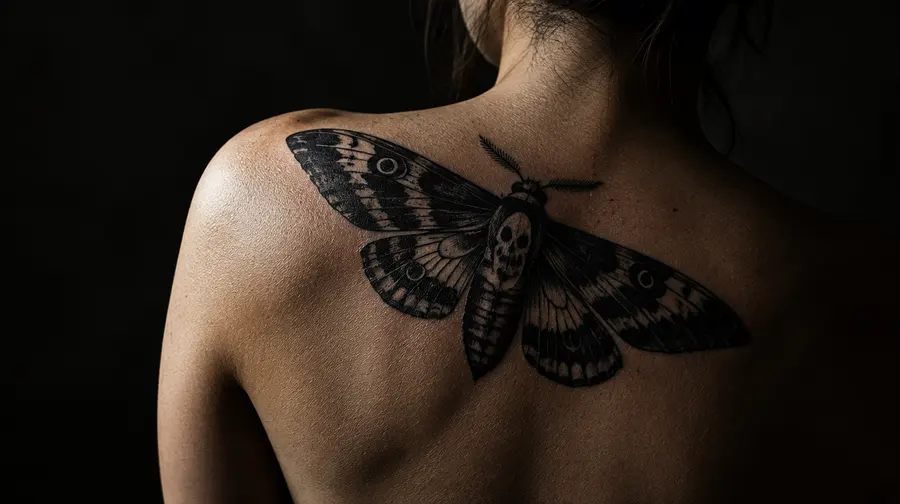
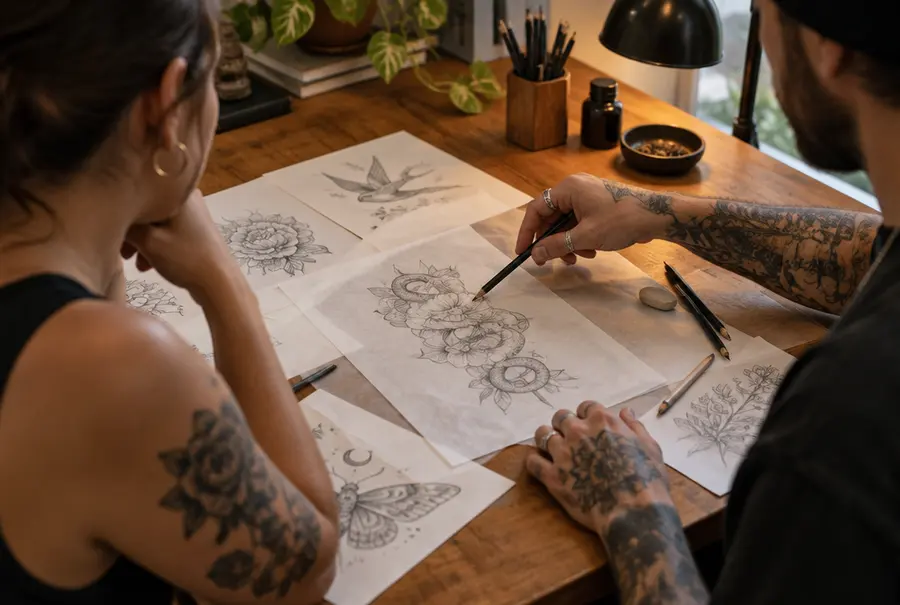
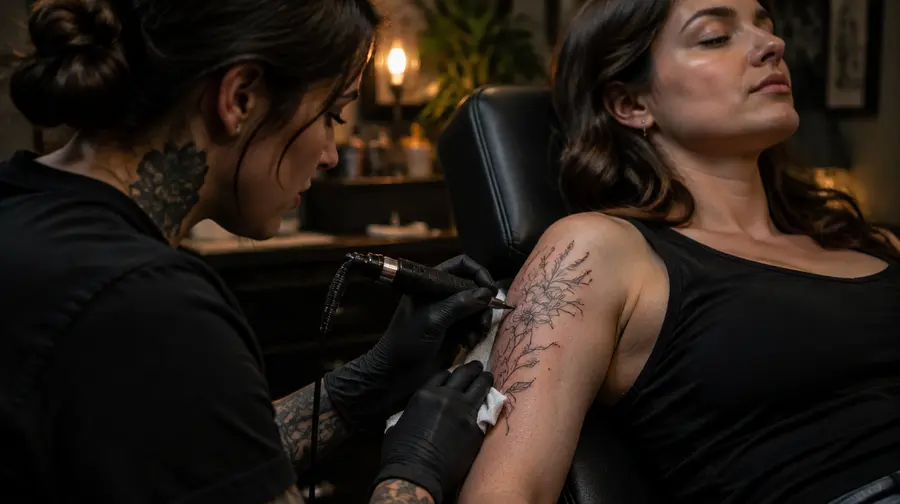
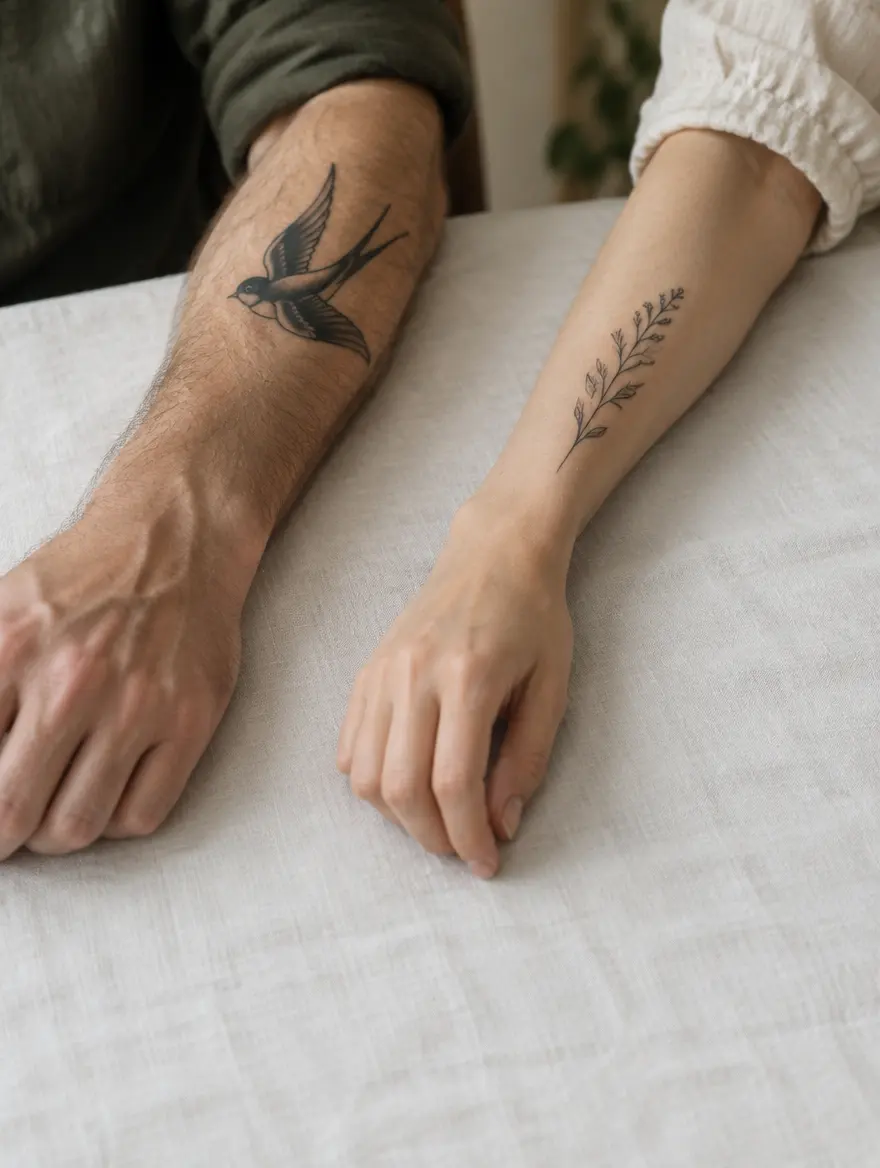
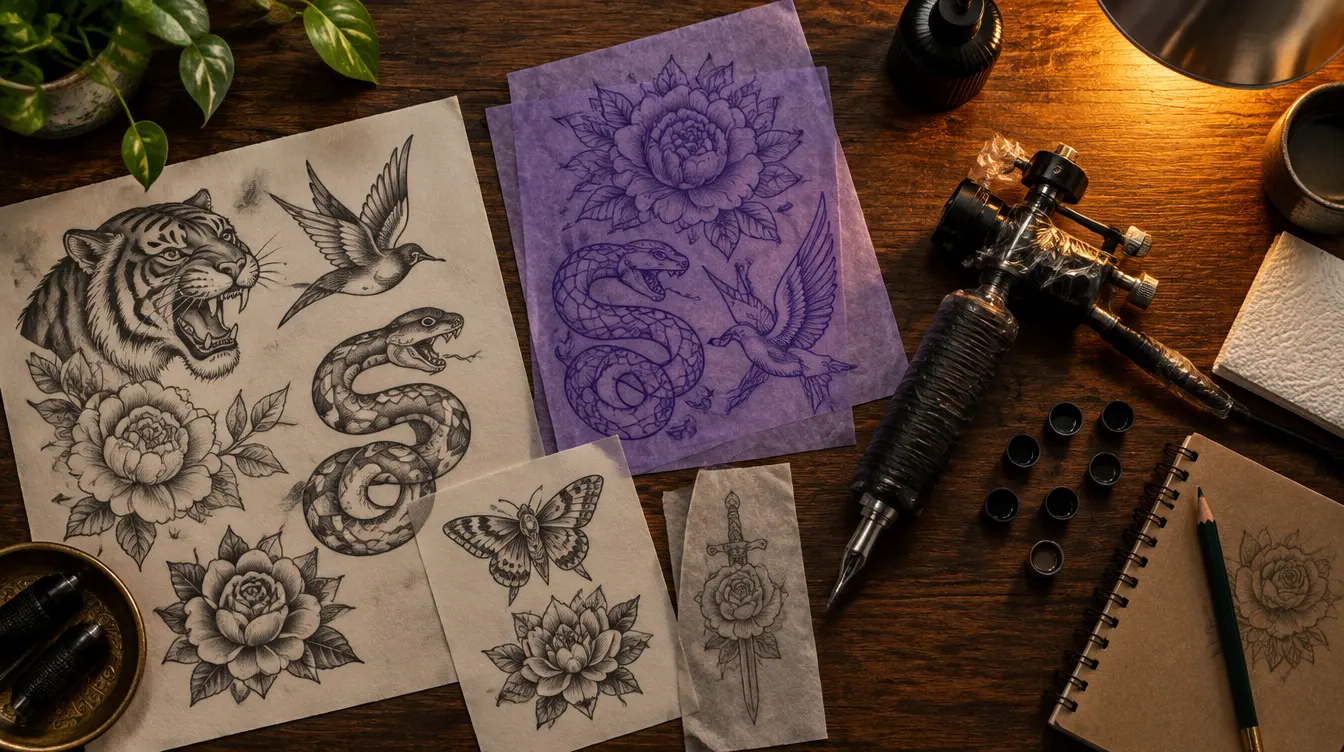
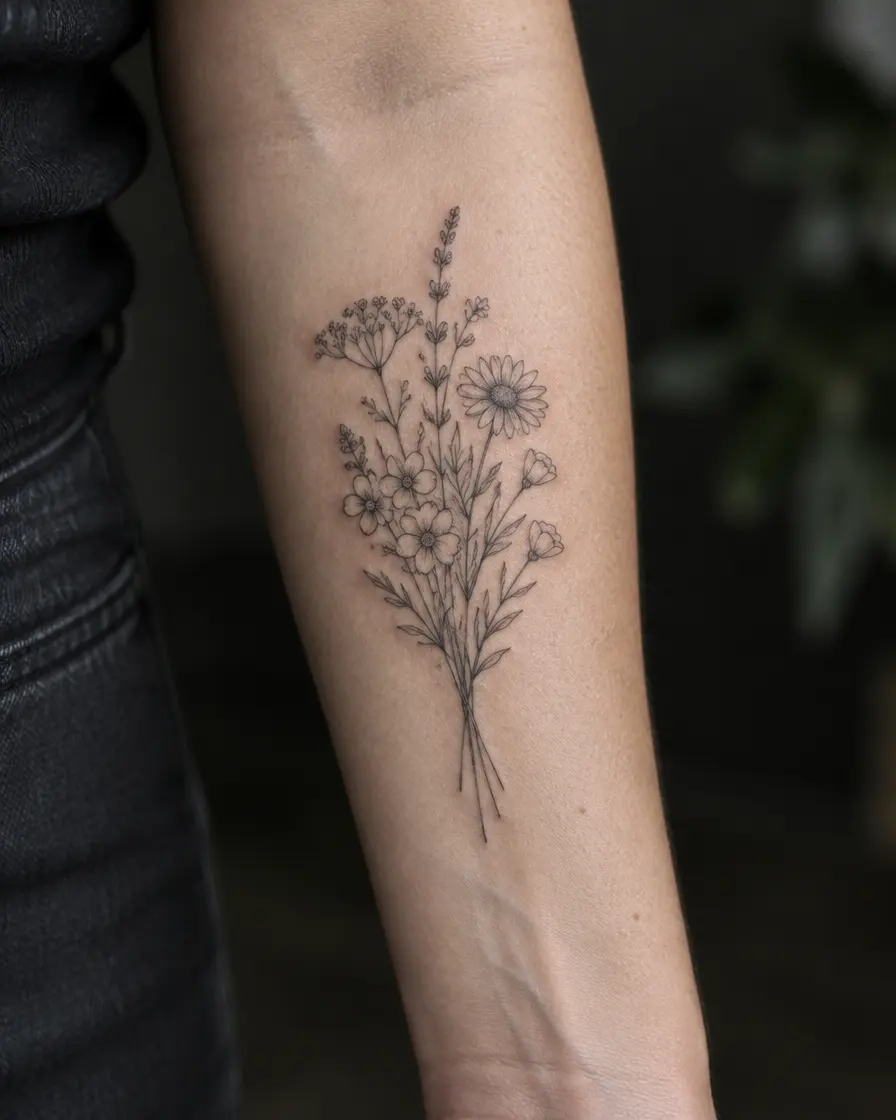
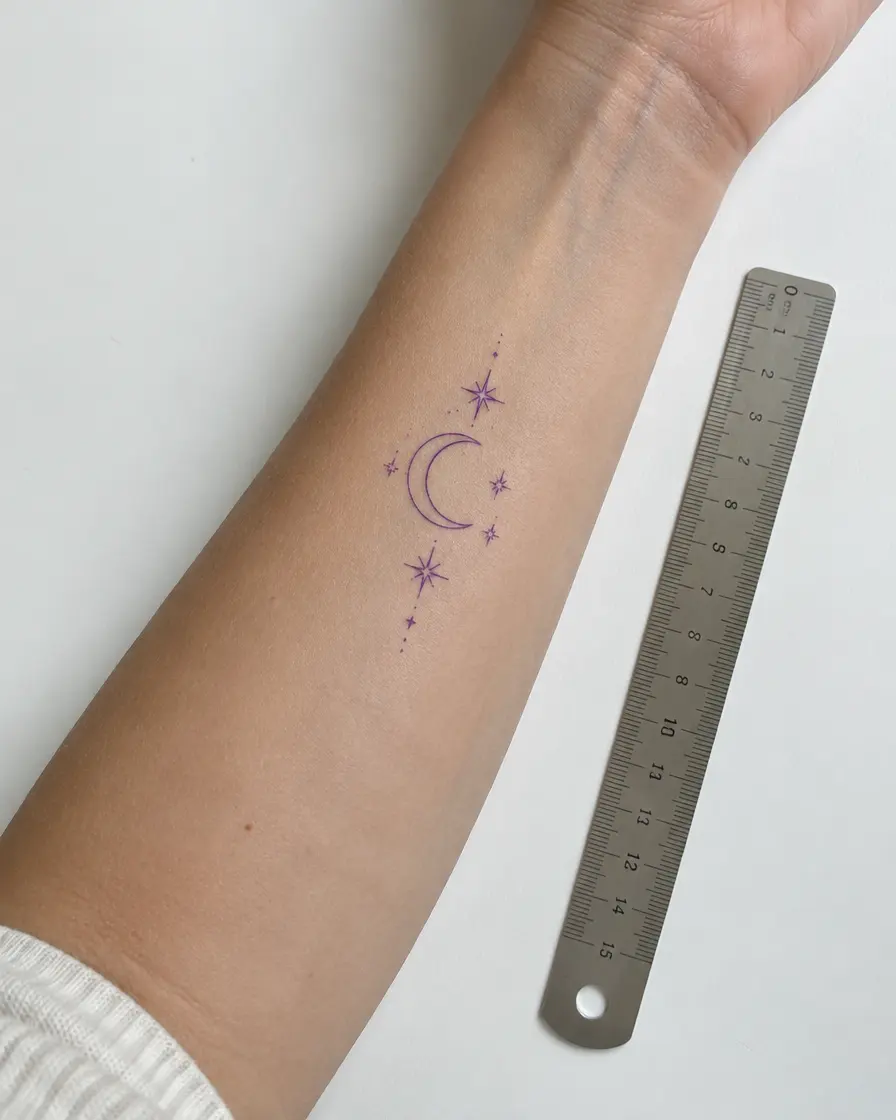
> A note on the pictures: the images in this article are illustrations made to show typical situations. They are not photos of real people or real results.
What makes a first tattoo idea last
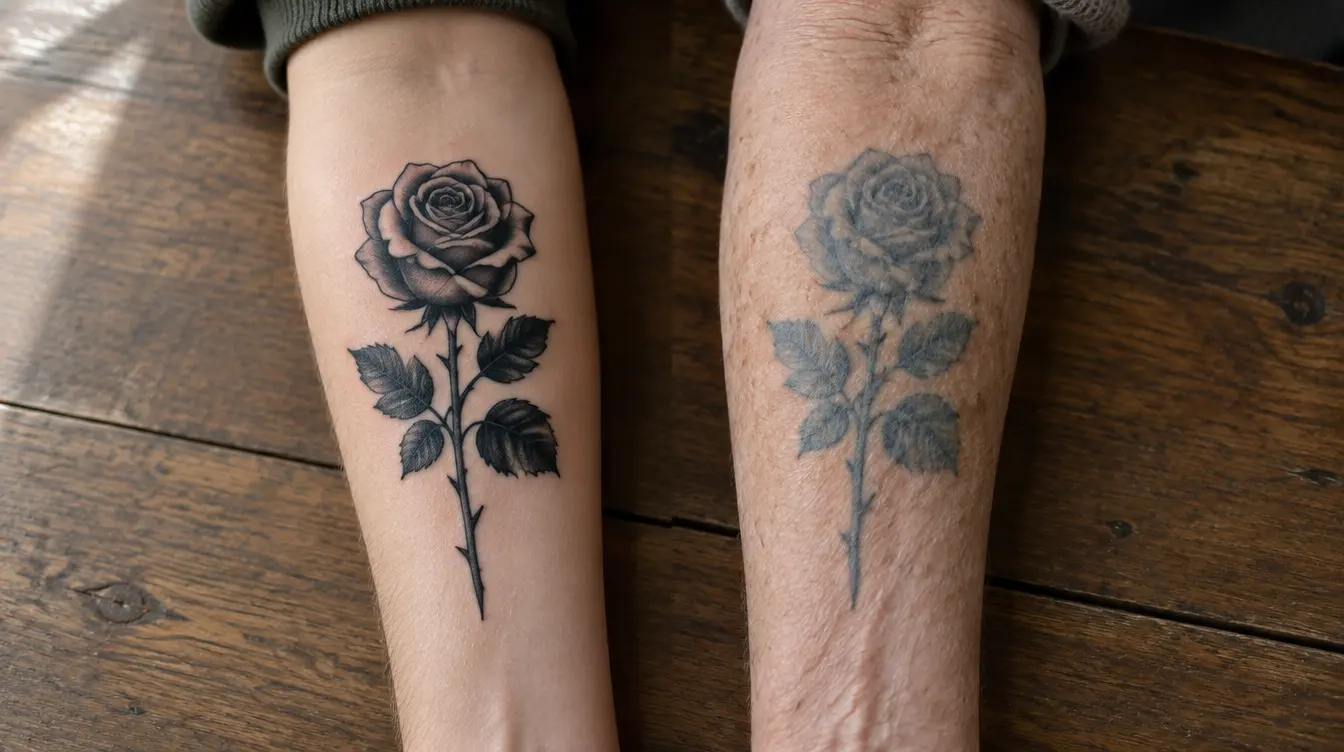
Every tattoo changes with time. Ink particles slowly spread a little in the skin, lines get softer and wider, and contrast drops, faster in the sun and on skin that rubs or folds a lot. A design that ages well is one that still reads clearly after that softening. Our guide to tattoos that age well explains the mechanics in detail; for a first tattoo, three filters do most of the work.
- A meaning that is yours. It can be big or small, but it should not depend on one relationship, one job or one summer’s feed. “It reminds me of the sea where I grew up” lasts longer than “everyone has this one”.
- A clear silhouette. If you squint at the design or look at it from a few metres away, can you still tell what it is? Simple outlines and open shapes pass; crowded detail does not.
- Room to age. The design needs enough size for its detail and a spot on the body that is gentle on ink. The same drawing can last thirty years on the outer forearm and blur in ten on a finger.
The good news: none of this limits you to boring tattoos. It just means picking an idea from a family that suits skin, and then giving it the right size and home.
Six kinds of first tattoo that age well
The sizes below are rules of thumb that many artists use, not hard limits. Your artist will adjust them to your design, your skin and the exact spot.
1. Small symbols
A moon, a star, a wave, an arrow, a heart, a small sun. Symbols are the classic first tattoo for a reason: they are quick, relatively affordable, easy to place and easy to build around later. They age well because they are already simple, so there is little to lose when the lines soften.
- Best size: about 3–5 cm. A thumbnail-sized symbol with a few clean lines lasts; a grain-of-rice symbol does not.
- Best spots: outer forearm, outer upper arm, the back of the shoulder, or behind the ear if you want it hidden by hair.
- Keep in mind: solid shapes and slightly bolder lines hold up better than a hairline outline.
2. Botanicals
A single stem, an olive branch, a fern, a birth flower. Plants are one of the most requested first tattoos, and they can age beautifully if they are drawn with open spaces between the petals and leaves.
- Best size: about 8–15 cm long for a stem or branch. The length lets each leaf stay separate.
- Best spots: along the forearm, the outer upper arm, the calf or the side of the thigh, running with the length of the limb.
- Keep in mind: one stem ages better than a tight bouquet. A bouquet the size of a stamp is the botanical most likely to turn into a dark blot.
3. Animals
A swallow, a cat, a fox, a fish, a bee, a bird in flight. Animals carry meaning without words, and a strong silhouette is one of the most durable things you can tattoo.
- Best size: about 5–10 cm for a silhouette or simple line drawing; much more for a realistic portrait of your own pet.
- Best spots: outer upper arm, outer forearm, calf, shoulder blade.
- Keep in mind: fur, feathers and eyes in tiny detail are the first things to merge. A bold outline with a few interior lines is safer than miniature realism.
4. Script
A word, a short phrase, a date, a place name. Lettering can be one of the most personal first tattoos and one of the most fragile, because letters have small enclosed spaces that close up over time.
- Best size: letters at least about 1 cm tall, and more for handwriting or very thin fonts. Keep it short: one to three words is easier to size well than a full sentence.
- Best spots: along the inner or outer forearm, the upper back, the shoulder blade or along the side of the calf.
- Keep in mind: open letters with clear spacing age better than tight, tiny script. If the text gets too long at a good letter size, shorten the text, not the letters.
5. Line art
A face drawn in one line, a mountain range, a hand-drawn wave, a small abstract shape. Line art suits people who like a light, modern look, and it ages well when the lines have enough distance from each other.
- Best size: about 7–12 cm, so lines that run close together still have a few millimetres of skin between them.
- Best spots: forearm, upper arm, shoulder blade, the side of the ribcage if you can handle the pain.
- Keep in mind: ask for lines that are not too thin. A slightly weightier line keeps the drawing readable decades later.
6. Meaningful objects
A key from your grandparents’ house, a compass, a paper plane, a coffee cup, a camera, a small book. Objects tell a story without spelling it out, so they keep their meaning even if your life changes.
- Best size: about 5–10 cm, depending on how much detail the object has.
- Best spots: outer forearm, outer upper arm, calf, ankle area only if it is simple and bold.
- Keep in mind: draw the object as a simple shape, not every scratch and screw. Your artist can suggest which details to keep.
The best first tattoo is not the most original idea. It is a simple idea, drawn at the right size, in a spot that is kind to ink.
Where to put a first tattoo
For a first tattoo, two things matter most about placement: how much it will hurt, and how gently the spot treats ink over the years. Pain is personal and no ranking is scientific, but artists and pain charts agree on the general picture.
- Gentle and stable: the outer forearm, the outer upper arm, the calf, the front and outer thigh and the shoulder blade. The skin is thicker, there is more padding, the area does not rub much, and it is easy to cover or show.
- More sensitive: the ribs, the inner upper arm, the spine, the collarbone, the ankles and the tops of the feet. Thin skin over bone usually hurts more.
- Fast-fading: fingers, the sides of the hands, palms, the sides of the feet and lips. Skin there renews quickly and is in constant contact with things, so fine work often needs touch-ups within a few years.
That is why so many first tattoos end up on the forearm or upper arm. It is not a lack of imagination; it is a spot where a design can heal easily, hurt less and still look good in twenty years. Our guide to the best placements for tattoo longevity goes deeper if you are torn between spots.
First tattoo ideas to think twice about
None of these are forbidden. They are just the ideas that most often disappoint people later, which makes them a risky first step.
Tiny, detailed pieces
A full landscape the size of a coin, a tiny portrait, a micro bouquet with twenty petals. They look stunning in a fresh close-up photo. But fine detail needs space to survive the slow spreading of ink, and at a few centimetres there is no space. Five to ten years later, many of these read as a grey smudge. If you love a detailed idea, make it bigger or simplify it.
A partner’s name
In a UK survey of around 1,000 tattooed people by the University of Portsmouth, another person’s name was the design people most often regretted, with roughly a quarter to a third of those who had one saying they wished they had not. Relationships change; the ink does not. If you want to honour someone, a symbol you share, a place you love or a small object from your story carries the meaning without the risk. Names of children or parents are a different story for many people, but even then, think about size and lettering as carefully as for any script.
This year’s trend
There is nothing wrong with liking what is popular. But the design that fills every feed this year is often the one that dates your tattoo most clearly later. Ask yourself whether you liked this kind of image before it went viral. If yes, it is probably yours. If you only found it last month, give it a few more months.
A copy of someone else’s tattoo
An exact copy is unfair to the original artist and rarely works anyway, because the design was made for another body at another size. Use it as a reference, and let your artist draw your own version.
The good news is that regret is less common than people fear. Surveys by Ipsos in the US and Canada have put it at roughly one in ten tattooed adults. A calm, well-chosen first tattoo is very likely to be one you keep happily.
Three quick tests for any idea
Before you write to an artist, run your favourite idea through three questions.
- Would you still want it if nobody ever saw it? If the answer is yes, the meaning is yours, not the audience’s.
- Does it read at arm’s length? Print it at the planned size, tape it to the spot and look at it in a mirror from a couple of metres away. If it turns into a blob, it needs more size or less detail.
- Does it still fit if your life changes? New job, new city, new relationship, kids, a different style. A design that survives all of those is a good candidate.
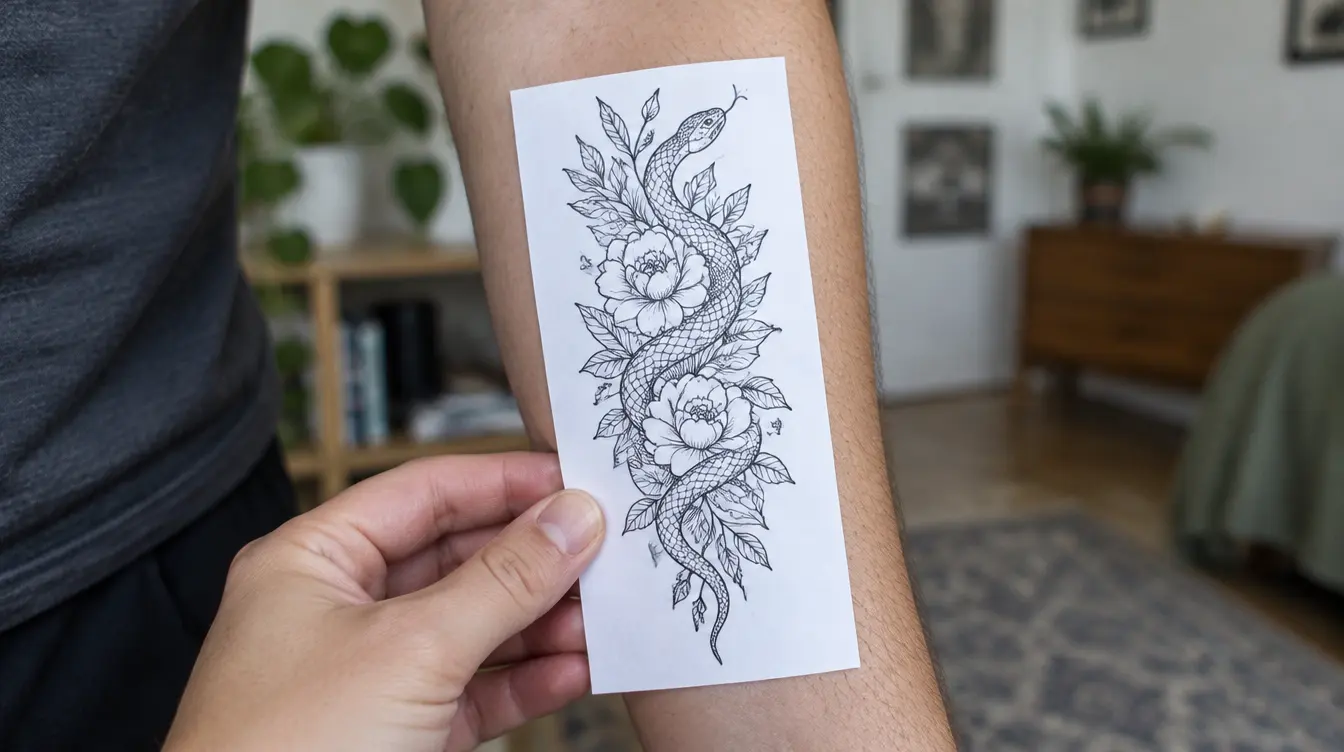
Living with the idea for a while is the best filter of all. Set it as your phone wallpaper for a few weeks. If you still smile when you see it, you are close.
How to turn an idea into a brief for your artist
Most artists prefer a clear, short brief to a long story or a single screenshot. It saves both of you time, makes the price easier to quote and gives the artist room to do what they are good at. A good first tattoo brief fits in one message.
- The meaning in one sentence. For example: “A small wave for the lake where my family spent every summer.”
- Three to five references, with notes. For each one, say what you like: the line weight, the shape, the mood. “I like how open this one is” is more useful than the picture alone.
- The spot. Outer left forearm, right calf, between the shoulder blades. Add a photo of the area if you can.
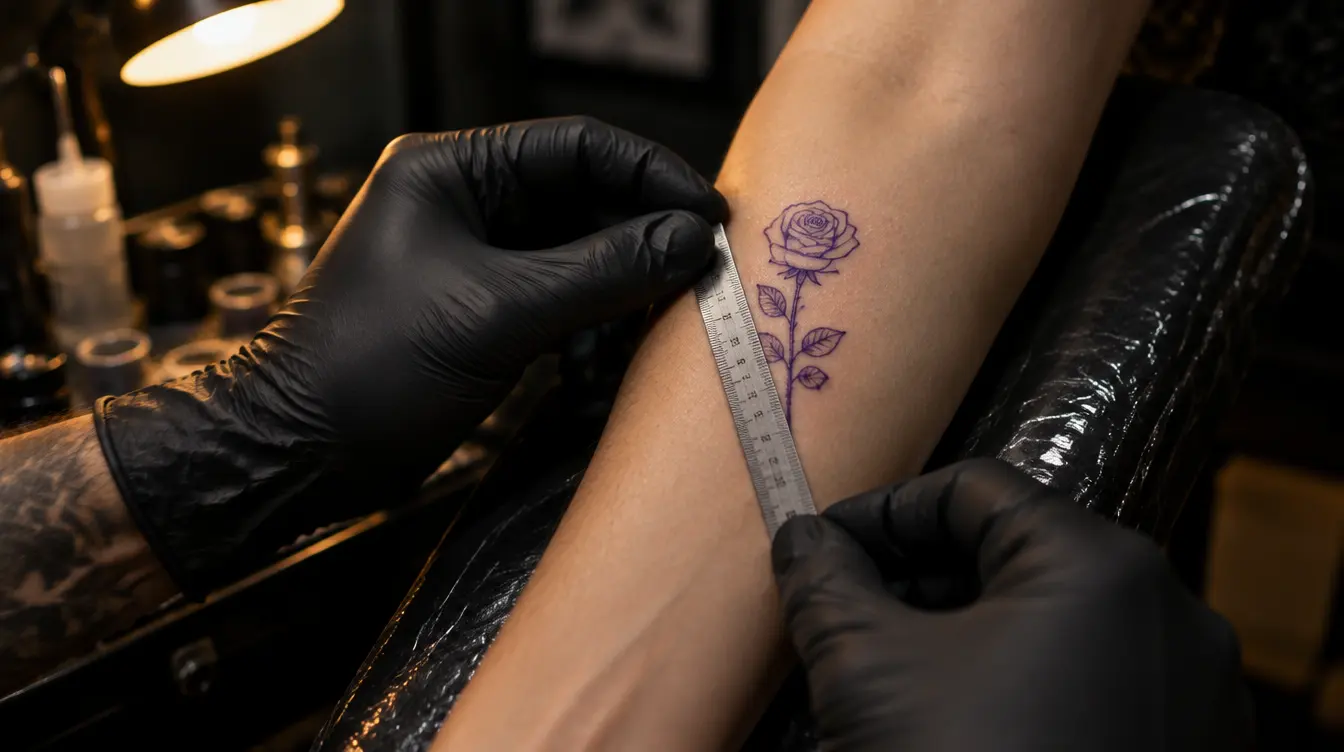
- The size in centimetres. Measure it on your body with a ruler. “About 6 cm tall” is much clearer than “small”.
- Black or colour, and the style. Fine line, bold outline, solid black, a little shading. If you are unsure, say so and ask for advice.
- What you do not want. No text, nothing too delicate, nothing that wraps around the arm. This often helps more than what you do want.
- Room for the artist. Say that you are open to their suggestions on size and detail. An artist who tells you the design needs to be bigger or simpler is protecting your tattoo, not upselling you.
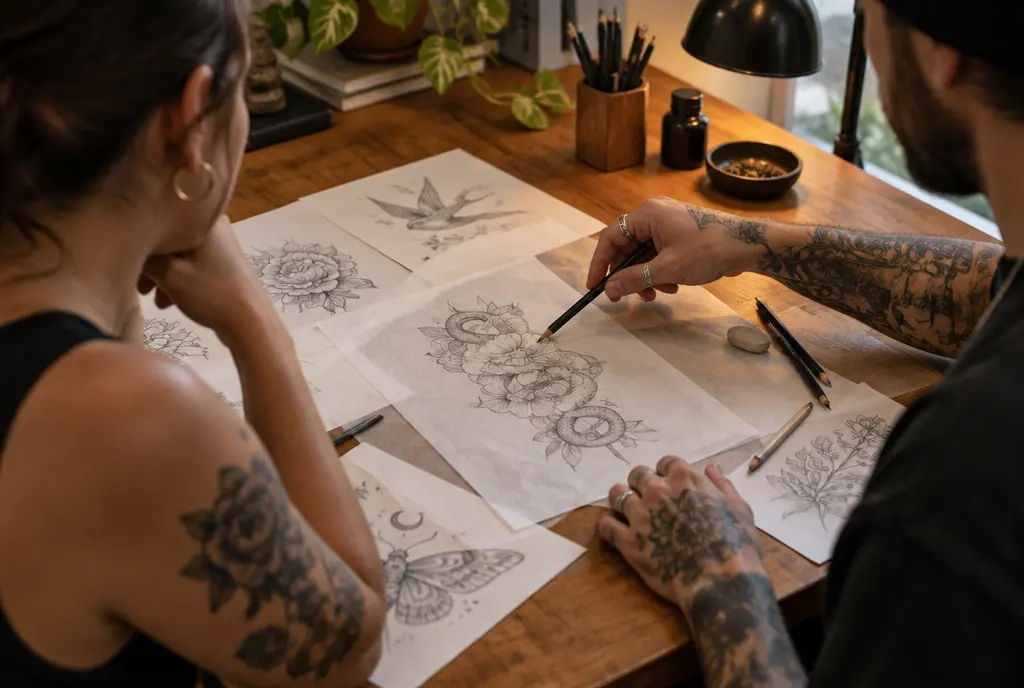
Put together, it might read like this: “Hi! I would like my first tattoo: a single olive branch, about 12 cm long, along my outer left forearm, black only, fine but not too thin lines, no shading. It is for my grandmother’s garden. I attached four references and marked what I like in each. I am open to your suggestions on size so it ages well.” That is all an artist needs to answer with a price, a date and their own ideas. If you are about to send that first message, our guide on how to book a tattoo covers deposits, prices and what to expect next.
See it twenty years ahead
The hardest part of choosing a first tattoo is that you can only see it fresh. That is the reason we built InkAge: you place a design on a photo of your own body, at its real size, and see how it may look after 10, 30 and 50 years. It is a quick way to compare two sizes, or a fine and a bolder version, before anything goes into your skin. The previews are estimates, not promises, and your artist’s eye still matters most.
The short version
Pick an idea from a family that suits skin: a small symbol, a single botanical, an animal silhouette, a short word, open line art or an object with a story. Give it enough size, usually 3–15 cm, and a gentle spot like the outer forearm, upper arm, calf or shoulder blade. Skip micro detail, partner names and this year’s trend as a first. Then send your artist a short, clear brief and let them make it yours.
Frequently asked questions
What is a good first tattoo idea?
Something simple with a meaning that is yours: a small symbol, a single flower or branch, an animal silhouette, a short word, open line art or an object with a story. Simple shapes at the right size age far better than tiny detailed designs.
Where is the best place for a first tattoo?
The outer forearm, outer upper arm, calf and shoulder blade are the most common choices. They usually hurt less than bony areas, heal easily, fade slowly and are easy to cover or show.
How big should a first tattoo be?
Big enough for its detail. As a rule of thumb, a simple symbol works at about 3–5 cm, a single botanical at 8–15 cm, and letters should be at least about 1 cm tall. Your artist can tell you the smallest size at which your design will still age well.
Is a name a bad idea for a first tattoo?
A partner’s name is the design people most often regret in surveys. A shared symbol, place or object keeps the meaning with less risk. Names of children or parents feel different to many people; if you choose one, give the letters enough size.
Should my first tattoo be small?
Small is fine if the design is simple. A 3–5 cm symbol with a few clean lines is a great first tattoo. The problem is small and detailed together: if the idea has a lot of detail, make it bigger or simpler.
Sources
- Ipsos: More Americans have tattoos today than seven years ago (2019)
- Ipsos: One in ten tattooed Canadians and Americans regret it (2012)
- Yahoo / The Independent: Names and tribal motifs named the most regretted types of tattoo
- American Academy of Dermatology: Tattoo complications
- HowStuffWorks: Least painful places to get a tattoo
Written by the InkAge editorial team from widely accepted tattoo-care practice. Figures are rules of thumb, not measurements. This is general information, not medical advice — ask your artist or a dermatologist about your own skin.
Last updated: 14 November 2026