In short
- Tattoos that age well share four traits: a clear silhouette, bold enough lines, room between details and strong contrast.
- Traditional, bold blackwork, larger illustrative and neo-traditional pieces tend to age best; micro, dense dotwork and outline-free watercolour change most.
- Two quick tests reveal a lot: squint at the design, and look at it on your phone from arm’s length. What survives is what will survive.
- Placement and sun can make a great design age badly, or help a delicate one last much longer.
In this article 10
- What every tattoo that ages well has in common
- Styles that tend to age best
- Styles that change the most
- Two tests you can do in thirty seconds
- Colour or black?
- Where it goes matters as much as what it is
- The habits that keep a good tattoo good
- Before you book, see it in thirty years
- The short version
- Frequently asked questions
Tattooers have a saying that gets repeated in every studio sooner or later: “Bold will hold.” It sounds like a slogan, and it is one, but it is also the most compressed piece of tattoo science you will ever hear. Look at any group of tattoos that have been around for thirty years and you will see it play out. The ones that still look good are almost never the ones that looked most impressive on day one.
This guide is about those survivors. Not about which tattoos are fashionable right now, but about which ones are still clearly themselves after decades of sun, showers, birthdays and changing skin. The good news is that ageing well isn’t a style you have to choose. It is a set of qualities you can build into almost any design, if you know what to look for.
What every tattoo that ages well has in common
Strip away the styles and you are left with four things. Almost every tattoo that looks good at thirty years has all of them; almost every one that looks tired is missing at least two.
1. A silhouette you can recognise
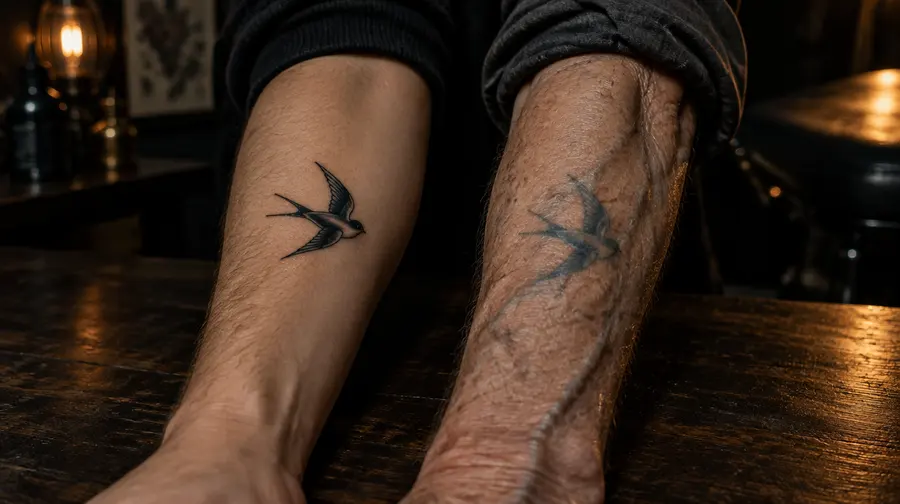
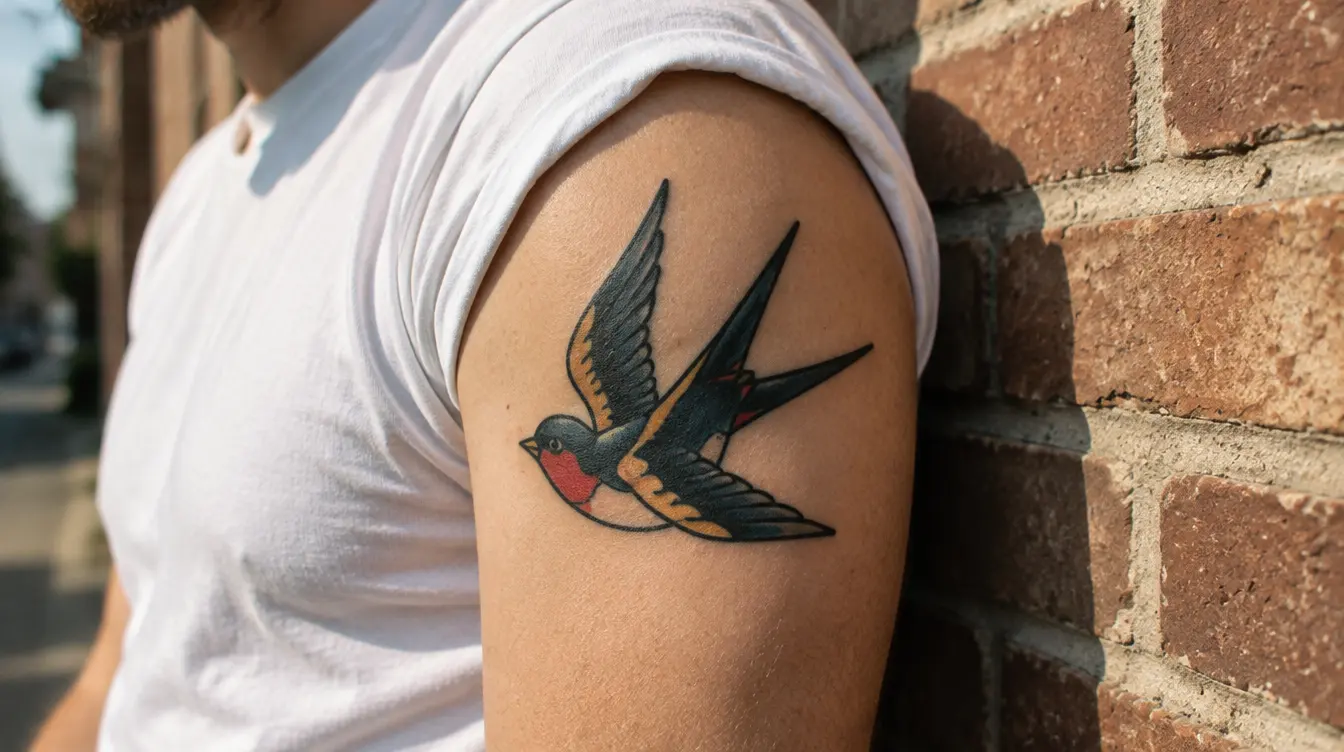
Over time, small details merge into tone and the tattoo begins to speak mostly through its outline. A swallow, a rose, a dagger, a cat sitting with its tail curled: these shapes are readable even as a dark blur. A design that only makes sense once you see every tiny element inside it will lose its meaning as those elements soften.
2. Lines with some weight
Ink slowly spreads in the skin, and artists usually estimate it at roughly a tenth of a millimetre per decade. On a bold line, that is nothing. On a hairline drawn with a single needle, it is a large share of the line’s width. Thicker key lines simply have more margin to give.
3. Room to breathe
If two lines spread towards each other and the gap between them is tiny, they meet. A rough rule many artists use is at least one to two millimetres between neighbouring lines, more for anything you want to read in thirty years, such as text or faces. Negative space, the bare skin inside a design, is not empty. It is what keeps the design legible later.
4. Contrast
Light areas next to dark areas give the eye something to hold on to. As colours soften and lines widen, contrast is what keeps the image from turning into a single mid-tone. This is why solid black next to bare skin is so durable, and why a design made entirely of pale greys and pastels can fade into the skin.
Bold will hold. Everything else is a bonus with an expiry date.
Styles that tend to age best
No style guarantees anything, and a talented artist can make almost any style last longer. But some styles have the four qualities built in.
- American traditional. Thick outlines, a limited palette, solid fills and iconic shapes. It was designed to be read on sailors’ arms across a deck, and it still reads at thirty years.
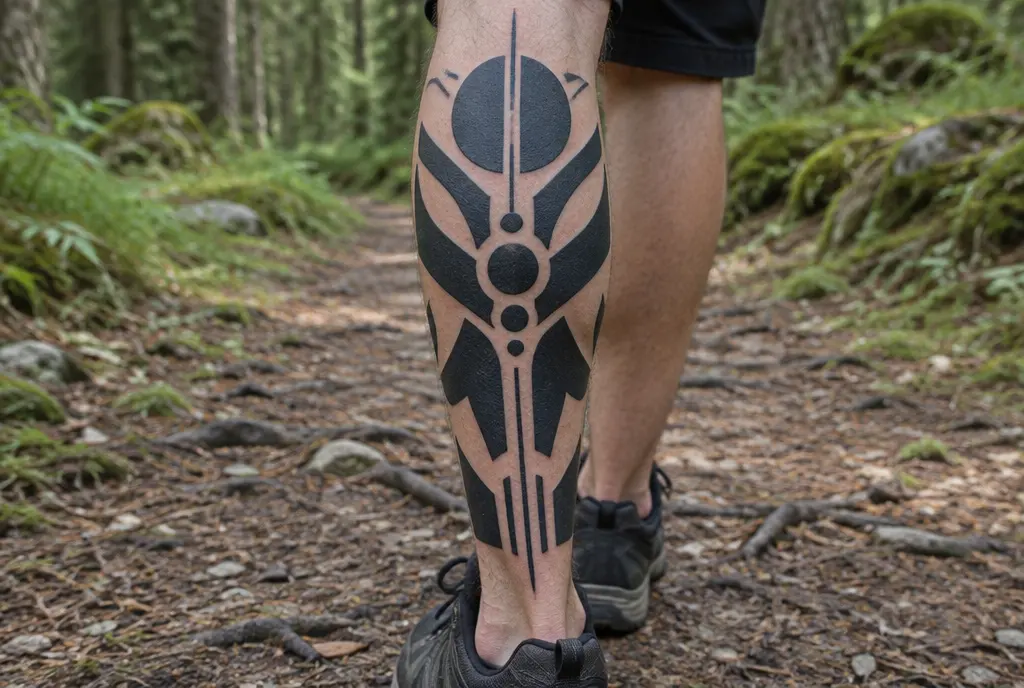
- Bold blackwork. Large areas of solid black next to bare skin give maximum contrast. Big tribal-inspired or ornamental pieces often look almost unchanged after decades.
- Neo-traditional. Richer colour and more detail than traditional, but usually still built on strong outlines and clear shapes. It ages well when the detail is kept to a sensible density.
- Larger illustrative and black-and-grey work. Realism and illustration can age beautifully when they are big enough for their detail and have strong darks. The same image shrunk to a few centimetres is a different story.
- Lettering with weight and space. Script and block letters can last for life if the letters are tall enough and the counters, the holes inside letters like “e” and “o”, are open.
Styles that change the most
This is not a list of styles to avoid. Plenty of people love these tattoos and are happy to touch them up or let them soften. It is simply honest about what time does.
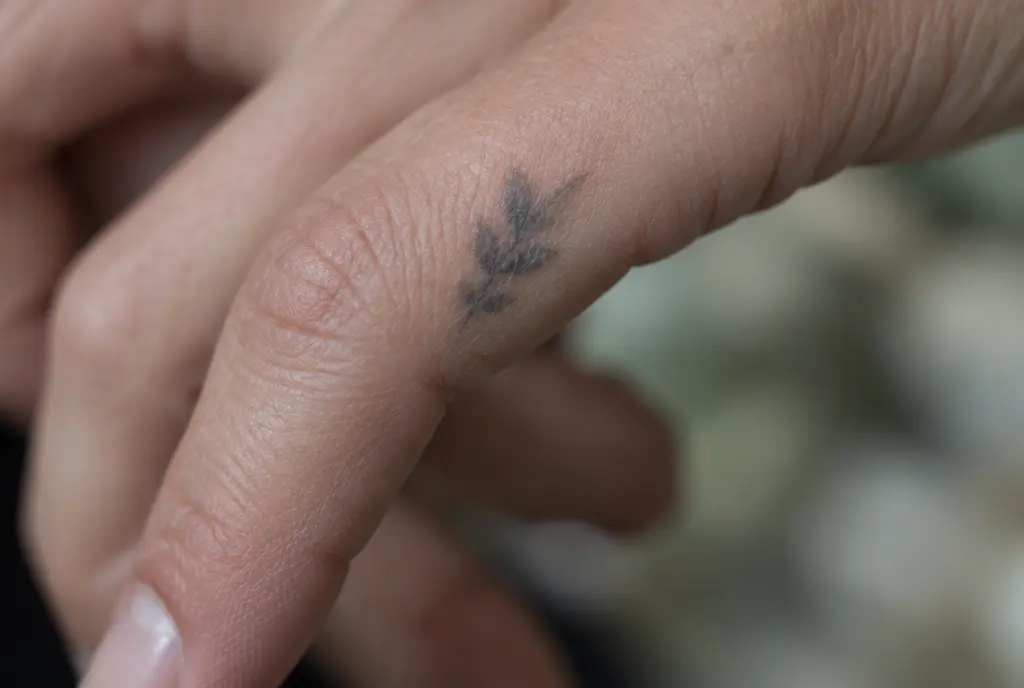
- Micro tattoos. Anything smaller than a coin with internal detail has very little room to absorb spread. These often blur within a handful of years, especially on hands and fingers.
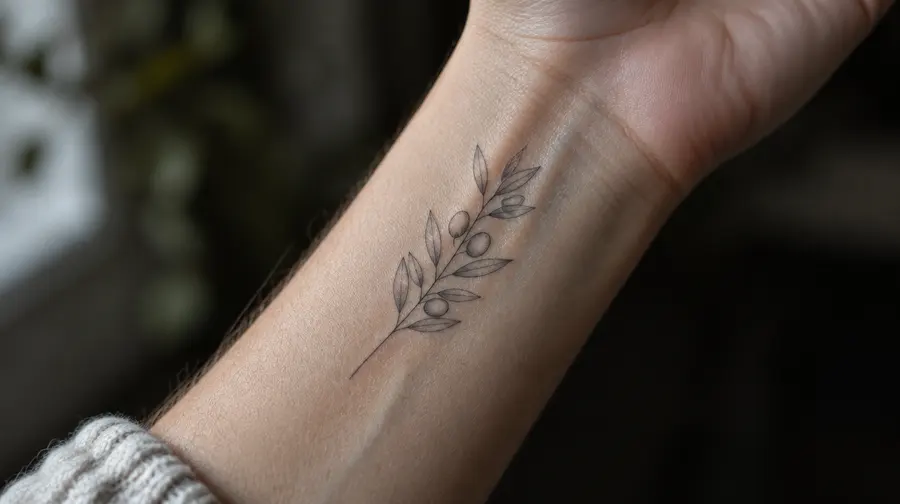
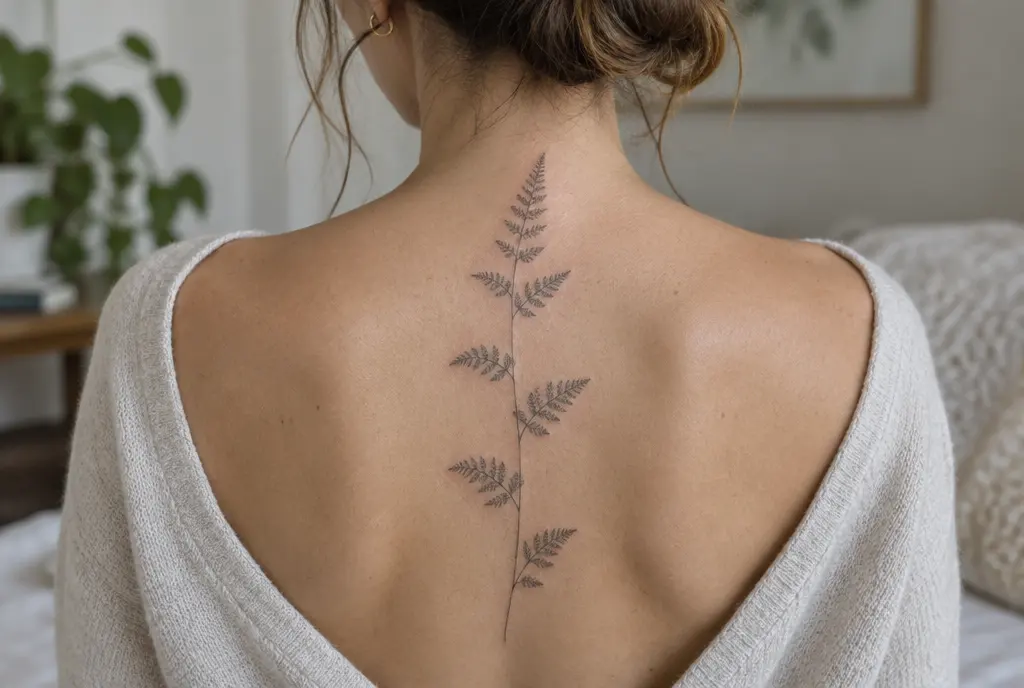
- Single-needle fine line. Delicate and lovely when fresh. Large, airy fine line pieces can last well; tiny, dense ones soften fast.
- Outline-free watercolour. Soft washes of colour without a dark structure can drift into an impression of the original. A thin dark outline or a few darker accents make a huge difference.
- Very dense dotwork and soft shading. Fine stippling tends to merge into a flat grey over time. It still looks intentional if the main structure is bold.
- White ink and pale pastels. Beautiful highlights that often turn yellowish, skin-toned or simply disappear within a few years.
Two tests you can do in thirty seconds
You don’t need training to get a feel for how a design will age. You need two minutes and your phone.
The squint test
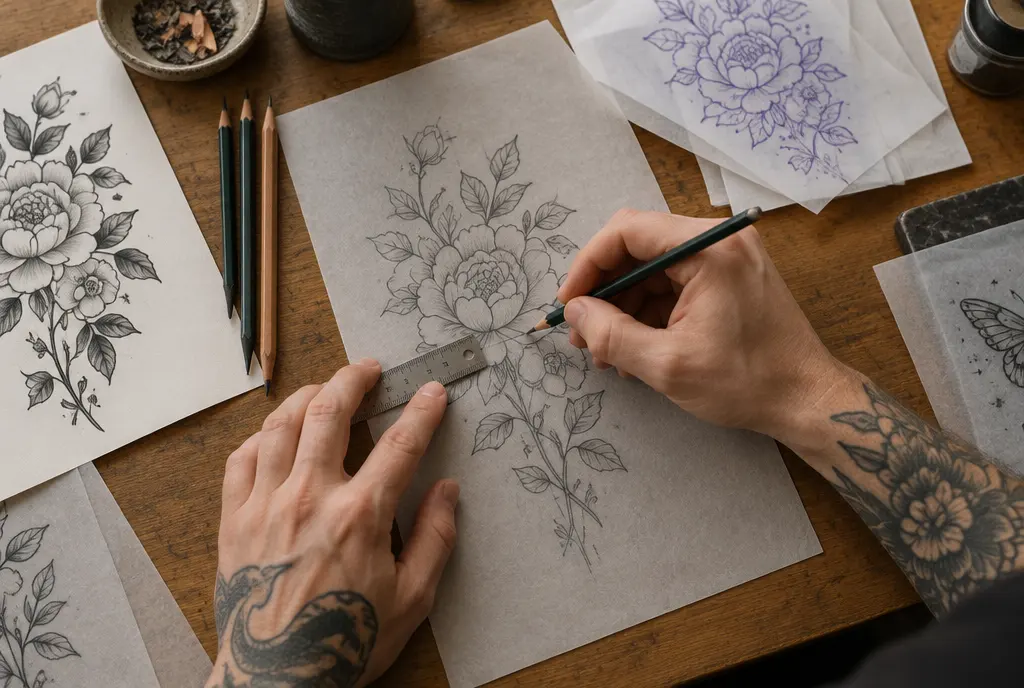
Put the design on your screen at full size, then squint until everything goes soft. That blur is a decent stand-in for decades of spread. Can you still tell what it is? Does it still have a clear top and bottom, a dark side and a light side? If it turns into a grey patch, the design is relying on details that won’t last.
The arm’s-length test
Now shrink the image to roughly the size it will be on your body and look at it from about a metre away, the distance at which other people will see it most of the time. Fine details disappear at that distance today. In twenty years they will disappear up close too. Whatever still reads from a metre away is the real design.
Colour or black?
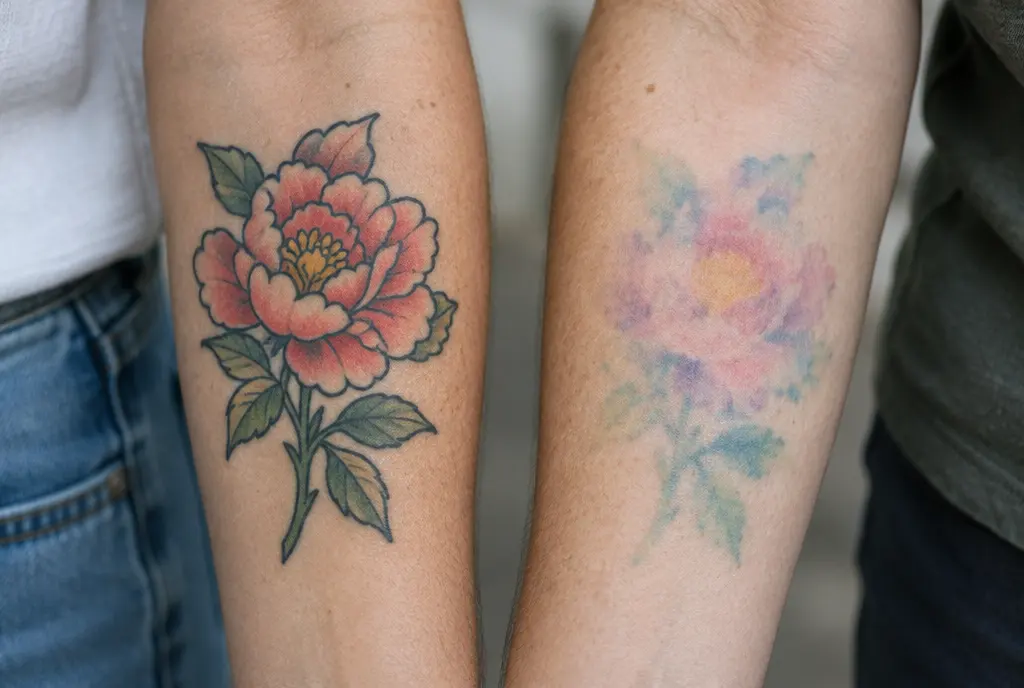
Black is the most stable pigment used in tattooing, which is why line work tends to outlive shading and colour. That doesn’t mean colour is a bad idea. Reds and deep blues usually hold well. Yellows, oranges, whites and pastels are more sensitive to light and are the first to pale.
The real secret of colour tattoos that age well is the outline. A colour piece with a solid dark outline keeps its shape even when the fill fades, the way a colouring book page still shows a picture after the crayon has faded. Without that skeleton, soft colours can blur into a stain. If you love loose, painterly colour, ask for a fine dark outline or a few darker values in the key areas.
Where it goes matters as much as what it is
The same design can age very differently in two spots. Skin that is covered most of the time, doesn’t bend much and doesn’t get scrubbed several times a day is kind to ink.
- Kind to tattoos: upper arm, inner arm, shoulder, upper back, ribs, thigh and calf.
- Hard on tattoos: fingers, hands, feet, the inside of the lips, elbows, knees and the outer forearm. Friction, washing, bending and sun all add up.
If you have your heart set on a hand or finger tattoo, that is fine. Just give the design a bolder structure than you would elsewhere, and expect it to need a touch-up sooner.
The habits that keep a good tattoo good
A design that is built to age well still needs a little help. The most important habits are not complicated.
- Heal it properly. Follow your artist’s aftercare, don’t pick, and keep it out of the sun, pools and the sea until it has healed.
- Use sunscreen every time it is out. A broad-spectrum SPF 50 is the single best thing you can do for any tattoo over its lifetime.
- Keep your skin in good shape. Moisturised, hydrated skin shows ink more clearly. Habits that age skin in general, such as smoking and sunburn, age tattoos too.
- Touch it up when it asks. Many tattoos benefit from a refresh every 8 to 10 years. Think of it as maintenance, like repainting a window frame.
Before you book, see it in thirty years
The squint test and the arm’s-length test are good, but nothing beats seeing your own design on your own skin, aged. In InkAge you upload a photo of the spot, place your design at the size you have in mind and see it fresh, healed, and at 10, 30 and 50 years.
The longevity score from 0 to 100 tells you how well the design suits that size and spot. If it is low, try the “Make it last” version, which redraws the design with stronger key lines and more breathing room, and compare the two side by side. You can also take the PDF to your artist, which tends to start exactly the right conversation.

The short version
Tattoos that age well are not boring tattoos. They are tattoos whose beauty doesn’t depend on details smaller than time can keep. Give your design a strong silhouette, some line weight, room to breathe and real contrast, put it somewhere kind and keep the sun off it. Then it will still look like what you meant it to be, long after the photo from day one has scrolled out of everyone’s feed.
Frequently asked questions
What tattoo style ages the best?
American traditional and bold blackwork usually age best, because they combine thick outlines, solid fills, clear shapes and strong contrast. Larger neo-traditional, illustrative and black-and-grey pieces also age well when they are big enough for their detail.
Do small tattoos age well?
Small, simple shapes can age well. Small designs with a lot of internal detail, tiny text or very thin lines usually blur first, because there is little room for the ink to spread. Going a little bigger or simplifying the detail helps a lot.
Do fine line tattoos age badly?
Not necessarily. Large, airy fine line pieces with enough space between lines can last well. Tiny, dense fine line designs, especially on hands and fingers, soften fastest. Slightly bolder key lines make a big difference.
Which body parts are best for a tattoo that lasts?
Upper arm, inner arm, shoulder, upper back, ribs, thigh and calf. These areas are mostly covered, bend little and see less friction. Hands, fingers, feet and the outer forearm wear faster.
How can I tell if my design will age well?
Squint at it until it blurs, and look at it at real size from about a metre away. If it still reads, it has a good structure. For a closer look, preview it in InkAge on your own skin at 10, 30 and 50 years and check the longevity score.
Written by the InkAge editorial team from widely accepted tattoo-care practice. Figures are rules of thumb, not measurements. This is general information, not medical advice — ask your artist or a dermatologist about your own skin.
Last updated: 23 October 2026