In short
- Almost every clinic, dermatologist and tattoo artist advises waiting until after pregnancy and breastfeeding, both for laser removal and for a new tattoo.
- The reason is not proven harm. It is missing safety data for an optional treatment: laser-broken ink is carried away partly through the lymph system, and nobody has measured whether any of it reaches a baby or breast milk.
- Numbing creams, blisters that can get infected and hormonal skin changes are further reasons to postpone.
- Many people wait until they have weaned, sometimes plus a few weeks. The months in between are good for consultations, sun protection and deciding between removal, fading and a cover-up.
In this article 9
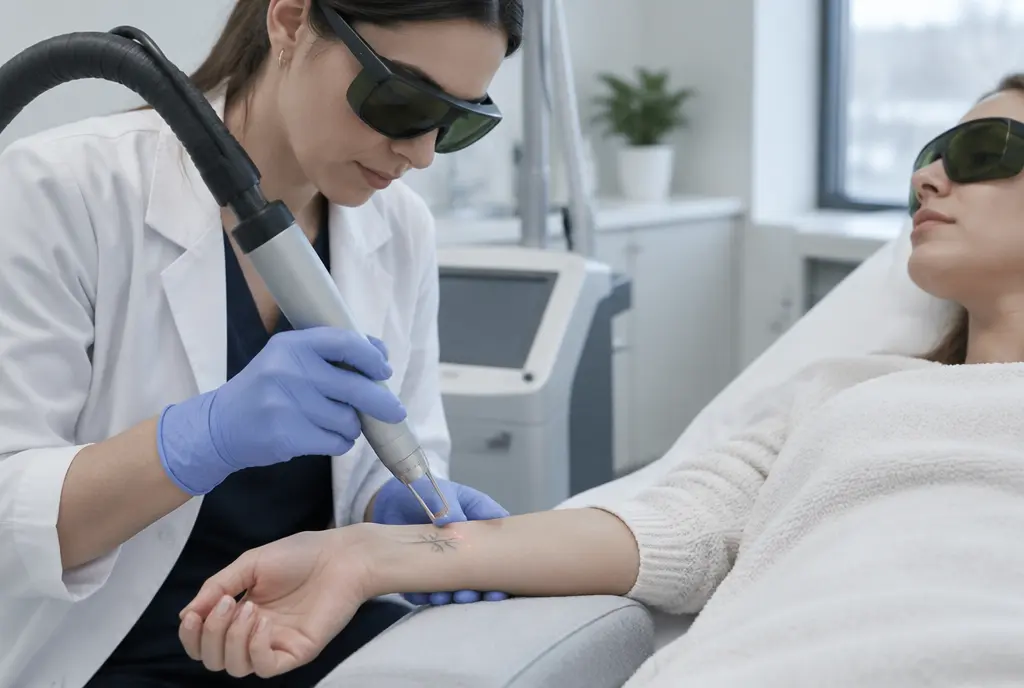
Mira was five months pregnant when she noticed she had started hiding her left wrist. The small script tattoo there, a name from a relationship that ended years ago, had bothered her for a while, and now that a new chapter was starting she wanted it gone before the baby arrived. She found a laser clinic, filled in the online form and stopped at one question: “Are you pregnant or breastfeeding?” She ticked yes. The reply came the next morning, friendly and short. They would be glad to see her, but only once she had finished breastfeeding.
Mira’s first reaction is the one many people have: is laser removal actually dangerous for the baby, or is the clinic just covering itself? The honest answer sits somewhere in between, and it is calmer than a lot of what you will read online. This guide walks through why almost every clinic says wait, what the research does and does not show, and how to use the months in between well.
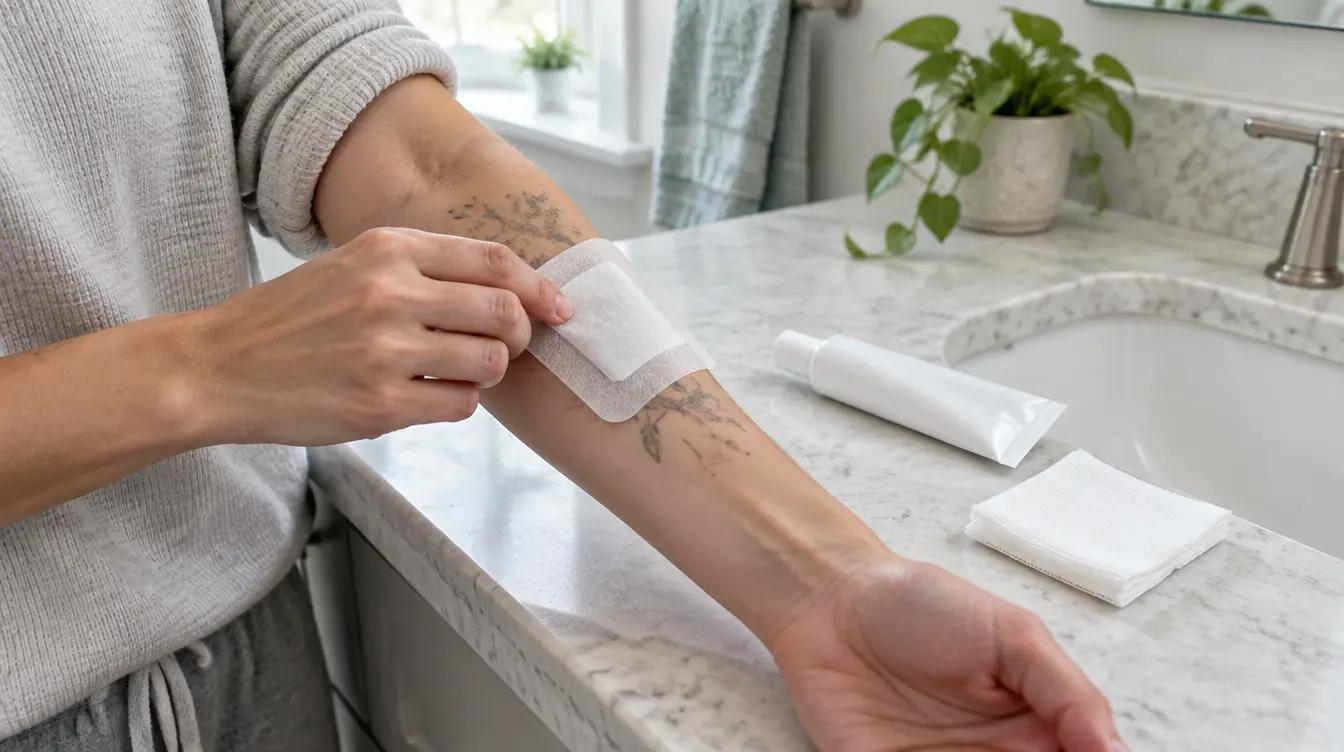
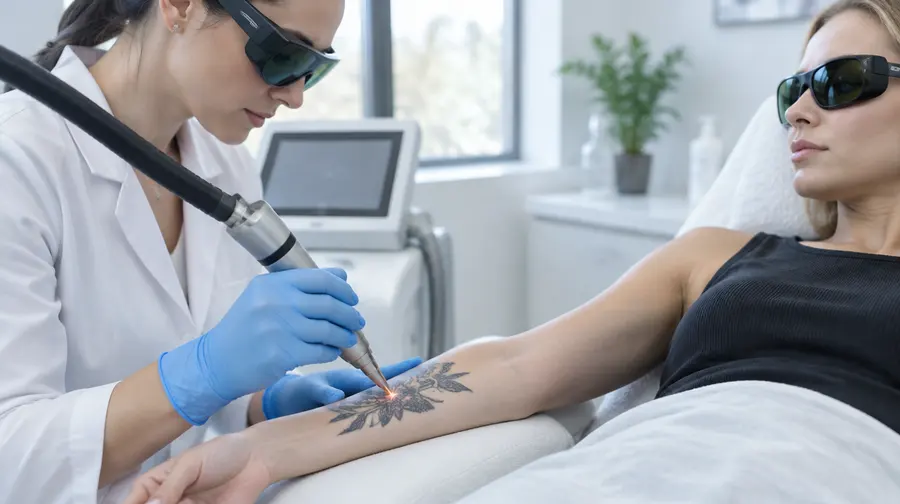
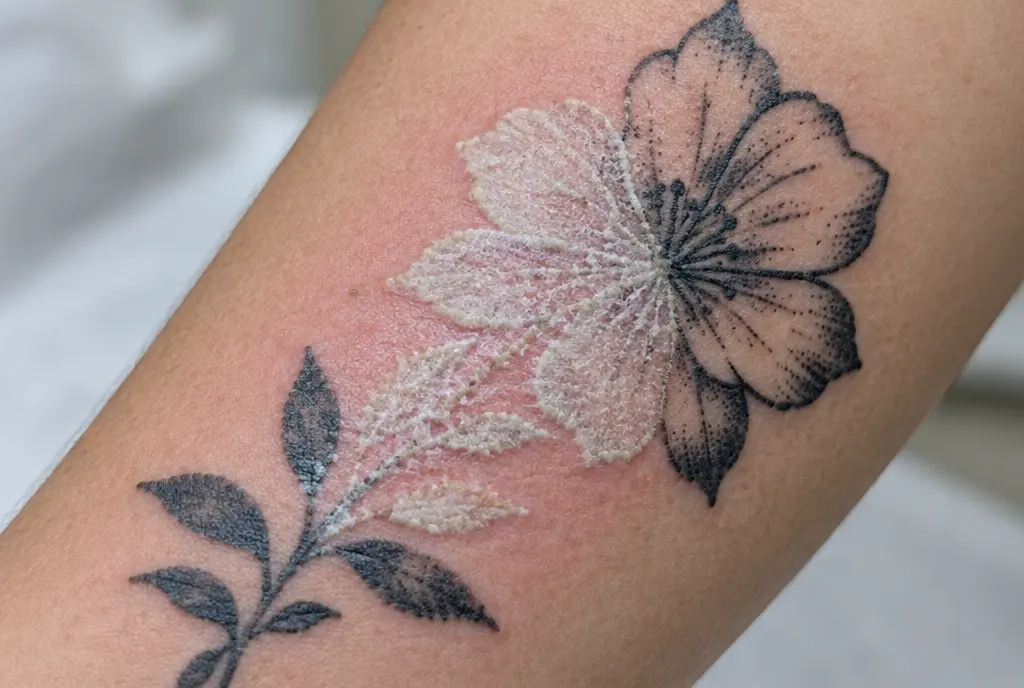
> A note on the pictures: the images in this article are illustrations made to show typical situations. They are not photos of real patients or real results. This article is general information, not medical advice: your midwife, doctor or dermatologist knows your situation.
The short answer
Most laser clinics, dermatologists and tattoo artists advise waiting until after pregnancy and breastfeeding, both for removing a tattoo and for getting a new one. That is not because laser removal has been shown to harm babies. It is because nobody has studied it properly in pregnant or breastfeeding people, and the treatment is entirely optional. When something is elective and the safety data are missing, the standard medical habit is to postpone it.
Removal is slow anyway. A typical tattoo needs several sessions spaced six to eight weeks or more apart, often over a year or longer. Starting a few months later rarely changes much in the end.
Removal calculatorLaser tattoo removal calculator: how many sessions and what it costsRead alsoLaser tattoo removal: what to really expectWhy clinics and doctors say wait
When you ask a clinic why, you usually hear a mix of reasons. They are worth separating, because some are about the baby, some are about your skin, and some are simply about the unknown.
There are no safety studies
Nobody runs trials that fire lasers at pregnant volunteers for a cosmetic treatment, and nobody is likely to. A 2017 review of cosmetic procedures in pregnancy and lactation, published in the International Journal of Women’s Dermatology, concluded that better evidence is needed before firm recommendations can be made, and that lasers are not indicated for cosmetic reasons during pregnancy because of the lack of safety data. Missing data is not proof of harm, but it is not proof of safety either.
The ink has to go somewhere
Laser removal does not lift ink out of the skin. The laser shatters the pigment into smaller fragments, and over the following weeks your immune cells pick them up and carry part of them away, largely through the lymphatic system. Research on human tissue has shown that small tattoo pigment particles do travel from the skin to nearby lymph nodes. What happens to those fragments next, and whether any meaningful amount could reach a developing baby or breast milk, has simply not been measured.
Nobody has shown that the fragments reach your baby. Nobody has shown that they don’t.
Many inks also contain pigments and traces of metals whose breakdown products are not fully understood. For most adults that uncertainty is acceptable. During pregnancy and breastfeeding, when the exposure is shared, most clinics simply prefer not to add it.
Numbing creams and painkillers
Laser removal stings, and many clinics offer a numbing cream, often containing lidocaine, before treatment. The amount absorbed through a small area of skin is generally low, and the 2017 review considers a common lidocaine and prilocaine cream acceptable in pregnancy when used correctly. Still, every medicine in pregnancy is a question for your midwife or doctor, and larger areas or heavier use mean more absorption. It is one more reason clinics would rather wait.
Your skin is different right now
Pregnancy hormones change the skin. Many people notice darker patches on the face (melasma), a dark line on the belly, more sensitive skin or slower healing. Laser removal works best on calm, predictable skin. A body that changes month by month makes it harder for a technician to choose settings and harder to predict how the area will heal. Light or dark patches after treatment are already a known side effect of laser removal, and hormonal skin can make them more likely.
Blisters, open skin and infection
After a session the skin often blisters and scabs for one to two weeks. That is a small wound, and any wound carries some risk of infection. An infection that would normally be a minor nuisance becomes more complicated in pregnancy, because the list of medicines you can take is shorter. For a new tattoo this matters even more: needles that are not properly sterile can transmit infections such as hepatitis B, hepatitis C and HIV, which is why every reputable studio uses single-use needles.
Comfort, policies and practicalities
Lying still on a treatment bed late in pregnancy is uncomfortable, especially on your back, and pain and stress raise your pulse. None of this is dangerous in itself, but it adds to the sense that a purely optional treatment can wait. Many clinics and most tattoo studios also have a written policy not to treat pregnant clients, partly for insurance reasons. So even if you were willing, you would often be turned away.
What the evidence does and does not say
It helps to be precise here, because the internet tends to swing between “totally fine” and “dangerous”. Neither is supported.
- What we know: lasers are used during pregnancy for some medical skin conditions, and reviews describe laser therapy as relatively safe in that setting. The light acts in the skin, a few millimetres deep, and does not reach the womb.
- What we know: some tiny tattoo pigment particles travel from the skin to nearby lymph nodes, even from an ordinary tattoo, and laser treatment breaks the ink into smaller pieces.
- What we do not know: whether laser-broken ink fragments, or the substances they break down into, cross the placenta or pass into breast milk in any amount that matters.
- What we do not know: whether laser removal during pregnancy affects the pregnancy at all. There are no studies either way. The advice to wait comes from that gap, not from documented cases of harm.
For breastfeeding the picture is a little softer. The same 2017 review lists lasers among procedures it considers safe during lactation. Breastfeeding organisations are more cautious: the Australian Breastfeeding Association points out that the effects of removal on breast milk are unknown and that many experts suggest waiting until after weaning. Ink pigments are large particles, and existing tattoos are not thought to get into milk, but removal deliberately breaks them into smaller pieces, and that is exactly the part nobody has measured.
And getting a new tattoo?
The same logic applies to a new tattoo, with infection risk higher on the list. Most medical sources advise waiting until after the baby is born, and many artists will not tattoo pregnant clients at all. During breastfeeding opinions are more mixed. There is no research showing harm to babies, but there is no safety data either, and most experts still suggest waiting until you have finished. One detail shows how cautious the system is: according to the Australian Breastfeeding Association, human milk banks usually do not accept donated milk for six months after a new tattoo.
Existing tattoos are a different matter. A tattoo you already have, even on the breast, is not a reason to stop breastfeeding. If you are wondering how pregnancy may change a tattoo on your belly, hips or breasts, that question has its own guide on tattoos, weight change and pregnancy.
How long do people usually wait?
There is no official number, and each clinic sets its own rules. The common patterns look like this:

- During pregnancy: no removal and no new tattoos. Almost every clinic and studio agrees on this.
- After birth, if you are not breastfeeding: many clinics ask you to wait until your body has settled, often at least six to eight weeks, and longer after a caesarean or if the tattoo is near the belly. Your postnatal check is a good moment to ask.
- While breastfeeding: most clinics and breastfeeding organisations suggest waiting until you have weaned, including pumping.
- After weaning: some clinics start right away, others like to wait a few more weeks so that hormones and skin settle. If you had melasma or other pigment changes in pregnancy, waiting until they fade can make the first sessions safer and more predictable.
For many people this adds up to somewhere between a few months and two years after the birth. It sounds long. Measured against a tattoo you have lived with for years, and a removal process that itself often takes a year or more, it usually is not.
What you can do in the meantime
The waiting months do not have to be lost time. A lot of what makes removal go well happens before the first session.
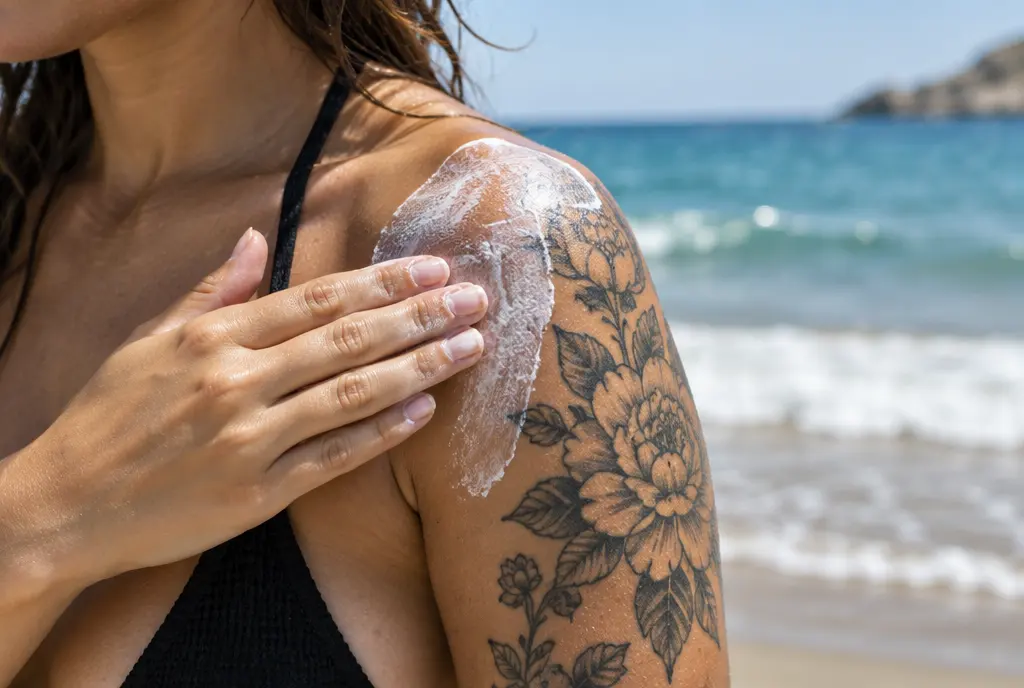
- Protect the tattoo from the sun. Tanned skin cannot be treated safely, and sun-darkened skin around the ink makes sessions harder. Cover the area or use a high-factor sunscreen, which also helps with pregnancy pigment changes.
- Book a consultation, not a treatment. Many clinics are happy to look at the tattoo, estimate the number of sessions and give you a price range long before you can start. Ask whether they do a small test spot before the first full session.
- Decide: remove, fade or cover? If you might want a cover-up later, a few fading sessions may be enough instead of complete removal. Talk to an artist you like before you book the laser.
- Look after the skin. Moisturise, avoid harsh scrubs on the area and let stretch marks and pigment changes settle. Calm, healthy skin heals better after laser.
- Skip the shortcuts. Removal creams, at-home devices and acids sold online are a bad idea at any time and an especially bad one now. They do not reach deep ink and can burn or scar the skin.
- Set money aside. Removal is paid per session and often costs more than the tattoo did. Spreading the cost over the waiting months makes it easier later.
Questions to ask at your consultation
- How long after birth and after breastfeeding do you want me to wait?
- Which laser do you use, and does it suit my skin tone and ink colours?
- Do you use a numbing cream, and which one? Can I check it with my doctor first?
- How many sessions do you expect, and how far apart?
- What should I do about sun, pigment changes or stretch marks around the area?
Mira, in the end, used her waiting time well. She had a consultation when her son was four months old, learned that the thin black script would probably need six to eight sessions, and booked the first one for the month after she stopped breastfeeding. By then she had also decided she wanted a small new piece on the same wrist one day, so she asked the clinic to fade the old name rather than chase every last trace.
Read alsoWeight change, pregnancy and muscles: how tattoos stretchWhat it means for you
Waiting with laser removal or a new tattoo during pregnancy and breastfeeding is not about a proven danger. It is about an optional treatment, missing safety data and a body that is busy with something more important. The research does not show that removal harms babies, and it does not show that it is safe, so almost everyone in the field takes the cautious route. If you are unsure, your midwife, doctor or dermatologist is the right person to ask, not a clinic’s booking form.
While you wait, it can help to picture the options side by side. With InkAge you can upload a photo of your tattoo and see how it may look as it ages, or how it might fade with laser sessions, which makes the conversation with a clinic or an artist a little easier when the time comes.
Frequently asked questions
Can you get laser tattoo removal while pregnant?
Almost every clinic will say no and ask you to come back after the birth. There is no proof that it harms the baby, but there are no safety studies either, and the treatment is optional, so the standard advice is to wait.
Can I get a tattoo removed while breastfeeding?
Most clinics and breastfeeding organisations suggest waiting until you have weaned. Laser removal breaks ink into smaller fragments that the body carries away, and nobody has measured whether any of it reaches breast milk.
How long after giving birth can I start laser tattoo removal?
There is no official rule. If you are not breastfeeding, many clinics ask for at least six to eight weeks and a settled body. If you are breastfeeding, most ask you to wait until you have weaned, sometimes plus a few weeks.
Is numbing cream safe during pregnancy?
Common lidocaine creams on a small area are generally considered low risk, because little is absorbed into the blood. Larger areas mean more absorption, so always check any cream with your midwife or doctor first.
I had a laser session before I knew I was pregnant. Should I worry?
There is no evidence that a session harms a pregnancy. Tell your midwife or doctor so they know, stop further sessions for now and continue once you have finished breastfeeding.
Sources
- Trivedi, Kroumpouzos, Murase: A review of the safety of cosmetic procedures during pregnancy and lactation (International Journal of Women’s Dermatology, 2017)
- Schreiver et al.: Synchrotron-based ν-XRF mapping and μ-FTIR microscopy enable to look into the fate and effects of tattoo pigments in human skin (Scientific Reports, 2017)
- Australian Breastfeeding Association: Beauty treatments and breastfeeding
- Healthline: Tattoos and breastfeeding
- Healthline: Can you get a tattoo while pregnant?
- MotherToBaby: Microblading in pregnancy, what to know before going under the needle
Do you run a laser clinic? Show guests their own tattoo after 3, 6 and 10 sessions
Written by the InkAge editorial team from widely accepted tattoo-care practice. Figures are rules of thumb, not measurements. This is general information, not medical advice — ask your artist or a dermatologist about your own skin.
Last updated: 20 November 2026