In short
- Redness, swelling and tenderness on day one, blisters in the first few days and crusts in the first week or two are all common after laser removal.
- The surface usually heals within about two to four weeks, while the ink keeps fading for weeks after that, which is why sessions are spaced at least six to eight weeks apart.
- Scars are mostly avoidable: don’t pop blisters or pick crusts, keep the area clean and out of the sun, and follow your clinic’s instructions.
- Spreading redness, increasing pain, pus or fever are not normal healing. Contact your clinic or a doctor.
In this article 8
Petra woke up on the second morning after her first session with a blister the size of a grape on her forearm. Nobody had shown her a picture of that. The clinic’s leaflet said “blistering may occur”, which, at seven in the morning, did not feel like an adequate description of what she was looking at. She took three photos, googled “tattoo removal blister normal”, and read a stranger’s story about a scar that made her feel considerably worse. Then she called the clinic, and the person on the phone asked one question: “Is it getting redder and hotter, or is it just big?” It was just big.
Most of the fear around healing comes from not knowing what normal looks like. This guide walks through the usual timeline day by day, explains what to do and what to leave alone at each stage, and helps you tell ordinary healing from the few signs that do need attention. It is general guidance rather than medical advice, and if your clinic’s instructions differ from anything here, follow your clinic.
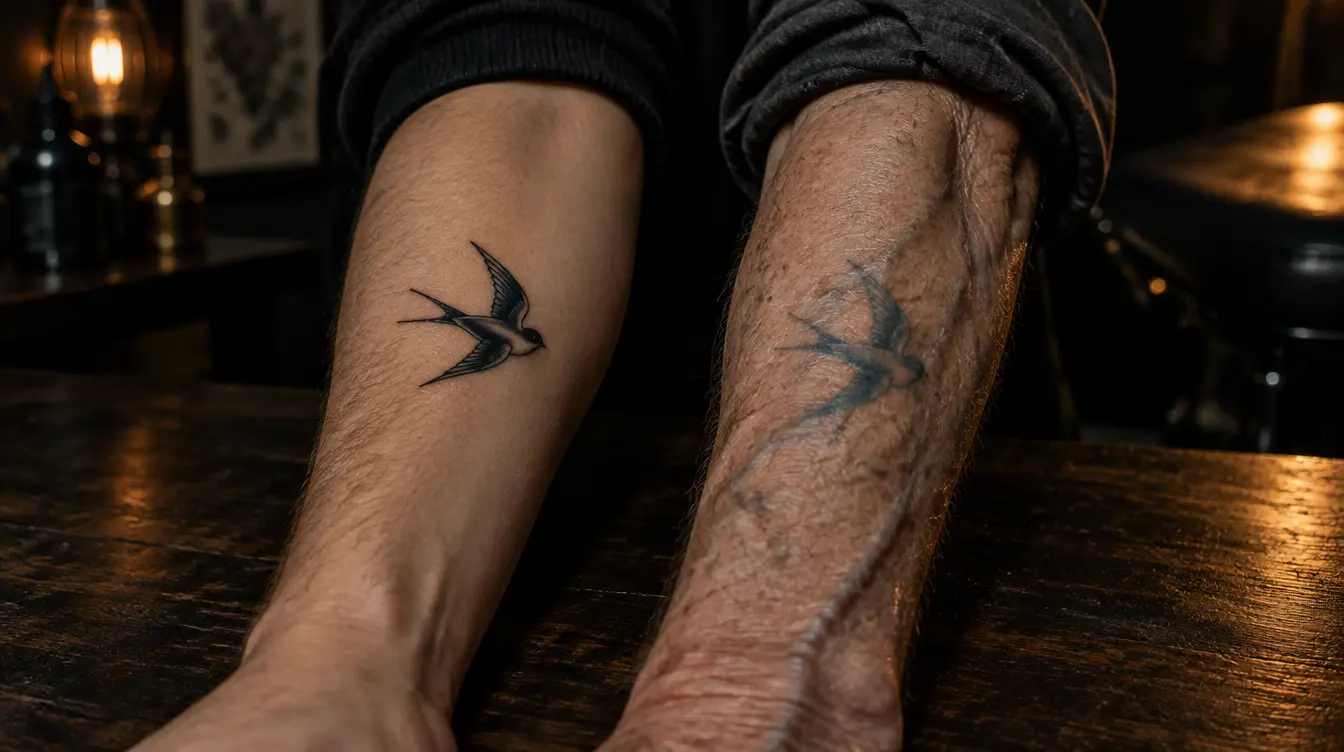
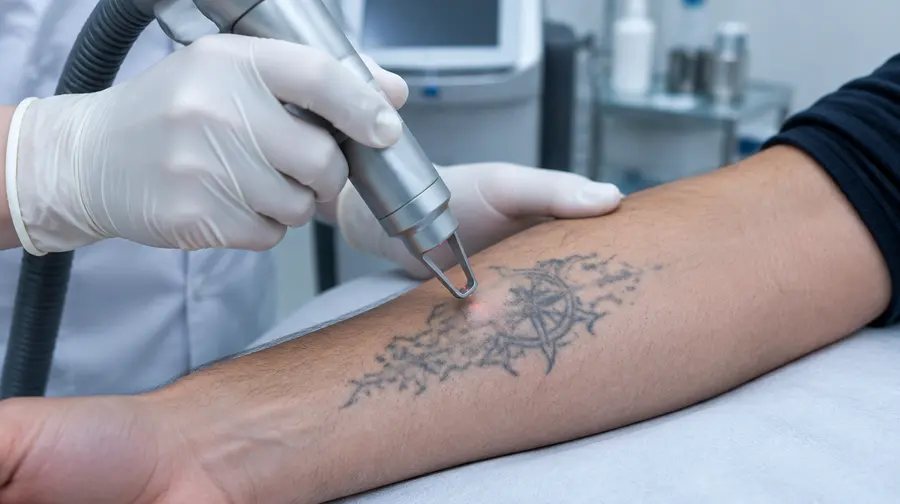
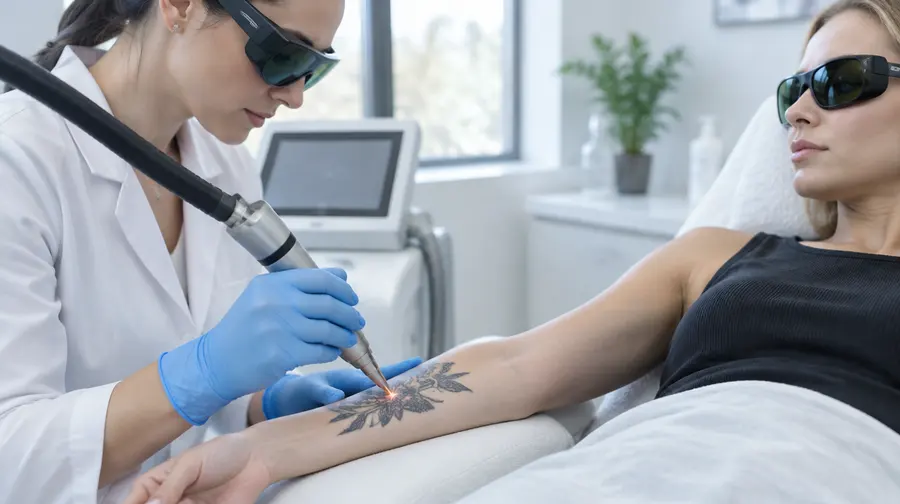
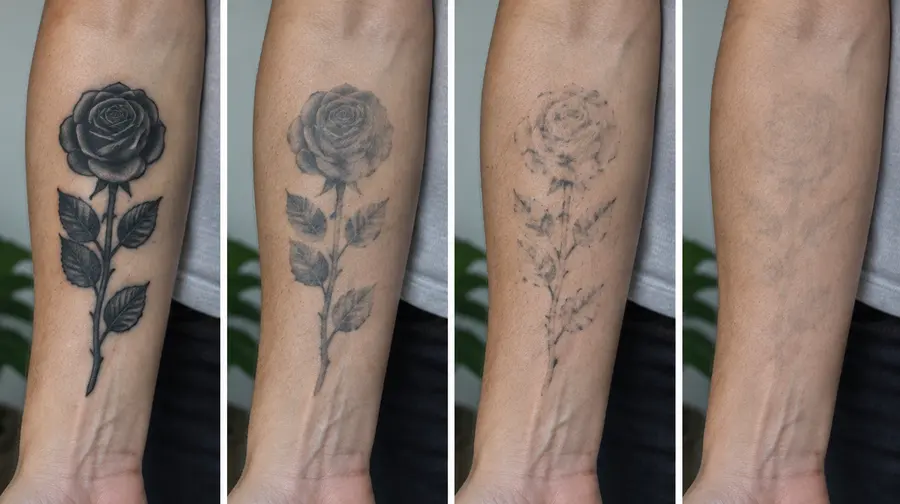
> A note on the pictures: the images in this article are illustrations made to show typical stages. They are not photos of real patients. Everyone heals differently.
What is actually happening in the skin
A laser pulse is absorbed by the ink, which heats up in a tiny fraction of a second and shatters. That sudden change also affects the skin around it: gas bubbles form, small blood vessels leak, and the top layers can separate slightly. Your body responds the way it responds to any small injury, with inflammation first, then repair. The swelling and blisters are part of that response, not a sign that something went wrong.
Meanwhile, a separate and much slower job is going on deeper down. Immune cells gather up the shattered ink and carry it away. This is why your skin can look healed long before the tattoo has finished fading.
Your skin heals in weeks. The ink keeps leaving for much longer. Those are two different clocks.
The healing timeline, day by day
Treat these as typical ranges rather than deadlines. Larger, denser and darker tattoos usually react more strongly, and areas such as ankles and feet often heal more slowly.
The first minutes and hours
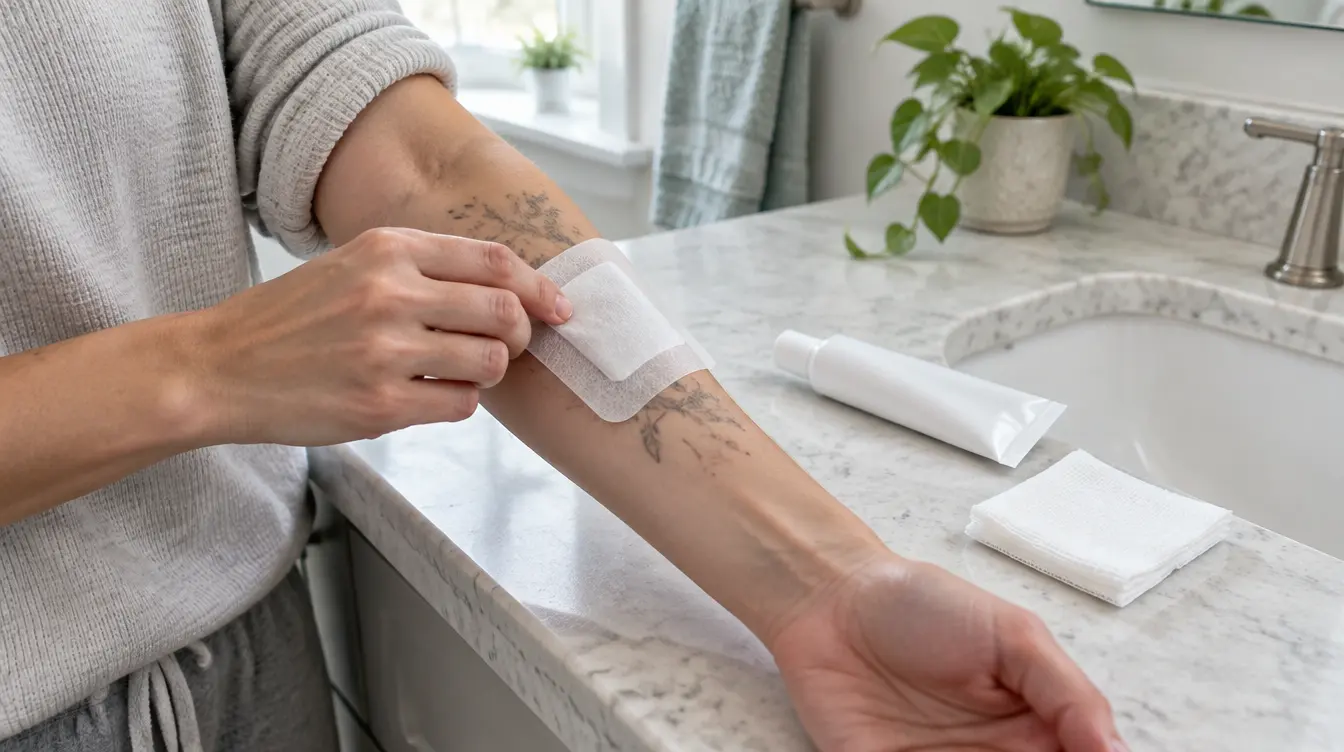
The treated area often turns white for a few minutes, a reaction known as frosting. As it fades, the skin becomes red, warm and swollen, and it may feel like a sunburn. A little pinpoint bleeding can happen, especially on dense ink. Your clinic will usually apply a soothing ointment and a dressing before you leave.
What helps: a cold pack wrapped in a clean cloth, for short periods at a time, and raising the area if it is an arm or a leg. Never put ice straight on the skin. Ask your clinic which pain relief suits you, because some common painkillers can increase bruising.
Days 1 to 3: swelling and blisters
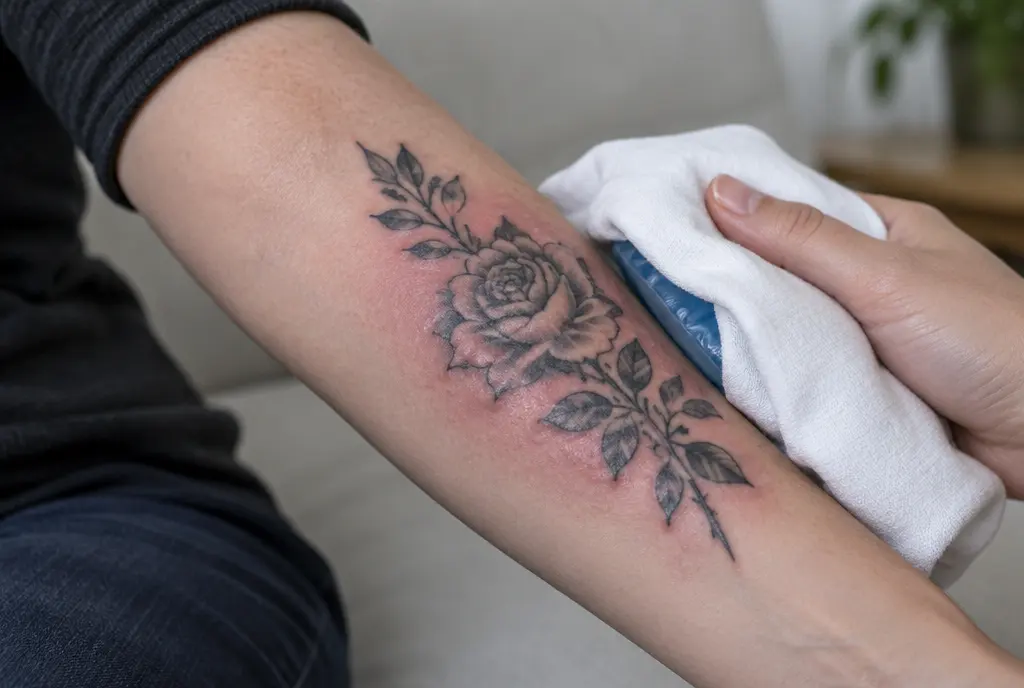
Swelling often peaks in this period, and blisters may appear, sometimes following the lines of the tattoo quite precisely. They can be small or surprisingly large. Blisters are common and are not a sign of a bad treatment, though not everyone gets them.
What helps: leave blisters intact, because the roof of a blister protects the skin underneath. Keep the area clean, use the ointment and dressing your clinic recommended, and wear loose clothing that doesn’t rub. If a blister is very large or sits somewhere it keeps getting knocked, call your clinic instead of dealing with it yourself.
Days 3 to 7: oozing and crusts
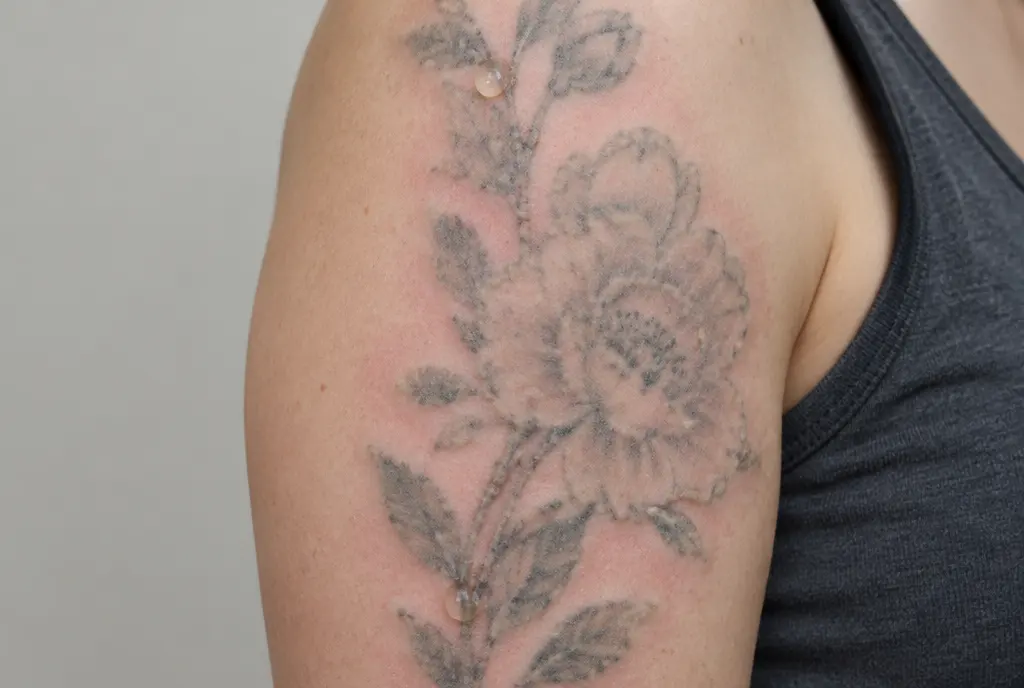
Blisters start to flatten or drain by themselves, and thin crusts form along the treated lines. The area can feel tight, and it often starts to itch. This is usually a sign that repair is underway.
What helps: gently clean the area with mild, unscented soap and pat it dry. Keep it lightly moisturised or covered as your clinic advises. Showers are generally fine, but keep them short and don’t aim the water directly at the area.
Weeks 1 to 2: flaking and itching
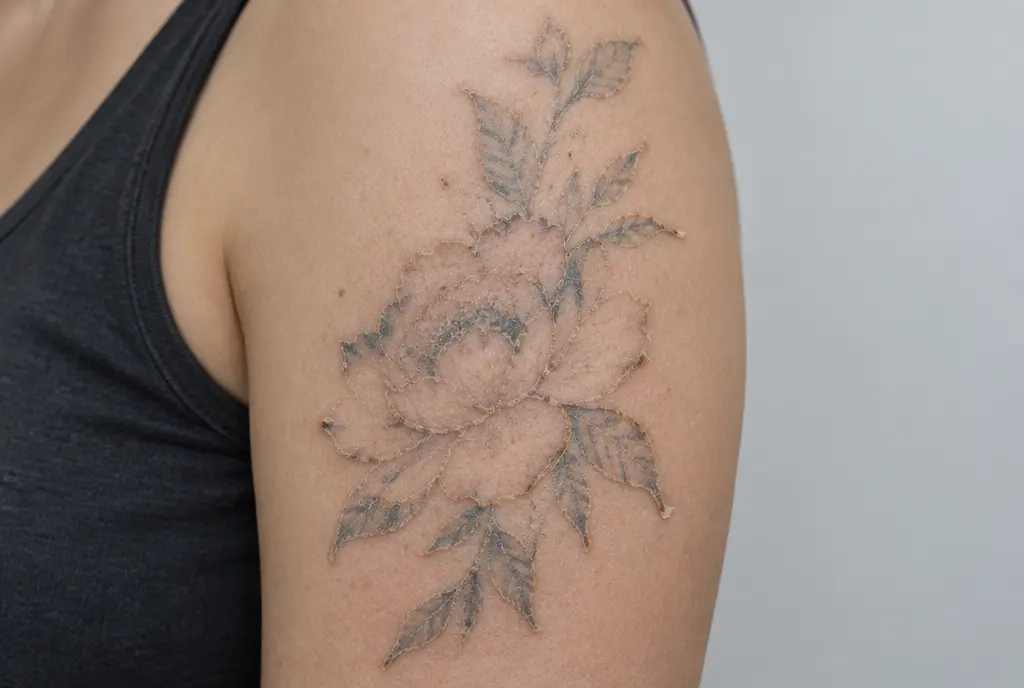
Crusts lift and flake off on their own, and the itching can be at its most annoying now. The temptation to help them along is strong. Don’t. Skin that loses a crust too early is far more likely to scar or change colour.
What helps: a plain, fragrance-free moisturiser once your clinic says the surface is closed, and patting or tapping the skin rather than scratching it.
Weeks 2 to 4: new pink skin
The surface has usually closed by now, and the new skin is smooth, pink and thinner than the skin around it. It may look lighter or darker than your usual tone. This often settles slowly over the following months, so don’t judge the final colour at this point.
What helps: this new skin burns very easily. Keep it covered, and once your clinic says it is healed, use a broad-spectrum SPF 50 every time it sees the sun.
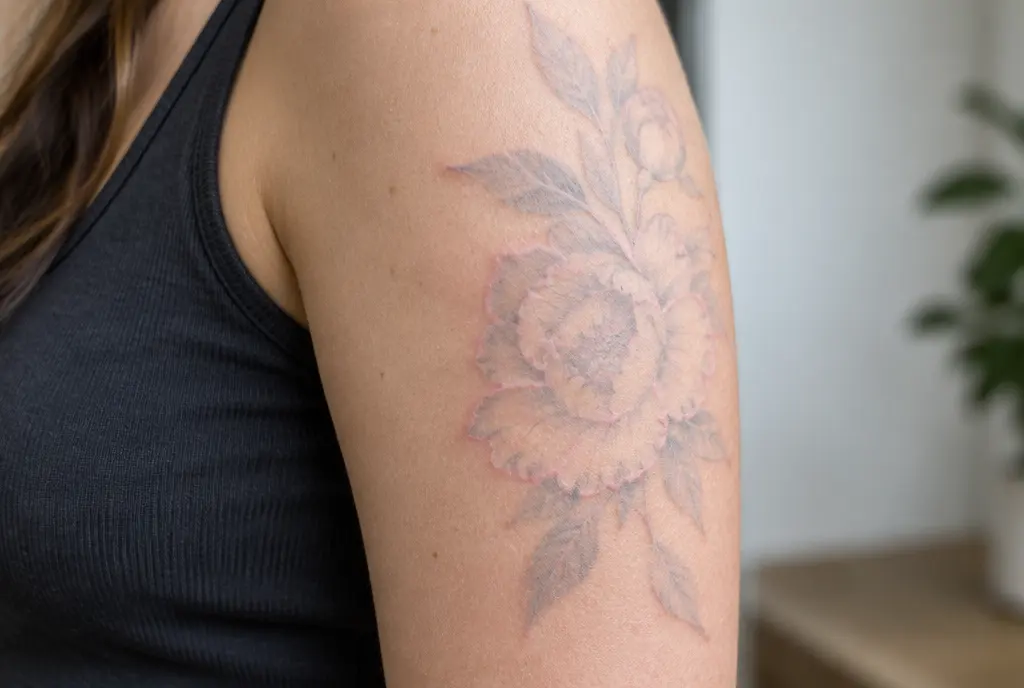
Weeks 4 to 8 and beyond: the ink keeps fading
Your skin looks calm, but the tattoo may keep getting lighter week by week as your body carries the fragments away. This is why clinics usually leave at least six to eight weeks between sessions, and often longer on slower areas or darker skin. Going back too soon doesn’t speed things up, and it gives the skin less time to recover. Our guide to the Kirby–Desai scale explains how many sessions you can roughly expect.
Aftercare: the short list
Your clinic’s instructions come first. These are the general habits most clinics agree on.
- Keep it clean. Wash your hands before touching the area, and clean it gently with mild soap and water.
- Use what your clinic gave you. Ointments and dressings vary, so don’t swap in your own products without asking.
- Leave blisters and crusts alone. No popping, peeling or scratching.
- Avoid soaking. Stay out of baths, pools, the sea, saunas and hot tubs until the skin has fully closed.
- Go easy on exercise for a few days. Heat, sweat and friction all irritate healing skin.
- Skip makeup, perfume, exfoliants and retinoids on the area until it has healed.
- Protect it from the sun. Cover it first, then use sunscreen once it has healed. No tanning beds.
- Look after your general health. Sleep, hydration and not smoking all help your body heal.

How to avoid scars
With a skilled practitioner and sensible aftercare, scarring is uncommon, but it can happen, and it is worth knowing what raises the risk.
- Picking and popping. This is the cause you control most. Removing a crust early or tearing a blister opens the skin up to infection and deeper damage.
- Infection. An infected wound is much more likely to leave a mark, which is why cleanliness matters so much in the first week.
- Settings that are too aggressive, or sessions too close together. This is one reason to choose an experienced practitioner who works at a sensible pace rather than one who promises the fastest result.
- Sun on healing skin. Sunburn over a treated area increases the risk of lasting colour changes.
- Your own skin. If you tend to form raised scars or keloids, or if the tattoo itself already has scar tissue, tell the clinic before you start. Darker skin tones also have a higher risk of pigment changes, which calls for careful settings.
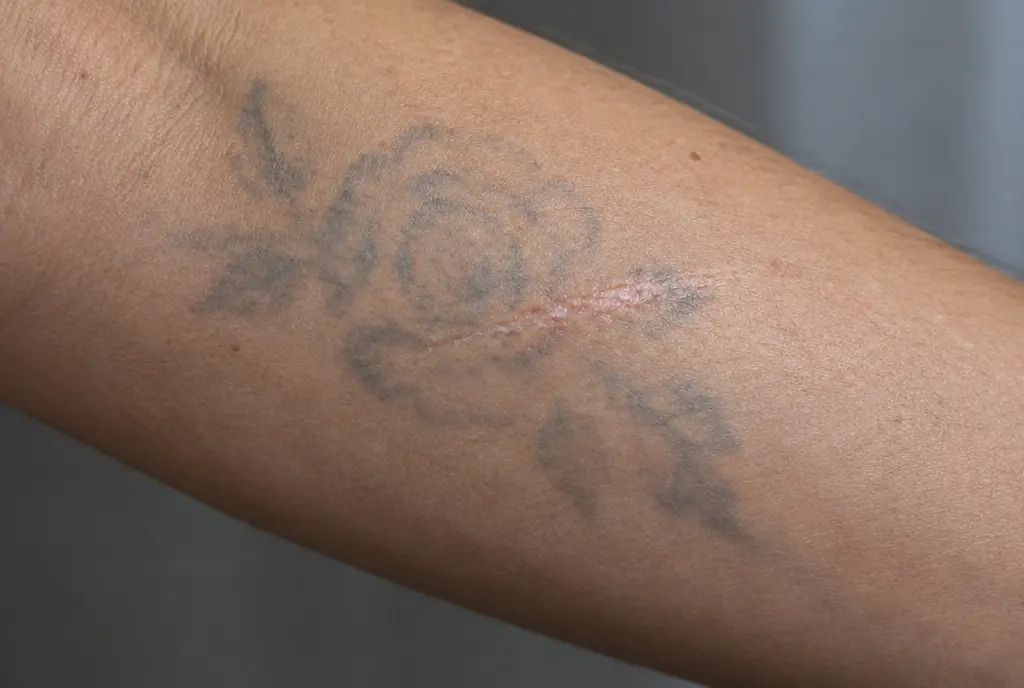
What may look like a scar is sometimes something else. An older tattoo can have scar tissue that only becomes visible once the ink above it fades. And pale or dark patches are usually changes in pigment rather than in texture, and they often improve over months. If you are unsure, show it to your clinic or a dermatologist before the next session.
When to contact your clinic or a doctor
Ordinary healing gradually gets better. Get in touch if it is getting worse instead.
- Redness that spreads away from the treated area, or red streaks
- Pain, heat or swelling that increases after the first couple of days
- Yellow or green pus, or a bad smell
- Fever or feeling unwell
- A rash, hives or severe itching across a wider area, which may point to an allergic reaction
- A wound that is still open after a couple of weeks
If you have trouble breathing or swelling of the face or throat, treat it as an emergency. And if you have diabetes, a condition that affects your immune system, or take medication that affects healing, mention it before your first session, because it may change the plan.
See where it is heading
During the slow weeks between sessions, it helps to have something to look forward to. The InkAge laser preview shows what your own tattoo might look like after 3, 6 and 10 sessions. It is a visual estimate rather than a medical assessment, but many people find it easier to be patient when they can picture the next step. A weekly photo in the same light helps too, because day to day you won’t notice the change.
The short version
Petra’s blister flattened by itself three days later. The crust came off in the second week, the skin underneath was pink and smooth, and when she went back for her second session the tattoo was visibly lighter. Nothing had gone wrong; it had just looked alarming. Keep it clean, leave it alone, keep it out of the sun, and call someone if it is getting worse rather than better. Most of good healing is resisting the urge to help.
Frequently asked questions
How long does it take to heal after laser tattoo removal?
The surface usually heals in about two to four weeks, and sometimes longer on hands, ankles and feet. The ink keeps fading for weeks after that, and any colour changes in the skin can take months to settle.
Are blisters normal after laser tattoo removal?
Yes, blisters are common in the first few days and can be surprisingly large. Don’t pop them, keep the area clean and contact your clinic if a blister is very large, painful or in an awkward spot.
Will laser tattoo removal leave a scar?
Usually not with a skilled practitioner and good aftercare, but it can happen. The risk rises with picking at crusts, infection, aggressive settings, sun on healing skin and a personal tendency to form raised scars.
Can I shower or exercise after a laser session?
Short showers are generally fine, but don’t aim the water at the area and don’t soak it in baths, pools or the sea until it has closed. Go easy on exercise for a few days, and follow your clinic’s specific advice.
How long should I wait between laser sessions?
Usually at least six to eight weeks, and often longer on slower areas or darker skin. The skin needs to recover and the ink keeps clearing during that time, so shorter gaps mostly add risk rather than speed.
Written by the InkAge editorial team from widely accepted tattoo-care practice. Figures are rules of thumb, not measurements. This is general information, not medical advice — ask your artist or a dermatologist about your own skin.
Last updated: 31 October 2026