In short
- A tattoo moves with your skin: moderate weight change usually shows only a little, but large, fast change can distort it.
- The stomach, hips, sides, upper thighs and chest change most; the forearms, calves, upper back and ankles tend to be more stable.
- Stretch marks running through a tattoo can break up its lines, and strict geometry or lettering is the first to show distortion.
- During pregnancy and breastfeeding most artists and doctors advise waiting – on questions like these, your doctor’s opinion always comes first.
In this article 12
- Why does a tattoo move with the skin?
- The areas that change most
- The more stable areas
- Weight change: gaining and losing
- Pregnancy and breastfeeding
- Muscle building and training
- Stretch marks and tattoos
- Which designs cope better with change?
- If an existing tattoo has changed
- Plan ahead with InkAge
- The one thing to take away
- Frequently asked questions
You’re looking at an old summer photo: there on your hip is the little mandala you got at twenty-two, perfectly round, every petal the same. A few years have passed since then – there was a long stretch when you trained a lot, then one when you didn’t train at all – and now you’re wondering why the circle looks slightly oval. Or maybe you’re planning your next tattoo, and in the back of your mind is the thought that you’d like to have a child within a few years.
This article is about how tattoos respond to changes in the body: weight gain and loss, pregnancy, muscle building and stretch marks. We’ll look at which body parts change most and which are most stable, which designs cope better with stretching, what you can do if an existing tattoo has changed, and how to plan ahead so your design looks good in the long run. One thing to say up front: your body changing is natural, and a tattoo doesn’t have to hold you back from that. The goal isn’t worry – it’s thoughtful planning.
Why does a tattoo move with the skin?
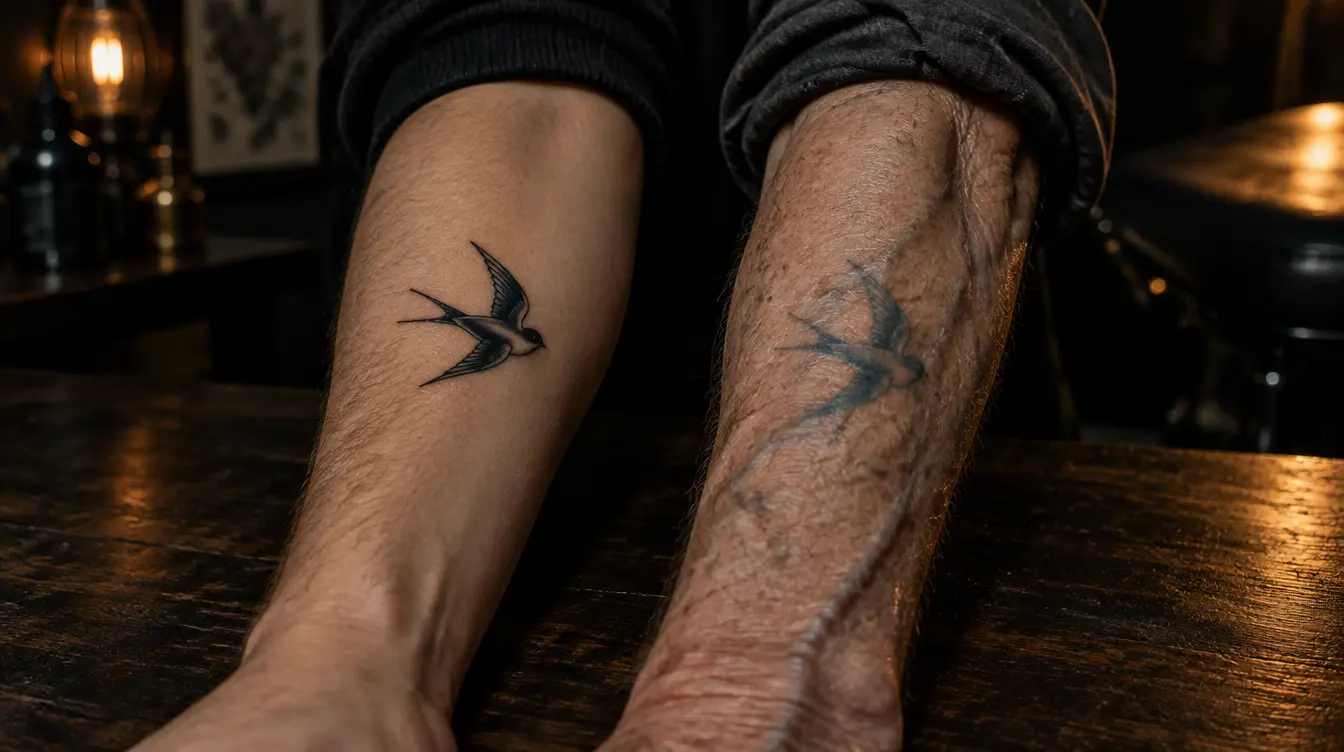
Tattoo ink doesn’t sit on the surface of the skin but in a deeper layer, the dermis. There the pigment particles stay more or less in place and move together with the skin around them. When the skin stretches, the design stretches; when the skin contracts, the design follows – but not always back to exactly where it started.
Skin is elastic and can adapt to change to a considerable degree. How far it recovers after a given change depends on many things: age, genetics, how large and how fast the change was, how hydrated the skin is, and how prone the area is to stretching in the first place. That’s why two people with the same weight change can see quite different results on their own tattoos.
It also helps to know that stretching is rarely even. A body doesn’t grow or shrink like an inflated balloon, where every point moves apart in the same proportion. Most distortion comes from one part of a design stretching more than another – for example, the lower half of a circle more than the upper half. That’s what turns a circle into an oval, a straight line into a gentle curve, and lettering into something uneven.
Age plays a part too. Younger skin is typically more elastic and recovers more easily after a change, while elasticity gradually declines over the years. That’s no reason to worry, just one more thing to consider: the same change can affect the same tattoo differently at twenty and at fifty. That’s why it’s worth thinking not only about your body now but also about your future body when you choose a placement.
The areas that change most
Some body parts respond particularly strongly to weight change, pregnancy or muscle growth. On these areas a tattoo is more likely to change shape, and this is also where stretch marks appear most often.
- Stomach: perhaps the area that changes most with pregnancy and weight change, especially around the navel.
- Hips and sides: fat is often gained and lost here, and the skin stretches and contracts a lot.
- Upper thighs: their circumference can change significantly with both weight change and muscle building.
- Chest and breasts: weight change, pregnancy, breastfeeding and training can all reshape them considerably.
- Inner upper arm: for many people it tends to loosen and develop stretch marks, especially after significant weight loss.
This doesn’t mean these spots are off-limits. Many beautiful hip or thigh tattoos stay lovely for decades. It’s just worth knowing that the risk of the design changing over time is higher here, and taking that into account when choosing the design.
If you already have a tattoo in one of these areas and a change lies ahead, don’t panic. In most cases the design stays recognisable and attractive, with at most its exact proportions shifting a little. What can help: moisturising your skin regularly, changing gradually, and not deciding what to do about the tattoo in the middle of the change. The final picture often only emerges months later.
The more stable areas
The good news is that some body parts change relatively little over most people’s lives – even when weight or fitness goes up and down. These are typically areas where less fat is stored and the skin lies more tightly over muscle or bone.
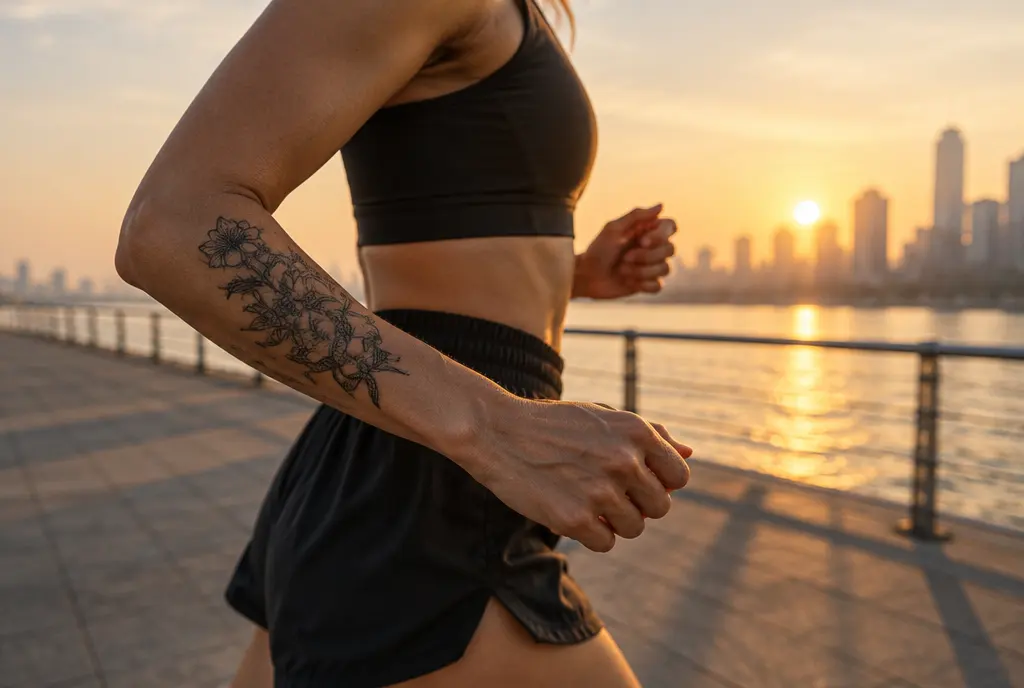
- Forearm: one of the most stable spots, and easy to see and look after, too.
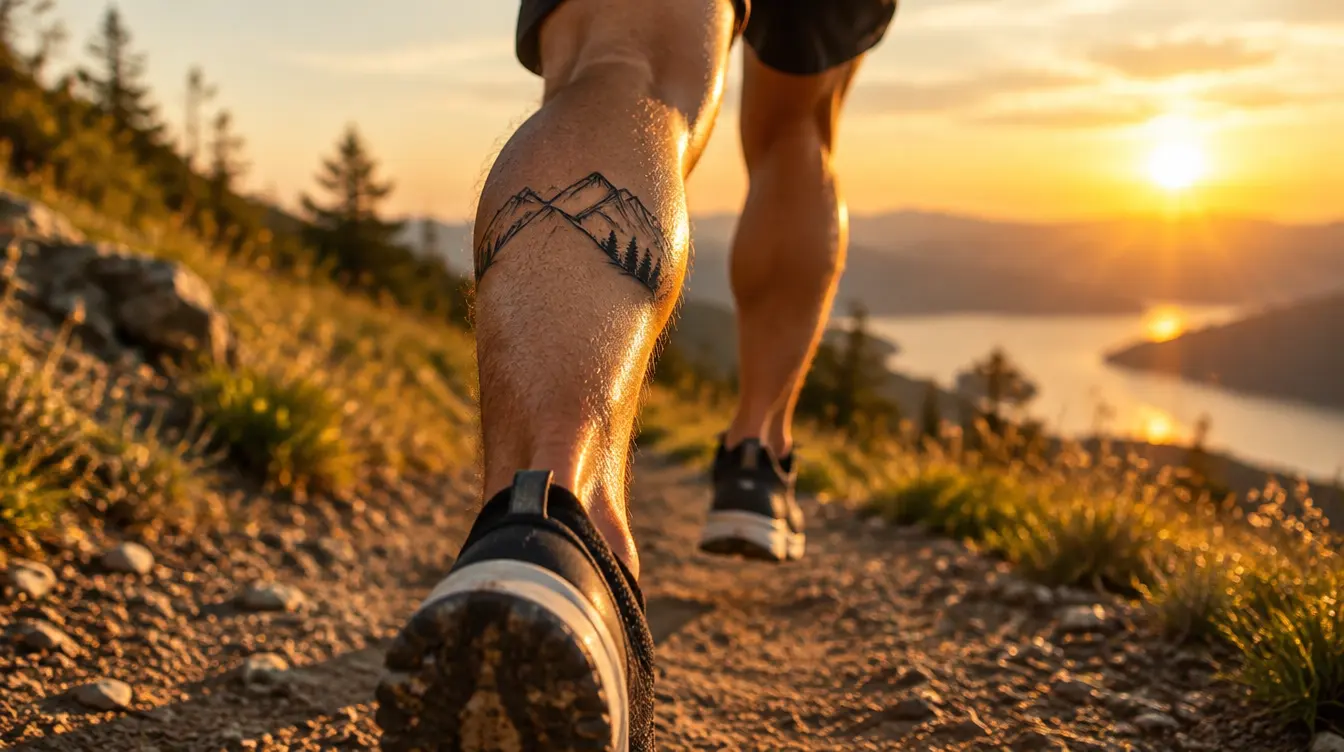
- Calf: usually distorts less with weight change, though it can grow slightly with serious muscle building.
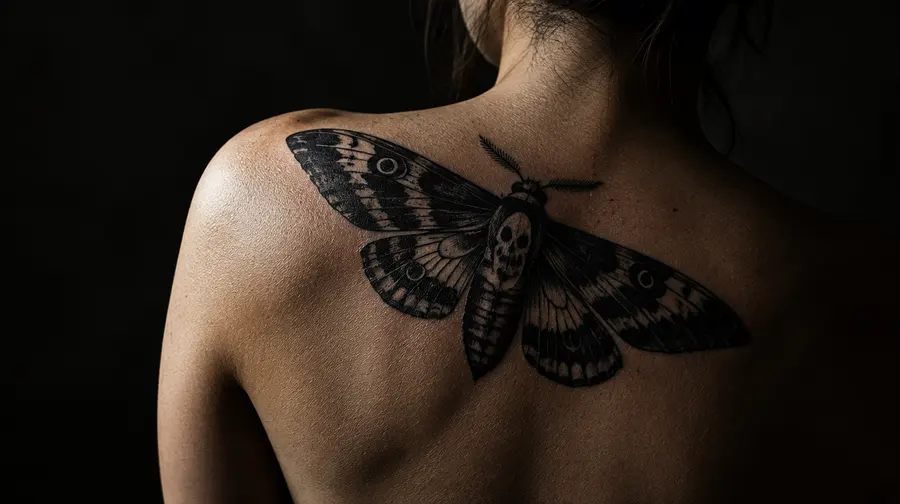
- Upper back and shoulder blade: a large, calm surface that typically stays untouched during pregnancy as well.
- Ankle and lower shin: little fat tissue, a stable shape – though friction brings other considerations here.
- Outer upper arm: more stable than the inner side, and it usually stretches evenly with muscle building.
Weight change: gaining and losing
The most important thing to know: moderate weight change usually shows only slightly on most tattoos. A few kilos either way is barely noticeable on most designs, especially on the more stable areas. The tattoo simply becomes a little bigger or smaller, while its shape usually stays the same.
With larger and faster changes, things are different. When skin has little time to adapt, stretch marks and uneven stretching of the design become more likely. After weight loss the skin doesn’t always contract fully; the tattoo may then look slightly “looser” or its surface may change – especially on the stomach, the inner upper arm and the thighs.
If you’re deliberately planning significant weight loss or gain – for example, a programme started for health reasons – it may be worth holding off on a new tattoo until your weight stabilises. That way the design is made for your “settled” proportions, and the artist can plan the placement better too. If your weight is changing for health reasons, always agree on the pace and method with your doctor.
A few practical points if your weight is changing:
- Gradual change gives your skin more time to adapt.
- Regular moisturising isn’t a miracle cure, but it’s good for your skin’s overall condition.
- Photos taken during weight loss or gain help you judge later what has actually changed.
- After a big change, wait a few months before deciding on a touch-up or a new tattoo.
Pregnancy and breastfeeding
Pregnancy is one of the biggest changes a body can go through, and it can leave its mark on tattoos too – mostly on the stomach, hips, sides and breasts. The skin of the stomach stretches considerably over a few months, and how far it contracts after birth is highly individual. Many tattoos regain almost their original shape after birth; on others, slight distortion or traces of stretch marks remain. There’s no way to know in advance.
As for new tattoos: most artists and doctors advise waiting during pregnancy and breastfeeding. There are several reasons: tattooing breaks the skin, there’s a risk of infection, your body may react differently during this period, and many artists simply don’t work on pregnant or breastfeeding clients. If you have any questions about this, always discuss them with your doctor or midwife – they know your situation.
Your body isn’t a canvas that “deteriorates” – it’s a living surface that changes, and your tattoo tells your story along with it.
If after pregnancy you feel a tattoo on your stomach or hip has changed a lot, give your skin time. In the months after birth the body is still changing, so it’s usually best to decide on a touch-up or rework later – and if you’re breastfeeding, to wait until then in any case.
If you’re planning a child soon
- Think a new tattoo through: can it wait until after pregnancy and breastfeeding?
- If you want it now, choose a stable spot – forearm, calf, upper back, ankle.
- A design planned for the stomach, hips or sides may be worth postponing.
- Take any health questions to your doctor before you book.
Muscle building and training
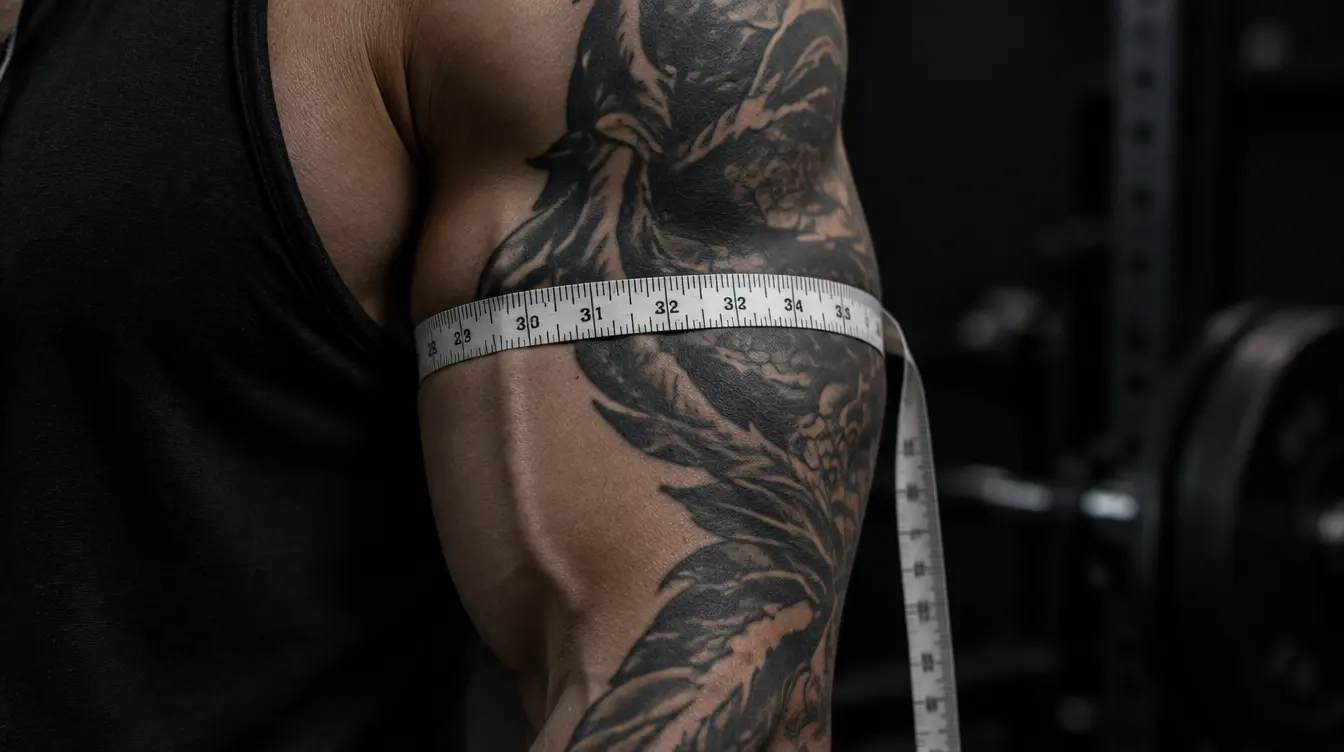
Many people worry that if they start training, the tattoo on their upper arm or chest will “stretch out”. In reality, muscle building usually means slow and fairly even stretching, so most designs simply get a little bigger while keeping their character. The skin has time to adapt, and the change is rarely as fast as in pregnancy.
There are situations, though, when training brings visible change too. With very rapid bulking – especially on the shoulders, inner upper arm and edge of the chest – stretch marks can appear. Strictly geometric designs, such as a perfect circle or a shape built from straight lines, show uneven stretching sooner here as well than an organic, soft-lined design.
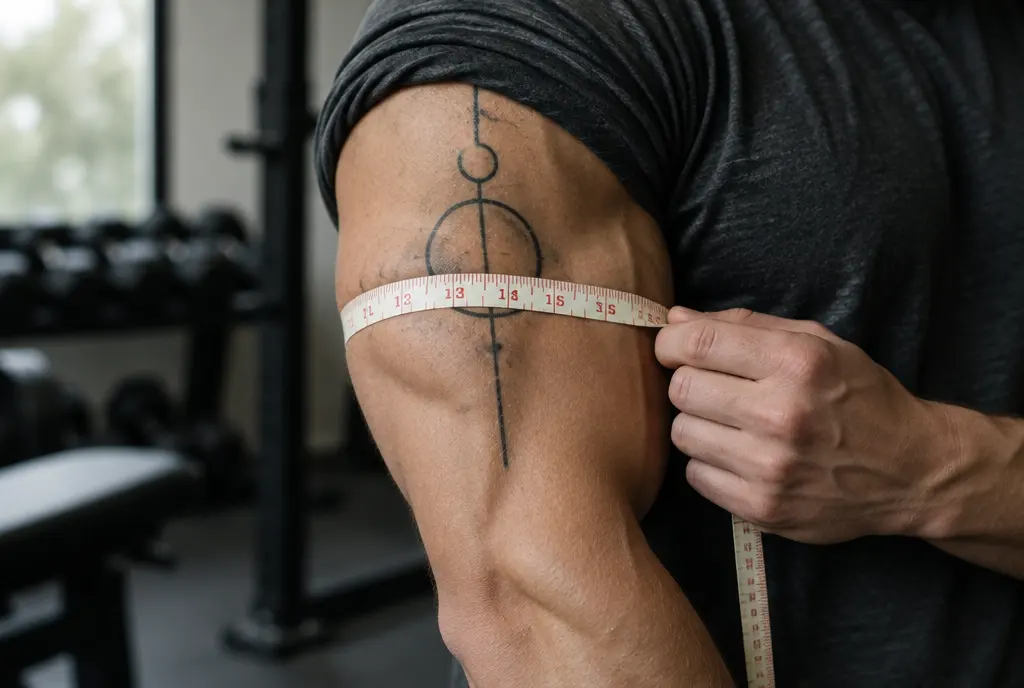
If you’re starting a serious training programme and planning a tattoo on your upper arm or chest now, talk it over with your artist. An experienced professional knows how to place the design so it follows the lines of the muscles rather than “fighting” them. A placement that follows the body and the shape of the muscle copes with change far better than a rigid composition that ignores the body.
Stretch marks and tattoos
Stretch marks form when skin stretches faster than it can adapt – typically during pregnancy, rapid weight change, teenage growth spurts or rapid muscle gain. When a stretch mark runs through an existing tattoo, the lines can look broken, and the colours can be patchier along that band.
Fresh stretch marks are usually reddish or purplish, and over time they tend to fade to a silvery-white shade. They rarely disappear completely, but they often become much less noticeable. That’s another reason to give it time after a change before deciding on any touch-up.
If you want a tattoo over an area with stretch marks, it’s often possible, but not always. Healed, faded stretch marks may be tattooable, but most artists advise against working over fresh, still reddish ones. Skin with stretch marks can behave differently from the skin around it, so ask an experienced artist for their opinion – and if you’re unsure, a dermatologist too.
Which designs cope better with change?
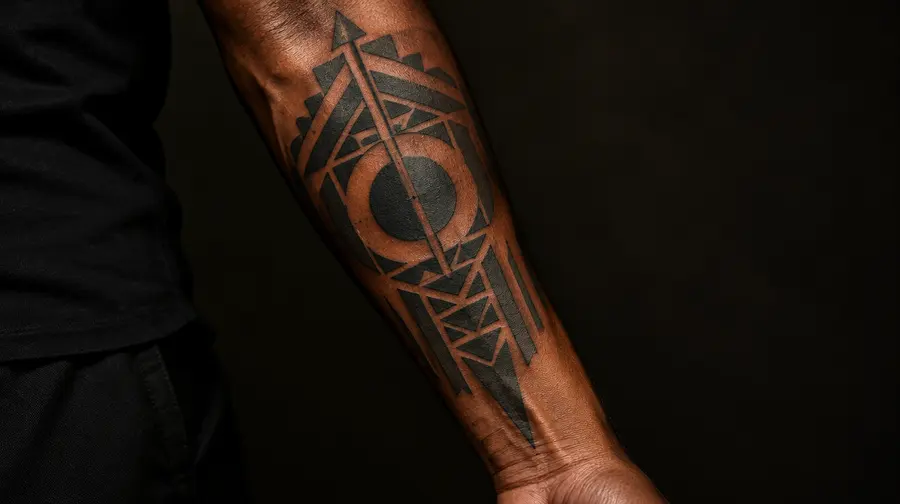
Not every design reacts to stretching the same way. Some styles almost “absorb” minor distortion, while others show even a tiny change conspicuously. Strict geometry and lettering are the most sensitive, because the eye immediately notices when a circle isn’t round, a line isn’t straight or the letters aren’t uniform.
More sensitive designs
- Perfect circles, mandalas, symmetrical geometric shapes
- Compositions built from straight lines and grids
- Lettering, dates, fine calligraphy – especially longer text on one line
- Very small, dense details that can blur together even more after stretching
More forgiving designs
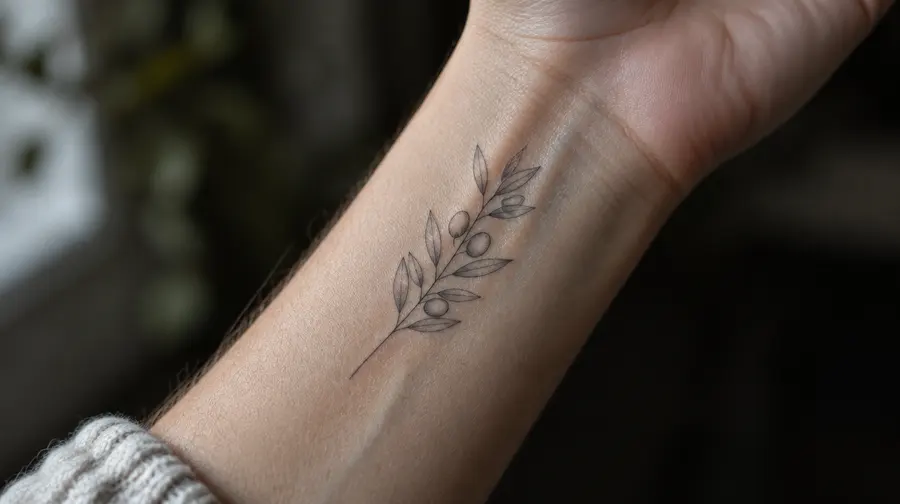
- Organic shapes: flowers, leaves, branches, animals
- Soft, freehand lines and compositions that follow the curve of the body
- Shaded, painterly work without sharp, strict edges
- Layouts where the design doesn’t rest on a single perfect shape
Of course, this doesn’t mean you shouldn’t choose a geometric design or lettering if that’s what you love. It just means choosing the placement especially carefully: a mandala on the forearm or upper back is far more likely to stay round than one on the stomach or hip.
If an existing tattoo has changed
If you feel one of your tattoos isn’t what it used to be because your body has changed, the first step is patience. Give your skin time – after pregnancy or significant weight change it can keep settling for months. A lot recovers on its own, or at least becomes less noticeable than in the first weeks.
If the change seems permanent, an experienced artist can often improve a lot. Options include re-lining, strengthening the lines, expanding the design or reworking it – a slightly distorted circle, for example, can be built into a larger, more organic composition. In some cases, if you want a completely new design, laser fading or removal may be an option; always consult a medical specialist or a properly trained professional about that.
It’s important not to rush this decision, and not to make it out of embarrassment. A slightly changed tattoo is often only really noticeable to you – to others it’s simply your tattoo, on your body.
Plan ahead with InkAge
If you’re still planning your tattoo and know your body may change in the coming years, InkAge can help you compare your options. Upload your own photo and try the same design on several body parts: for example, the forearm, the calf and the hip. The ink longevity score (0–100) and the 1, 10, 30 and 50-year previews show where the same design ages more gracefully.
This is especially useful if you’re drawn to a geometric design or lettering, since these are the most sensitive. Look at the versions side by side, and if a more stable spot scores better, consider whether it’s worth putting it there. You can also take the PDF to your artist, so you can talk concretely at the consultation about how the design should fit your body.
It’s important to know that InkAge can’t predict a pregnancy or a weight change – the preview is an estimate that helps you compare. When it’s safe to get tattooed, and what to watch out for with a particular health condition, your doctor is always your best adviser.
If you’re thinking about an existing tattoo, the laser-removal preview can also be useful: it shows roughly how the design might fade, giving you a more realistic picture of your options before you see a professional. It isn’t a medical opinion either, but it’s a good starting point for a calm, well-informed conversation.
The one thing to take away
Your body will change, and that’s fine – if you choose a stable spot and a design that tolerates change well, and calmly wait through the big changes (such as pregnancy and breastfeeding), your tattoo will age beautifully along with you.
Frequently asked questions
Will my tattoo stretch if I build muscle?
Usually a little and fairly evenly, because muscle building is slow and the skin has time to adapt. Most designs simply get slightly bigger while keeping their character. With very rapid bulking, though, stretch marks can appear and strict geometry may distort sooner.
Can I get tattooed while pregnant or breastfeeding?
Most artists and doctors advise waiting until after pregnancy and breastfeeding, and many studios won’t work on you during this time anyway. Tattooing breaks the skin and carries a risk of infection. Always ask your doctor or midwife.
Which body parts are most stable if my weight may change?
The forearm, calf, upper back, ankle and outer upper arm tend to change less. The stomach, hips, sides, upper thighs and chest are much more sensitive to weight change and pregnancy.
Will my tattoo go back to normal after weight loss or giving birth?
Often largely yes, but it’s very individual: it depends on age, genetics, and how big and fast the change was. Skin can keep settling for months, so it’s worth waiting before deciding on a touch-up. If the change is permanent, an experienced artist can often improve it a lot.
Can you tattoo over stretch marks?
Often yes with healed, faded stretch marks, but most artists advise against working over fresh, still reddish ones. Skin with stretch marks can behave differently, so ask an experienced artist for their opinion – and a dermatologist if you’re unsure.
Written by the InkAge editorial team from widely accepted tattoo-care practice. Figures are rules of thumb, not measurements. This is general information, not medical advice — ask your artist or a dermatologist about your own skin.
Last updated: 13 October 2026