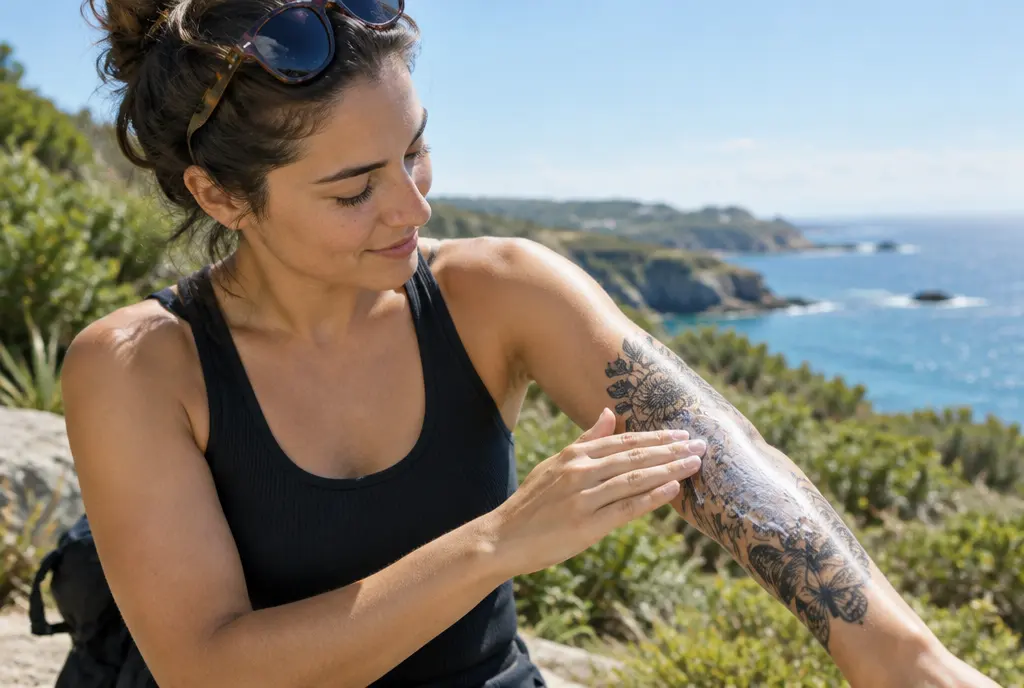
In short
- Yes, laser removal can be done in summer, but not on tanned skin. A tan adds pigment the laser also hits, which raises the risk of burns, blisters and light or dark patches.
- Most clinics ask you to keep the area out of the sun and free of self-tanner for a few weeks before each session, and to protect it carefully afterwards.
- Areas you can keep covered, such as the back or upper arm, can usually be treated all year. Hands, ankles and the face are harder in summer.
- Removal takes many sessions spread over a year or more, so a summer pause rarely costs much. Planning the calendar matters more than the season.
In this article 11
- The short answer
- Why a tan is a problem for the laser
- Tanned skin is not the same as darker skin
- Self-tanner and spray tans count too
- How long to stay out of the sun
- So what can you do in summer?
- A pause costs less than you think
- How to plan your removal year
- Protecting a treated area in the sun
- What it means for you
- Frequently asked questions
Lea had finally made the call. The small black wave on her ankle, a souvenir from a trip ten years earlier, was going. She booked her first laser session for the second week of June, the only gap in her calendar, and turned up straight from a long weekend at the lake: sandals, bare legs, a light golden tan she hadn’t even noticed. The technician looked at her ankle, pressed the skin with a finger, compared it with the inside of her arm and said: “Not today. Come back in the autumn, or at least when this has faded.”
Lea was annoyed for about a day. Then she asked the obvious question, the same one thousands of people type into search engines every spring: can you actually get a tattoo removed in summer, or do you have to wait? The honest answer is more useful than a simple yes or no, and it can save you both a wasted appointment and a patch of skin that heals the wrong colour.
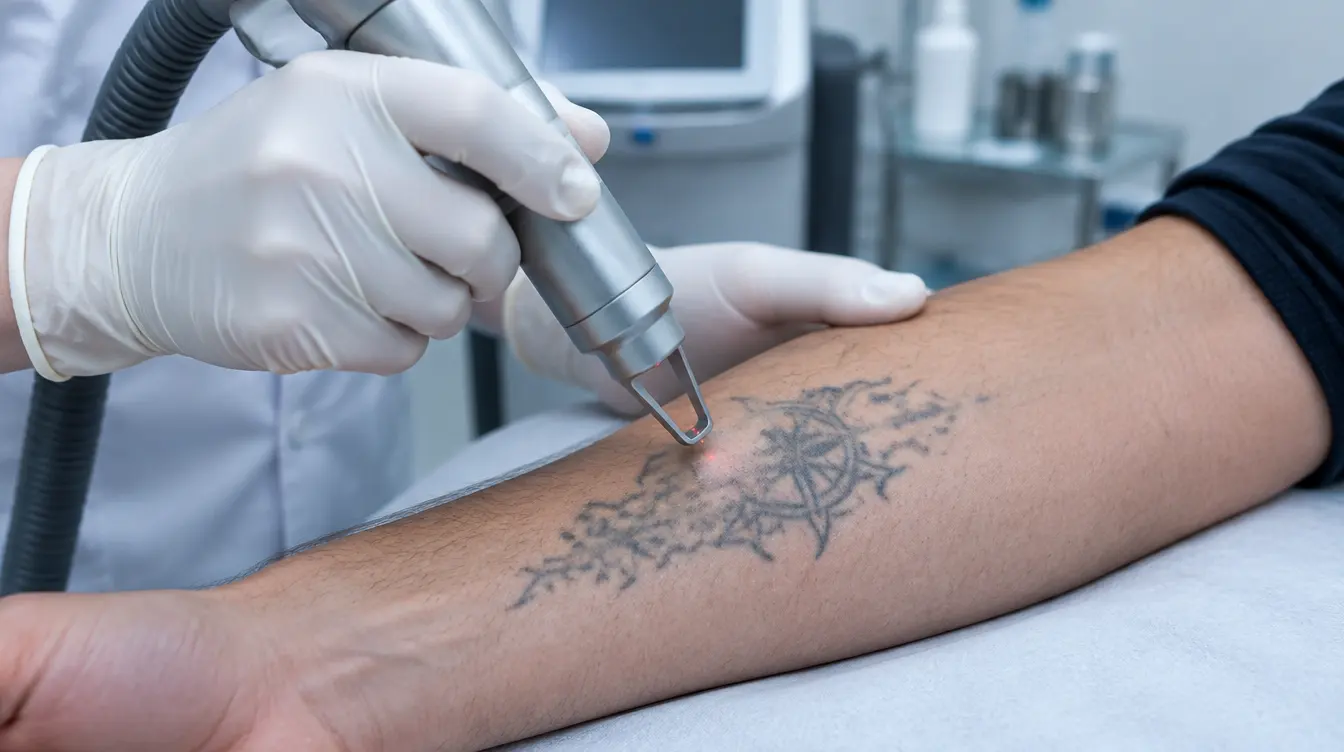
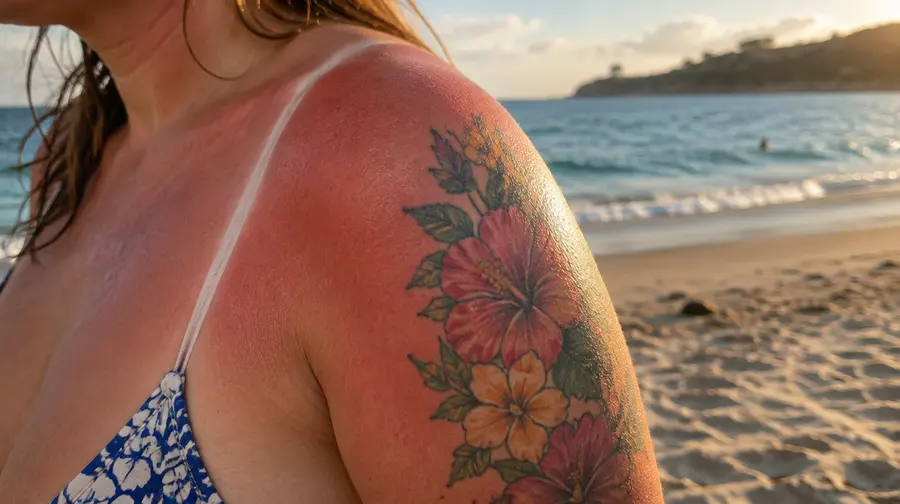
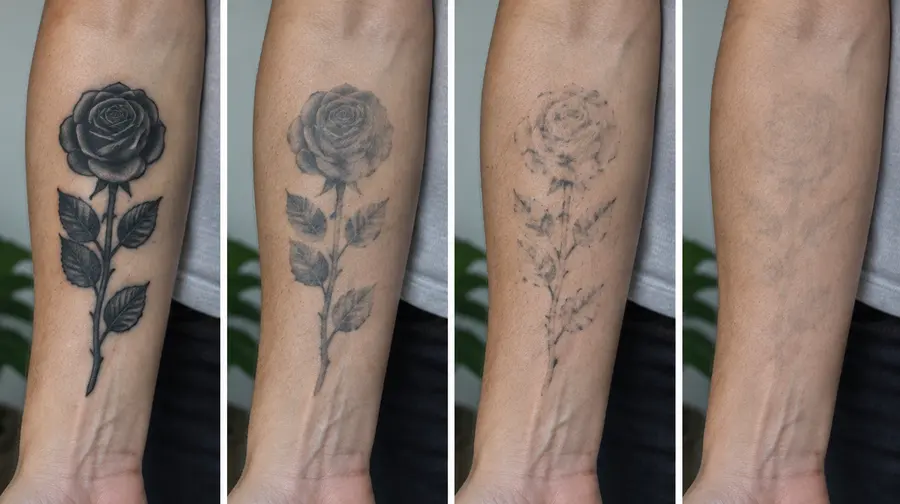
> A note on the pictures: the images in this article are illustrations made to show typical situations. They are not photos of real patients or real treatment results.
The short answer
Yes, you can have laser tattoo removal in summer, but not on tanned or sunburned skin. What matters to the laser is not the date on the calendar but the state of the skin on the day of treatment and in the weeks after it. Plenty of clinics treat people in July and August, and some patients go through a whole summer without a break. They simply keep the treated area out of the sun.
That is why many clinics quietly prefer autumn and winter. Not because the laser works better in the cold, but because in those months almost nobody turns up tanned, people wear long sleeves anyway, and protecting a healing area is easy. In summer the same rules apply, they are just harder to keep.
Removal calculatorLaser tattoo removal calculator: how many sessions and what it costsRead alsoHealing after laser tattoo removal: a day-by-day timeline, aftercare and how to avoid scarsWhy a tan is a problem for the laser
Laser removal works by sending very short, very strong pulses of light into the skin. The ink particles absorb that light, heat up in a fraction of a second and break into smaller pieces, which the body then clears away slowly over the following weeks. The trick is that the light should be absorbed by the ink and as little as possible by anything else.
The problem is that ink is not the only thing in the skin that absorbs light. Melanin, the pigment that makes skin darker when you tan, absorbs it too. When your skin is tanned, there is extra melanin sitting right above and around the tattoo. Part of the laser energy is then used up in the wrong place: it heats the pigment of your own skin instead of only the ink.
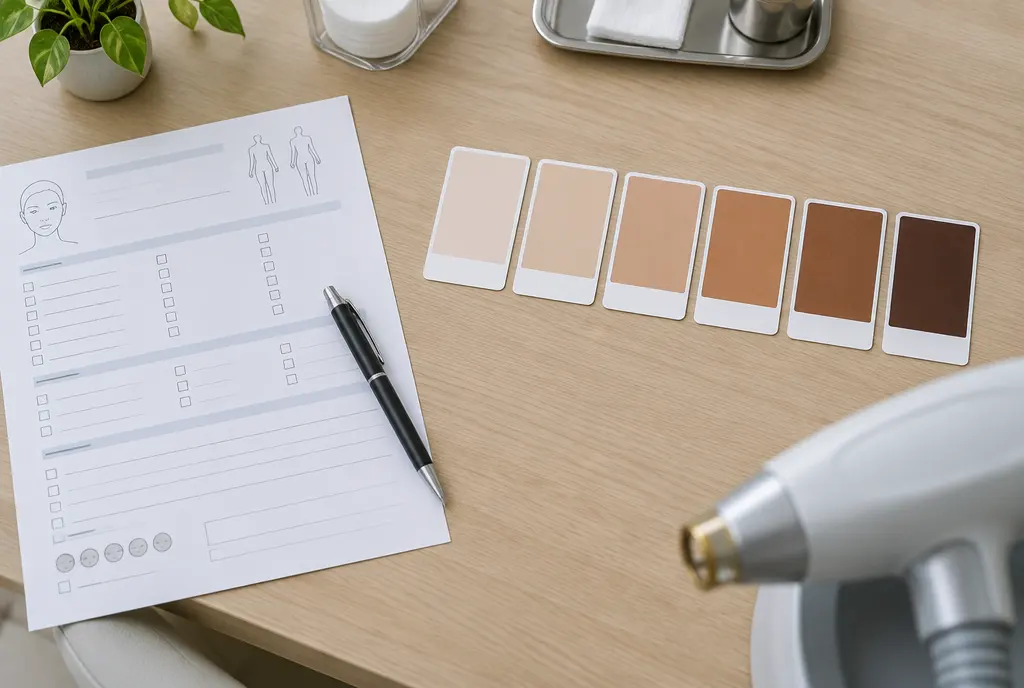
In practice this can lead to a few things, none of which you want on a tattoo you are trying to get rid of:
- Burns and blisters. More energy absorbed in the top layer of skin means more heat where it does not belong.
- Light patches (hypopigmentation). The laser can damage the cells that make pigment, leaving a pale shape where the tattoo was. On some people this lasts for months; occasionally it is permanent.
- Dark patches (hyperpigmentation). Irritated skin can also react by producing more pigment, especially if it sees sun while healing.
- Weaker sessions. To stay safe on tanned skin, the technician often has to lower the energy. A gentler session means less ink broken up, so you pay for an appointment that does less.
The laser cannot tell your tan apart from your tattoo. It only sees pigment.
This is also why a good clinic will sometimes do what Lea’s did: look, compare the treated area with skin that never sees the sun, and send you home. It feels like a lost appointment. In reality it is the clinic protecting the result you are paying for.
Tanned skin is not the same as darker skin
One point gets mixed up a lot. People with naturally darker skin can have tattoos removed, and many do, with lasers and settings chosen for their skin. The issue with a tan is not the shade of the skin in itself. It is that a fresh tan is a sudden, temporary change: the skin is reacting to sun, the amount of pigment is shifting, and the settings that suited your skin in March may not suit it in July.
An experienced clinic adjusts the wavelength and energy to your natural skin tone. What it cannot plan for is skin that is darker than normal for a few weeks and still changing.
Self-tanner and spray tans count too
Many people assume self-tanner is the safe option because it involves no sun. For the laser it is still a problem. Self-tanner colours the top layer of the skin, and that colour also sits over the ink. It can absorb part of the light, make it harder for the technician to judge your skin, and leave the result patchy.
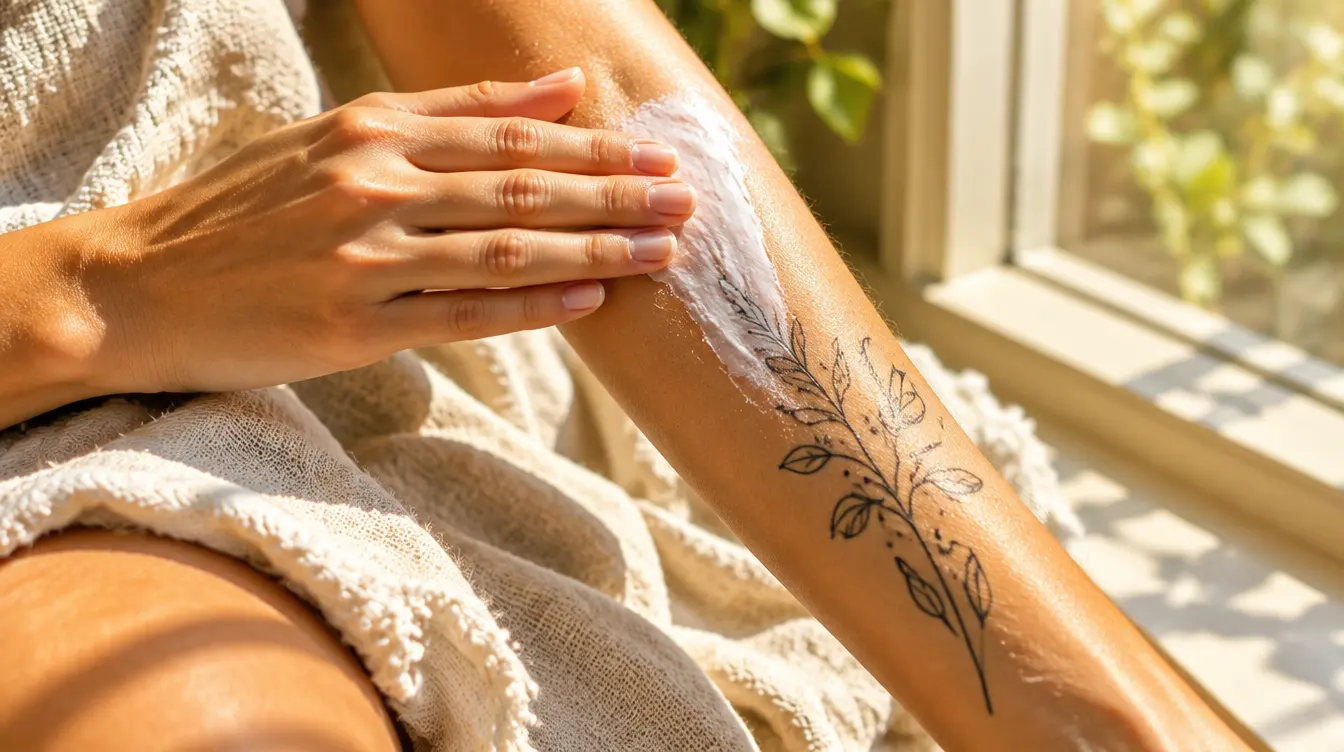
Most clinics ask you to stop using self-tanner on the area for one to two weeks before a session and to arrive with clean skin: no fake tan, no body shimmer, no tinted lotion. If you use a gradual tanning moisturiser out of habit, this is the one to watch, because it is easy to forget that it is not just a moisturiser.
How long to stay out of the sun
There is no single number that every clinic uses, and you should follow the instructions of the one treating you. The pattern is similar almost everywhere, though:
- Before the session: keep the area out of direct sun and off sunbeds for about two to four weeks. The aim is to arrive with skin at its normal, untanned colour.
- On the day: no sunburn, no fresh tan, no self-tanner, no irritated or peeling skin on the area.
- While it heals: the first one to two weeks, when the skin can blister and scab, it should be covered and fully out of the sun. Sunscreen does not go on open or blistered skin.
- After it has healed: keep protecting it for several more weeks, ideally until the next session. Use a high-factor sunscreen (SPF 50) once the skin is closed, and cover the area when you can.
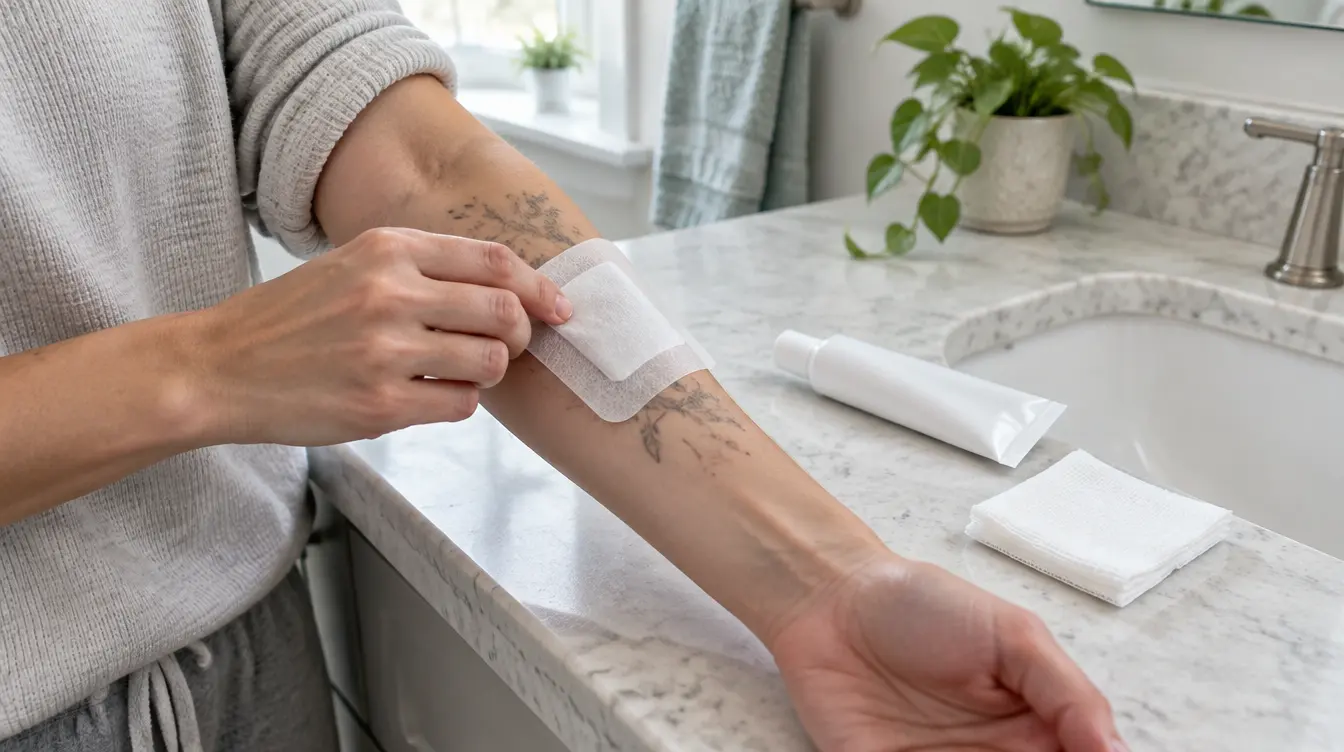
The weeks after a session matter as much as the weeks before. Freshly treated skin is more sensitive than usual, and sun on a healing area is one of the most common reasons for dark patches. If you have read about how sun affects a fresh tattoo, the logic is the same: healing skin and UV light do not mix.
So what can you do in summer?
This is where it gets practical. Summer does not have to be a dead season for your removal. It depends mostly on where the tattoo is.
Areas you can keep covered
Tattoos on the back, upper arm, thigh, hip or ribs spend most of the summer under clothes anyway. With a T-shirt, a light shirt or shorts that reach far enough, many people keep treating these areas through June, July and August without a problem. The clinic will still check the skin each time, but there is a good chance it will look exactly the same as in winter.

Areas that are hard to hide
Hands, fingers, wrists, ankles, feet, the neck and the face are the difficult ones. They catch sun on every walk, every bike ride, every coffee outside. Treating them in summer is possible if you are disciplined: long sleeves, socks, a bandage or a UV-protective sleeve over the area, sunscreen once healed, and avoiding beach holidays around the session. Many people find this too much effort and simply pause these areas from roughly June to August.
Swimming, sauna and the beach
After each session, pools, the sea, lakes, saunas and hot tubs are off limits until the skin has fully closed, usually one to two weeks. Blisters and scabs need to stay clean and dry, and chlorine, salt water and bacteria in lakes do not help. A beach holiday straight after a session is the worst combination of all: water, sun and heat at the same time.
A pause costs less than you think
Here is the part that usually calms people down. Laser removal is slow by design. Sessions are spaced at least six to eight weeks apart, often longer, because the body needs that time to clear the broken-up ink. A typical tattoo needs somewhere between six and twelve sessions, sometimes more. That means the whole process often takes one to two years.
Inside that timeline, a summer break of two or three months is not a disaster. The ink keeps fading between sessions even when you are not being treated, because your body is still carrying away particles from the last one. Some clinics even point out that longer gaps can give the skin more time to recover. You lose a little calendar time; you do not lose the progress you have made.
A skipped summer is a few extra weeks. A pale scar in the shape of your old tattoo can be years.
How to plan your removal year
If you are just starting, the best thing you can do is plan around the seasons instead of fighting them. A calendar that works well for many people looks something like this:

- Start in early autumn. September or October, once the summer tan has faded, is a natural moment for the first session.
- Use the cold months. From autumn to spring, keep a steady rhythm of a session every six to eight weeks, or whatever your clinic recommends. This is when you make most of your progress.
- Decide about summer in advance. Covered area: carry on with good protection. Exposed area: plan a pause, or commit seriously to keeping it covered.
- Book around holidays. Leave a few weeks after each session before any beach trip, and come back for the next one only once your skin is back to its normal colour.
- Tell the clinic everything. Recent sun, a sunbed, self-tanner, new medication: some medicines make the skin more sensitive to light, so mention anything you are taking.
Lea, in the end, did exactly this. She spent the summer with her ankle under socks and a sun-blocking bandage on the lake days, came back in late September with pale, even skin, and had her first session then. By the following June the wave was a faint grey shadow, and she simply took July and August off and picked up again in autumn.
Protecting a treated area in the sun
If you do have sessions over the summer, or the area catches sun between sessions, these habits make the biggest difference:
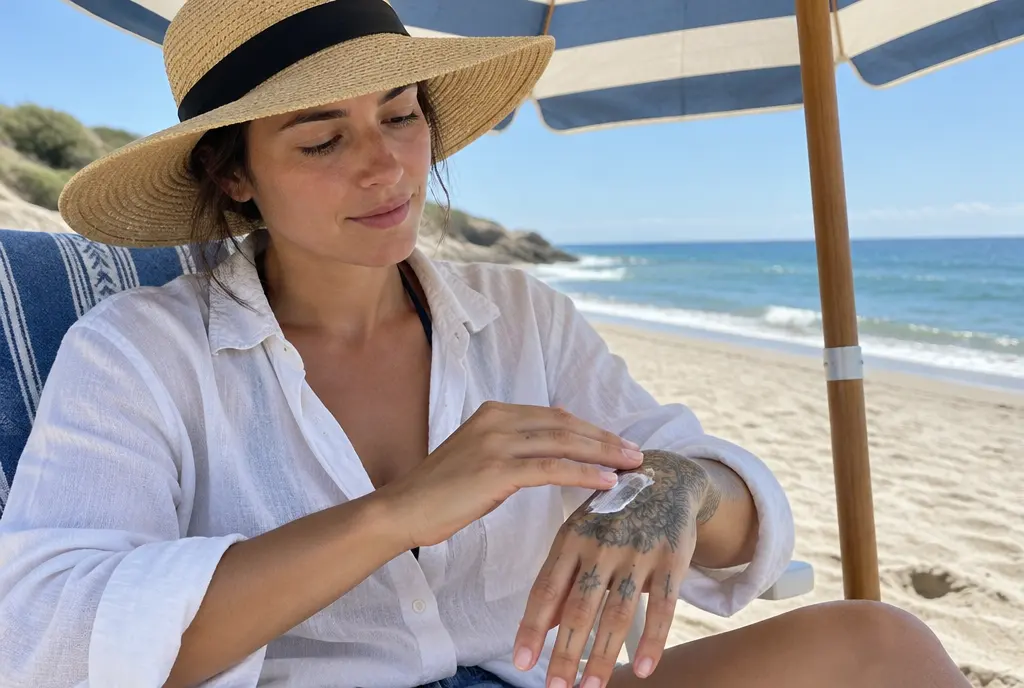
- Cover first, cream second. Clothing, a bandage or a UV-protective sleeve is more reliable than sunscreen alone, especially on skin that is still healing.
- SPF 50 on closed skin. Once there are no blisters or scabs, use a high-factor, broad-spectrum sunscreen and reapply it, especially after sweating or swimming.
- Find shade at midday. UV is strongest roughly from late morning to mid-afternoon. That is when protecting a treated area matters most.
- No sunbeds. Not before a session, not between sessions. A sunbed tan is still a tan, and the laser responds to it in the same way.
- Watch for changes. If the skin turns noticeably darker or lighter than the surrounding area, show it to your clinic before the next session.
What it means for you
Laser removal and summer are not enemies, but they do not get along easily. The laser needs skin at its normal colour, both before and after each session, and summer makes that harder. If your tattoo is somewhere you can keep covered, you can usually carry on all year. If it is on your hands, ankles or face, a summer break is often the easier and safer choice, and it costs less time than it seems.
If you are still deciding whether to remove a tattoo, fade it, or keep it, it helps to see how it is likely to look in a few years either way. With InkAge you can upload a photo of your tattoo and see how it may age over time, which can make the decision, and the timing, a little clearer.
Frequently asked questions
Can I get laser tattoo removal if I have a tan?
Usually not on the tanned area. Most clinics will postpone the session until the tan has faded, because extra pigment in the skin raises the risk of burns, blisters and light or dark patches. Expect to wait a few weeks.
How long should I avoid the sun before a laser session?
Many clinics ask for about two to four weeks without direct sun or sunbeds on the area, and one to two weeks without self-tanner. Follow the exact instructions of your own clinic.
Can I go swimming after laser tattoo removal?
Not until the skin has fully closed, usually one to two weeks. Until then, avoid pools, the sea, lakes, saunas and hot tubs, and keep any blisters or scabs clean and dry.
Does a summer break ruin my laser removal progress?
No. The ink keeps fading between sessions as your body clears the broken-up particles. A break of two or three months adds some calendar time to a process that usually takes one to two years anyway, but you do not lose the progress you have made.
What is the best time of year to start laser tattoo removal?
Early autumn works well for many people: the summer tan has faded, and the cold months that follow make it easy to keep the area covered and keep a steady rhythm of sessions until spring.
Sources
- Tattoos (laser treatment) – Bristol Laser Centre, North Bristol NHS Trust
- Tattoo removal: lasers outshine other methods – American Academy of Dermatology
- Laser tattoo removal: a clinical update – Journal of Cutaneous and Aesthetic Surgery
- Tattoo removal – German Federal Office for Radiation Protection (BfS)
- Postinflammatory hyperpigmentation – DermNet
Do you run a laser clinic? Show guests their own tattoo after 3, 6 and 10 sessions
Written by the InkAge editorial team from widely accepted tattoo-care practice. Figures are rules of thumb, not measurements. This is general information, not medical advice — ask your artist or a dermatologist about your own skin.
Last updated: 8 November 2026