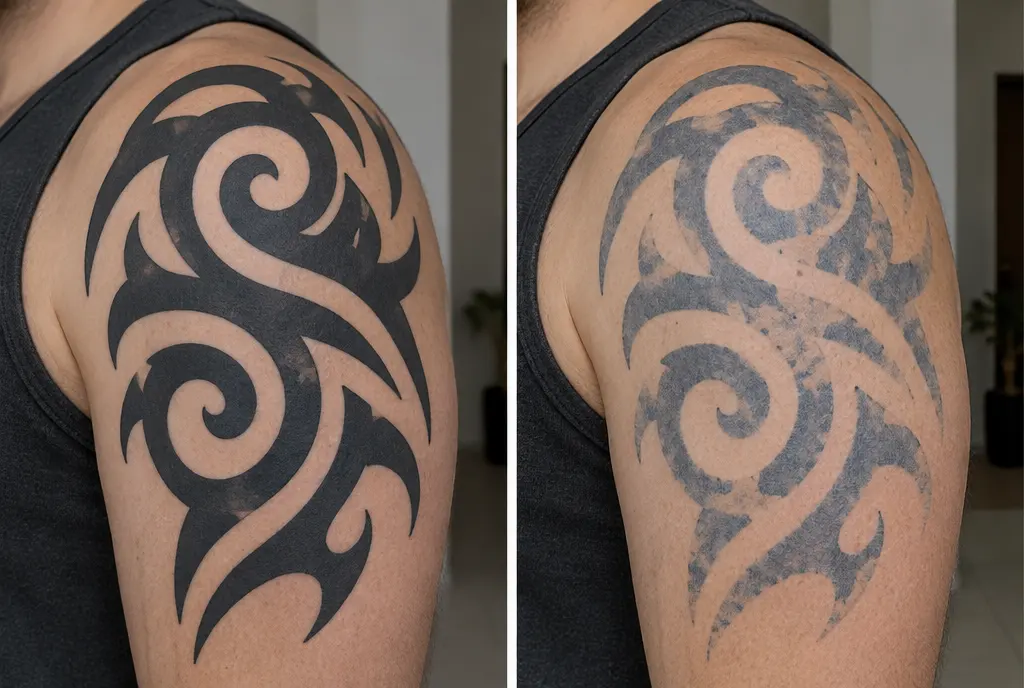
In short
- Tattoos can be removed safely from darker skin (Fitzpatrick types IV to VI), but the skin’s own pigment also absorbs laser light, so the risk of light patches, dark patches and burns is higher.
- The usual choice is a 1064 nm Nd:YAG laser, Q-switched or picosecond. Its long wavelength passes through the skin’s pigment more easily and works best on black ink.
- A careful clinic starts with a test spot, uses lower energy and leaves eight to twelve weeks between sessions. Expect more sessions and a longer timeline than on fair skin.
- Strict sun protection before and after every session matters as much as the laser itself. Choose a clinic that can show results on skin like yours.
In this article 9
Kemi was nineteen when she had a name written in black script along her inner forearm. Eleven years later the name belonged to someone she no longer spoke to, and she decided it was time for it to go. She had read the forums, though, and one fear kept coming back: people with skin like hers, a deep brown that rarely burns, posting photos of a pale ghost of a tattoo, or a dark patch in its shape, after a laser session that went wrong. Was removal even safe for her?
The short answer is yes, with the right laser, the right settings and a clinic that has done it many times before. The longer answer is what this guide is about: why darker skin carries more risk, what a careful clinic does differently, and how much more time and patience to plan for. How tattoos look, heal and age on darker skin in the first place is covered in our separate guide on tattoos on darker skin tones. This one is only about taking ink out.
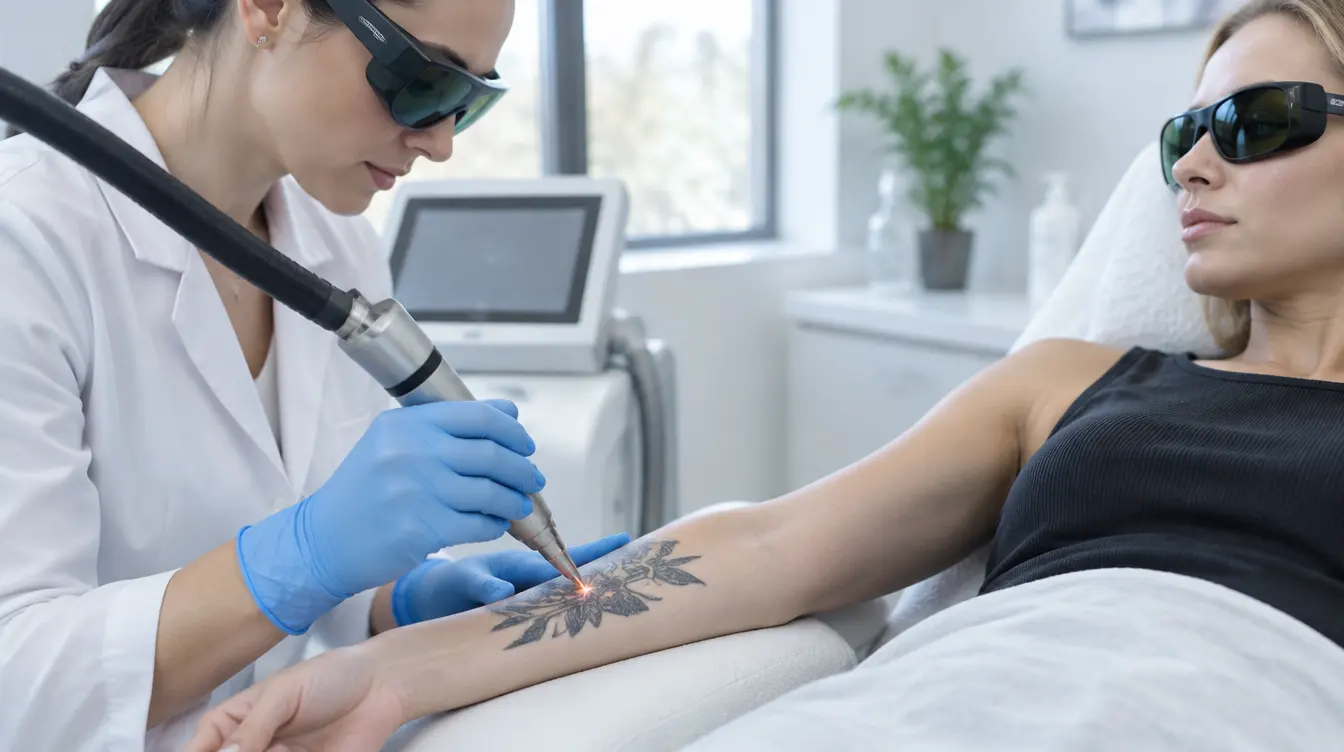
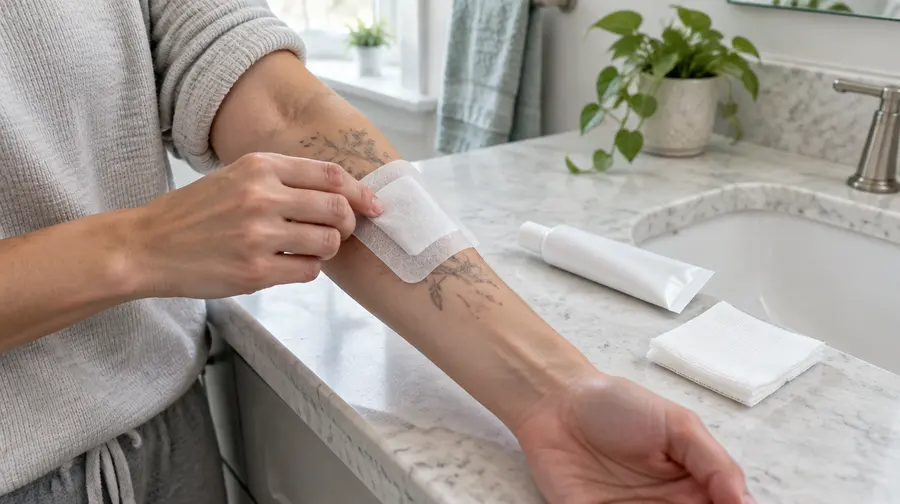
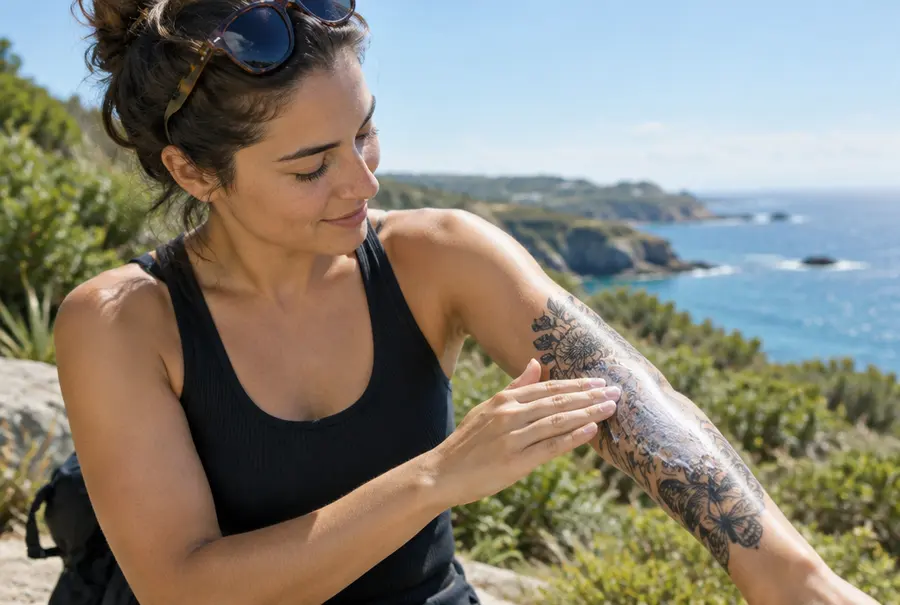
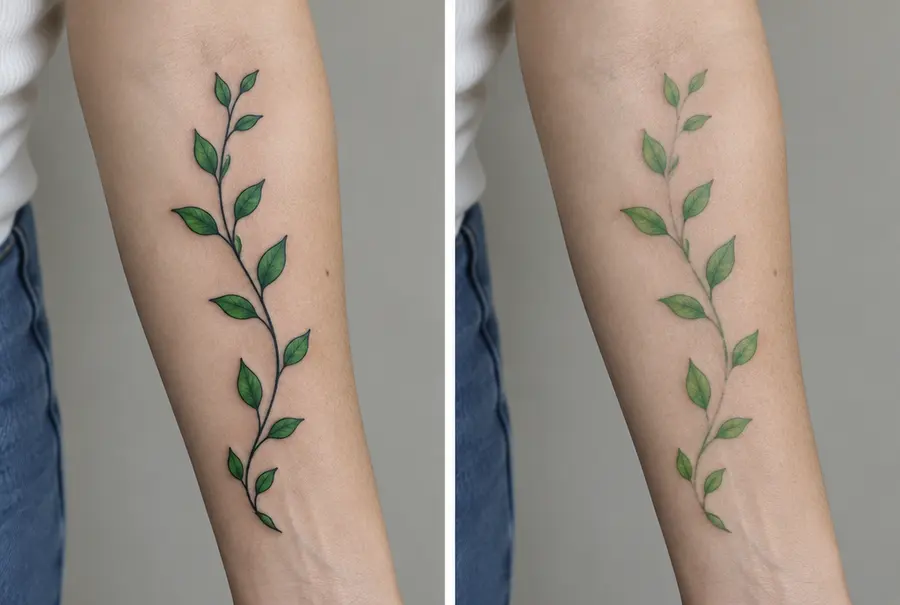
> A note on the pictures: the images in this article are illustrations made to show typical situations. They are not photos of real patients or real treatment results.
Why darker skin needs a different approach
Laser removal works by firing extremely short pulses of light into the skin. The ink particles absorb that light, heat up in a tiny fraction of a second and shatter into fragments small enough for the body to clear away over the following weeks. The whole method relies on one thing: the light should be absorbed by the ink, and as little as possible by anything else.
The trouble is that ink is not the only pigment in the skin. Melanin, the pigment that gives skin its colour, absorbs laser light too. Darker skin has much more melanin in its top layer, the epidermis, sitting right above the tattoo. Every pulse has to pass through that layer on its way to the ink, and part of the energy can be soaked up there instead.
Dermatologists describe skin with the Fitzpatrick scale, from type I (very fair, always burns, never tans) to type VI (deeply pigmented, rarely or never burns). Types IV, V and VI cover most people of African, South Asian, Middle Eastern and Latin American heritage, as well as many East Asian people. These are the skin types where lasers need the most care.
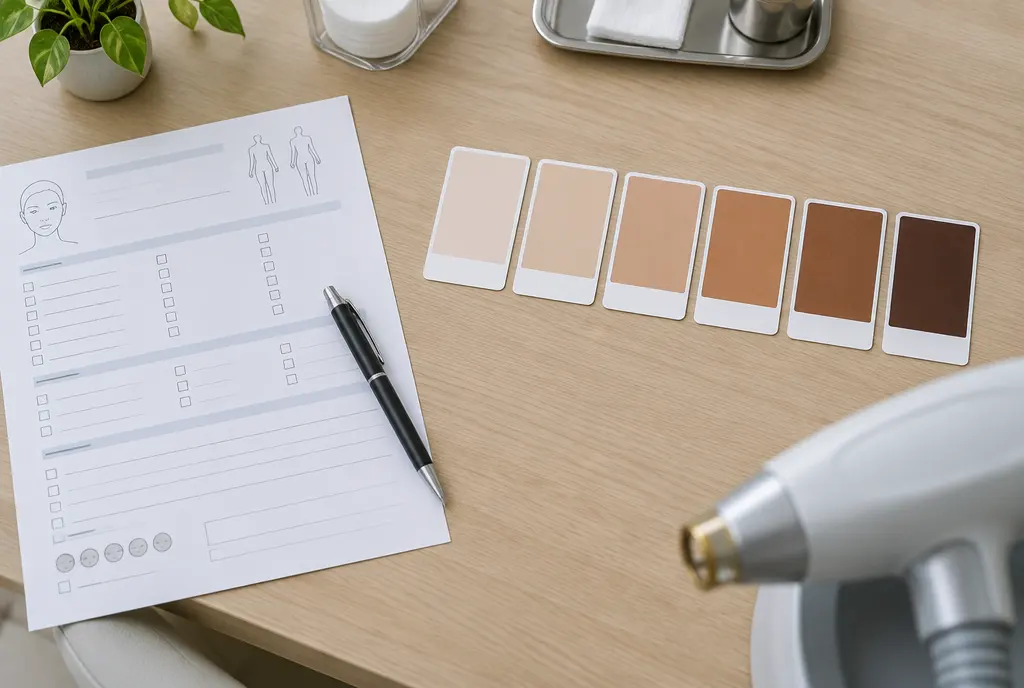
This does not mean the laser struggles to find the tattoo. Black ink still absorbs light very strongly. It means the margin for error is smaller: settings that would be routine on type II skin can harm type V skin.
Removal calculatorLaser tattoo removal calculator: how many sessions and what it costsRead alsoLaser tattoo removal: what to really expectWhat can go wrong
When the skin’s own pigment absorbs too much energy, a few things can happen. None of them is certain, and most can be avoided with careful treatment, but you should know them before you book.
- Light patches (hypopigmentation). The laser can damage the cells that make pigment, leaving the area paler than the skin around it, sometimes in the exact shape of the old tattoo. It often recovers over months, but recovery can be slow and occasionally the change is permanent. Medical reviews name it as the main risk for types IV to VI.
- Dark patches (post-inflammatory hyperpigmentation). Irritated skin can respond by making extra pigment. On darker skin this is a common reaction to any injury, lasers included. It usually fades over several months, faster with strict sun protection.
- Blisters and burns. Some blistering after a session is common on any skin. Too much energy absorbed near the surface makes deeper burns more likely, and burns are what lead to scars.
- Texture changes and scarring. Rare with modern lasers and good technique. If you have ever had keloids, tell the clinic before anything else, because any skin injury can trigger one.
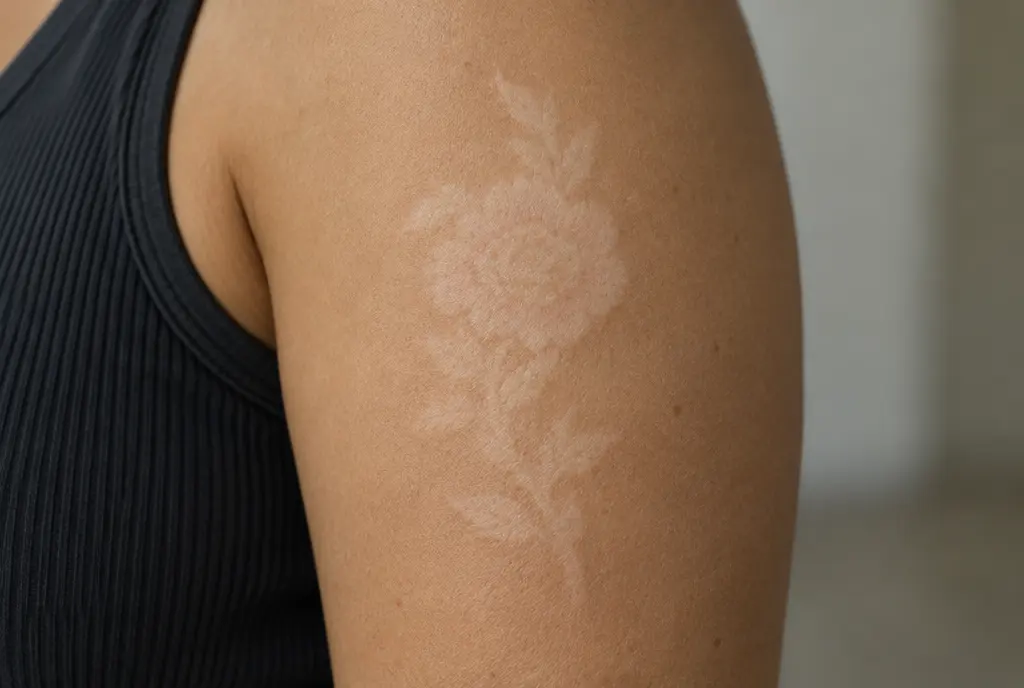
Exact numbers are hard to give, because there are few large studies of tattoo removal on the darkest skin types. Small studies and case series point the same way, though: the shorter the wavelength, the more pigment problems on darker skin. In one small series of Asian patients with type IV skin treated with a 755 nm picosecond laser, three out of six developed light patches. A 2022 case series using 1064 nm lasers on types IV to VI reported good results, and stressed that the settings have to be tuned to each patient.
On darker skin the laser is not less effective. It is less forgiving.
Why 1064 nm Nd:YAG is the usual choice
Tattoo removal lasers come in a handful of wavelengths, each absorbed best by certain ink colours. The key fact for darker skin is that melanin absorbs short wavelengths strongly and long wavelengths much less. Light at 532 nm, used for red and orange ink, is absorbed heavily by melanin. Ruby (694 nm) and alexandrite (755 nm) lasers sit in between. The 1064 nm Nd:YAG laser, in the near infrared, passes through the pigmented top layer with much less absorption and reaches the ink deeper down.
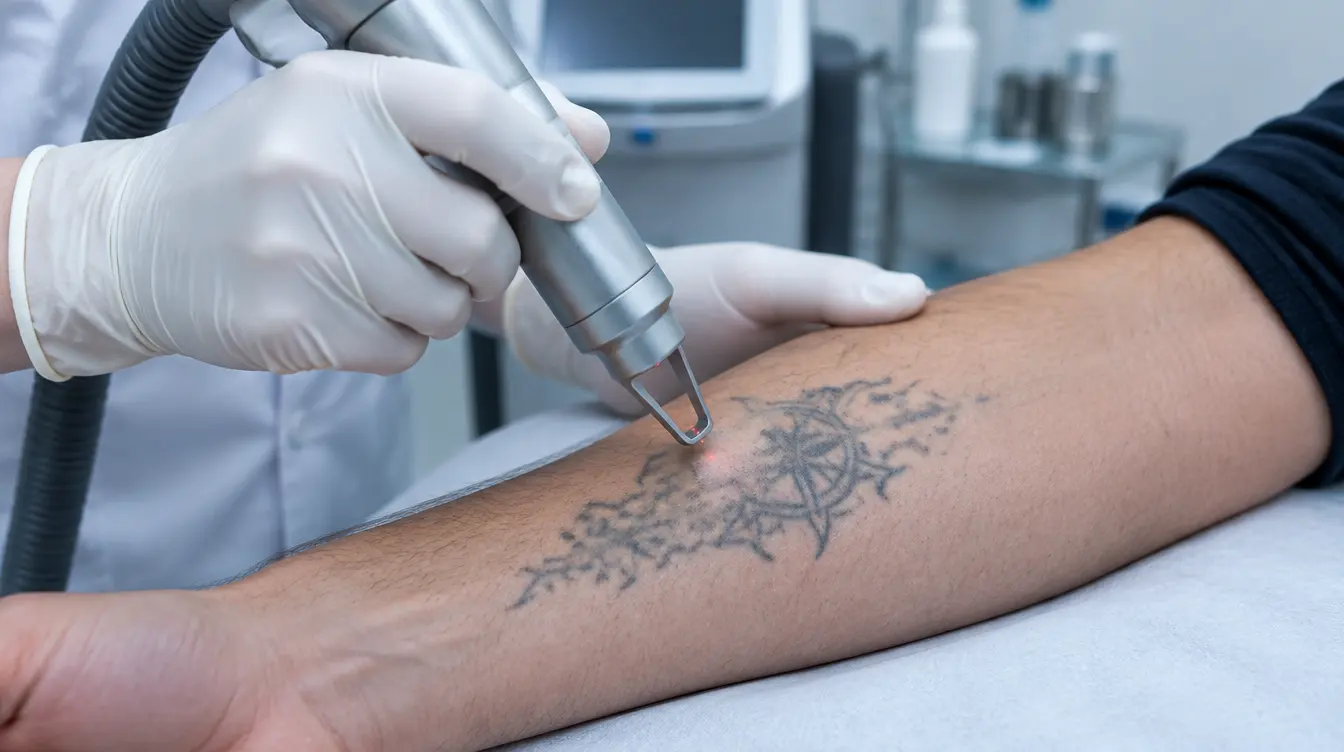
That is why medical guidance, including that of the American Society for Laser Medicine and Surgery, says people with darker skin should be treated with longer-wavelength lasers, and why the Nd:YAG at 1064 nm is the standard tool for types IV to VI. It is also the best wavelength for black and dark blue ink, which is what most tattoos are made of.
Picosecond lasers, which fire even shorter pulses than the older nanosecond (Q-switched) ones, are often advertised as safer for dark skin. Shorter pulses can break up ink with less heat, but the wavelength matters more than the brand or the pulse length. A picosecond laser used at 532 nm or 755 nm on type V skin still carries the risks of those wavelengths. Ask which wavelength will be used on you, not only which machine.
The catch: coloured ink
The 1064 nm laser works well on black and less well on colours. Red responds best to 532 nm, green and light blue to the red-light lasers around 700 nm, and yellow and orange are hard to remove on any skin. On darker skin, the wavelengths that suit those colours are exactly the ones melanin absorbs most. A careful clinic will use them very cautiously at low energy, accept that some colours will only fade, or suggest leaving a faint trace rather than risking the skin. If your tattoo is mostly colour, ask about this at the consultation, before you pay for a package.
What a careful clinic does differently
Good clinics treat darker skin with a set of habits rather than a single trick. If you know them, you can tell during the consultation whether a clinic really has experience.
- A real skin assessment. They ask how your skin reacts to sun, whether you get dark marks after spots or scratches, and whether you have ever had keloids. They look at your skin in daylight, not only at the tattoo.
- A test spot. A few pulses on a small corner of the tattoo, then a wait of usually a few weeks to see how your skin heals before the whole design is treated.
- Lower energy, slower progress. They start with conservative settings and raise them only if your skin tolerates it. Each session breaks up less ink, but the skin stays healthy.
- Longer gaps between sessions. The usual minimum is six to eight weeks. On darker skin many clinics stretch this to eight to twelve weeks, or longer if any darkening appears, so the skin can settle completely before the next round.
- Cooling. Cold air or a cold pack before, during and after the pulses protects the surface of the skin.
- Clear sun rules. No tan, no self-tanner and strict sun protection on the area before and after every session.
The test spot, step by step
The test spot is the single most useful safety step. The technician treats a small area, often the edge of the tattoo, with the settings they plan to use. You go home and let it heal. A few weeks later you come back and they check: is the skin around it its normal colour, lighter or darker? Has the ink faded? Only then do they decide the settings for the full treatment.
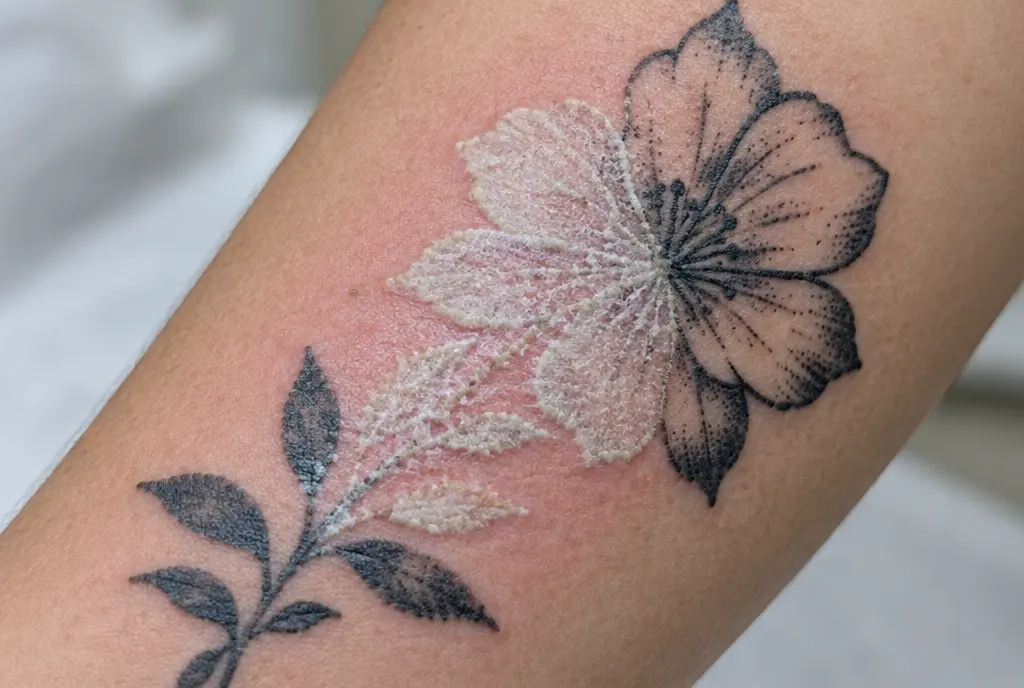
It costs you a few weeks at the start. It can save you a pale patch the size of your tattoo. Some clinics include it in the consultation, others charge a small fee.
How many more sessions to expect
This is the part people find hardest to hear. On darker skin, removal usually takes more sessions and more time. Not because the ink is more stubborn, but because careful settings break up less ink per session, and longer gaps stretch the calendar.
Medical sources give a wide range for tattoo removal in general: from about four to more than ten sessions, and sometimes up to fifteen. The Kirby–Desai scale, which clinics use to estimate sessions, adds one point per Fitzpatrick type: 1 for type I up to 6 for type VI. In practice the same tattoo may need roughly three or four more sessions on type V or VI skin than on type II, before colour, ink density and placement add their own share.

With longer gaps, the timeline grows as well. Ten sessions eight weeks apart take about a year and a half. Ten sessions twelve weeks apart take more than two years. Plan for that from the start, and be wary of any clinic that promises complete removal in four or five sessions on type VI skin.
More sessions also means a higher total cost. Ask for a price per session, or a package that clearly states what happens if you need more sessions than estimated. An honest estimate at the start saves a lot of frustration later.
How to choose the clinic
The rules on who may use a tattoo removal laser differ from country to country. In some places only doctors may do it, in others trained technicians can. Whoever treats you, what matters most on darker skin is experience with skin like yours.
- Ask which laser and which wavelength. For black ink you want to hear 1064 nm Nd:YAG, Q-switched or picosecond.
- Ask for before-and-after photos on types IV to VI. Results on fair skin tell you little about how they will handle yours.
- Ask how often they treat your skin type. A clinic that treats darker skin every week will have settings and habits for it.
- Ask about the test spot and the gap between sessions. If the answer is no test spot and six weeks for everyone, keep looking.
- Ask what happens if you get light or dark patches. A good clinic has a plan: pausing treatment, sun protection and, if needed, a referral to a dermatologist.
A board-certified dermatologist, or a clinic that works closely with one, is a sensible choice, especially if you have had keloids or pigment problems before.
Aftercare and the sun
Aftercare is the same as on any skin, with one difference: on darker skin, the weeks after each session decide how the skin colour recovers. Inflamed skin plus sun is the most common recipe for dark patches.
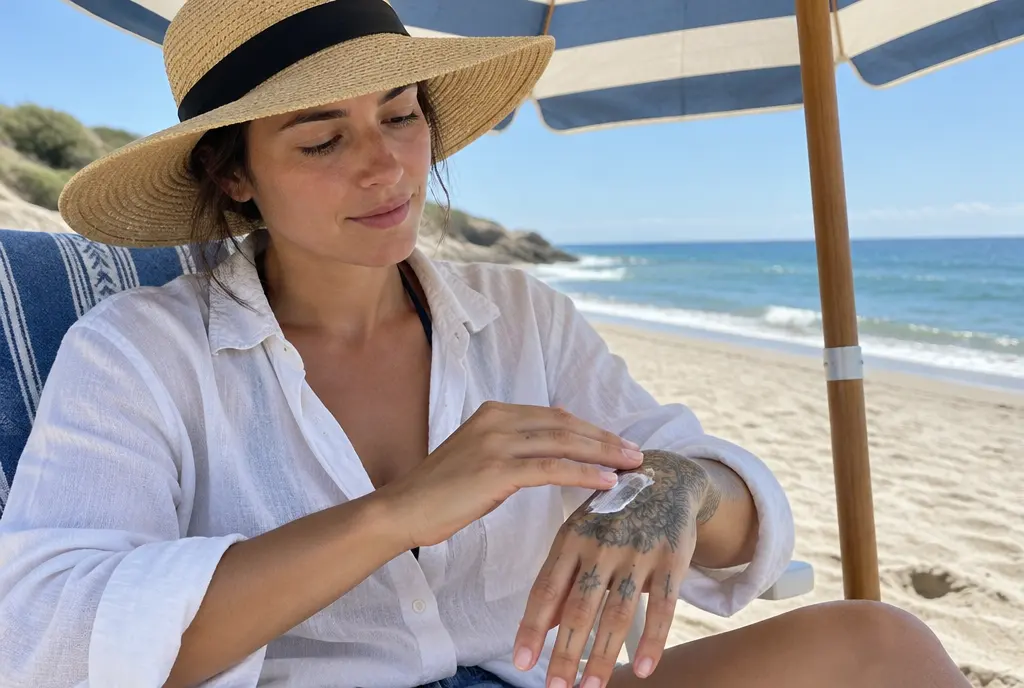
- The first days: cool the area, keep it clean, use the ointment and dressing your clinic recommends, and do not pop blisters or pick at scabs.
- Until the skin has closed: keep it covered and completely out of the sun, and avoid pools, the sea and saunas, usually for one to two weeks.
- After that: a broad-spectrum sunscreen with SPF 30 to 50 on the area every day, reapplied outdoors, and clothing over it when you can. Darker skin burns less easily, but healing skin still reacts to UV light by making extra pigment.
- Before each session: no tan, no self-tanner and no irritation on the area. Tell the clinic about any new medicines, because some make the skin more sensitive to light.
- Watch and report: if the area turns noticeably lighter or darker than the skin around it, show it to the clinic before the next session. Usually the answer is to wait longer, not to push on.
Dark marks after a session usually fade over a few months, and a dermatologist can suggest a lightening cream if they linger. Light patches can take longer. Both are a reason to slow down, not a reason to panic.
Read alsoTattoos on darker skin tones: what works bestWhat it means for you
Kemi, in the end, found a clinic that mostly treated darker skin. They did a test spot with a 1064 nm laser, waited four weeks, and set her sessions ten weeks apart. Nine sessions and almost two years later, the name was gone and the skin on her forearm was the same colour as the rest of her arm. It took longer than the adverts promised. It looked far better than the forum photos she had been afraid of.
Laser tattoo removal on darker skin is safe in experienced hands. The rules are simple: the right wavelength, a test spot, gentle settings, long gaps and strict sun protection. The price you pay is time.
If you are still deciding whether to remove a tattoo, lighten it for a cover-up or keep it, it can help to see how it is likely to look in the years ahead. With InkAge you can upload a photo of your tattoo on your own skin and see how it may age, which can make the decision a little clearer.
Frequently asked questions
Can you get laser tattoo removal on Black or brown skin?
Yes. Tattoos are removed from Fitzpatrick types IV to VI every day. The skin’s own pigment raises the risk of light or dark patches, so the treatment should use a 1064 nm Nd:YAG laser, a test spot, lower energy and longer gaps between sessions, ideally at a clinic experienced with darker skin.
Which laser is best for tattoo removal on dark skin?
For black and dark blue ink, the 1064 nm Nd:YAG laser, either Q-switched or picosecond. Its long wavelength is absorbed much less by melanin than 532 nm, 694 nm or 755 nm light, which lowers the risk of pigment damage. The wavelength matters more than the brand of the machine.
Will laser tattoo removal leave a light patch on dark skin?
It can, and this is the main risk for darker skin. A test spot, conservative settings, long gaps between sessions and strict sun protection lower the risk considerably. Light patches often recover over months, but recovery can be slow and occasionally the change is permanent.
How many sessions does tattoo removal take on dark skin?
Usually more than on fair skin. General estimates range from about four to more than ten sessions, and on types V and VI the same tattoo may need roughly three or four more than on type II. With gaps of eight to twelve weeks, the whole process often takes one and a half to more than two years.
What should I do if I get dark spots after laser tattoo removal?
Protect the area from the sun every day, do not scrub or pick at it, and show it to your clinic before the next session, which may need to be postponed. Dark marks usually fade over a few months. If they linger, a dermatologist can suggest a lightening cream.
Sources
- American Society for Laser Medicine and Surgery: Tattoo removal
- StatPearls: Laser Tattoo Removal
- DermNet: Laser therapy in skin of colour
- Pincelli et al. (2022): Nd:YAG laser tattoo removal in individuals with skin phototypes IV–VI, a case series
- Lee et al. (2016): Picosecond 755-nm alexandrite laser for tattoos in Asian skin
- High power Q-switched 1064 nm / 532 nm Nd:YAG laser in tattoo removal: a systematic review
Do you run a laser clinic? Show guests their own tattoo after 3, 6 and 10 sessions
Written by the InkAge editorial team from widely accepted tattoo-care practice. Figures are rules of thumb, not measurements. This is general information, not medical advice — ask your artist or a dermatologist about your own skin.
Last updated: 12 November 2026