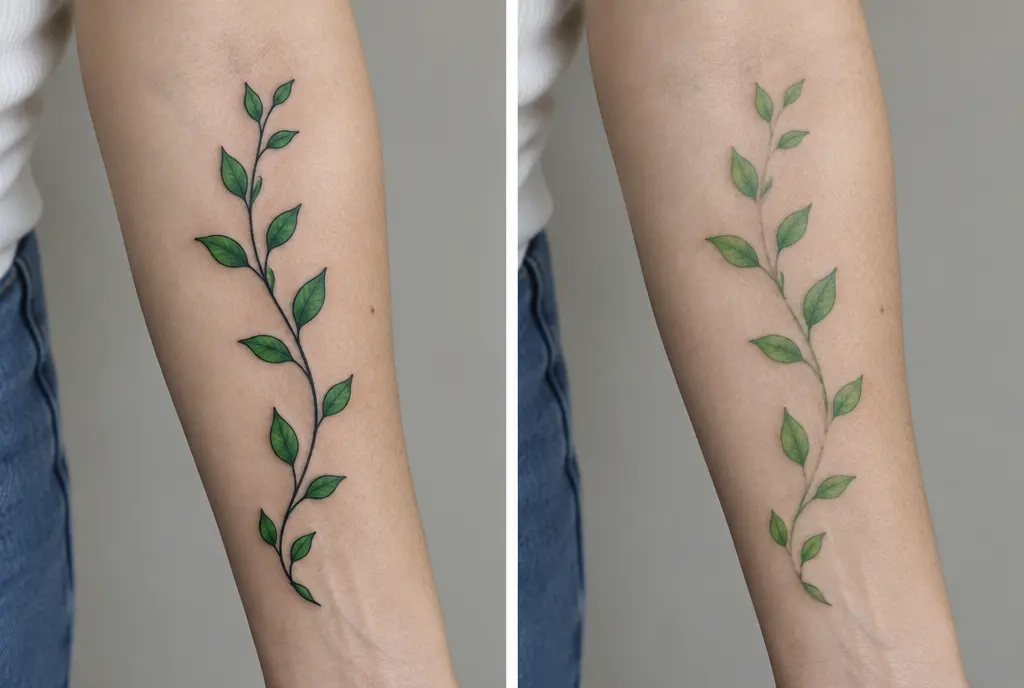
In short
- Black ink absorbs almost every laser wavelength, so it usually fades fastest. Coloured inks only absorb some wavelengths, so they need the right laser for each colour.
- As a rule of thumb: 1064 nm for black and dark blue, 532 nm for red, orange and yellow, and 694, 755 or 785 nm for green and blue. A clinic with only one wavelength cannot treat every colour well.
- White, skin-tone, pink and some red, orange or brown inks can turn grey or black when the laser hits them. A small test spot before the full session shows how your ink reacts.
- Colour tattoos usually need more sessions than black ones, and some shades never clear completely. Fading for a cover-up is often a realistic goal.
In this article 11
- The short answer
- Why black goes first
- Which wavelength targets which colour
- Colour by colour
- Picosecond or Q-switched for colour?
- When colour turns dark: paradoxical darkening
- How many more sessions does colour need?
- Questions to ask before you start
- Fading for a cover-up is often enough
- What it means for you
- Frequently asked questions
Daniel’s koi fish took two long sessions to tattoo, back when he was twenty-two. Orange scales, a red fin, blue water swirling around it, a few green leaves and bright white highlights on the eyes and the waves. Twelve years later he wanted his forearm back. At the consultation he expected to hear a number of sessions. Instead the technician spent ten minutes going through the tattoo colour by colour: “The black outline will go quickly. The red and orange should be fine. The blue and green need a different wavelength. And these white highlights, I want to test first.”
Daniel had assumed a laser is a laser. It is not, and colour is the main reason. If your tattoo has anything other than black in it, understanding how each ink reacts will tell you more about your removal than any price list. It explains why some clinics turn colour tattoos away, why two people with the same size tattoo can need very different numbers of sessions, and why a small test patch is not a waste of time.
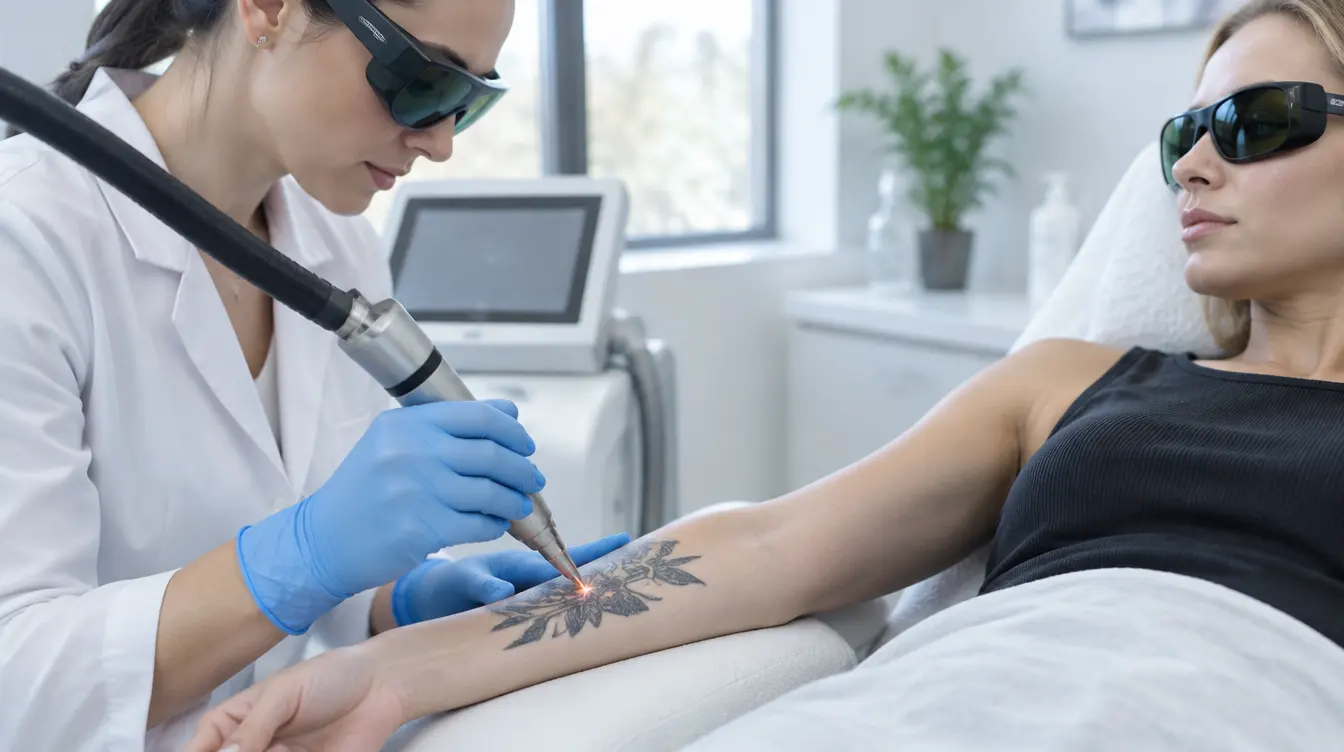
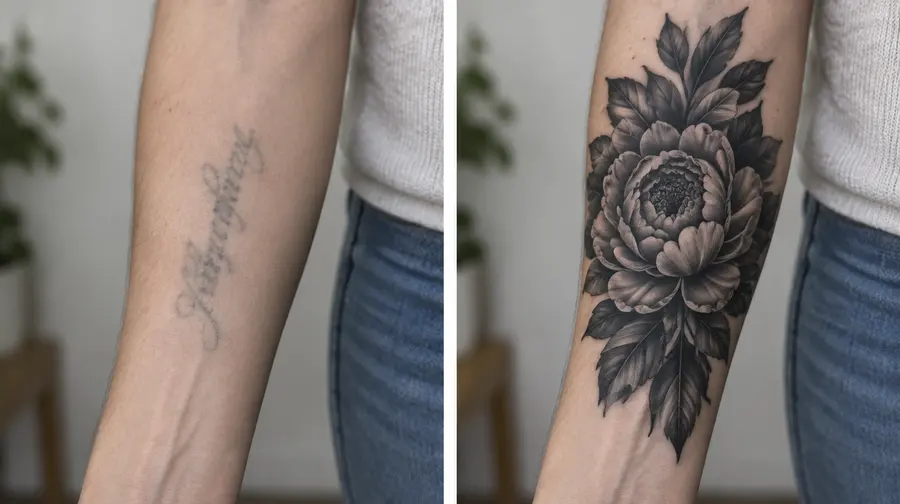
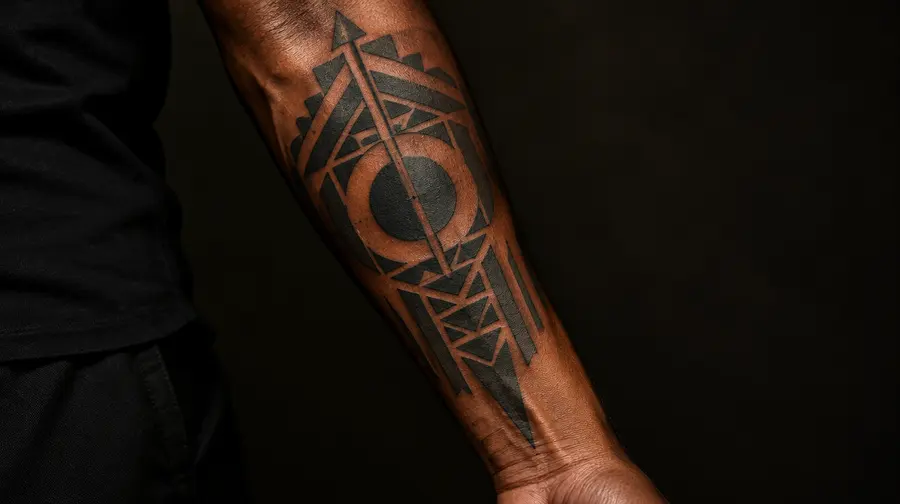
> A note on the pictures: the images in this article are illustrations made to show typical situations. They are not photos of real patients or real treatment results.
The short answer
Coloured tattoos can be removed or faded with a laser, but they usually take longer than black ones, need more than one wavelength, and some shades may never disappear completely. Black and dark blue are the easiest colours. Red usually responds reasonably well. Green, light blue and yellow are harder. White, skin-tone and pastel inks are the most unpredictable, because some of them can turn darker instead of lighter when the laser hits them.
Whether your colours fade well depends mostly on two things: which wavelengths the clinic’s laser can produce, and what your specific inks are made of. The first you can ask about. The second nobody knows exactly in advance, which is why experienced clinics often start with a test.
Removal calculatorLaser tattoo removal calculator: how many sessions and what it costsRead alsoLaser tattoo removal: what to really expectWhy black goes first
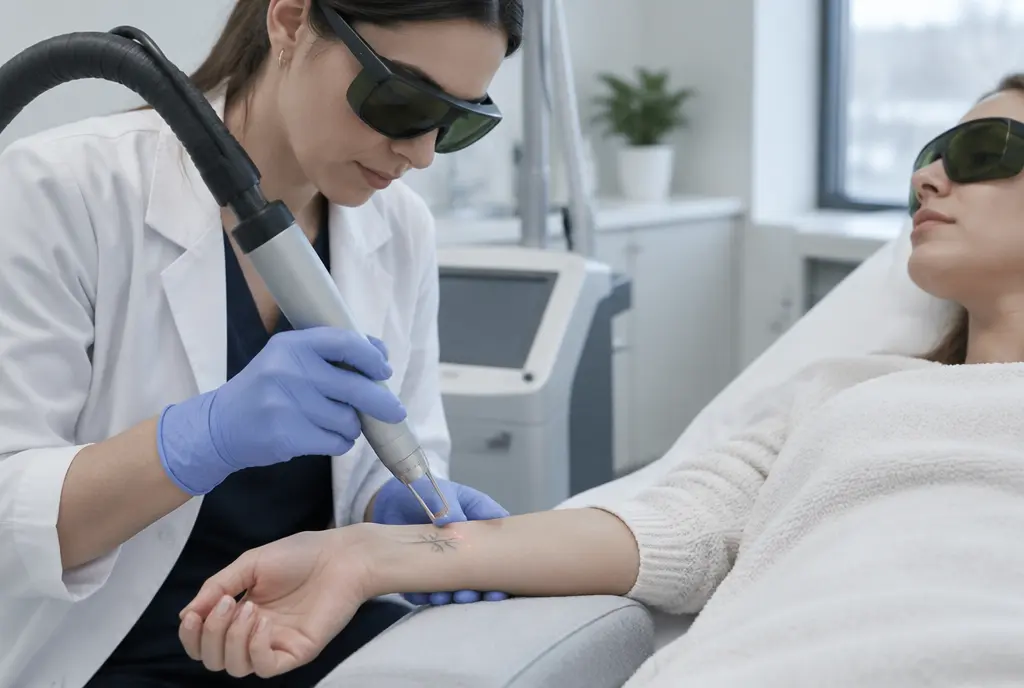
Laser removal works by sending extremely short pulses of light into the skin. The ink particles absorb the light, heat up in a tiny fraction of a second and shatter into smaller pieces, which the body then clears away over the following weeks. The key word is absorb. A particle can only be broken up by light it actually takes in.
Black ink absorbs light across almost the whole spectrum. That is what makes it look black. So almost any tattoo-removal wavelength works on it, including 1064 nm, a near-infrared light that reaches deep into the skin and is absorbed relatively little by your own skin pigment. This is why black tattoos are the standard case in every session estimate, and why the black outline of a colour tattoo is usually the first part to fade.
Coloured ink is different. A colour looks the way it does because it absorbs some light and reflects the rest. Green ink looks green because it reflects green light, and it absorbs mainly red light. Red ink reflects red and absorbs mainly green. The laser has to use a colour of light that the ink absorbs, not one it reflects.
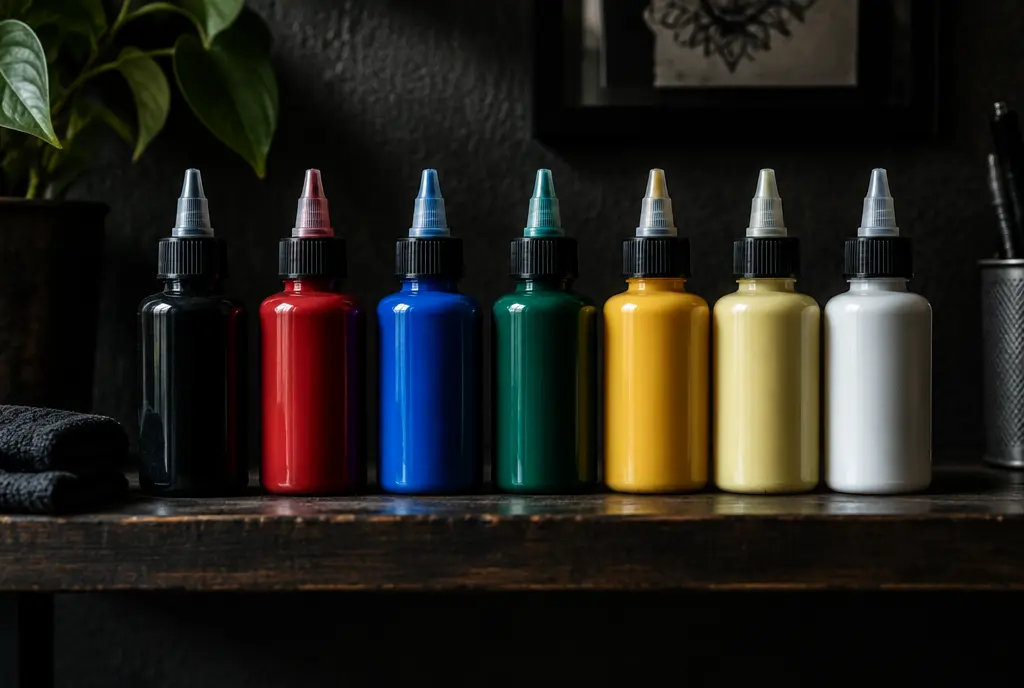
A laser can only break up ink that absorbs its light. The wrong wavelength mostly passes straight through.
Which wavelength targets which colour
Tattoo removal lasers are described by their wavelength, measured in nanometres (nm). There are four or five you will hear about most often, and each covers a different group of colours:
- 1064 nm (Nd:YAG): black, dark grey and dark blue. It reaches deepest and is the safest choice for darker skin, because melanin absorbs it the least.
- 532 nm (frequency-doubled Nd:YAG): red, orange, yellow and many pinks and purples. It is a green light, so it suits warm colours, but it is also absorbed more by your skin’s own pigment, which means more caution on darker or tanned skin.
- 694 nm (ruby): green and blue, as well as black. It is an older technology and less common in clinics today.
- 755 nm (alexandrite): green, blue and black. Many picosecond lasers use this wavelength.
- 785 nm: found on some picosecond devices, mainly for blue and green.
Many modern machines combine 1064 nm and 532 nm in one device, and some add extra handpieces for blue and green. That is why the question “Which wavelengths do you have?” is one of the most useful things you can ask a clinic before starting with a colour tattoo. A laser that only offers 1064 nm can do a very good job on black, and very little on green.
Colour by colour
Every ink is a mix of pigments, and two tattoos that look the same shade of red can contain completely different ingredients. So treat what follows as a general pattern, not a promise.
Black and dark grey
The easiest. They respond to almost every wavelength and usually make steady progress from the first session. Shading made with diluted black, often called grey wash, tends to fade even faster, because there is less ink in the skin to begin with.
Red
Red usually responds well to 532 nm, and often clears in a number of sessions not far from black. Two points need attention, though. Red is the colour most often linked to allergic tattoo reactions. If your red areas have ever been itchy, raised or swollen, tell the clinic and have a doctor look at it first, because breaking up the pigment can sometimes make an existing reaction flare. And a few red and brownish-red inks contain iron oxide, which can darken under the laser.
Blue
Dark blue is close to black and often fades well with 1064 nm. Lighter blues and turquoise are much harder. They usually need 694, 755 or 785 nm, and some light shades stay visible for a long time.
Green
Green has long been one of the most stubborn colours. It reflects the green 532 nm light and absorbs 1064 nm poorly, so it really needs a red or near-infrared wavelength around 694 to 785 nm. With the right laser it can fade well. Without it, clinics see very little change.
Yellow and orange
Orange usually behaves like a softer red and responds to 532 nm. Yellow is a mixed story. Some clinics count it among the hardest colours because it absorbs so little light, while others report good results with 532 nm. Pale yellow in particular can be very persistent.
Purple and pink
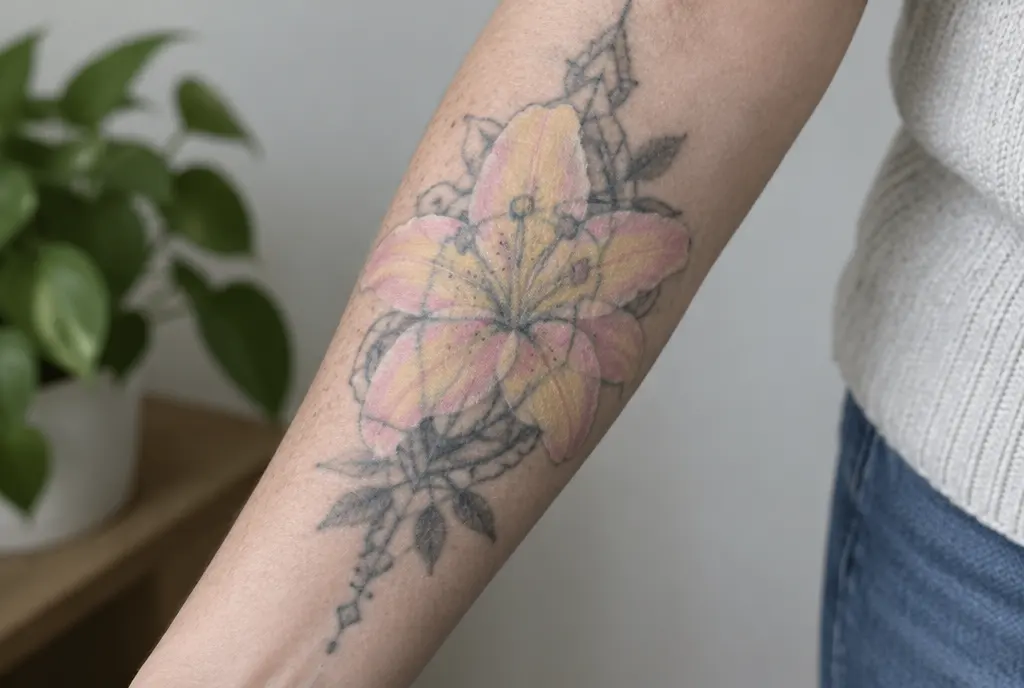
Purple often fades reasonably well, because it is a mix of red and blue pigments that both have a matching wavelength. Pink is less predictable: many pinks are red pigment lightened with white, and the white part brings the risk of darkening described below.
White, skin tones and pastels
The most difficult group. White is often used for highlights, and skin-tone and pastel inks are mixed with white pigment to lighten them. These inks reflect most light, so there is little for the laser to work with, and some of them can turn dark when it does react. Some clinics will not treat white highlights at all, and simply leave them, because on their own they are often barely visible once the colours around them are gone.
Picosecond or Q-switched for colour?
There are two families of tattoo-removal lasers. Q-switched lasers, used since the 1990s, fire pulses lasting a few billionths of a second (nanoseconds). Picosecond lasers fire pulses about a thousand times shorter, lasting trillionths of a second. The shorter the pulse, the more the ink is shattered by a pressure wave rather than by heat, and the smaller the fragments tend to be.
For colour, the most encouraging research is on blue and green. In a small 2012 study with a 755 nm picosecond laser, most of the twelve blue and green tattoos treated were more than three-quarters cleared after one or two sessions. Larger reviews are more careful. A 2016 systematic review found that the evidence that picosecond lasers beat Q-switched ones is still limited, and that bigger, better-controlled studies are needed.
In practice, this is a reasonable way to see it:
- The wavelength matters more than the pulse type. A picosecond laser without a wavelength for green will still struggle with green. A Q-switched machine with the right wavelength can fade it.
- Picosecond lasers may save some sessions on stubborn colours, especially blue and green, and are often gentler on the surrounding skin.
- They usually cost more per session. Fewer sessions at a higher price can end up costing about the same, or more. Ask for a total estimate, not just the price of one visit.
- Experience counts. A careful technician with a well-maintained Q-switched laser can get better results than someone rushing through with the newest machine.
When colour turns dark: paradoxical darkening
This is the risk that surprises people most. With some inks, the laser does not lighten the tattoo at all. Within seconds of the pulse, the treated area turns grey, dark brown or black. Doctors call this paradoxical darkening, and it has been described in dermatology papers since the early 1990s.
It happens mainly with inks that contain titanium dioxide, the bright white pigment, or iron oxide, used in many reds, browns, tans and skin tones. The laser energy can change these compounds chemically into a darker form. The colours most at risk are:
- White and white highlights
- Skin-tone and nude shades, including many cosmetic tattoos on eyebrows and lips
- Pink, peach and pastel shades that are mixed with white
- Some reds, oranges, tans and browns, depending on the pigment
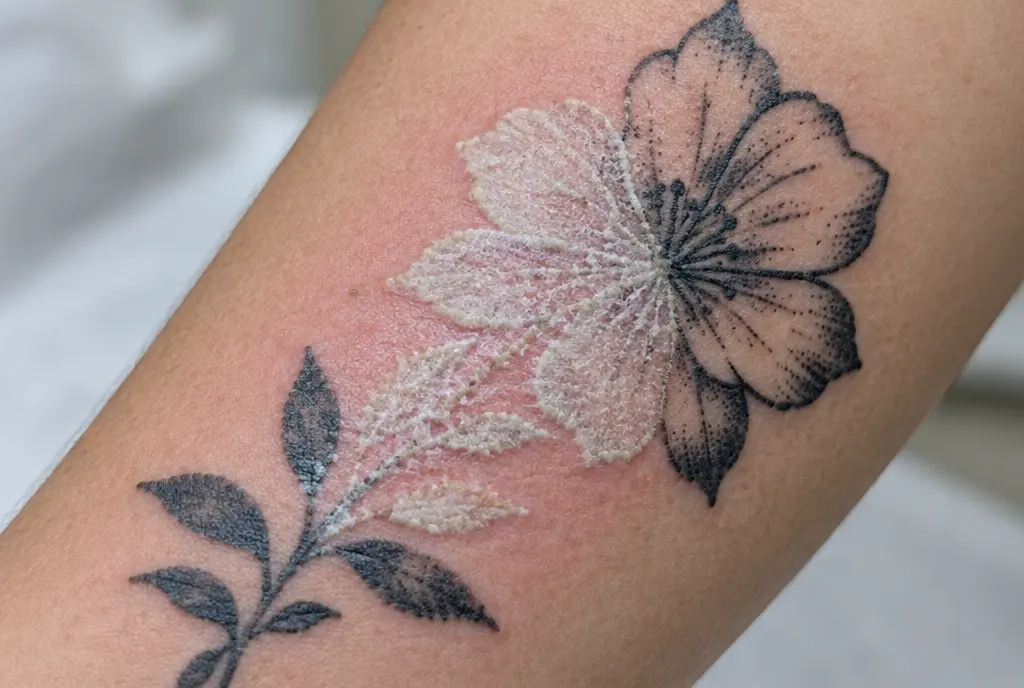
Sometimes the darkened ink can then be treated in later sessions like black ink and fades over time. Sometimes it cannot, and the darker patch is permanent. The US Food and Drug Administration warns that pigment which has oxidised and turned black may no longer be treatable by laser. That is the reason careful clinics treat these colours slowly, or advise leaving them alone.
Why a test spot matters
Because nobody can see what an ink is made of by looking at it, many clinics start with a test spot: one or a few laser pulses on a small, discreet part of the tattoo, ideally in each risky colour. You then wait, often several weeks, to see how the skin heals and whether the ink lightened or darkened. Only then is the full tattoo treated.
How many more sessions does colour need?
A mostly black tattoo typically needs somewhere between six and twelve sessions, spaced at least six to eight weeks apart. Colour usually adds to that. Clinics often quote ten to fifteen sessions or more for multicolour tattoos, and there is a real chance that some shades never fully clear. Colour is one of the factors in the Kirby-Desai scale, a scoring system doctors use to estimate how many sessions a removal will take, alongside skin type, location, amount of ink, scarring and layering.
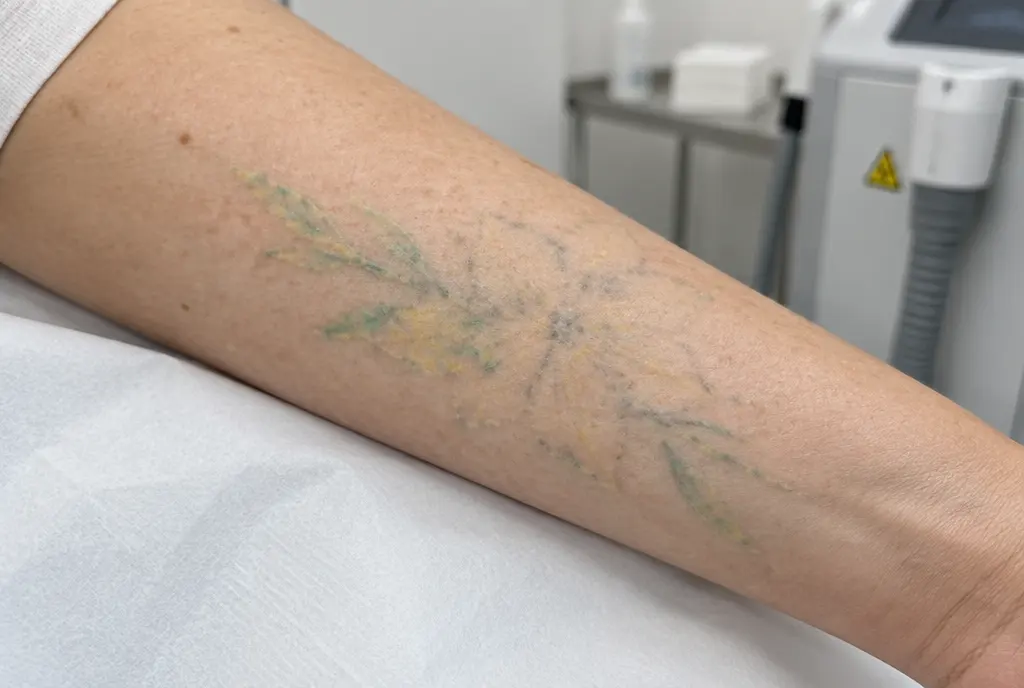
The ranges are wide because so much depends on the individual tattoo. A small tattoo with black, red and dark blue may finish almost as quickly as a black one. A large piece with light green, turquoise, yellow and white highlights may take two to three years and still leave traces. A realistic plan for a colourful tattoo often looks like this:
- Black and dark colours fade in the first sessions.
- Red, orange and purple follow, provided the clinic has 532 nm.
- Blue and green need their own wavelength and often more sessions.
- Yellow, light blue and pastels fade slowest. Some remain as a faint tint.
- White and skin tones are treated carefully after a test, or left alone.
Questions to ask before you start
A good consultation for a colour tattoo is longer than one for black. These are the questions that tell you most about whether a clinic can handle your colours:
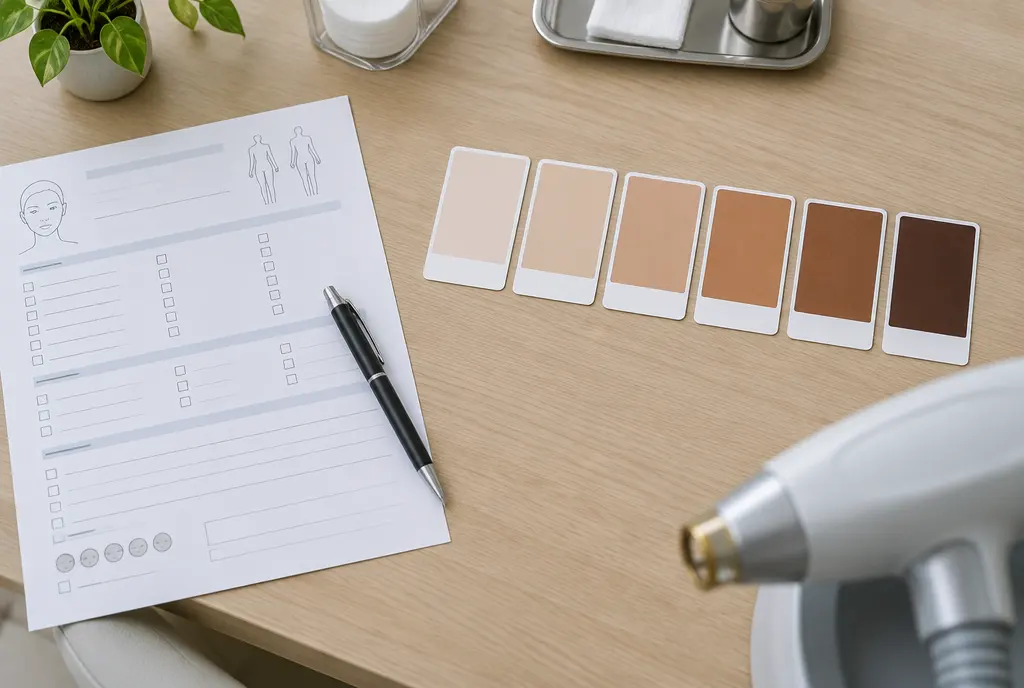
- Which wavelengths does your laser have, and which of them will you use on each of my colours?
- Is it a picosecond or a Q-switched laser, and how many colour tattoos have you treated with it?
- Will you do a test spot on the white, skin-tone or pastel areas first?
- Can you show before-and-after photos of colour tattoos, not just black ones?
- How many sessions do you estimate in total, and what is the price of the whole course?
- What happens if some colours do not fade, and would you stop at a fade for a cover-up?
Mention your skin type, any recent tan, any medicines you take and any reaction your tattoo has ever had. With colour, the 532 nm wavelength in particular is absorbed more by darker skin, so the settings have to be chosen with care.
Fading for a cover-up is often enough
Not every colour tattoo has to disappear completely. If you plan to cover it with a new design, a few sessions that knock back the brightest colours can be enough. Tattoo artists often say they can work over faded colour far more easily than over a strong one, especially if the new piece is darker. Leftover yellow or white, which are hard to remove, are usually easy to hide under a new tattoo.
Daniel went for a middle path. The black outline and the blue water faded within the first year, the red fin and orange scales followed, and the test spot on one white highlight turned grey, so the clinic left the rest of the white alone. After eight sessions what was left was faint enough for his artist to plan a darker cover-up over it.
Read alsoColour or black ink: which lasts longer?What it means for you
Colour tattoos can be removed or faded, but they need more patience, more planning and the right equipment. Black and dark blue go first, red and orange usually follow, green, light blue and yellow are slower, and white or skin-tone inks need a test before anything else. The most important thing you can do is choose a clinic whose laser has the wavelengths your colours need, and ask for an honest estimate of the whole course.
If you are still deciding between removing, fading or keeping a colourful tattoo, it can help to see how it is likely to look in a few years without treatment. With InkAge you can upload a photo of your tattoo and see how its colours may age over time, which can make the choice a little clearer.
Frequently asked questions
Can coloured tattoos be removed completely?
Often largely, but not always completely. Black, dark blue and red usually fade well. Green, light blue, yellow and pastel shades are harder, and some traces may remain. Many people aim for strong fading, especially if they plan a cover-up.
Which tattoo colour is hardest to remove?
White and skin-tone inks are usually the hardest, because they reflect most light and can darken under the laser. Light green, turquoise and yellow are also stubborn. Black and dark blue are the easiest.
Can a red tattoo be removed with a laser?
Yes. Red usually responds well to the 532 nm wavelength. If the red area has ever been itchy, raised or swollen, have a doctor check it first, because red is the colour most often linked to allergic reactions.
Why did my tattoo turn darker after laser treatment?
Some white, skin-tone, pink, red and brown inks contain titanium dioxide or iron oxide, which the laser can change into a darker form. This is called paradoxical darkening. Sometimes further sessions can fade it, sometimes it is permanent, so talk to your clinic before the next session.
Is a picosecond laser better for colour tattoos?
It may help with blue and green and save some sessions, but the evidence is still limited and sessions usually cost more. Having the right wavelength for each colour matters more than the pulse type.
Sources
- Tattoo Removal: Options and Results (U.S. Food and Drug Administration)
- Laser removal of tattoos (review, PubMed 11702617)
- Cosmetic tattoo ink darkening. A complication of Q-switched and pulsed-laser treatment (Arch Dermatol 1993)
- Successful and rapid treatment of blue and green tattoo pigment with a novel picosecond laser (Brauer et al., Arch Dermatol 2012)
- Picosecond lasers for tattoo removal: a systematic review (2016)
- Laser Tattoo Removal (UCSF Health)
Do you run a laser clinic? Show guests their own tattoo after 3, 6 and 10 sessions
Written by the InkAge editorial team from widely accepted tattoo-care practice. Figures are rules of thumb, not measurements. This is general information, not medical advice — ask your artist or a dermatologist about your own skin.
Last updated: 8 November 2026