In short
- Microblading, powder brows, lip blush and eyeliner can usually be removed or lightened, most often with a picosecond or Q-switched laser. Brows often need around 2 to 6 sessions, spaced six to eight weeks or more apart.
- Permanent make-up pigments often contain iron oxides and titanium dioxide. Under the laser, pink, red, light and skin-tone shades can turn grey or black, and brown brows often pass through an orange or pink stage. That is why a test spot comes first.
- Saline removal is a non-laser option for small areas and for colours the laser handles badly, but it is slower, results vary, and it depends heavily on the skill of the technician.
- Laser removal of eyeliner belongs only in a doctor’s hands, with metal shields placed over the eyes. Brow hairs can turn white for a while; in a published series of 76 patients, no permanent hair loss was recorded.
In this article 11
- First: what you are actually removing
- Why permanent make-up can turn darker under the laser
- The test spot: small, boring and essential
- Saline and other non-laser removal
- Lip blush and lip liner
- Eyeliner: a job for a doctor only
- Will my eyebrow hair grow back?
- How many sessions, and what it costs
- Before you book: a short checklist
- If you are thinking about something new
- Frequently asked questions
Mira had her brows microbladed four years ago, when thin, high arches were everywhere. At first she loved them. Then they slowly changed. The hair strokes blurred into a soft band, the tails drifted upwards, and on a sunny day in the bathroom mirror she finally saw it clearly: her brows were no longer brown. They were a warm salmon colour, almost orange, sitting a few millimetres above her own hairs.
She wanted them gone before anyone touched her face again. What she did not expect was how many different answers she would get. One studio offered saline removal on the spot. A laser clinic talked about a test spot and “possible darkening”. A friend warned her that the laser would burn off her real brows. All three had a point, and this guide sorts out which risks are real, which are rare and what you can do about each.
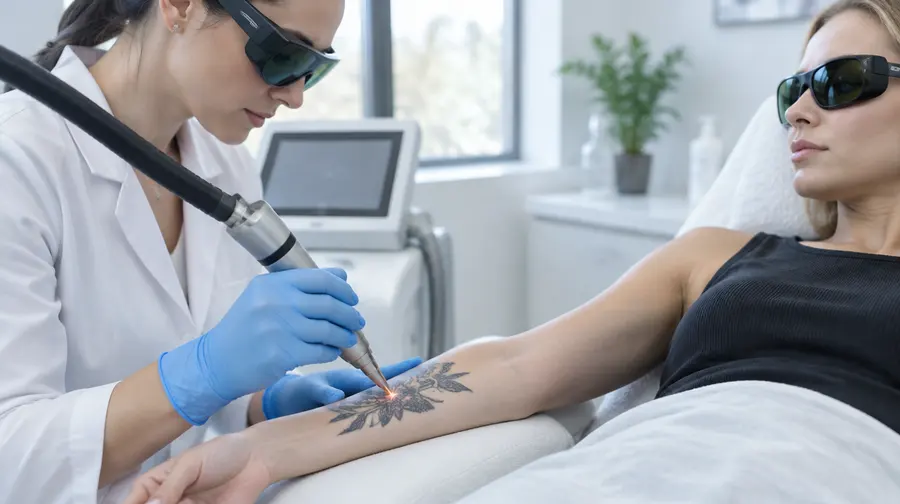
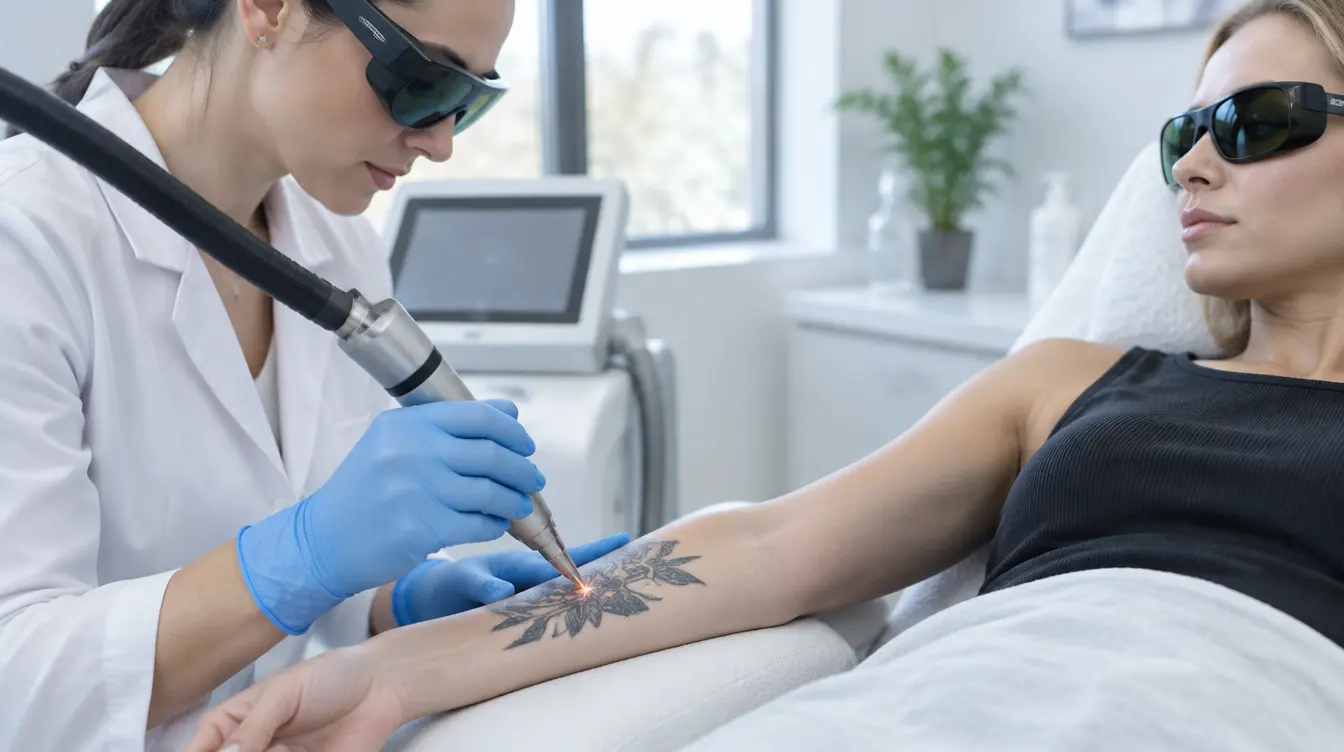
> A note on the pictures: the images in this article are illustrations made to show typical situations. They are not photos of real patients or real treatment results.
First: what you are actually removing
Permanent make-up (often shortened to PMU) is a tattoo, but a gentle one. Microblading places pigment in fine hand-drawn strokes; powder or ombré brows, lip blush and eyeliner use a machine. In every case there is usually less pigment than in a body tattoo, and it sits shallower in the skin. That is why most PMU fades on its own over one to a few years, and why it usually needs fewer removal sessions than a tattoo on the arm.
The other big difference is the pigment itself. Brow colours are mostly blends of iron oxides: black, red and yellow oxides mixed into browns. Lighter, softer or skin-tone shades often add titanium dioxide, a white pigment. Lip colours mix iron oxides, titanium dioxide and organic reds. These ingredients are chosen for natural-looking colour, not for how they will behave under a laser years later.
Why old brows turn orange, pink or grey
A brown brow is rarely one pigment. It is usually a dark component mixed with warmer red and yellow ones. Over time the dark part tends to fade first, and what is left is the warm base: salmon, orange or pink. Cooler blends, or pigment placed too deep, can go the other way and look grey or blue-ish. This is normal fading, not removal, and it is exactly what Mira saw in the mirror.
Read alsoLaser tattoo removal: what to really expectWhy permanent make-up can turn darker under the laser
Removal lasers work by sending extremely short pulses of light into the skin. The pigment absorbs the light, heats up in a tiny fraction of a second and breaks into smaller particles that the body clears away over the following weeks. With black body ink, this is fairly predictable. With cosmetic pigments, it is not.
Some of the pigments used in PMU can change chemically under the pulse instead of breaking apart. Rust-red iron oxide can be turned into a black form, and white titanium dioxide can darken too. This was described in dermatology journals as early as 1993, in pink, red and skin-tone cosmetic tattoos that turned black within seconds of treatment. Doctors call it paradoxical darkening.
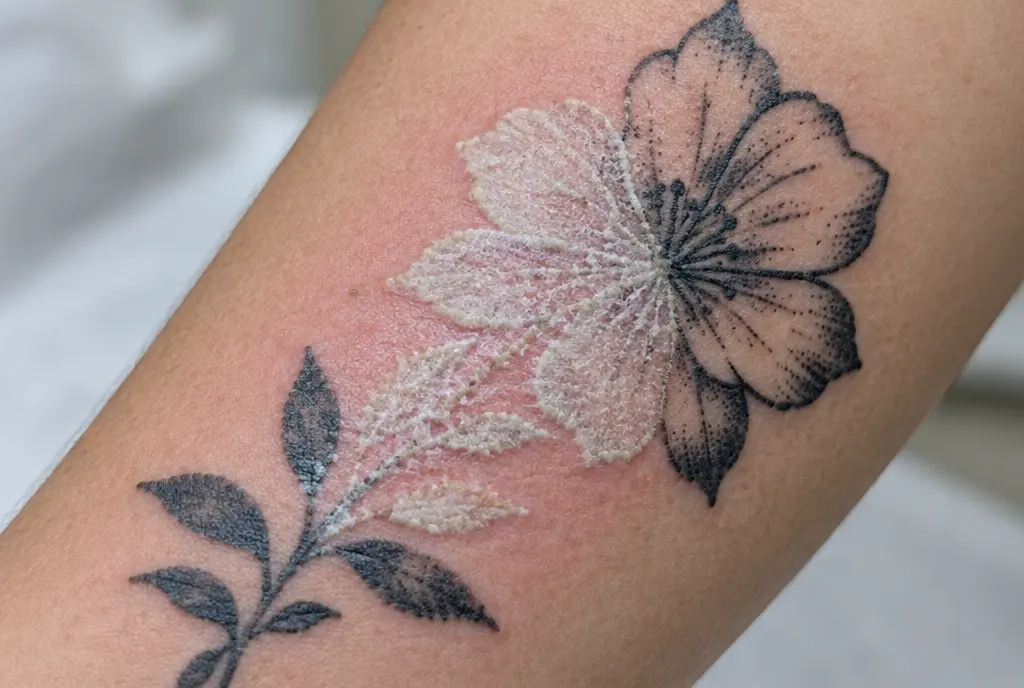
With permanent make-up, the first laser pulse can make a colour darker before anything makes it lighter.
The good news for brows is that this seems less common than older warnings suggest. In a 2023 chart review of 76 people treated for eyebrow and eyeliner tattoos with picosecond lasers, none showed paradoxical darkening. The risk is highest with pink, red, light and skin-tone pigments, with traditional machine-done cosmetic tattoos, and above all with lips. When darkening does happen, further laser sessions can sometimes clear it, and doctors can switch to an ablative laser that removes the top layers of skin regardless of colour. But it is not something you want to discover on your whole face at once.
Orange or pink after the first session: unmasking
A far more common surprise is that brown brows turn orange, red, yellow or pink after the first laser session. In the same chart review this happened in about a quarter of cases. It is called unmasking: the laser breaks up the dark part of the blend first, and the warm colours that were hiding underneath suddenly show.
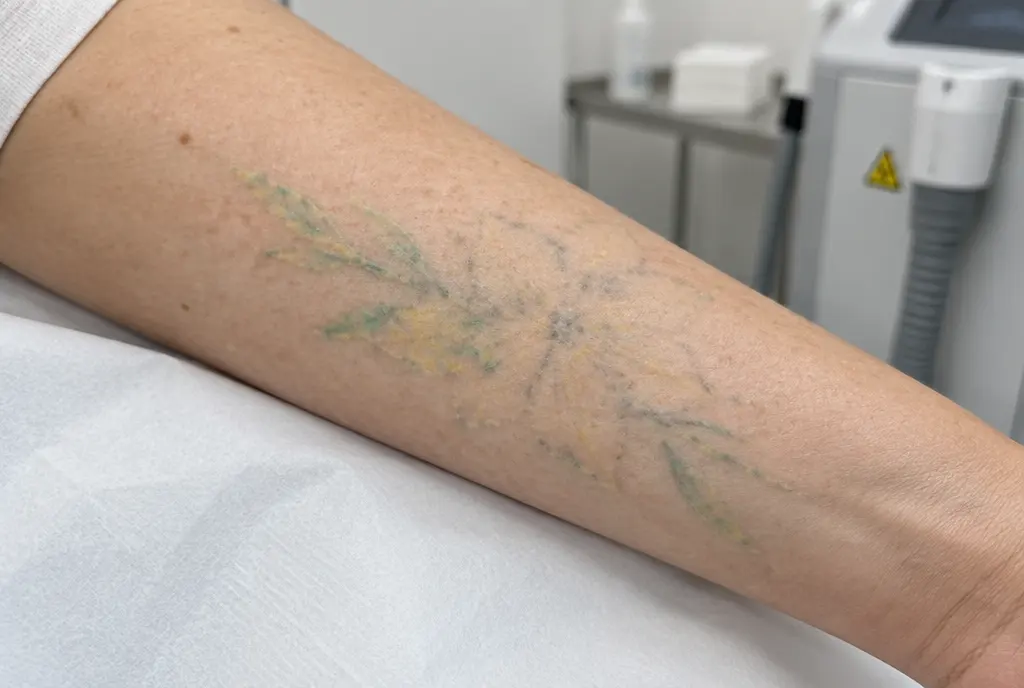
Unmasking is not a sign that something went wrong, but it does change the plan. Warm yellow and orange pigments respond less well to the wavelengths used for dark ink, so the last stage often takes longer than the first. A good clinic will warn you about this before you start, so a month of orange brows does not come as a shock.
The test spot: small, boring and essential
Because no one can see from the outside exactly what is in your brows or lips, a careful clinic starts with a test. The practitioner treats a small area, for example the tail of one brow or a few strokes, and then you wait until it has fully healed, usually several weeks. Only then do you both look at the result in daylight.
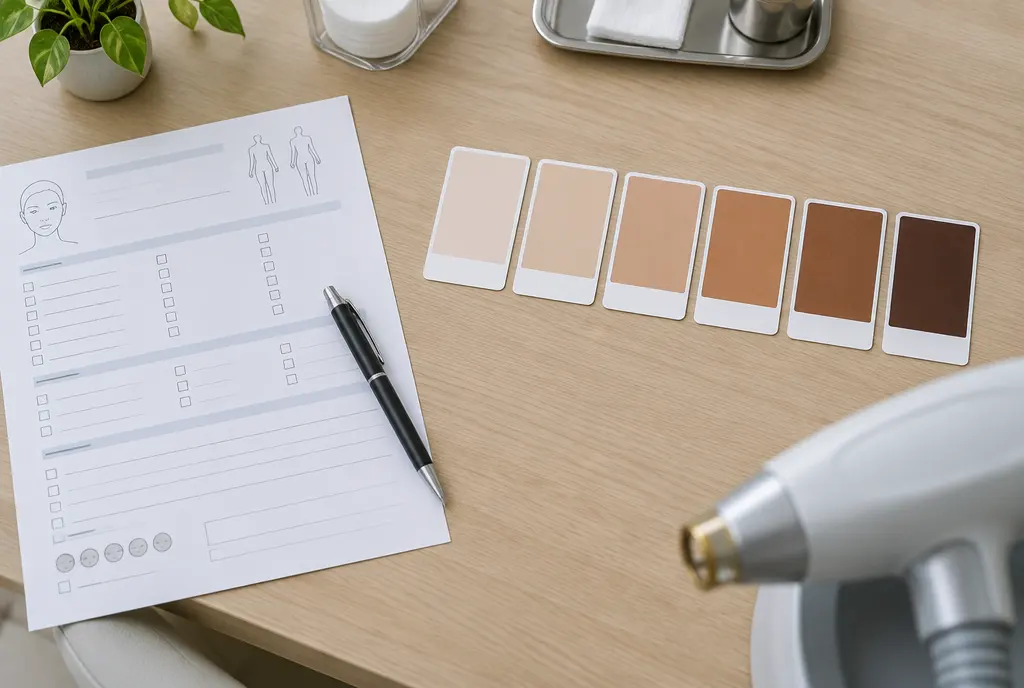
The test answers three questions: does the pigment lighten, darken or change colour, how does your skin heal, and how do the brow hairs in the area react. If the spot darkens, it is far easier to deal with a few millimetres than two full brows.
Questions worth asking at the consultation:
- Which laser and which wavelengths do you use? Picosecond lasers with several wavelengths are common for cosmetic tattoos today.
- How many brows, lips or eyeliners have you treated? Ask to see healed results, not only fresh ones.
- Will you do a test spot, and how long do we wait before the next step?
- What is the plan if the test spot darkens or turns orange?
- How will you protect my eyes and my brow hairs?
Saline and other non-laser removal
Saline removal is offered in many permanent make-up studios. The technician uses a tattoo machine or a fine needle to work a strong salt solution into the pigmented skin. The skin forms a scab over the following days, and some of the pigment is drawn out with it as it heals. Some studios use similar removers with other ingredients, such as glycolic acid. Sessions are usually spaced six to eight weeks or more apart.
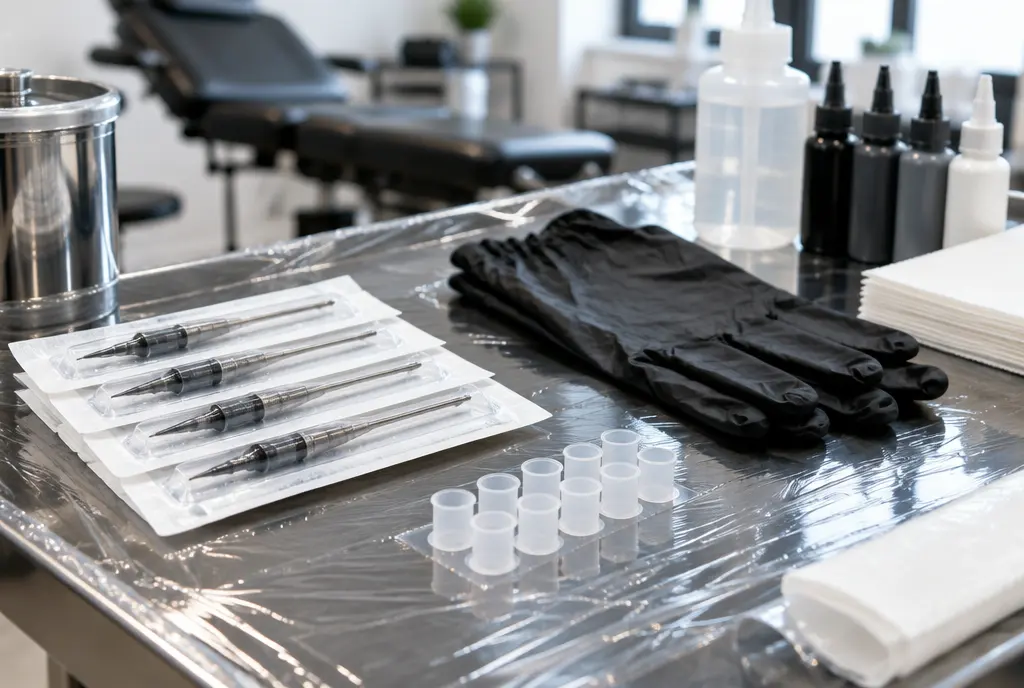
Saline has real strengths for PMU. It does not depend on the colour of the pigment, so it cannot trigger the chemical darkening a laser can. That makes it a reasonable option for warm, light or skin-tone pigments, small corrections such as a tail that sits too high, and leftovers after laser. It is also the method many PMU artists are trained in, so it is easy to find.
The limits are just as real:
- It is slow. Each session usually lifts only part of the pigment, so several rounds are common, and dense or deep pigment may never fully clear.
- It is a controlled wound. Overworking the skin, picking the scab or treating too often can leave scars, texture changes or pale patches.
- Results depend on the person. Training standards vary a lot between countries and studios, and the technique is less studied than laser removal.
- It is not for everywhere. Many technicians will not do saline close to the lash line, and results on lips are unpredictable.
Creams, home kits and “removal pens” are a different matter: they do not reach the pigment safely, and on the face the scars they can leave are hard to hide. We look at those in detail in our separate guide to tattoo removal creams and home methods.
Lip blush and lip liner
Lips are the hardest area. Lip colours are usually pink or red and often contain both iron oxide and titanium dioxide, which is the combination most prone to darkening. Lip tissue also heals differently from the skin on your brows. Many doctors test with special care here, and some treat only the lip line on the skin and not the lip itself.
Two practical points. If you get cold sores, tell the clinic in advance: any injury to the lips, from laser or saline, can trigger an outbreak, and many doctors prescribe antiviral tablets beforehand. And because lip blush often fades faster than brows, sometimes the least risky plan is simply to wait a year and see how much is left.
Eyeliner: a job for a doctor only
Removing tattooed eyeliner with a laser is possible, but the eye is millimetres away. Laser light can pass through closed eyelids, and the injuries reported after cosmetic laser accidents include corneal burns and damage to the retina, sometimes permanent. Goggles alone are not enough when the treatment area is the eyelid itself.
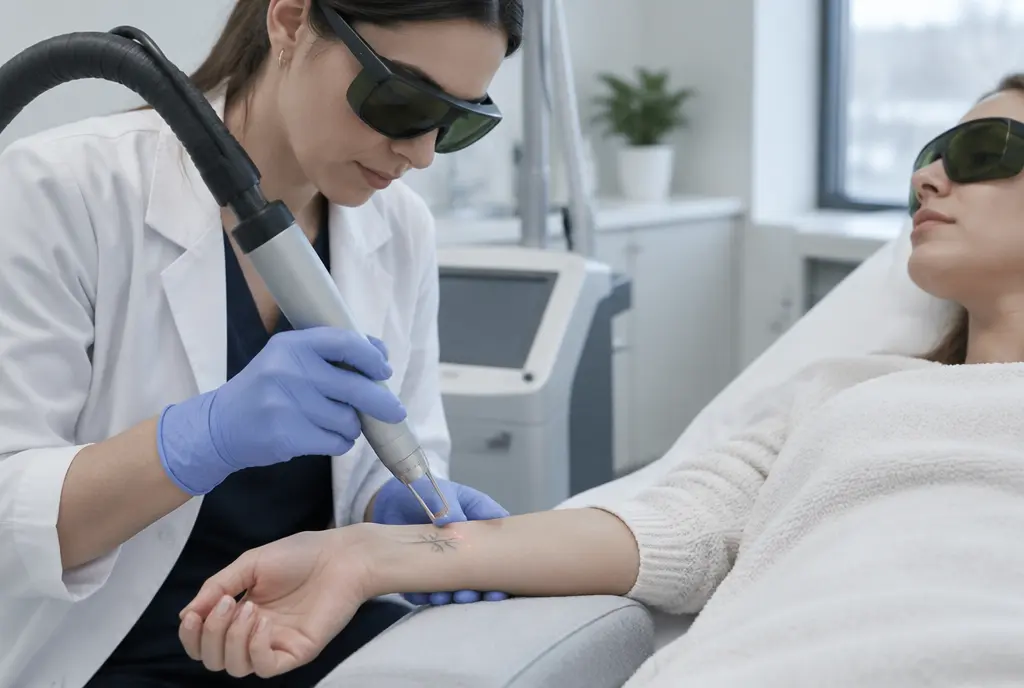
Doctors who treat eyeliner place a small metal shield directly on the eye, under the eyelid, after numbing drops. This should only ever be done by a physician experienced with these shields: a dermatologist, oculoplastic or ophthalmic surgeon, or a similarly trained doctor. Tell them about any eye surgery, including laser vision correction. Even with shields the risk is not zero, which is why the setting matters so much.
Saline removal near the lash line has its own risks, from scarring of the lid edge to solution getting into the eye, and many experienced technicians refuse to do it. For eyeliner, an eye-area doctor is the place to start, whichever method you end up with.
Will my eyebrow hair grow back?
This is the worry that stops many people. Tattoo-removal lasers are not hair-removal lasers, but brow hairs do absorb some of the light. Right after a session, hairs in the treated area can turn white or look singed. In the 2023 chart review, clinics covered the hairs with a protective gel, white hairs were temporary and could be tinted, and no permanent hair loss was recorded among 76 patients.
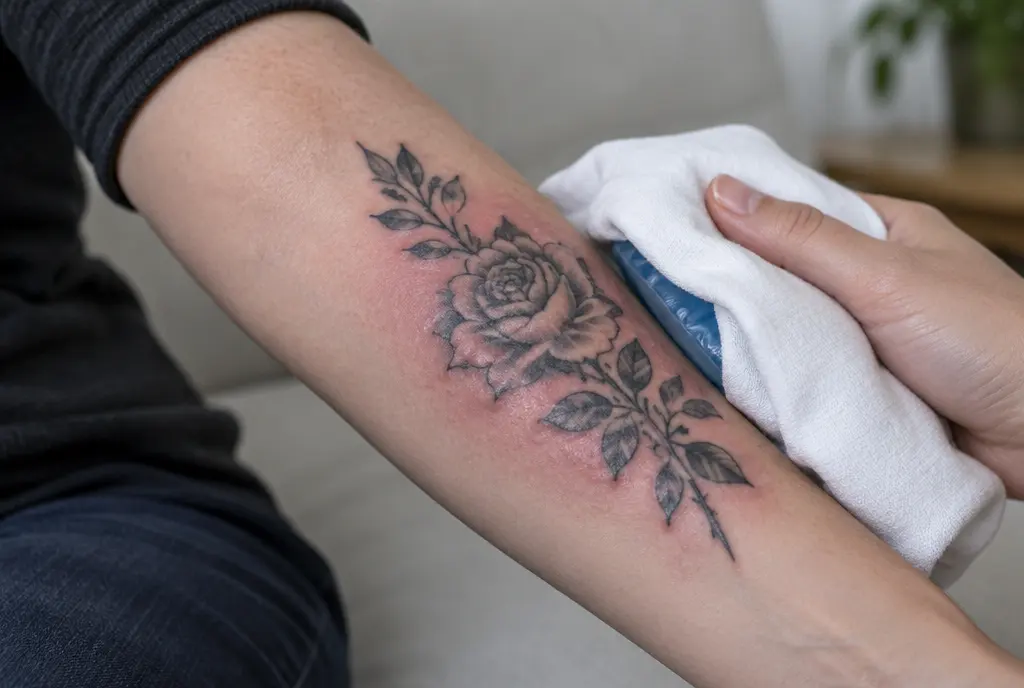
That is reassuring, but it is one series from experienced doctors, not a guarantee. Heavy treatment, many sessions close together or an inexperienced operator can thin the brows, and saline that is overworked can damage the skin the hairs grow from. Brow hairs also grow slowly, so a patch that looks sparse after a session may need a few months to fill in. Ask how your hairs will be protected, and do not push for more sessions or higher energy than the clinic suggests.
How many sessions, and what it costs
With laser, brows often need about 2 to 6 sessions. In the chart review above, the average was just under three, with a range from one to twelve. Warm pigments left after unmasking, lips and very dense machine work tend to need more. Most clinics space sessions six to eight weeks apart, sometimes a little less for brows, so a typical plan runs from a few months to a year.
Saline usually needs several sessions too, at least six to eight weeks apart, and often more rounds than laser for the same result.
Prices vary widely by country, city and clinic, so treat these as rough guides only:
- Laser, both brows: in much of Europe roughly €100–250 per session; US prices are usually higher.
- Saline, both brows: UK clinics often list around £70–150 per session; elsewhere in Europe prices are similar in euros.
- Eyeliner and lips: usually more per session, especially when a doctor and eye shields are involved.
- Consultation and test spot: sometimes charged separately, sometimes deducted from the first session.
You may not need everything gone. If you plan to have new brows done, many artists only need the old ones lightened enough to work over. One to three sessions can be enough for that, which is often cheaper than full removal.
Before you book: a short checklist
- Find out what you can about the original work: microblading or machine, the date, and the pigment brand if the artist will tell you.
- Decide whether you want everything gone or just enough lightening for a correction.
- Book a consultation with someone who treats cosmetic tattoos often, and ask for a test spot.
- Wait for the test spot to heal fully before agreeing to the rest of the plan.
- For eyeliner, go to a doctor who uses metal eye shields. No exceptions.
- Plan around the sun and around events: treated skin needs protection, and orange brows for a few weeks are part of the process.
If you are thinking about something new
Removal tends to make people more careful about what goes on next, and that is a good thing. Permanent make-up and tattoos both change with time: strokes blur, colours warm up, fine details soften. If your next step is a tattoo rather than new brows, InkAge can show you how a design might look after 10, 30 or 50 years before it goes on.
As for Mira: her test spot in the tail of the left brow went orange, then lighter, and healed without darkening. Five laser sessions over eight months, one round of saline for a stubborn warm patch, and a brow tint while the white hairs grew back. Her own brows were still there underneath. They had been all along.
Frequently asked questions
Can microblading be removed completely?
Often yes, or close to it. Microblading sits fairly shallow and many brows clear in about 2 to 6 laser sessions. Warm leftover pigment can take longer, and sometimes a faint trace remains. A test spot first shows how your pigment reacts.
Why did my eyebrows turn orange after laser removal?
Brown brow pigments are blends. The laser usually breaks up the dark part first, and the warm red, orange or yellow pigments underneath show through. This is called unmasking. It is common and usually fades with further sessions, though warm tones can be slower to clear.
Is saline removal better than laser for eyebrows?
Neither is better for everyone. Saline does not depend on pigment colour, so it suits warm, light or skin-tone pigments and small corrections, but it is slower and relies heavily on the technician. Laser is usually faster for dark brows. Many people use both: laser first, saline for stubborn leftovers.
Will laser removal make my eyebrow hair fall out?
Usually not permanently. Hairs in the treated area can turn white or look singed for a while, and a protective gel helps. In a published series of 76 patients treated by experienced doctors, no permanent hair loss was recorded, but heavy or careless treatment can thin brows.
Can permanent eyeliner be removed safely?
It can, but only by a doctor who places metal shields directly on the eyes under the lids. Laser light can pass through closed eyelids and injure the eye, so goggles alone are not enough. Never have eyeliner lasered in a salon.
Sources
- Anderson et al., Cosmetic tattoo ink darkening: a complication of Q-switched and pulsed-laser treatment (Arch Dermatol, 1993)
- Kream et al., Laser removal of eyeliner and eyebrow tattoos: chart review, experiences, and learnings (J Clin Aesthet Dermatol, 2023)
- American Academy of Ophthalmology EyeWiki: Ocular injuries due to cosmetic laser
- Removing eyebrow and eyelid tattoos possible with laser, case series finds (MDedge)
- A comprehensive evaluation of safety and awareness in eyebrow microblading: a cross-sectional study (Dermatology Reports, 2024)
- NHS: Permanent make-up
Do you run a laser clinic? Show guests their own tattoo after 3, 6 and 10 sessions
Written by the InkAge editorial team from widely accepted tattoo-care practice. Figures are rules of thumb, not measurements. This is general information, not medical advice — ask your artist or a dermatologist about your own skin.
Last updated: 18 November 2026