In short
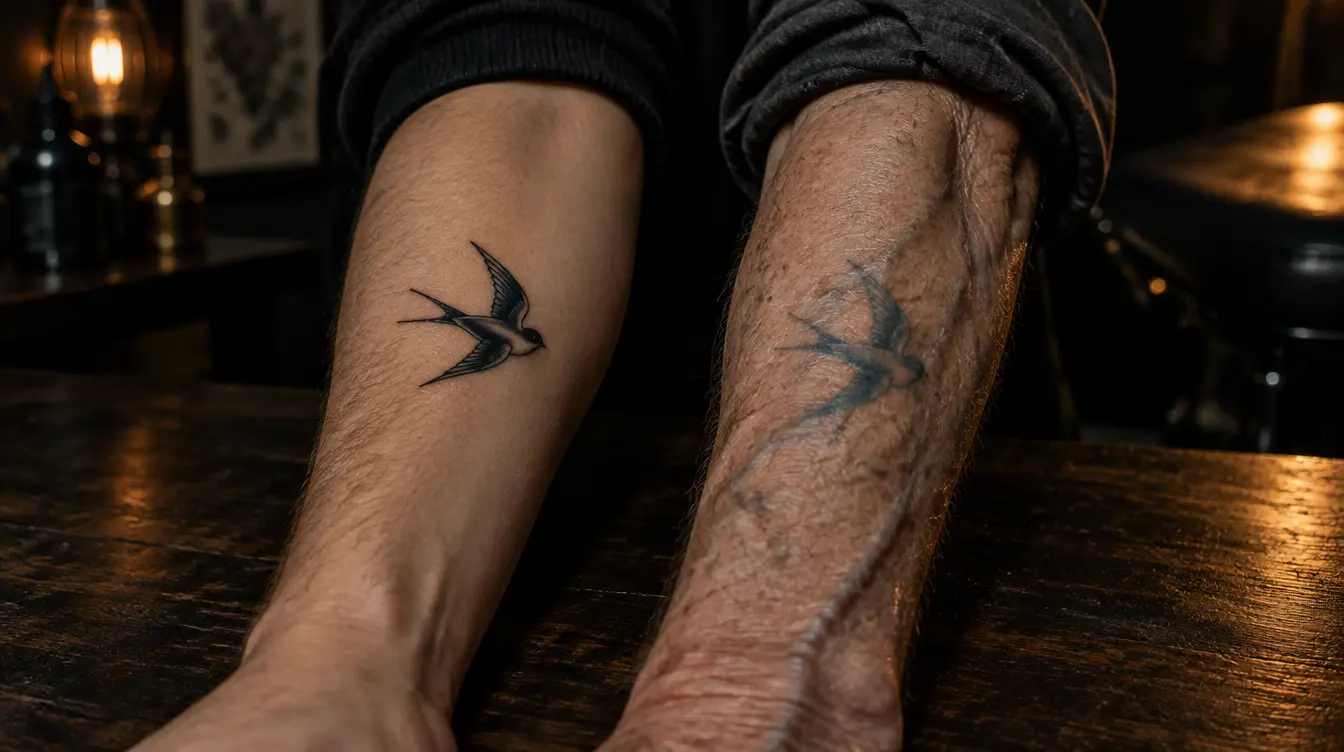
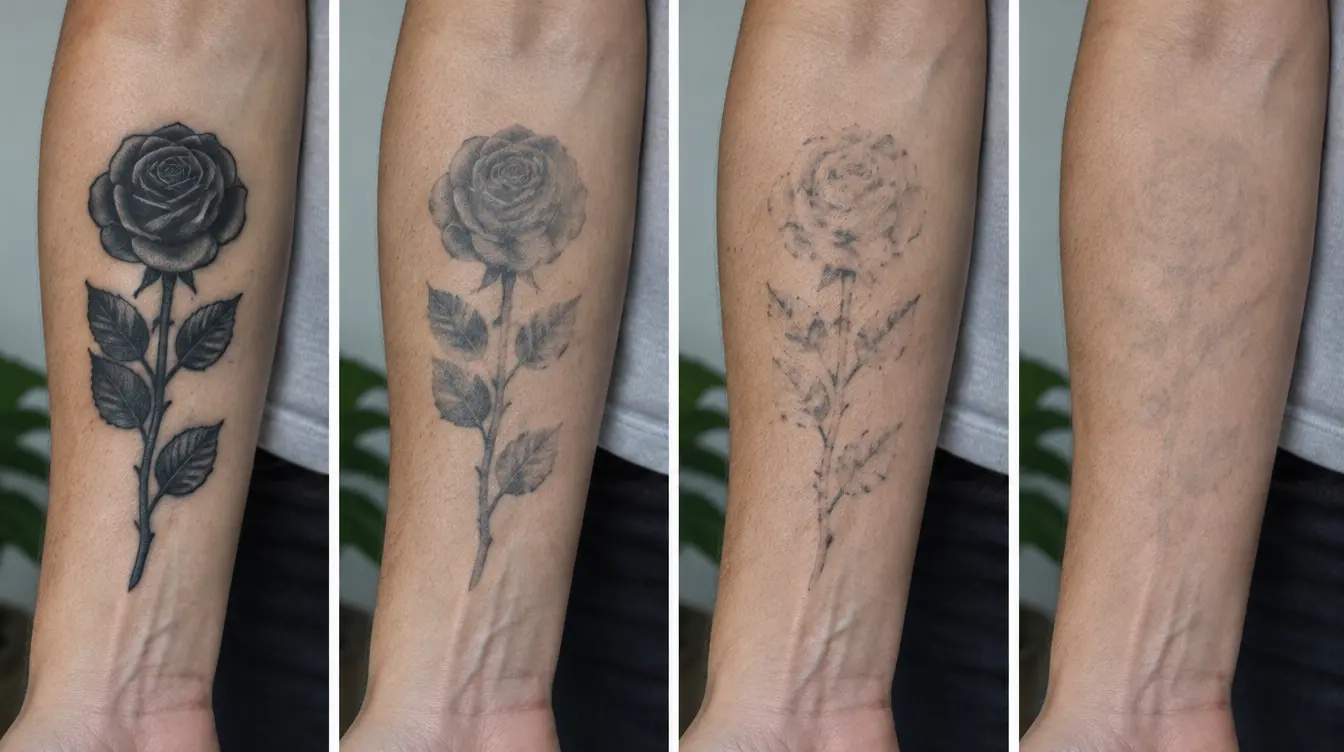
- Results usually come gradually: an obvious change in the first few sessions, a patchy middle stage, then a slow final stretch where the last traces clear or remain as a faint ghost.
- Black generally responds best. Red and dark blue usually respond well with the right wavelength. Green and light blue are harder, and yellow, white and skin tones are the hardest.
- Tattoos near the centre of the body tend to clear faster than those on hands, ankles and feet.
- Picosecond lasers aren’t magic: they can help, especially with stubborn ink, but the right wavelength and the operator’s skill matter just as much.
In this article 9
- What the process usually looks like, session by session
- Before and after by colour
- Before and after by body part
- Q-switched or picosecond: does the laser type show in the photos?
- How to read a before-and-after photo
- What the skin can look like afterwards
- See your own version first
- The short version
- Frequently asked questions
Dóra had saved eleven before-and-after photos on her phone by the time she booked a consultation. In every one of them, a tattoo simply vanished: dark ink on the left, clean skin on the right, a clinic’s logo in the corner. Then she showed the practitioner the black and green snake on her forearm and asked which photo hers would look like. The practitioner smiled, scrolled for a moment, and said: “None of these. Yours has green in it. And nobody in these pictures tells you how many sessions it took, or how long ago the last one was.”
Before-and-after photos are the first thing almost everyone looks for when they think about laser removal, and they are also the easiest thing to be misled by. This guide shows you what usually happens to a tattoo over a course of treatment, how the result changes with colour, placement and laser type, and how to read those photos with a clear head.
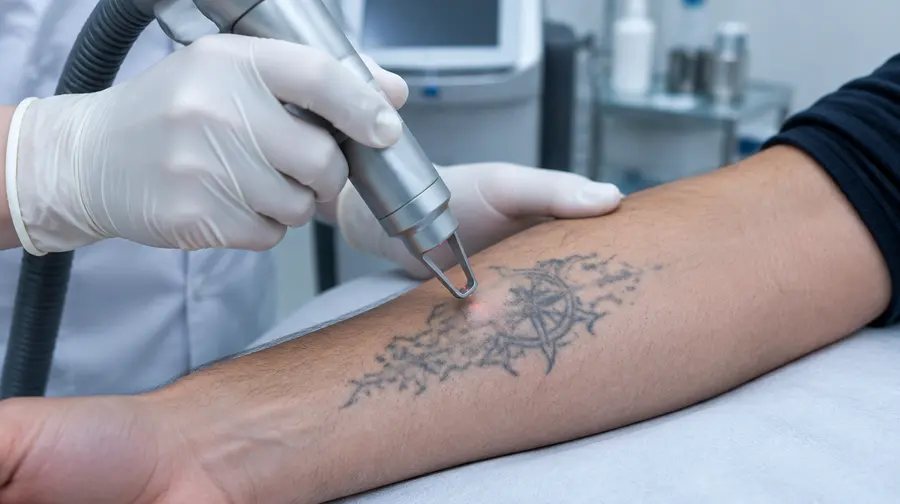
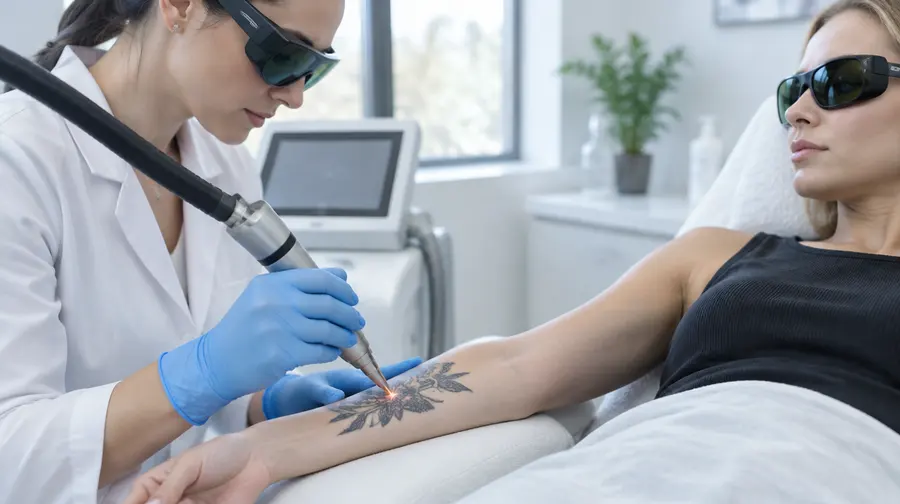
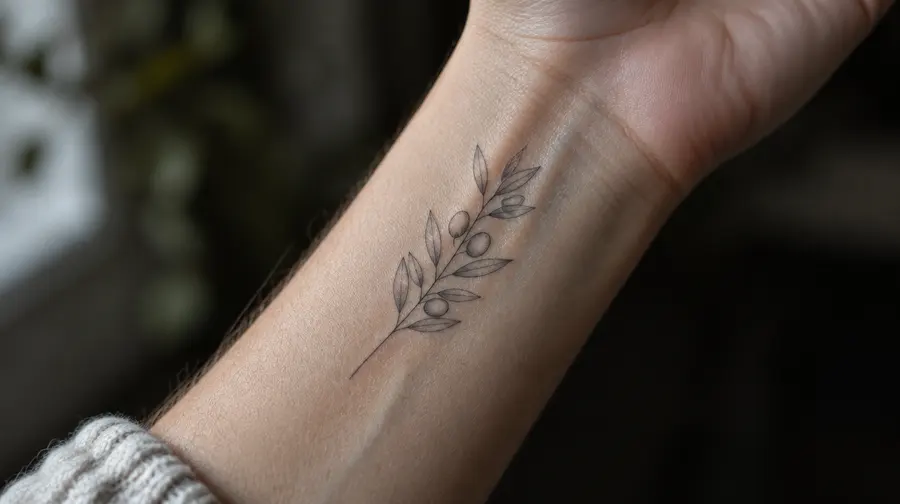
> A note on the pictures: the images in this article are illustrations made to show typical patterns. They are not photos of real patients or results from any clinic. Your own result will depend on your tattoo and your skin.
What the process usually looks like, session by session
A tattoo doesn’t fade evenly like a photo left in the sun. The laser shatters ink particles into smaller fragments, and your body clears those fragments over the following weeks. So the change happens mostly between sessions, not during them. No two tattoos follow exactly the same path, but the general shape is familiar to most practitioners.
Right after a session
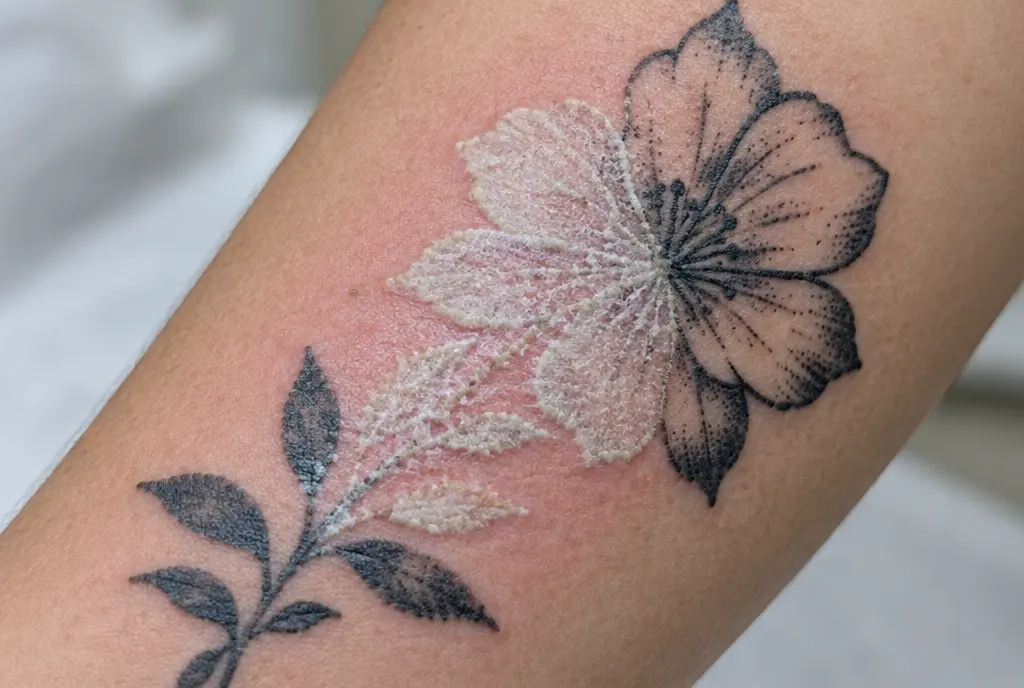
The treated area often turns chalky white for a few minutes. This is called frosting, and it is caused by tiny gas bubbles forming in the skin, not by the ink vanishing. Redness, swelling and sometimes blisters can follow over the next days as the skin heals. This is the stage people rarely photograph for a clinic’s website.
After the first few sessions
This is usually the most satisfying stretch. Black outlines lighten visibly, dense areas shift from black to a dark blue-grey, and many people feel the tattoo has lost its punch. It can look like a lot of progress, because the ink closest to the surface tends to respond first.
In the middle
Now it gets patchy, and a little discouraging. Some lines nearly disappear while others hold on, and shaded parts look uneven. This is normal. Ink sits at different depths and in different densities, so it never leaves all at once. Many people decide around here whether they want full removal, or whether fading is enough for a cover-up.
The last stretch
The final sessions change less and less. What remains may be a faint grey ghost, a few stubborn dots, or a slight difference in skin tone. For some tattoos and some skin, a completely clean result is realistic. For others, “barely visible” is the honest target, and it is worth asking about that at the start. If you want an estimate of how long this whole road is, our guide to the Kirby–Desai scale in this knowledge base shows how to score your own tattoo.
Most of the change happens between sessions, not during them. The photo that matters is the one taken months later.
Before and after by colour
Each pigment absorbs light differently, which is why a laser’s wavelength matters so much. A wavelength only works on a colour that can absorb it, a little like how a black shirt heats up in the sun and a white one doesn’t.
Black and dark grey
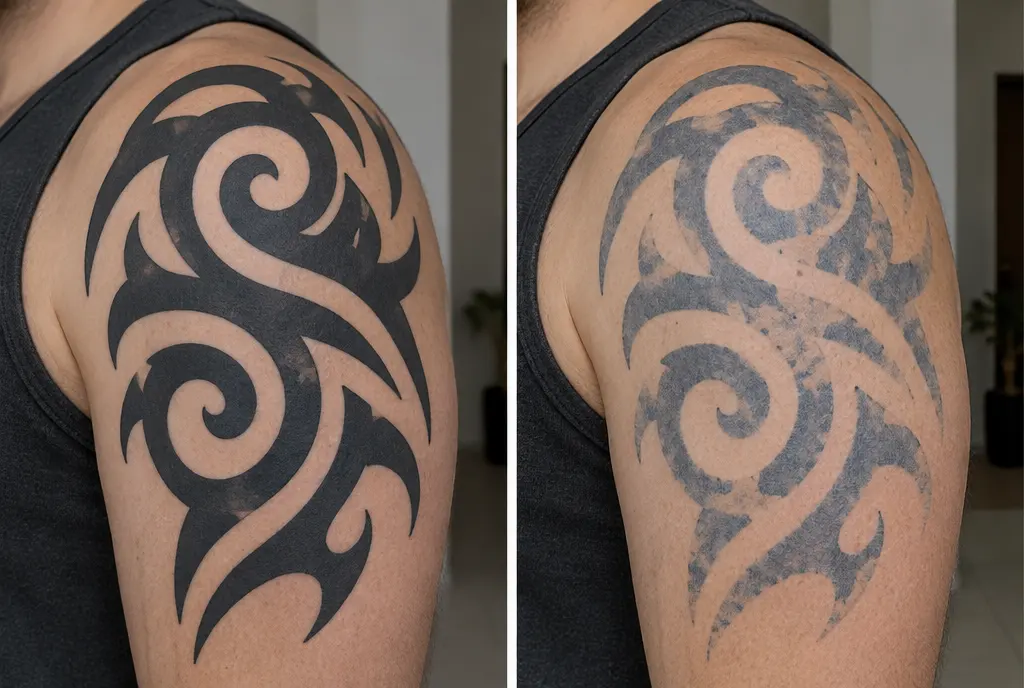
The best case. Black absorbs a very wide range of wavelengths, and the long 1064 nm wavelength of an Nd:YAG laser reaches it well while being relatively gentle on the skin’s own pigment. This is why black work makes up most of the dramatic photos online.
Red and orange
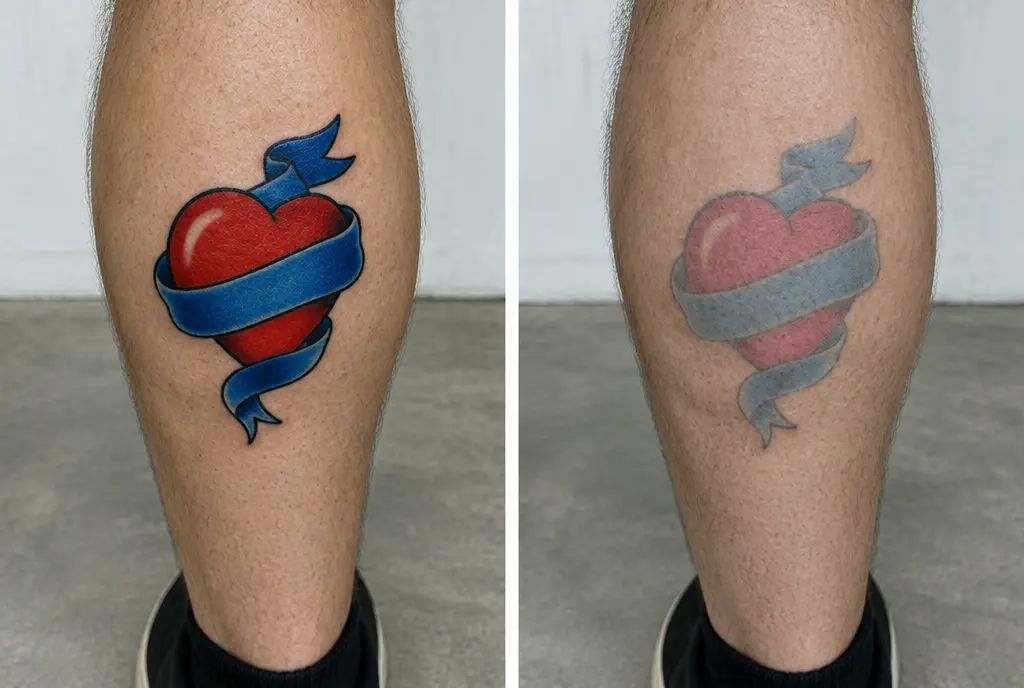
Red usually responds well to the shorter 532 nm wavelength. In the before-and-after, it typically turns pinker and paler. Orange is less predictable, and some red and orange inks can react unexpectedly, so a small test area is sensible.
Blue
Dark blue tends to clear reasonably well, and the 694 nm (ruby) and 755 nm (alexandrite) wavelengths are usually the tools for it. Light blue and turquoise are harder and may need more sessions. In photos, blue often fades to a soft grey-blue before it goes.
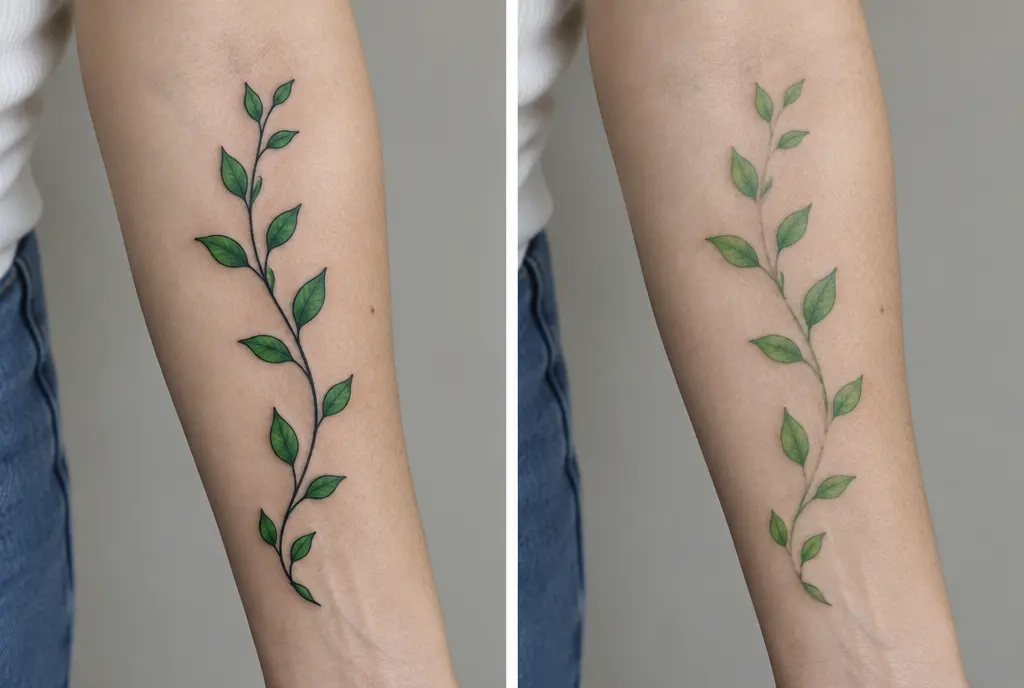
Green
Green is the classic stubborn one, and it is what Dóra’s practitioner was warning her about. It needs red-range light such as 694 nm or 755 nm, and not every clinic has those wavelengths. A common “after” for a mixed tattoo is the black outline nearly gone while the green is still clearly there.
Yellow, white and skin tones
These are the hardest. Yellow absorbs poorly at most wavelengths. White and flesh-toned inks often contain titanium dioxide or iron oxides, and these can actually darken under the laser, sometimes turning grey or black. A reputable practitioner will test a small spot first, especially on cosmetic tattoos such as lip or brow work.
Before and after by body part
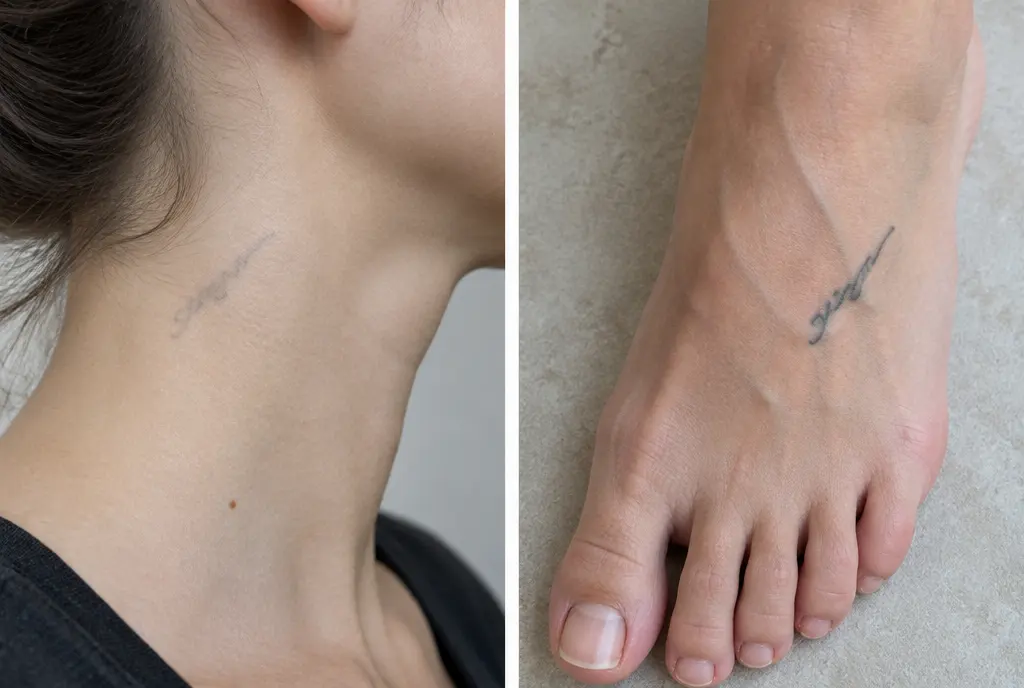
The same design can behave very differently depending on where it is. Tattoos closer to the centre of the body generally clear faster than those further out, and the usual explanation is blood and lymph supply: your body’s transport system is what carries the ink fragments away.
- Head and neck: often among the quickest to respond.
- Chest, back and shoulders: usually steady progress.
- Stomach and lower back: moderate progress.
- Upper arm and thigh: slower.
- Forearm, wrist, hand, ankle and foot: typically the slowest, so expect more sessions.
So when you look at someone’s photo of a neck tattoo that cleared quickly, don’t assume your ankle will follow the same timeline.
Q-switched or picosecond: does the laser type show in the photos?
Two main types of laser are used. Q-switched lasers deliver pulses measured in nanoseconds and have been the standard for decades. Picosecond lasers deliver much shorter pulses, which rely more on a mechanical shock than on heat to break up ink.
In theory, shorter pulses shatter ink into smaller pieces, and some studies have found good results with them, especially on stubborn colours and on tattoos that have already been treated. But the comparisons are mixed, and marketing tends to promise more than the research does. A picosecond machine with the wrong wavelength for your green won’t beat a Q-switched one with the right wavelength.
So instead of asking “is it a picosecond laser?”, try asking: which wavelengths do you have, which would you use on each colour in my tattoo, and can I see results on a similar one? You may also see Nd:YAG mentioned as if it were a type of machine that competes with these. It is the laser medium, and many Q-switched and picosecond devices use it.
How to read a before-and-after photo
Next time you are looking at a clinic’s gallery, check these things before you believe the picture.
- How many sessions? A photo without a session count tells you very little.
- How long after the last session? Skin that was treated last week still looks different from skin that has healed for months. A photo taken right after frosting tells you nothing about the result.
- Same light and angle? Strong light can wash out what is left of a tattoo. If the “after” is brighter or further away, be careful.
- Is it like your tattoo? Look for the same colours, a similar density and a similar placement. An amateur black tattoo clearing fast says little about a saturated professional piece.
- Close enough to see the skin? Ask for a close-up. Good results show normal skin texture and tone, not just missing ink.
- What is missing? Clinics show their best cases. Ask what a typical result looks like, not only the best one.
What the skin can look like afterwards
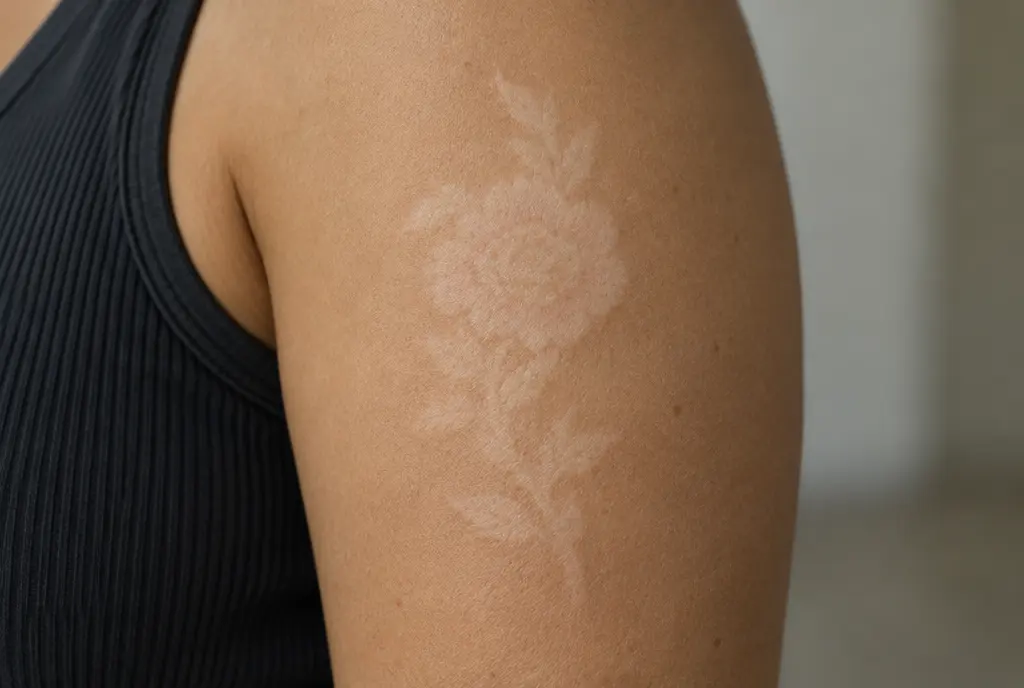
An honest “after” includes the skin, not only the ink. Temporary lightening (hypopigmentation) or darkening (hyperpigmentation) of the treated area is fairly common and often improves over months, though it can last longer, particularly on darker skin tones. Some people see a faint outline of the old design in their skin’s texture, and scarring is a risk if the settings are too aggressive or if the area isn’t cared for during healing. Picking at blisters and exposing the area to sun both make things worse.
If you have a recent tattoo, it is also worth waiting. Clinics usually want a new tattoo to be fully healed, often for at least a couple of months, before the first session.
See your own version first
Other people’s photos can only tell you so much. In InkAge, the laser preview shows what your own tattoo might look like after 3, 6 and 10 sessions, so you can picture the patchy middle stage and the likely finish before you go to a consultation. And if you are still deciding on a new tattoo, the same app shows how the design is likely to age on your skin. It is a visual estimate rather than a medical assessment, and any decision about treatment belongs with a dermatologist or a qualified laser specialist.
The short version
Dóra’s forearm didn’t look like any of the eleven photos, and that was fine. After a good consultation she knew which colour would go first, which would take longest, and which wavelength the clinic would use for it. The best before-and-after photo isn’t the most dramatic one. It is the one that looks like your tattoo, states the number of sessions, and shows healed skin in honest light.
Frequently asked questions
How much does a tattoo fade after one laser session?
Usually a noticeable but partial change, and it continues for weeks as your body clears the ink. Black tattoos often show the clearest early change. Don’t judge the result right after treatment, because frosting and swelling hide it.
Which tattoo colours are hardest to remove?
Yellow, white and skin tones are the hardest, followed by green and light blue. White and flesh-toned inks can even darken under the laser, so a small test spot comes first.
Is a picosecond laser better than a Q-switched laser?
Sometimes, especially on stubborn or previously treated ink, but the research is mixed. The right wavelength for each colour and the practitioner’s experience matter at least as much as the pulse length.
Will my skin look normal after laser tattoo removal?
Often yes, but not always right away. Lighter or darker patches are fairly common and usually improve over months, and some people keep a faint ghost image or a change in texture. Careful aftercare and sun protection help.
Are the before-and-after photos on clinic websites realistic?
They are usually real but selected: clinics show their best cases. Check the number of sessions, the time since the last one, the light and angle, and whether the tattoo resembles yours. Then ask what a typical result looks like.
Written by the InkAge editorial team from widely accepted tattoo-care practice. Figures are rules of thumb, not measurements. This is general information, not medical advice — ask your artist or a dermatologist about your own skin.
Last updated: 30 October 2026