In short
- Yes, it hurts, but usually for a short time. Most people describe each pulse as a rubber band snapping against the skin with a burst of heat, and a session on a small tattoo often lasts only a few minutes.
- Bony and thin-skinned areas such as the ribs, ankles, feet, wrists and fingers tend to hurt more than the upper arm, outer thigh or calf. Dense, dark and colourful tattoos often feel more intense in the first sessions.
- Cold air during the session, numbing cream applied beforehand and ice packs make a real difference. Anaesthetic injections exist too, but only a doctor may give them.
- Afterwards the area feels like a sunburn for a day or two. Pain that gets worse instead of better, spreading redness, pus or fever are warning signs to have checked.
In this article 11
Tom had a name on the inside of his wrist. Thin black letters, about six centimetres long, from a relationship that had ended years ago. He had finally booked a consultation for laser removal, and the night before he did what most people do: he searched for how much it hurts. The answers ranged from “barely felt it” to “worse than anything I have ever had done”, which did not help at all.
The next day he sat in the chair, the technician turned on a machine that blew cold air at his wrist, and the first pulses landed. Tom’s verdict afterwards was more useful than anything he had read: “It hurt. Properly. But it was over before I could get annoyed about it.” This article explains why both kinds of stories you read online are true, what decides where you will land, and what you can do to make it easier.
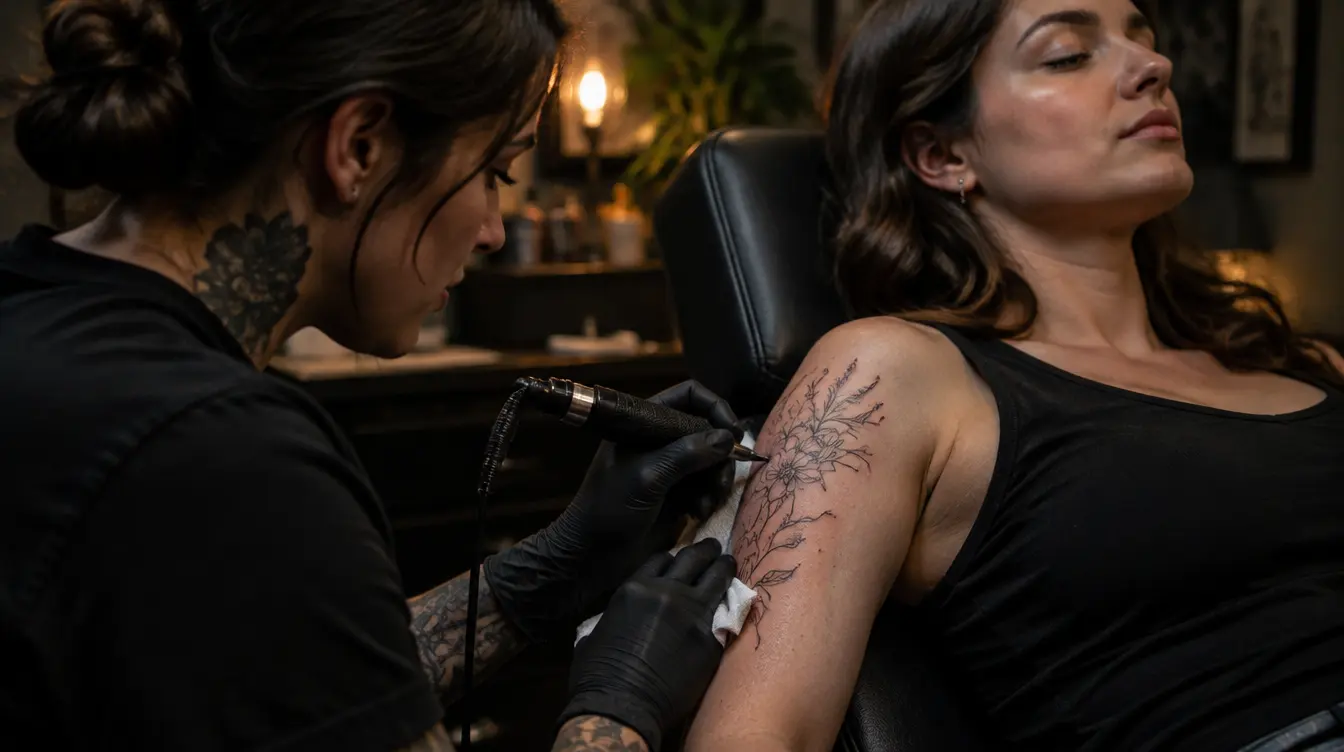
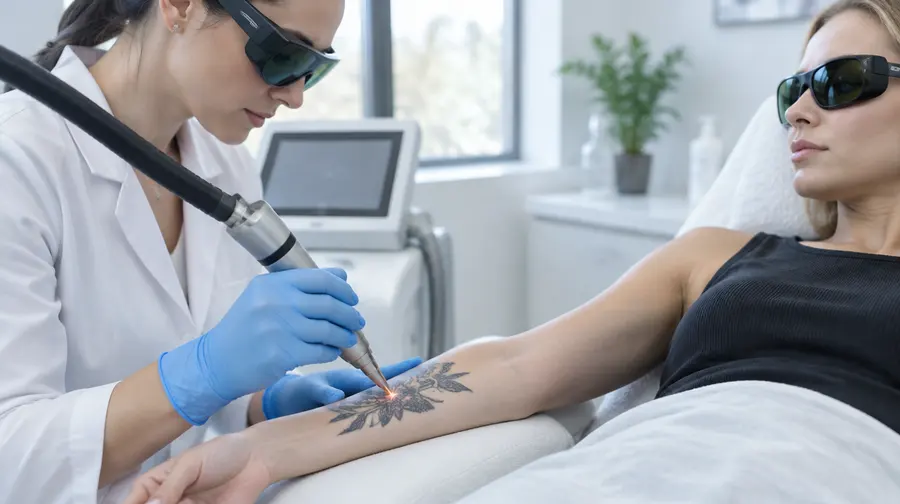
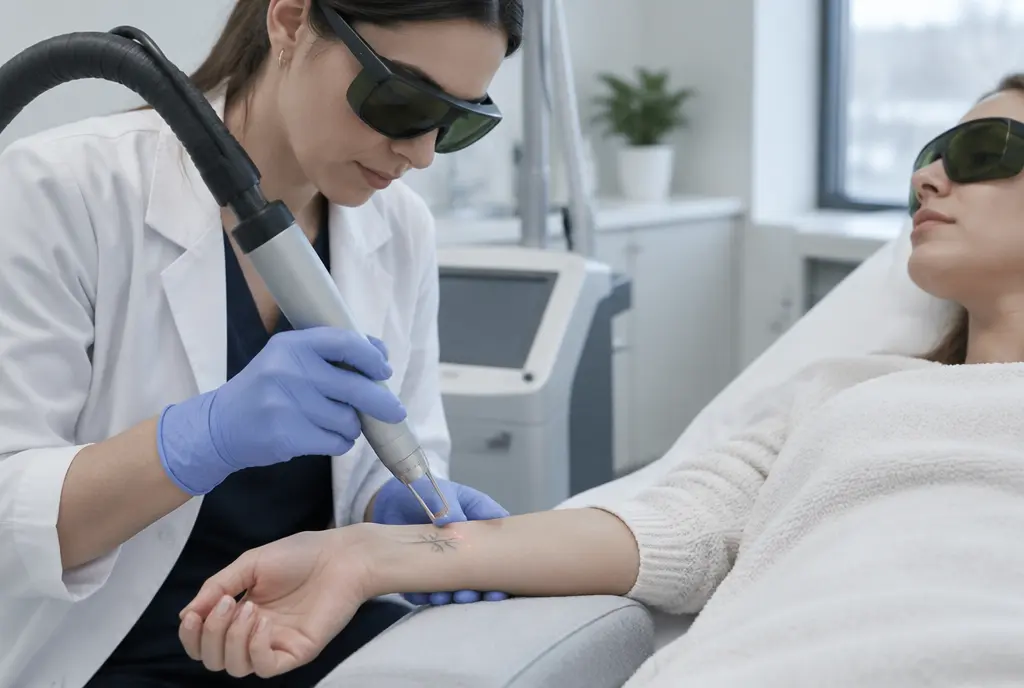
> A note on the pictures: the images in this article are illustrations made to show typical situations. They are not photos of real patients or real treatment results.
The short answer
Yes, laser tattoo removal hurts, but the pain is short and it can be made much more bearable. Most people rate it as uncomfortable to clearly painful while the laser is firing, and as a sunburn-like soreness for a day or two afterwards. Many describe it as more intense than getting the tattoo, but much shorter: a small tattoo is often done in a few minutes, while the tattoo itself may have taken an hour.
How much it hurts for you depends on a handful of things you can predict: where the tattoo is, how much ink is in it, which session you are in, what numbing you use and how tired or tense you are on the day.
Removal calculatorLaser tattoo removal calculator: how many sessions and what it costsRead alsoLaser tattoo removal: what to really expectWhat it actually feels like
A removal laser does not cut the skin. It sends extremely short, extremely strong pulses of light into it. The ink absorbs that light, heats up in a tiny fraction of a second and breaks into smaller particles that your body clears away over the following weeks. You feel each of those pulses individually.
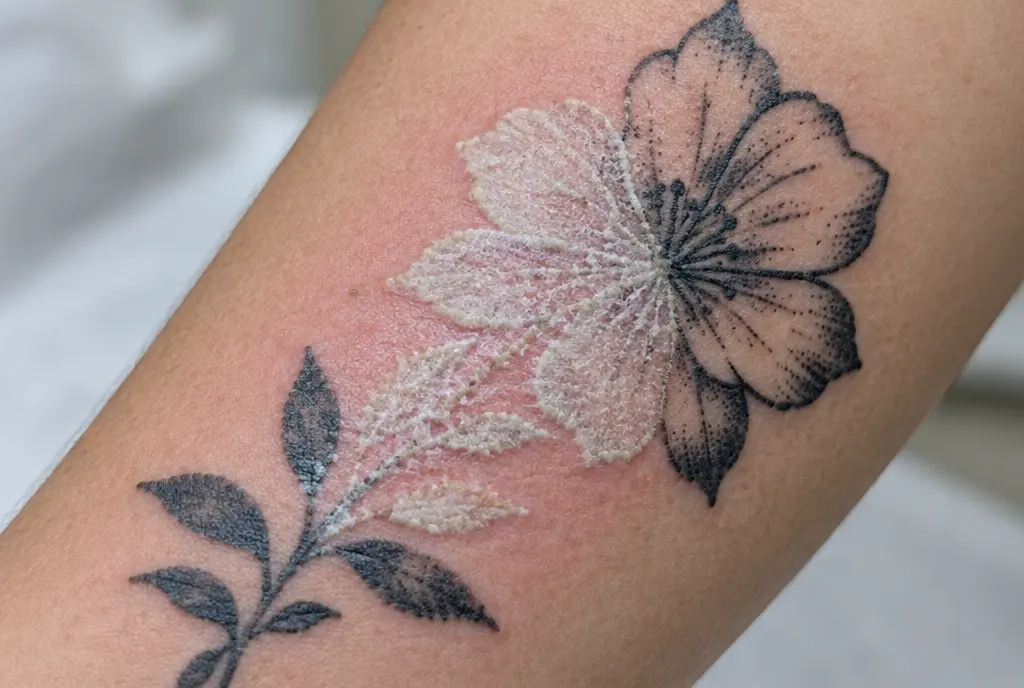
The description you will hear most often, from patients and from clinics alike, is a rubber band snapping against the skin. Each pulse is a sharp little sting. Then comes heat: as the technician moves across the tattoo, the snaps join into a hot, prickling feeling, similar to a bad sunburn or splashes of hot oil. Some people also notice a crackling sound and a faint smell, and the treated area often turns white for a few minutes. That white layer, which clinics call frosting, is gas released in the skin and fades on its own.
Each pulse lasts a fraction of a second. The sting is real, but so is how quickly it is over.
The feeling also changes during the session. The first few pulses are often the worst because they surprise you. Once the area is cooled and you know what is coming, most people settle into it. When the laser stops, the sting stops almost at once and turns into warmth and throbbing.
Is it worse than getting the tattoo?
This is the comparison everyone makes, and the answers really do differ. Getting a tattoo is a long, scratching, wearing kind of pain. Laser removal is short and sharp. Many people say each moment of removal hurts more, but the whole session is far easier to get through because it is so brief. Others find it the other way round. What almost everyone agrees on is that a good clinic with proper cooling makes a big difference, and that the anticipation is often worse than the session itself.
Pain by body area
Just as with getting a tattoo, location matters. Areas where the skin is thin, where bone sits close to the surface or where there are many nerve endings are more sensitive. Fleshy areas with more padding are easier.
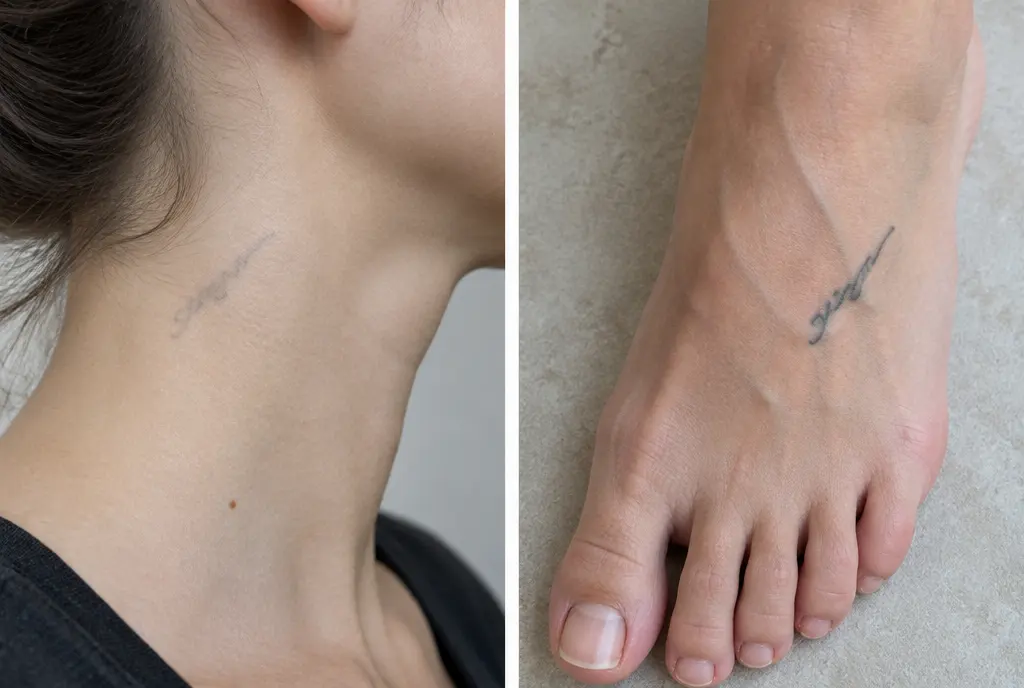
- Usually more painful: ribs, spine, ankles, tops of the feet, wrists, hands and fingers, the inner elbow, the armpit, the neck and the face.
- Usually in the middle: forearm, shoulder blade, chest, lower back and the inner thigh.
- Usually easier: the outer upper arm, the outer thigh, the calf and the buttocks.
Tom’s inner wrist sits firmly in the first group, which is why it felt sharper than a forearm would have. That is not a reason to leave a wrist or foot tattoo alone. It is a reason to take the numbing options below seriously.
Ink, colour and which session you are in
The amount of ink matters almost as much as the location. A professional tattoo with dense, saturated black or many colours absorbs a lot of laser energy, and the reaction in the skin is stronger. A thin, faded or amateur tattoo has less ink to react, so the session is often milder and shorter.
Colour plays a role too. Black absorbs the common removal wavelengths very well. Colours such as green, blue or red may need a different wavelength and sometimes extra passes, which can mean a longer session.
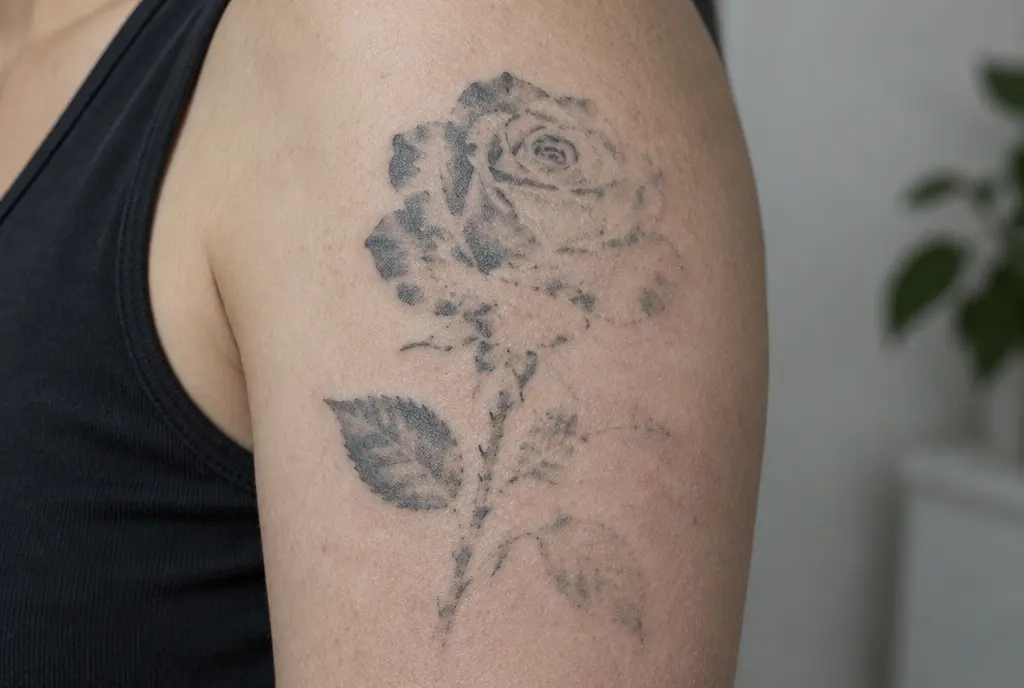
Many people find the first sessions the most intense, because that is when there is the most ink in the skin. As the tattoo fades, there is less to react to and the treatment is usually quicker. This is a common experience rather than a rule: some people feel no difference, and a session where the technician raises the energy can sting more again. Ask your clinic what to expect from your next session before it starts.
How long a session lasts
The laser part is short. A small tattoo, like Tom’s six-centimetre name, often takes only a few minutes; a palm-sized one perhaps five to ten; large pieces on the back or a full sleeve can take longer and are sometimes split over separate appointments. Add the time for numbing cream to work beforehand and for cooling and dressing afterwards, and a visit often lasts about half an hour to an hour.
Numbing options that actually help
There is no reason to grit your teeth through a session without help. Clinics use a combination of the following, and you can ask in advance which ones they offer.
Cold air during the session
Many clinics blow very cold air onto the skin before, during and after the laser passes. It numbs the surface and calms the heat, and it is the method most patients notice first. In one study of 166 patients treated with different lasers, most clearly preferred cold-air cooling over the methods they had had before. If you are comparing clinics, ask whether they use a cooling device.
Numbing cream
Numbing creams, usually containing lidocaine, block the pain signals from the top layers of the skin. They need time to work: typically 30 to 60 minutes, often under a layer of cling film, as your clinic tells you. They take the edge off the sting rather than removing it completely. Use them only on the treated area and in the amount your clinic recommends, and ask before using a cream you bought yourself, especially on a large tattoo, because spreading large amounts over big areas of skin is not safe.
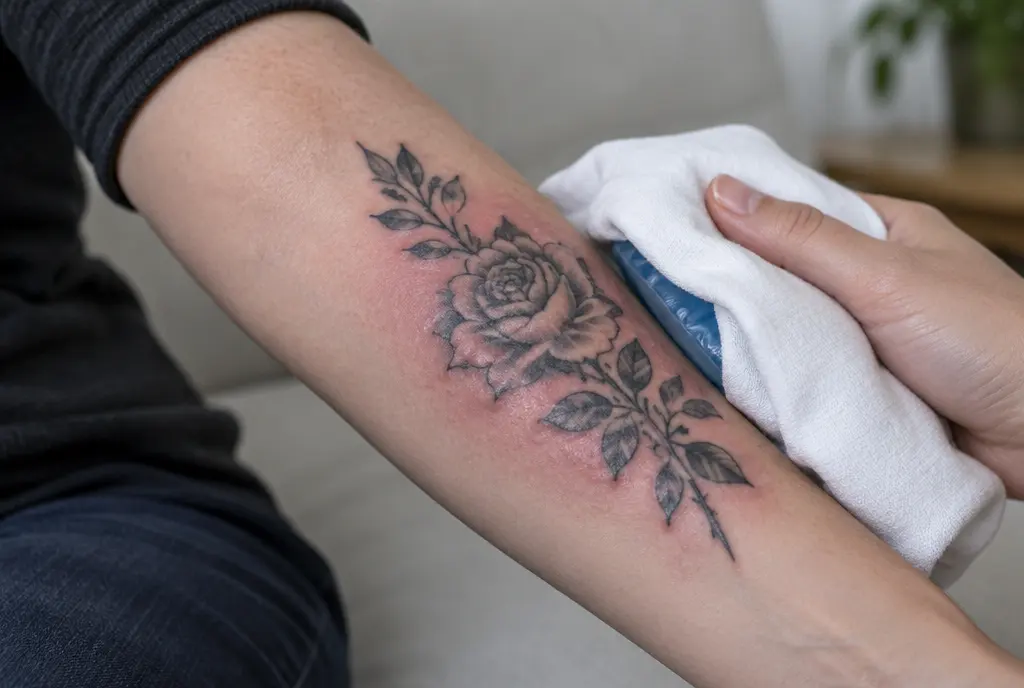
Ice and cold packs
An ice pack wrapped in a cloth for a few minutes before the session and after it reduces sensation and swelling. Never put ice directly on the skin, and do not use it on blistered skin.
Anaesthetic injections
A local anaesthetic injected under the skin numbs the area almost completely. This is a medical procedure that only a doctor may perform, so it is offered mainly in clinics run by dermatologists or other physicians, usually for small, very sensitive areas. The injection itself stings briefly. It is not something a tattoo studio or beauty salon can offer, and you should never be asked to inject yourself.
Small things that help
- Sleep, eat and drink water before the session. Being tired, hungry or dehydrated makes pain feel stronger.
- Skip alcohol the day before and the day of the session.
- Breathe out slowly as the pulses come, and ask for short breaks. A good technician will pause when you need it.
- Bring a distraction, such as music in your headphones or a stress ball in the other hand.
- Ask about pain relievers in advance. Some clinics suggest paracetamol and ask you to avoid aspirin before treatment, because it can increase bruising. Follow their advice and your doctor’s, especially if you take other medicines.
What the days after feel like
Once the laser stops, the sharp pain is over. What follows is more like a sunburn that is gradually getting better. A typical course looks like this:
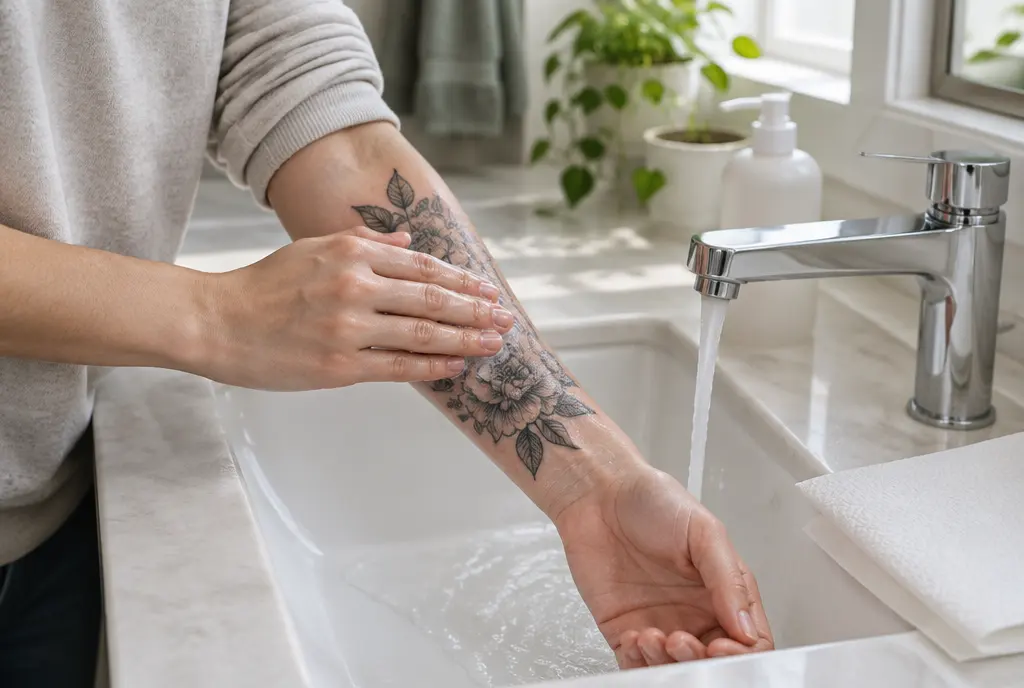
- The first hours: warmth, throbbing and tenderness, redness and swelling. Cool compresses help. The white frosting fades within minutes to an hour.
- Days one to three: the area may stay red, swollen and sore to touch. Small blisters can appear within a day or two, and pinpoint bleeding or bruising is possible. This is a normal reaction.
- The first week: blisters dry out and thin scabs or crusts form. The skin begins to itch, which is a sign of healing. Do not pop blisters or scratch scabs.
- Weeks one to two: the scabs come off by themselves and the skin underneath may look pink or lighter for a while. Most people feel nothing by now except the occasional itch.
During those days, follow the aftercare your clinic gives you: keep the area clean, protect it with a thin layer of the ointment they recommend and a dressing if needed, wear loose clothing over it, and keep it out of the sun. Tom wore a soft wristband for a few days, mostly so his watch strap did not rub the healing skin.
When pain is a warning sign
Normal post-laser soreness has one clear pattern: it is at its worst on the first day and gets better after that. Pain that follows a different pattern needs attention.
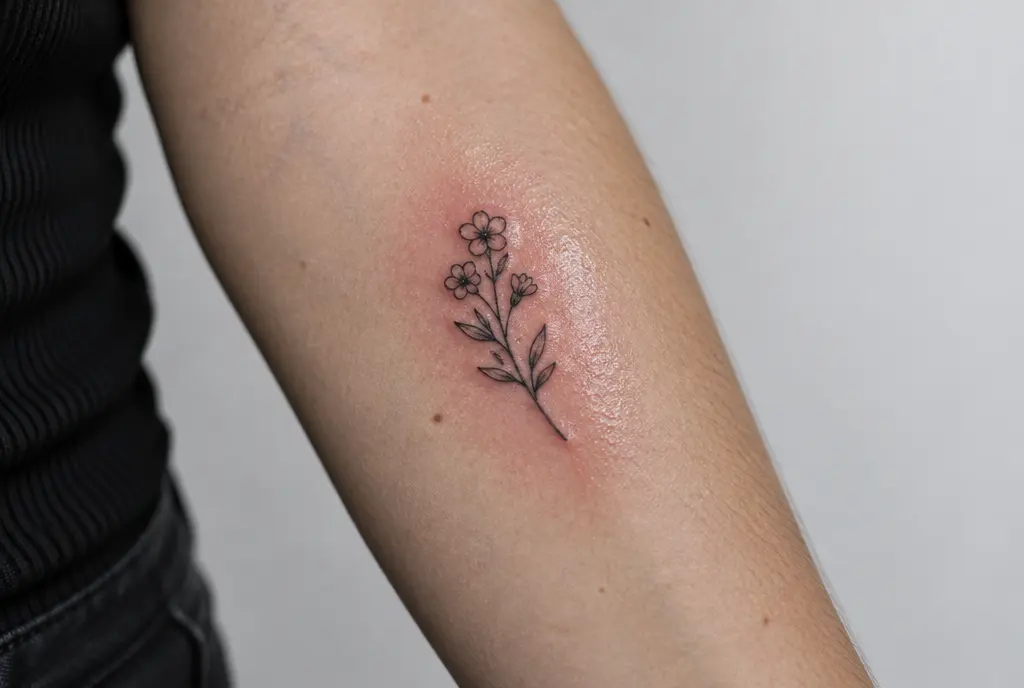
Contact your clinic or a doctor if you notice:
- Pain that gets worse after the second or third day instead of easing.
- Redness, swelling or warmth that spreads beyond the treated area, or red streaks running away from it.
- Pus or a cloudy, smelly discharge from blisters or scabs.
- Fever or feeling generally unwell.
- Severe pain that does not improve with the usual pain relief, or heavy bleeding.
- Very large blisters, or blisters that keep coming back.
These can be signs of an infection or of a burn that needs treatment. Spreading redness with fever or red streaks needs urgent care. Most removals heal without any of this, but it helps to know what normal looks like so you can tell the difference.
Read alsoHealing after laser tattoo removal: a day-by-day timeline, aftercare and how to avoid scarsWhat it means for you
Laser tattoo removal hurts, and anyone who tells you otherwise is selling something. But the pain comes in short bursts, it is strongest in the first sessions and in bony areas, and cooling, numbing cream and a patient technician take a lot of the edge off. The days after feel like a sunburn that is slowly getting better. If the pain goes the other way, have it checked.
Tom needed several sessions over more than a year. By the end, he said the worst part had been the night before the first one. If you are still weighing whether removal is worth it, or whether fading the tattoo would be enough, it can help to see how it is likely to look over time either way. With InkAge you can upload a photo of your tattoo and see how it may age over the years, which can make the decision a little clearer.
Frequently asked questions
Does laser tattoo removal hurt more than getting a tattoo?
Many people find each moment sharper, but the session is much shorter: a small tattoo often takes only a few minutes. Others find it easier than the tattoo. Cooling and numbing cream make a big difference either way.
What does laser tattoo removal feel like?
Most people compare each pulse to a rubber band snapping against the skin, followed by heat similar to a bad sunburn. The sting stops almost as soon as the laser does, and the area stays warm and sore for a day or two.
Can I use numbing cream before laser tattoo removal?
Usually yes. Lidocaine creams are applied about 30 to 60 minutes beforehand, often under cling film. Ask your clinic first, use only the recommended amount and only on the treated area, especially if the tattoo is large.
Which body areas hurt most during laser removal?
Areas with thin skin, bone close to the surface or many nerve endings: ribs, spine, ankles, feet, wrists, hands, fingers, neck and face. The outer upper arm, outer thigh and calf are usually easier.
How long does it hurt after laser tattoo removal?
Usually a day or two of sunburn-like soreness, then it eases. Blisters and scabs can itch for one to two weeks. Pain that gets worse after the second or third day, spreading redness, pus or fever should be checked by a doctor.
Sources
- Tattoo Removal (Cleveland Clinic)
- Does Tattoo Removal Hurt? (Healthline)
- Understanding Laser Tattoo Removal (University of Utah Health)
- Cold air in laser therapy: first experiences with a new cooling system (Lasers in Surgery and Medicine, 2000)
- Efficacy of a new cryotherapy device on pain relief during laser tattoo removal (Chung-Ang University)
Do you run a laser clinic? Show guests their own tattoo after 3, 6 and 10 sessions
Written by the InkAge editorial team from widely accepted tattoo-care practice. Figures are rules of thumb, not measurements. This is general information, not medical advice — ask your artist or a dermatologist about your own skin.
Last updated: 8 November 2026