In short
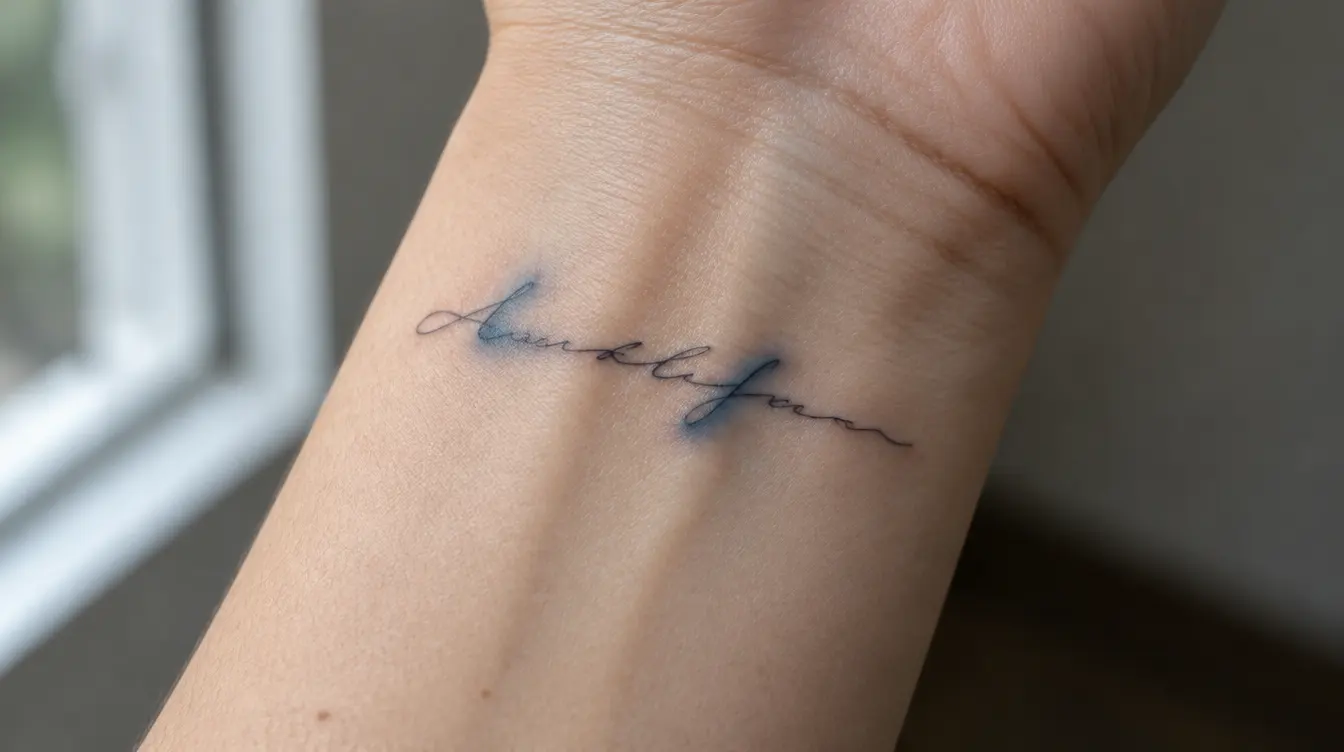
- A blowout happens when ink goes deeper or wider than it should and spreads under the skin, leaving a soft, bluish blur next to a line.
- Redness, puffiness, bruising and a shiny or cloudy look are normal in the first weeks. A blowout is the blur that is still there once the skin has fully healed.
- Judge it at around four to six weeks, in daylight, next to a photo from day one. Don’t panic in week one.
- Small blowouts can often be hidden with bolder lines or shading; bigger ones may need a cover-up or laser to lighten the blur. Creams and home remedies don’t remove ink.
In this article 9
Lili noticed it on the eighth day. She was brushing her teeth, glanced down at the little word on her inner wrist, and saw something she was sure hadn’t been there before: a faint blue shadow hugging one side of the “b”, as if the ink had sighed and leaned out of the line. She tilted her arm under the bathroom light. Then under her phone torch. Then she sent a photo to three friends and her artist, in that order, and spent the evening reading forum threads with titles in capital letters.
If you are reading this with a fresh tattoo on your arm and a knot in your stomach, take a breath first. A lot of what looks alarming in the first two weeks is just healing, and even a real blowout is rarely a disaster. This guide will help you tell the two apart, understand why blowouts happen, and know what your realistic options are if yours turns out to be the real thing.
What a blowout actually is
When you get tattooed, the needle places ink in the dermis, the layer just beneath the surface that doesn’t shed. Artists aim for a fairly narrow depth: deep enough that the ink stays, shallow enough that it stays put. A blowout happens when ink ends up deeper or travels sideways beyond the line, into the looser tissue underneath, where it spreads out like a drop of ink on a paper towel.
Because that ink sits deeper, you see it through more layers of skin, and skin scatters light. That is why a blowout usually looks bluish or grey-blue and soft-edged, even when the tattoo was done in black. It typically runs along one side of a line or around the ends of strokes, and it looks the same whether you press on the skin or not.
One important thing: a blowout is a cosmetic problem, not a health problem. It doesn’t mean the tattoo is infected, and it doesn’t hurt more than the rest of the tattoo. If you do see signs of infection, such as increasing pain, heat, swelling that gets worse after the first few days, pus or fever, that is a separate matter and a reason to see a doctor.
A blowout is ink in the wrong layer of skin. It looks dramatic, but it is a design problem, not a medical one.
Is it a blowout or just healing?
This is the question that sends most people into a late-night search spiral, so let’s go through the usual suspects. In the first two to three weeks, several completely normal things can look like a blowout.
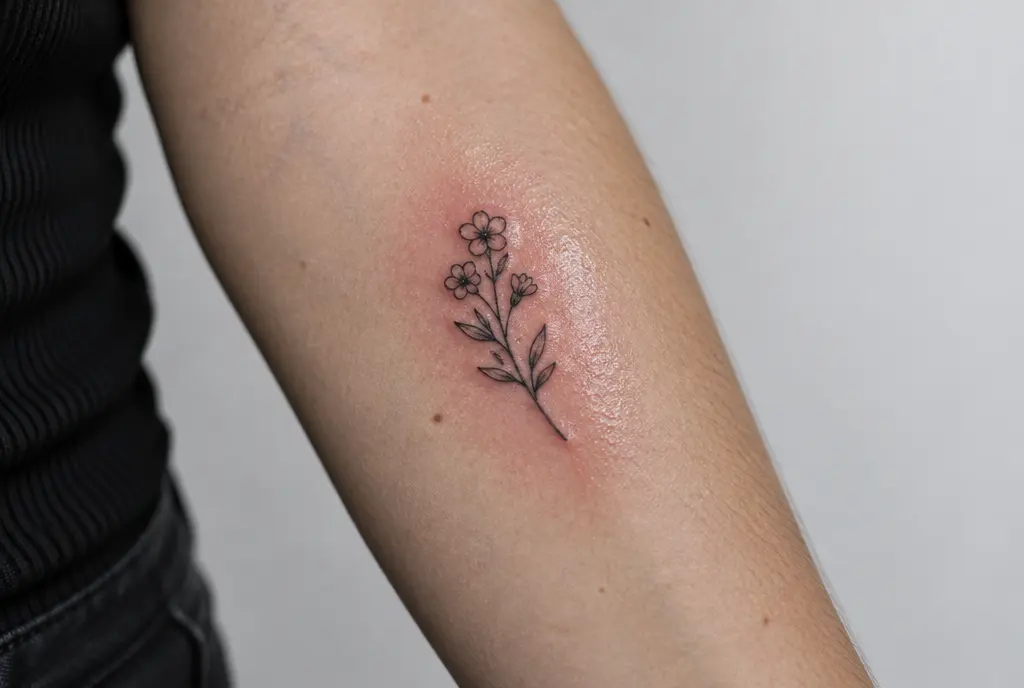
- Redness and swelling. Fresh tattoos are puffy and pink for a few days. The swelling can make lines look softer and wider than they are.
- Bruising. Especially on thin or bony skin, a fresh tattoo can bruise. A bruise is purple, yellow or greenish, it isn’t limited to the edge of a line, and it fades within a week or two.
- The “milky” stage. Around the second week, a thin layer of new skin forms over the tattoo and makes it look cloudy or dull. It clears up as the skin settles.
- Ointment and plasma. A shiny film can make lines look blurred in photos, especially with flash.
A blowout behaves differently. It usually becomes visible within the first days and doesn’t fade as the skin heals. It has a recognisable blue-grey tone, it hugs the line, and once the redness, bruising and cloudiness are gone, it is still there.
The four-to-six-week rule
Skin looks healed on the surface after two to four weeks, but the deeper layers keep settling for longer. That is why most artists ask you to wait four to six weeks before judging anything. By then, normal healing has finished its show, and whatever blur is left is the real result.
Why blowouts happen
Blowouts are usually the result of a few small things combining, and they can happen even to experienced artists on the wrong day or the wrong patch of skin.
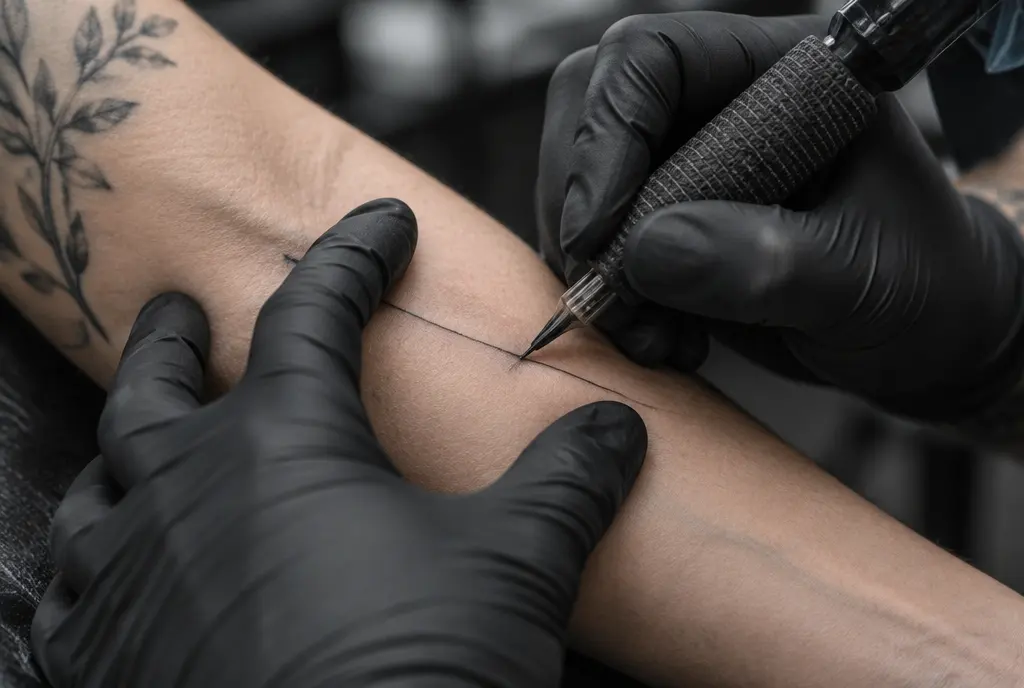
- Depth. If the needle goes too deep, ink can reach the layer beneath the dermis and spread.
- Angle. Pulling a line with the machine tilted too much can push ink sideways rather than straight down.
- Skin stretch. Artists stretch skin to make it a firm, even surface. Too little stretch and the needle catches; too much, and the skin can bounce back and shift where the ink lands.
- Movement. A sudden flinch, a cough or a twitch at the wrong moment can drive the needle deeper for a split second.
- Thin skin. Some areas simply leave less margin for error, because the dermis is thinner there.
Where blowouts are most common
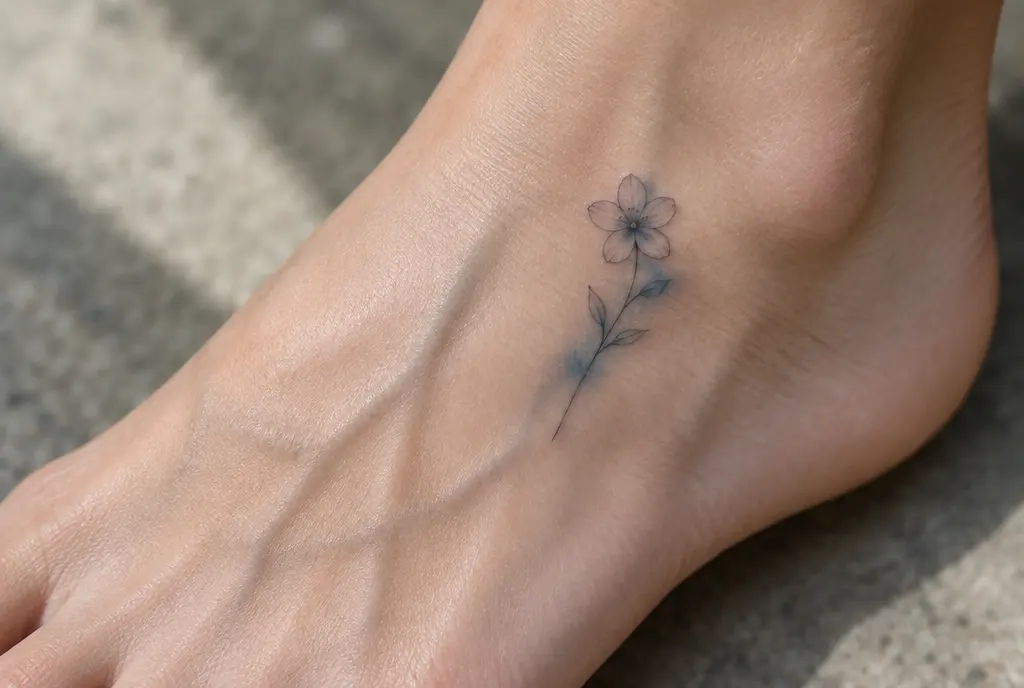
The usual trouble spots are places where skin is thin, loose or close to bone: the inner wrist, the inner arm and the crook of the elbow, the top of the foot and the ankle, the hands and fingers, and the ribs. Fine line and single-needle work is more likely to show a blowout too, not because it causes more of them, but because a little blur next to a hairline is far easier to see than next to a bold line.
This is also why a design that would be fine on an outer upper arm may be a gamble on a delicate inner wrist. It isn’t a reason to avoid those spots, but it is a reason to pick an artist who has plenty of healed work in exactly that kind of place.
What to do if you think you have one
Start gently. Most blowouts don’t need anything urgent, and the worst thing you can do is panic-book a fix on top of skin that is still healing.
- Keep doing normal aftercare. Clean, light moisturiser, no picking, no sun. Nothing you put on the skin will pull ink back up.
- Wait out the full healing time. Give it four to six weeks before you decide anything.
- Photograph it properly. Daylight, no flash, same angle as your day-one photo.
- Talk to your artist. Send the photos calmly. Most reputable artists want to know, and many will look at it for free and suggest a fix.
- Decide based on how it looks from a normal distance. A small halo that is obvious from ten centimetres away may be invisible from across a table.
How blowouts are fixed
Not every blowout needs fixing. Many people decide, once the tattoo has healed and they have stopped staring at it, that they can live with a slightly soft edge. If you do want to do something, these are the realistic options.
Hiding it in the design
This is the most common fix for small blowouts. The artist goes over the affected area with a slightly bolder line, adds shading or a shadow on the side where the blur is, or works the blur into a new element such as a leaf, a swirl or a background texture. Done well, nobody will ever know. It does change the design a little, usually towards something bolder, so it is worth talking through what the finished piece will look like.
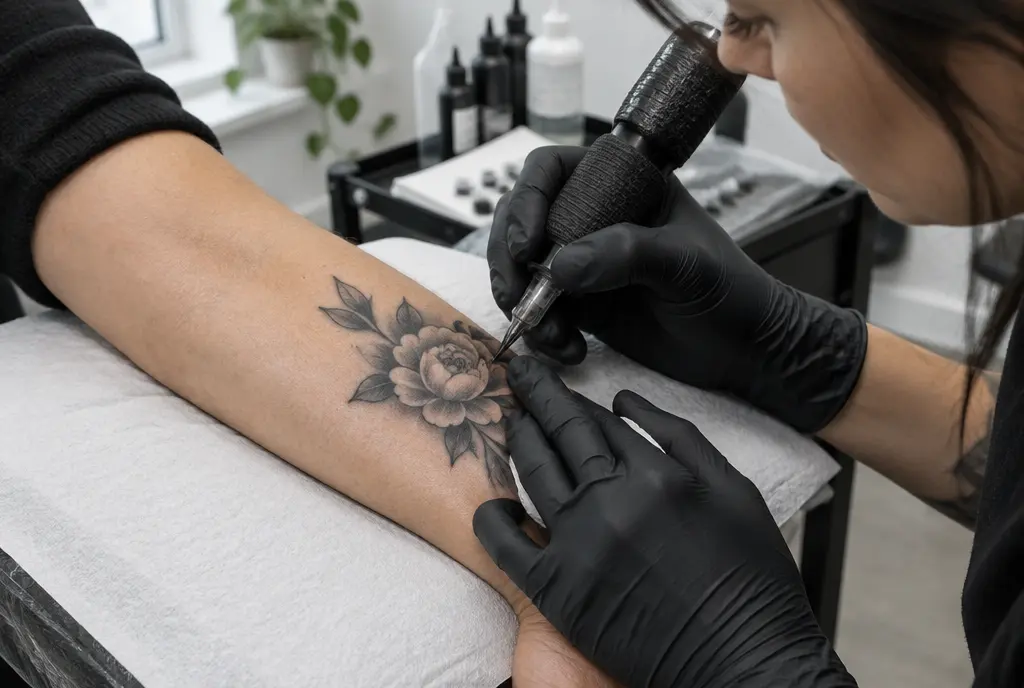
Cover-up
If the blowout is large, or affects several lines, a cover-up may be the cleaner answer: a new, usually larger and darker design that absorbs the old one. That gives the artist more freedom, but it means a bigger tattoo than you originally planned.
Laser
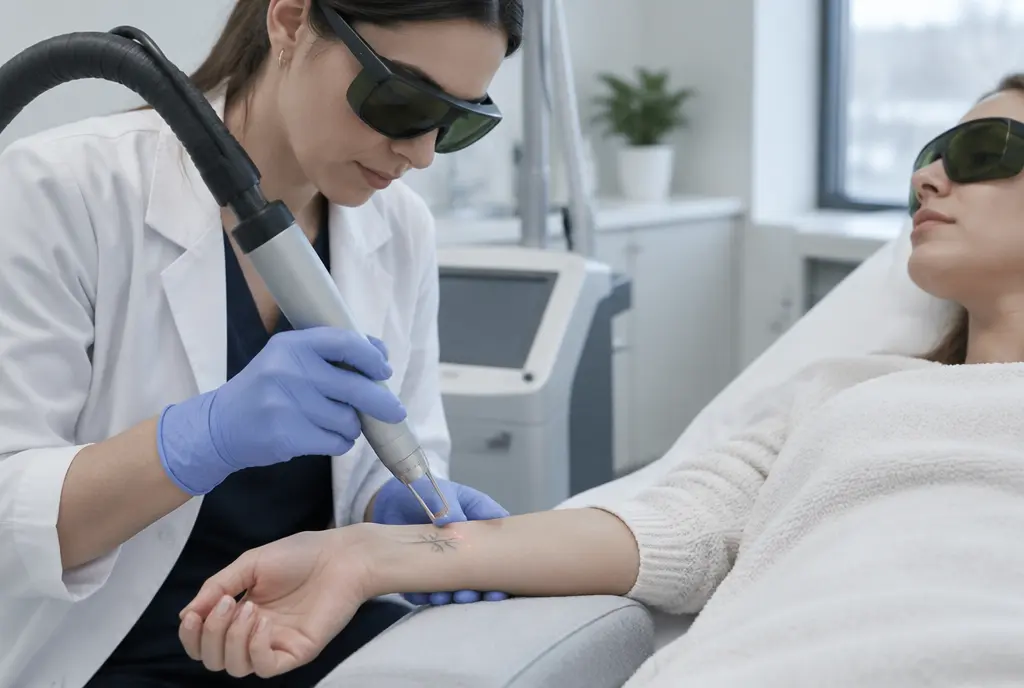
Laser treatment can lighten the blurred ink so that the rest of the tattoo reads cleanly again, or prepare the area for a cleaner rework. It usually takes several sessions spaced weeks apart, results vary, and it isn’t right for everyone. Talk to a dermatologist or a qualified laser specialist, and ask to see their before-and-after results on similar cases.
What doesn’t work
Removal creams, lemon juice, salt scrubs and other home remedies don’t remove ink from the dermis. At best they do nothing; at worst they irritate or scar the skin and make any later fix harder. A concealer or a skin-tone makeup can soften the look for a photo or an event, and that is about as far as surface products go.
How to lower your chances next time
You can’t eliminate the risk completely, but a few choices tilt the odds strongly in your favour.
- Look at healed work, not fresh photos. Ask your artist for pictures of their tattoos at least a few months old, ideally in the same placement and style as yours.
- Be honest about the spot. If you want very fine work on thin skin, ask the artist directly how they feel about it. A good artist will tell you if a slightly bolder line or a different placement would be safer.
- Stay still and say when you need a break. Pausing is far better than flinching mid-line.
- Arrive rested and fed. Being tired, hungry or hungover makes it harder to sit still, and alcohol can make you bleed more during the session. Ask your artist about anything you take that affects bleeding.
- Size it sensibly. Tiny, dense designs leave little room for any spread. A little extra size gives both you and the artist margin.
See it before the needle touches your skin
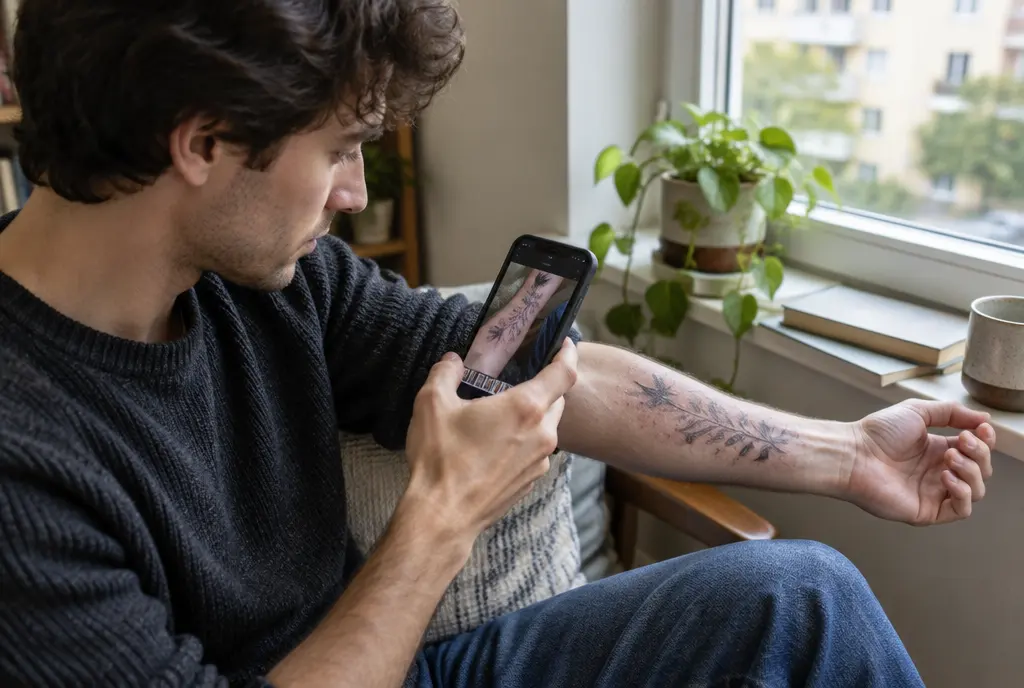
Blowouts are about what happens in the first weeks. Ageing is about what happens over the next decades, and the two have a lot in common: both are kinder to bold, well-sized designs than to tiny, delicate ones. In InkAge you can place your design on a photo of your own skin, at the size you have in mind, and see it fresh, healed and at 10, 30 and 50 years.
If the preview shows the fine details merging even without a blowout, that is a strong hint to go a little bigger or a little bolder, which is exactly the change that also makes a blowout less likely and easier to hide. The longevity score and the “Make it last” version help you have that conversation with your artist before you book.
The short version
If you are in week one and something looks blurry, it is probably just healing. If the blue haze is still hugging a line at six weeks, it is likely a blowout, and it is fixable more often than not, usually by an artist with a slightly bolder line rather than by anything dramatic. Take good photos, talk to your artist, skip the miracle creams, and give your skin the time it needs. Lili, by the way, ended up with a tiny shadow drawn in on purpose. These days people think it was always part of the design.
Frequently asked questions
How soon does a tattoo blowout show up?
Usually within the first days to two weeks, once the initial swelling goes down. The key difference from normal healing is that a blowout doesn’t fade as the skin heals, so judge it at around four to six weeks.
Can a tattoo blowout go away on its own?
A real blowout doesn’t disappear, because the ink sits deeper than it should. What often does go away is swelling, bruising or the cloudy healing stage, which can look like a blowout in the first weeks. Some blowouts soften slightly as the skin settles.
Is a tattoo blowout dangerous?
No, a blowout is a cosmetic issue, not an infection or an injury. If you notice increasing pain, heat, swelling that keeps getting worse, pus or fever, that is a different problem and you should see a doctor.
Can a blowout be fixed?
Often, yes. Small blowouts are usually hidden with a slightly bolder line or added shading once the tattoo has healed. Larger ones may need a cover-up, and laser can lighten the blurred ink. Talk to your artist first, and to a qualified specialist about laser.
Who is at fault for a blowout?
Usually it comes down to needle depth, angle or skin stretch, which are the artist’s side, but thin skin and sudden movement play a part too. Most reputable artists will look at a blowout and discuss a fix; going back to them calmly with good photos is the best first step.
Written by the InkAge editorial team from widely accepted tattoo-care practice. Figures are rules of thumb, not measurements. This is general information, not medical advice — ask your artist or a dermatologist about your own skin.
Last updated: 24 October 2026