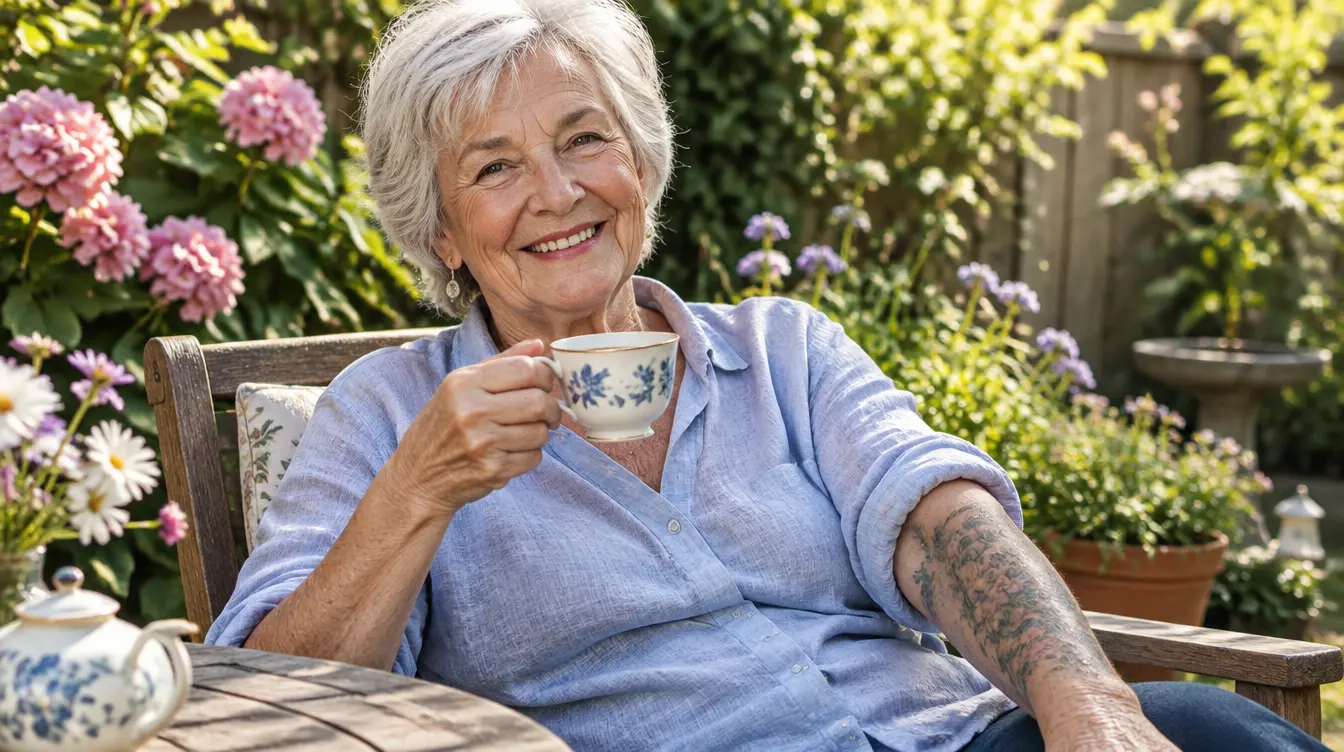
In short
- As skin ages it loses collagen and elasticity, gets thinner and creases. The tattoo moves with it: it softens, loosens and follows every wrinkle.
- The ink itself keeps slowly spreading and fading, so by your seventies most tattoos read through their overall shape rather than fine detail.
- Spots that stay covered and don’t sag much age kindest; hands, neck, chest and the inner upper arm show skin changes most.
- Keep tattoos clear of moles so skin checks stay easy, protect them from the sun, and expect touch-ups on older skin to heal more slowly.
In this article 9
Sooner or later, everyone with a tattoo hears the question. Sometimes it comes from a parent, sometimes from a stranger at a bus stop: “And what will that look like when you’re eighty?” It is usually meant as a warning. The funny thing is that there is a perfectly good answer, and it is not the one the person asking expects.
Tattoos on older skin are no longer rare. Many people who got tattooed in the seventies, eighties and nineties are now in their sixties and seventies, and plenty of them will tell you they wouldn’t trade their ink for anything. Some tattoos look lovely at eighty. Some look like a shadow of what they were. This article is about what makes the difference, without the scare tactics and without pretending nothing changes.
Your skin is the canvas, and the canvas changes
Most of what happens to a tattoo in old age isn’t about the ink at all. It is about the skin around it. Over the decades a few things change, at different speeds for different people.
- Collagen and elastin decline. These are the fibres that keep skin firm and springy. With less of them, skin becomes looser, creases more easily and doesn’t snap back the way it used to.
- Skin gets thinner. Both the outer layer and the dermis, where the ink lives, become thinner and more delicate. Ink can look slightly closer to the surface and a little less crisp.
- Texture changes. Fine lines, crepey patches and, eventually, deeper wrinkles appear, especially on areas that have seen a lot of sun.
- Sun damage shows up. Years of UV exposure leave age spots, uneven tone and broken capillaries. On a tattooed area, these sit right on top of the design.
- Volume shifts. Fat and muscle under the skin change with age and weight, so skin that was stretched over a toned arm may sit differently decades later.
A tattoo is just pigment held in that skin. When the skin folds, the design folds. When it loosens, the design loosens. When age spots appear, they appear on the tattoo too. None of this is specific to tattoos; it is simply easier to notice when there is a drawing to compare against.
Meanwhile, the ink keeps doing its own thing
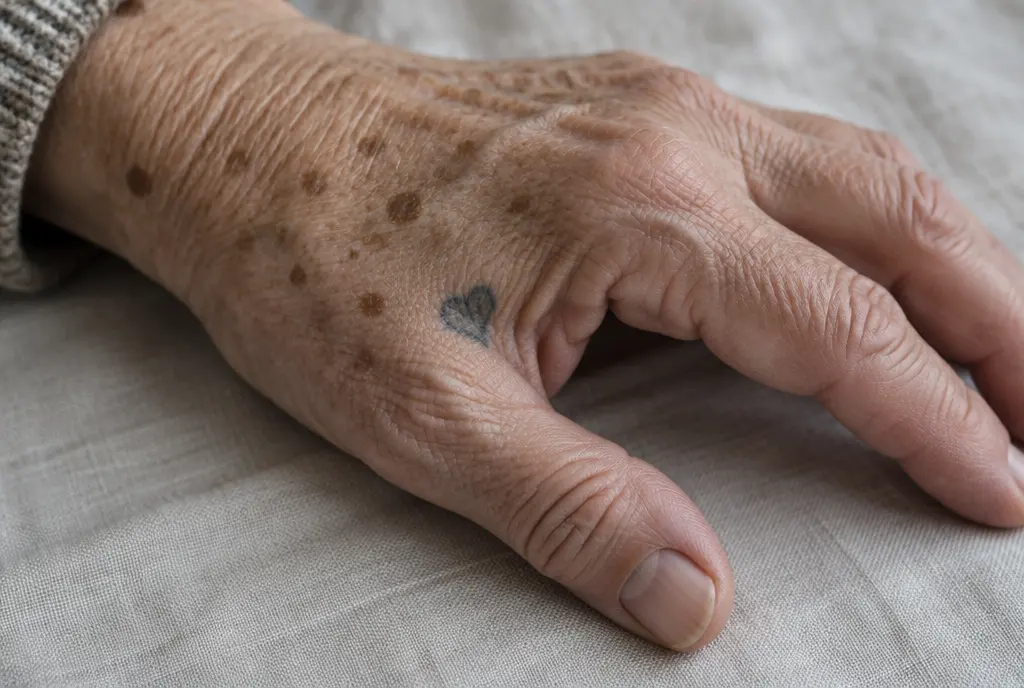
On top of the skin changes, the pigment keeps the slow habits it has had from the start. Your immune cells keep capturing and releasing it, and over the decades lines spread a little further and colours fade a little more. Artists often estimate the spread at roughly a tenth of a millimetre per decade.
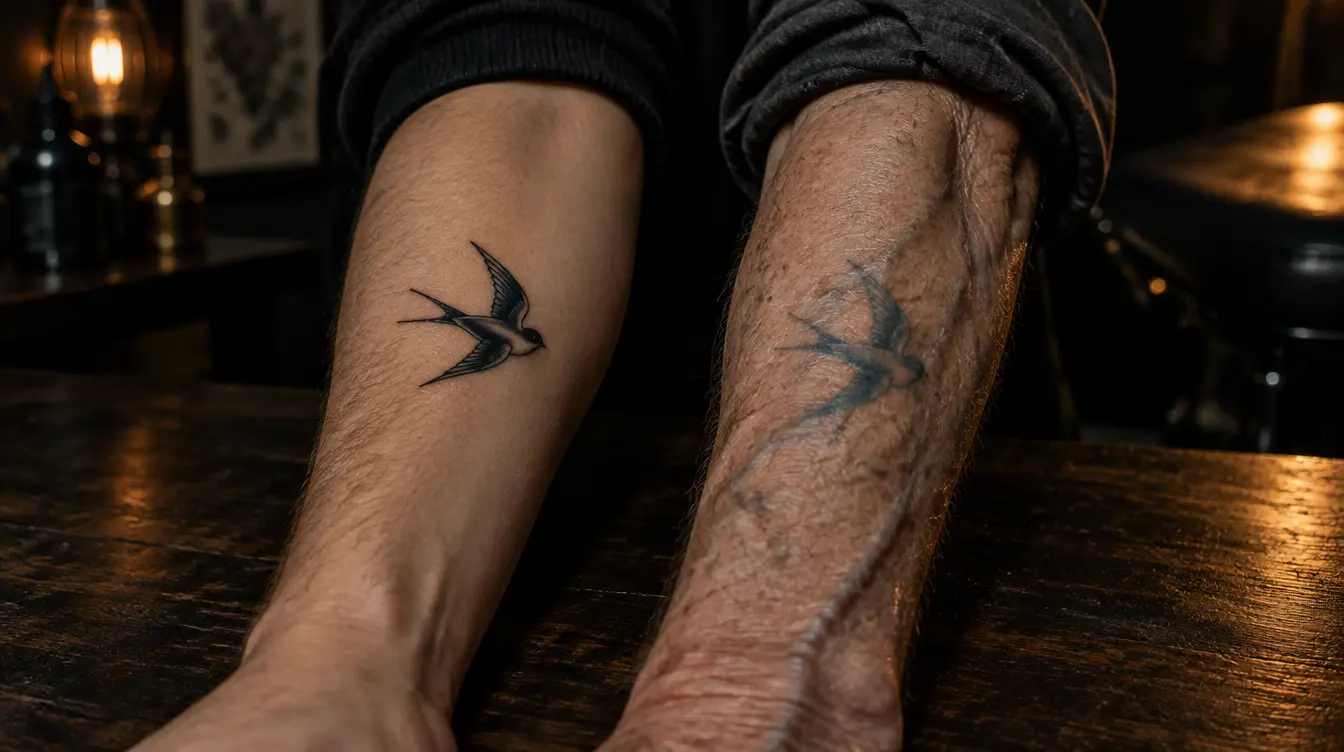
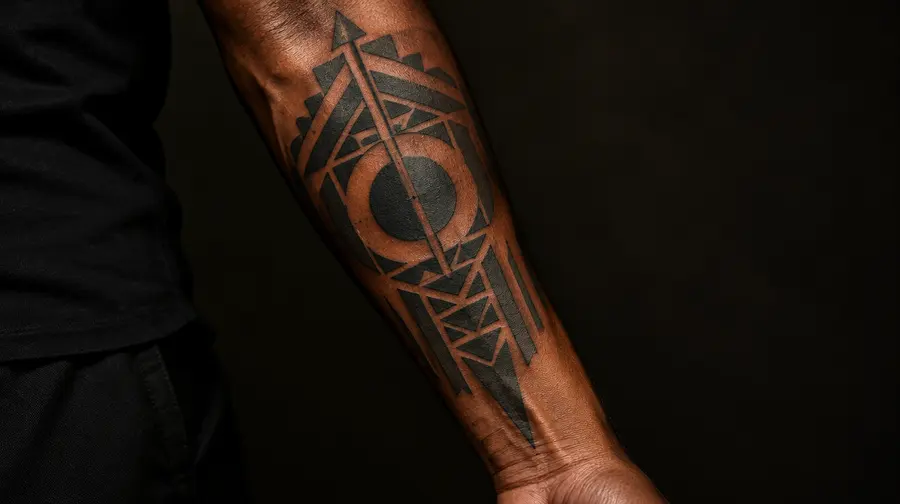
By your seventies, a tattoo you got at twenty has had half a century of that. Lines that were two millimetres thick might be noticeably wider, gaps that were narrow may have closed, and pale colours are likely to be much softer. What remains strongest is what was strongest at the start: solid black, bold outlines and big shapes.
At eighty, a tattoo speaks in its silhouette. Make sure it has one worth hearing.
Not every part of the body ages the same way
Where a tattoo sits matters even more in later life than it does at thirty, because some areas show skin ageing much more than others.
Areas that tend to age kindly
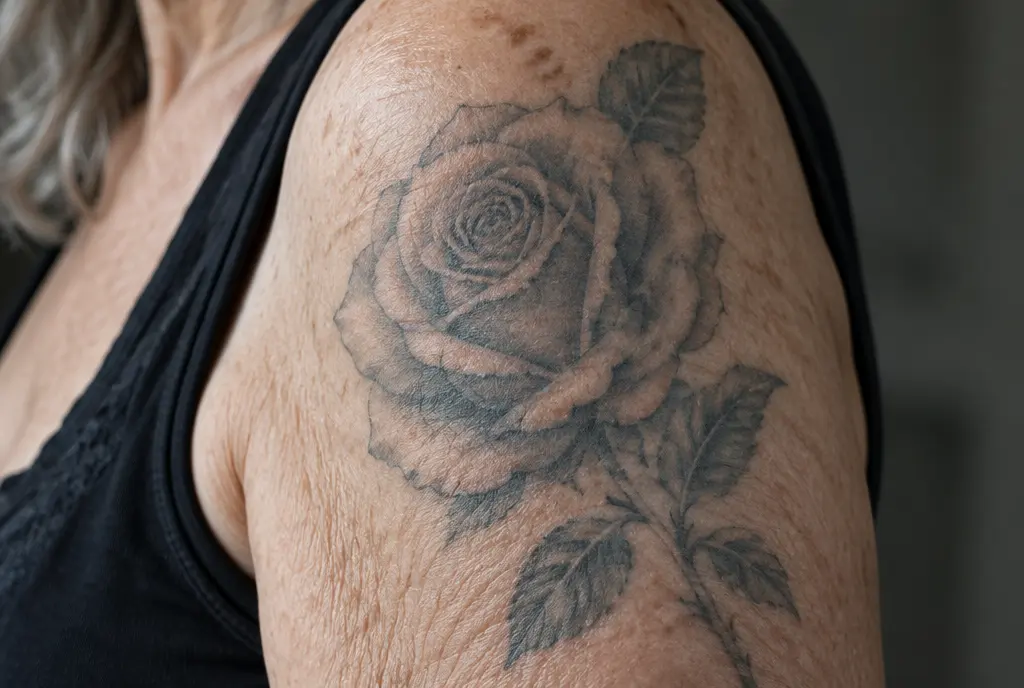
The outer upper arm, shoulder, upper back, calves and thighs often keep a tattoo looking good for a very long time. They are usually covered, the skin there is relatively thick, and while it changes, it doesn’t tend to fold dramatically.
Areas that show the most change
- Hands and fingers: thin skin, constant washing and decades of sun. Hand tattoos show both ink spread and skin ageing early.
- Neck and chest: delicate skin that creases and sees a lot of sun, especially the V of the neckline.
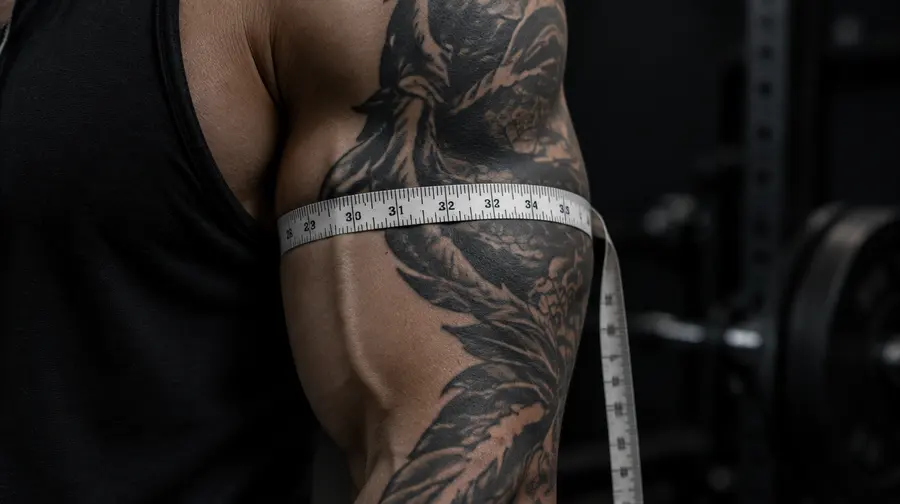
- Inner upper arm: famously soft skin that loosens with age, so designs there can sag more than on the outside of the arm.
- Stomach: strongly affected by weight changes and, for many people, pregnancy.
- Forearms: usually hold the design well, but outer forearms often carry decades of sun, which shows as fading and age spots.
Why some old tattoos look wonderful
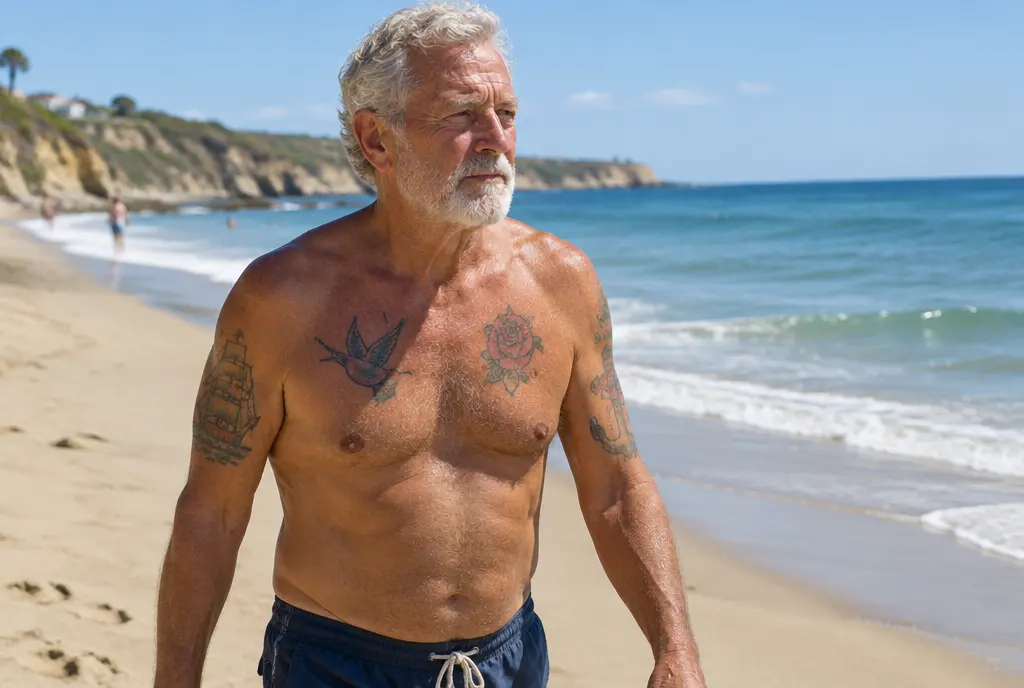
If you look closely at older people whose tattoos still look great, a pattern emerges. Their tattoos were usually bold to begin with. They were big enough for their detail. They sit somewhere that doesn’t get much sun. And, quite often, they have been touched up once or twice over the years.
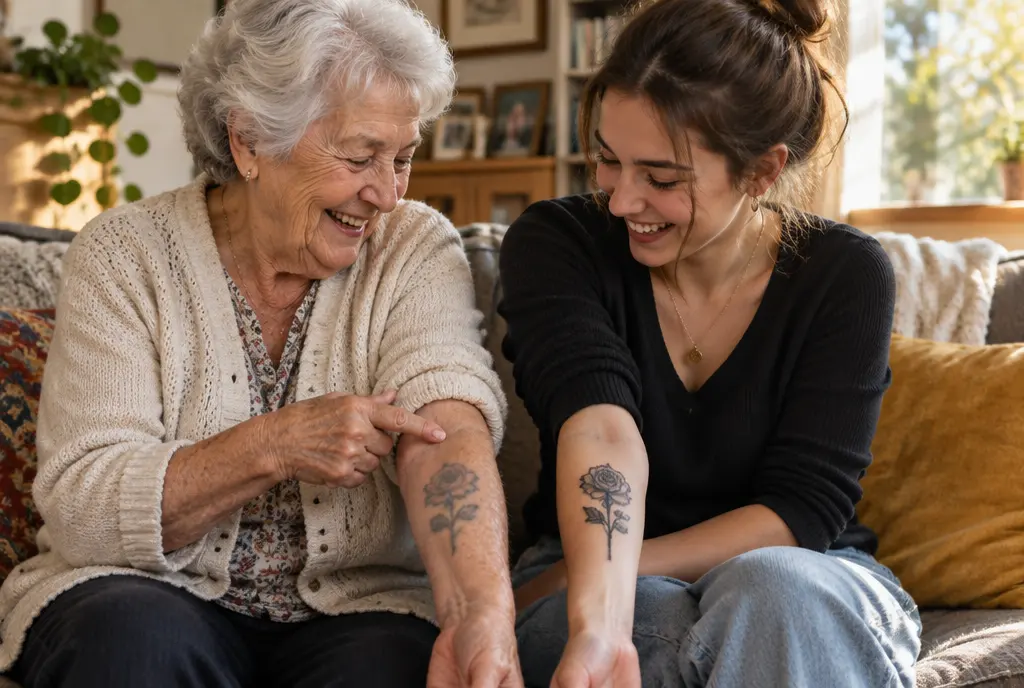
There is also something harder to measure. A tattoo on older skin carries the history of the person wearing it. A softened swallow on a seventy-year-old arm doesn’t look like a failed tattoo; it looks like a tattoo that has lived. Plenty of people find that more beautiful than a crisp new piece, and the old “wait until you’re eighty” warning tends to fall flat when someone who actually is eighty rolls up their sleeve and grins.
Health things worth knowing
Tattoos don’t stop you from ageing healthily, but there are a few practical points that matter more as the years go by.
Keep moles visible
Skin checks become more important with age. Dermatologists generally advise against tattooing over moles or right next to them, because ink can make it harder to spot changes. If you already have a tattoo near a mole, make sure your doctor knows, and keep an eye on any spot that changes shape, size or colour.
Sun protection doesn’t retire
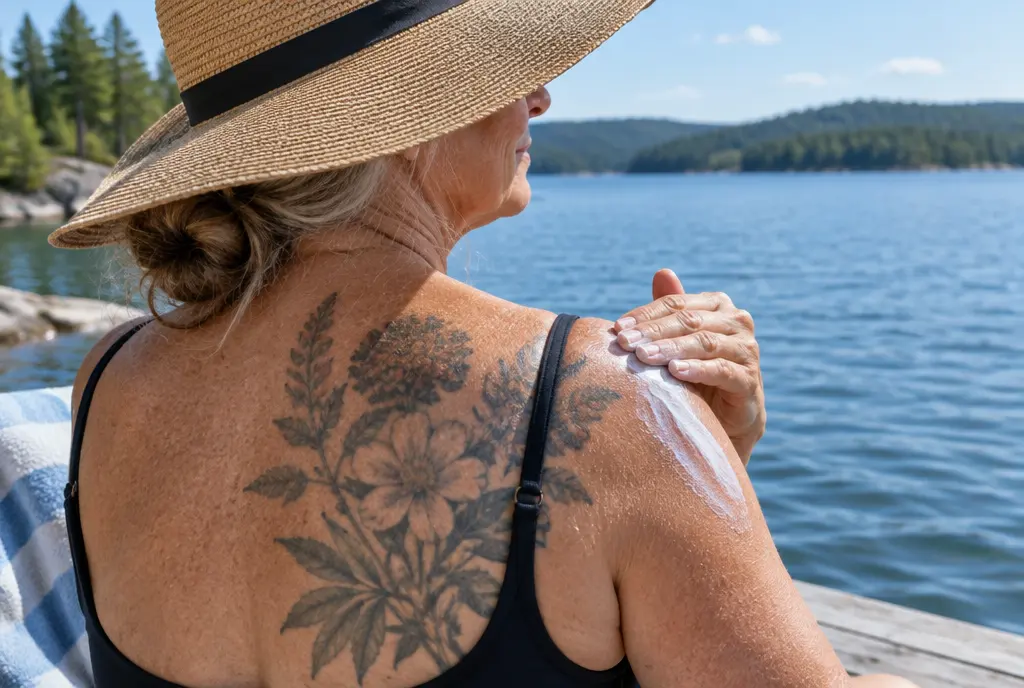
UV damage keeps adding up for life. Protecting tattooed skin with clothing and a broad-spectrum SPF 50 slows both the fading of the ink and the ageing of the skin. It is good for the tattoo and much better for you.
Healing takes longer
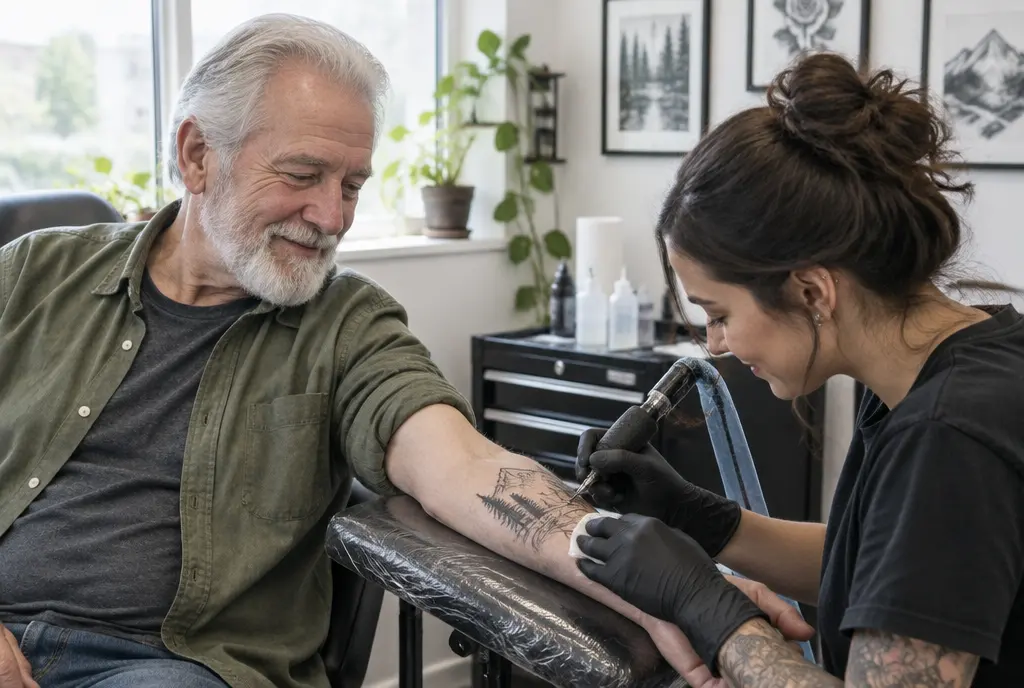
Older skin renews itself more slowly, so a touch-up or a new tattoo later in life may take a little longer to heal and needs careful aftercare. Some medicines, such as blood thinners, and conditions such as diabetes can affect bleeding and healing. Talk to your doctor before getting tattooed if that applies to you, and tell your artist about it.
Scans and medical procedures
Most people with tattoos have MRI scans without any problem. Mention your tattoos to the radiographer anyway; very occasionally they can feel warm during a scan. If you are ever unsure about a medical procedure, ask the team doing it.
What you can plan for now
If you are getting tattooed in your twenties, thirties or forties, you have a lot of influence over what your tattoo will look like at seventy. It mostly comes down to decisions you make before the first line.
- Choose a design with a strong silhouette. Ask yourself whether it would still be recognisable as a soft, dark shape.
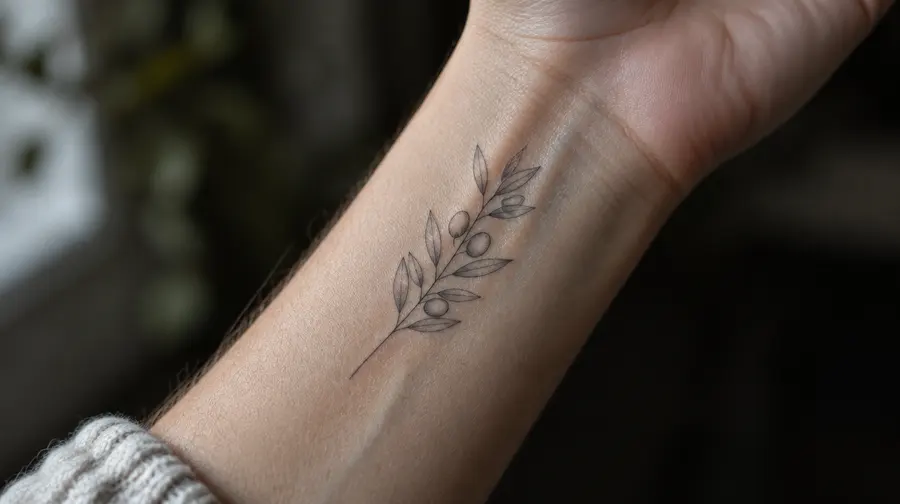
- Size it for its detail. If there is text or fine work, give it room. The extra centimetres pay you back for decades.
- Think about placement for the long run. Areas that stay covered and don’t sag much will treat your tattoo kindly for longest.
- Keep it out of the sun. Every summer you protect it is a summer it doesn’t age.
- Plan on touch-ups. A refresh every eight to ten years keeps lines and colour where you want them, and many artists enjoy bringing an old piece back to life.
See it at 30 and 50 years
It is hard to imagine your own skin decades from now. InkAge does it for you: upload a photo of the spot, place your design at the size you want, and see it fresh, healed, and at 10, 30 and 50 years, with the softening of the ink and the skin built in.
The longevity score shows how well your design suits that size and placement. If the 50-year view looks more like a smudge than a swallow, try a slightly bigger size, a different spot, or the “Make it last” version with stronger lines and more space. It is an estimate rather than a promise, but it turns “what will it look like when you’re eighty?” from a warning into a question you can actually answer.
The short version
Your tattoo will age, because you will. The skin will soften and crease, the ink will spread and fade, and the design will lose its finest details. But a bold, well-placed tattoo that has been kept out of the sun will still be clearly yours at eighty, and for many people it will be one of their favourite things about their own skin. That is the answer to give at the bus stop.
Frequently asked questions
Do tattoos look bad when you get old?
Not necessarily. Every tattoo softens as the ink spreads and the skin ages, but bold, well-sized tattoos in protected spots often still look good at seventy or eighty. Tiny, dense designs and sun-exposed spots change the most.
Do tattoos stretch or sag with age?
They follow the skin. As skin loses collagen and elasticity it loosens and creases, and the design loosens and creases with it. Areas like the inner upper arm, neck and stomach show this most; the outer upper arm, shoulder, back and calves the least.
Which body part is best for a tattoo that ages well?
The outer upper arm, shoulder, upper back, calves and thighs are usually the kindest over a lifetime. They are mostly covered, see less sun and friction, and the skin there tends not to fold dramatically.
Can you touch up a tattoo on older skin?
Yes, and many artists enjoy it. Older skin is thinner and heals more slowly, so an experienced artist will work gently and you may need a little more time and care while it heals. If you take blood thinners or have a condition that affects healing, ask your doctor first.
Should I avoid tattooing over moles?
Yes. Dermatologists generally advise keeping tattoos away from moles so changes stay easy to spot during skin checks, which matter more as you get older. If you already have a tattoo near a mole, let your doctor know.
Written by the InkAge editorial team from widely accepted tattoo-care practice. Figures are rules of thumb, not measurements. This is general information, not medical advice — ask your artist or a dermatologist about your own skin.
Last updated: 23 October 2026