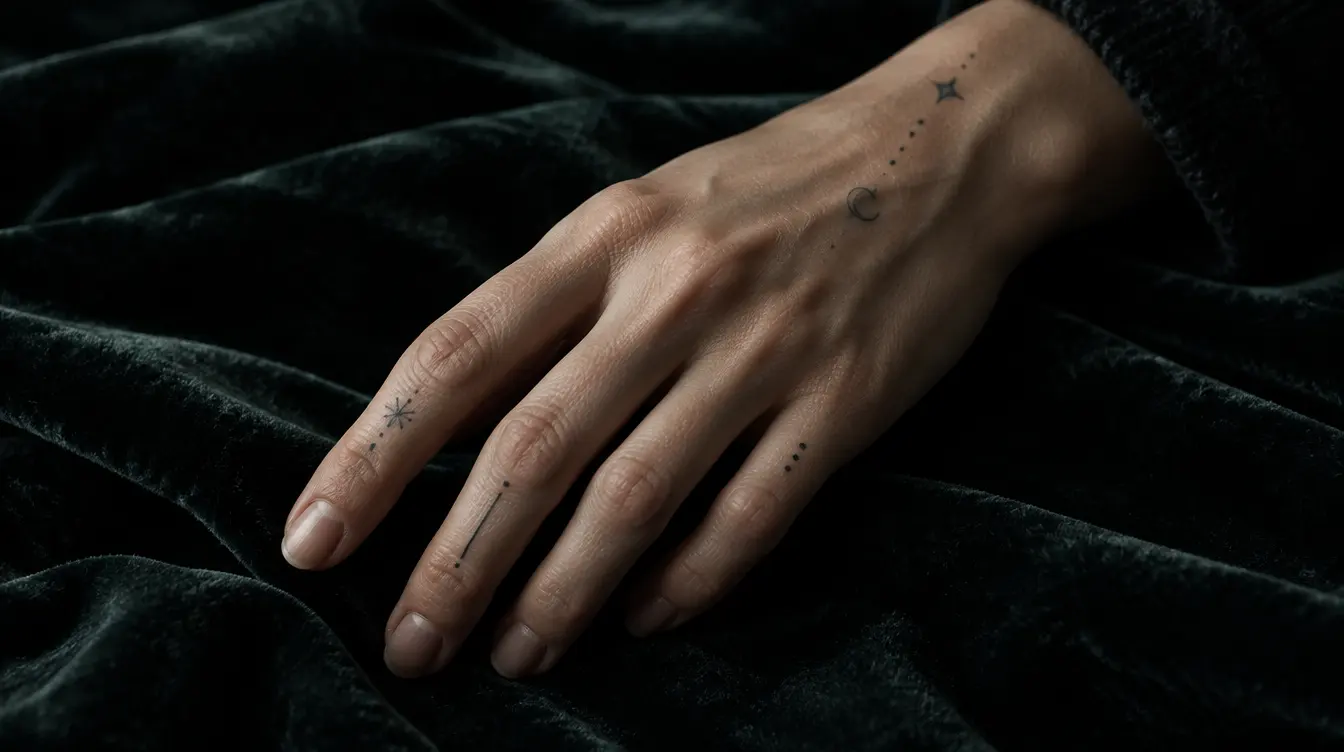
In short
- Skin on the hands renews quickly, gets washed many times a day and touches everything – so ink fades and blurs faster here than almost anywhere else.
- The sides of the fingers and the palm side are the most critical: thin skin raises the risk of blowout and of lines “falling out”.
- A simple, bold, airy design on the back of the hand or the top of the fingers holds best – and it’s wise to plan for a touch-up from the start.
- Think about visibility too: hands are almost always on show, at work and in everyday life.
In this article 12
- Why are hands the toughest terrain?
- What happens beneath the surface?
- The sides of the fingers and the palm: the critical zone
- What to expect in the first year
- Which designs hold up best?
- Where to put it: back of the hand, top of the fingers or elsewhere?
- How to choose an artist for hand work
- Aftercare: your hands can’t rest
- Visibility at work and in everyday life
- See it first: hand vs. forearm in InkAge
- The one thing to take away
- Frequently asked questions
You order a coffee at your favourite place in the morning, and as the barista hands you the cup, you notice the little words on their fingers. One is still sharp, another has shrunk to a few greyish dots, and the letters of a third seem to have run together. Same hand, same artist, probably done at the same time – yet they look completely different. That’s hands for you: less predictable than any other part of the body.
In this article we go through why hand and finger tattoos fade so fast, what happens to the skin beneath the surface, which areas hold up better and which worse, which designs work, and how to choose an artist. We’ll also cover aftercare, touch-ups and visibility – without judgement, just so you can decide with your eyes open. Because a hand tattoo can be beautiful; it simply plays by different rules.
Why are hands the toughest terrain?
Think about how much you do with your hands in a single day: you wash them, do the dishes, type, hold a steering wheel, carry a bag, tap your phone, put them in your pockets, pull on gloves. Your hands are your body’s most-used “tool”, and every movement puts a little strain on the skin. Compared with that, a tattoo on the forearm or shoulder blade lives an almost restful life.
Three factors work against the ink at once: the skin’s quick renewal, constant friction and frequent washing. On top of that, on some parts of the hand – especially the sides of the fingers and the palm-facing areas – the structure of the skin is different, which makes it harder for the artist to place the ink at exactly the right depth. None of these factors is dramatic on its own, but together they speed up fading considerably.
That’s why many artists call the hand an “ungrateful” area. It doesn’t mean you can’t get a beautiful hand tattoo; it means you need realistic expectations: something that would stay flawless on your arm for ten years can change significantly on your hand within a year or two.
What happens beneath the surface?
Tattoo ink sits beneath the top layer of skin, the epidermis, in the dermis. The epidermis constantly renews itself: dead cells wear away and new ones replace them from below. The ink isn’t in that layer, but the state, thickness and renewal of the epidermis strongly affect how clearly the design shows beneath it and how well the tattoo heals.
Quick renewal
The skin on your hands is under constant mechanical stress, so it regenerates intensively. During healing part of the epidermis sheds, and if the ink wasn’t placed deep enough, it can leave along with it. This is one reason hand tattoos often look “patchier” after healing than when fresh.
Friction
Your hands touch almost everything. Gripping objects, clothing, bag straps and gloves all rub the skin. Constant friction slowly but surely wears down the design’s sharpness, especially where the skin is in the most contact with the world: the inner and side parts of the fingers.
Water and soap
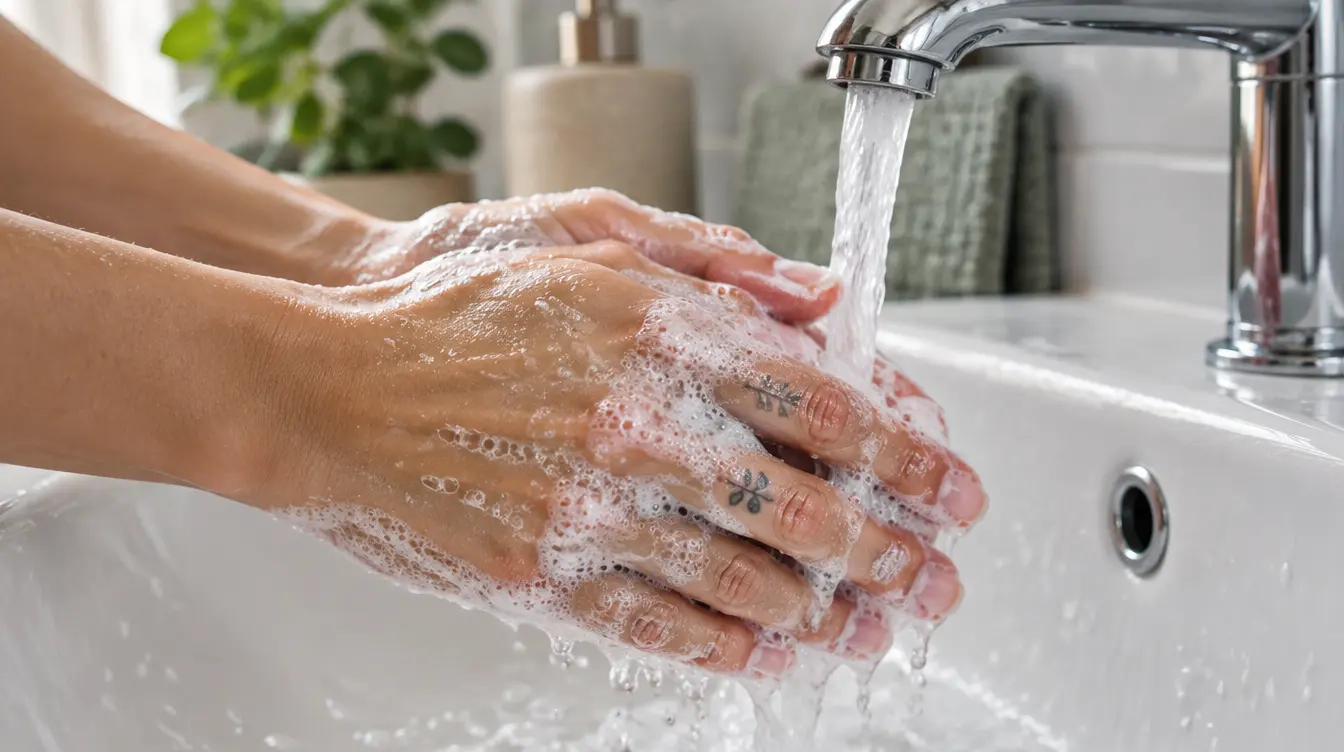
We may wash our hands dozens of times a day, and soap, sanitiser and washing-up liquid all dry and stress the skin. Dry, frequently washed skin peels and cracks, and it’s especially vulnerable during healing. Frequent soaking isn’t good for a fresh tattoo either, and on the hands it’s almost impossible to avoid completely.
Add the seasons to that – winter cold and dry indoor heating dry the skin even further, while in summer the sun and the beach put it to the test – and it’s clear why ink on the hands lives a much “busier” life. There isn’t one big enemy, but many small influences that add up over the years.
The sides of the fingers and the palm: the critical zone
If the hand is tough terrain, the sides of the fingers and the palm are the toughest. Here the skin’s structure differs from the back of the hand, and the artist has to work with a very small margin of error. If the ink goes in too shallow, it can simply “fall out” during healing – the line breaks up, gets patchy or disappears entirely.
The other extreme is blowout. This happens when ink spreads too deep or sideways in the skin, and a bluish-grey, blurry halo appears around the line. On thinner, mobile skin like the sides of the fingers, the chance of this can be higher. Blowout doesn’t fade by itself and is hard to fix afterwards – at most it can be “hidden” with a bolder line or darker fill.
The palm and the palm-facing side of the fingers are the biggest challenge: the skin is thicker here, works hard and regenerates very quickly. That’s why many artists won’t tattoo these areas at all, or will explicitly say they can’t guarantee the result.
What to expect in the first year
It’s good to know in advance that a hand tattoo’s journey is rarely straightforward. Fresh, it’s usually sharp and dark, but after healing it often turns out that some lines have become patchier or small sections have dropped out. This isn’t necessarily the artist’s fault – hands are just like that. That’s why many artists expect from the outset that hand work will need a touch-up after healing.
It’s worth building this into your budget and schedule too. If you know in advance there will be a second session, seeing patchier areas after healing won’t feel like a disappointment – it’s simply part of the process. It’s better to think of a hand tattoo as a two-step project than a one-off event.
The exact pace varies hugely from person to person. For some, a simple, bold design stays beautiful for years; for others, fine lines blur or drop out within a few months. Your skin type, your job, your habits, aftercare and the artist’s technique all play a part. As a general rule, all we can say is that hands change faster than most body parts and need refreshing sooner.
- The first touch-up often happens after healing, a few weeks or months later.
- Some studios include the first touch-up in the price, but for hands this may differ – ask before you book.
- Some artists won’t guarantee hand work at all; that’s not a bad sign, rather honesty.
- In the longer term, expect to refresh the design every few years if you want to keep it sharp.
Which designs hold up best?
On the hands, choosing the design matters at least as much as choosing the artist. Simple, strong, airy designs age best, because they stay recognisable even when lines spread or fade a little over time. Overly intricate, fine details, on the other hand, quickly run together.
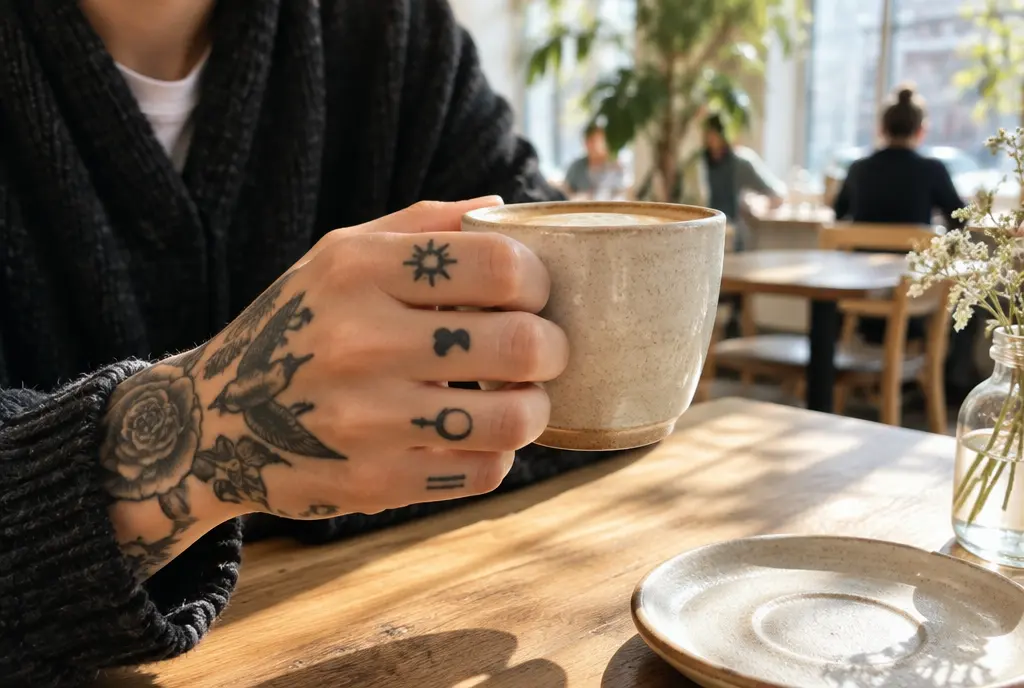
- Bold, confident lines: cope better with friction and renewal, and are less likely to disappear.
- Solid black shapes: little detail, strong contrast – one of the most durable options on the hand.
- More space between lines: since lines can spread, give them more room than in a design on the arm.
- Few, larger letters: a short word or an initial works better than a longer, tiny inscription.
- Avoid: hair-thin fine line, very small dotwork, subtle shading and light colours.
Many classic hand tattoos have worked for decades precisely because they follow these rules: bold outline, simple symbol, little colour. If you love fine line, it’s worth planning that for a more protected spot and choosing a simpler, stronger version for your hand.
Think about size, too. Fingers have very little room, and it’s tempting to cram as much as possible onto them. But if the design is too small, the gaps between lines close quickly, and after a while only a dark smudge remains. One or two simple symbols are always worth more than a dozen tiny details that will be unreadable in a few years.
Where to put it: back of the hand, top of the fingers or elsewhere?
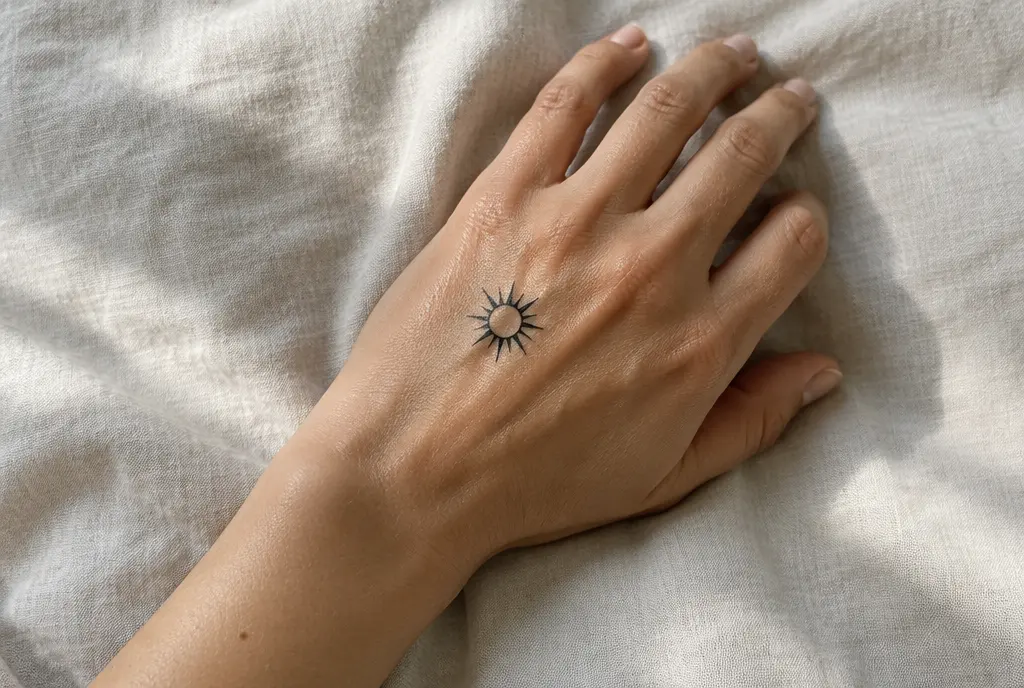
Not every part of the hand is the same. The back of the hand and the top of the fingers (the upper side, towards the nails) generally hold ink better than the sides of the fingers or the palm side. The skin here touches objects less, and tattooed lines can be more stable.
The back of the hand has more room, so a slightly larger, airier design fits there too. At the same time, the skin on the back of the hand also moves a lot and can thin and wrinkle over time, which also affects how the design ages. On top of the fingers space is tight, so simplicity matters even more there.
If you’re still unsure, consider an alternative: the inner wrist, the forearm or an area close to the hand often gives a similar effect yet lasts significantly longer. You don’t have to give up the design you want on your hand, but it’s worth knowing there’s a middle ground.
Another good strategy is to let part of the design sit on the hand and continue onto the wrist or forearm. That way the more prominent, detailed elements go on the more durable area, and only the simple, strong parts land on the hand.
How to choose an artist for hand work
Tattooing hands and fingers takes serious experience, because the skin here forgives very few mistakes. A good artist has a precise feel for the depth they need to work at and tells you honestly what to expect. If someone promises a perfect, lasting result on every hand tattoo, that’s more a reason for caution.
A good hand tattoo artist doesn’t promise it will stay perfect forever, but tells you honestly what to expect – and is there when it needs a touch-up.
- Ask specifically for healed hand and finger tattoos from the portfolio, not just fresh photos.
- Ask what they’d change in your design so it ages better on the hand.
- Clarify the touch-up terms upfront: when, how many times and at what price.
- Notice whether they talk about the risks, such as blowout and lines falling out.
After a good consultation you’ll understand not only the design better, but also how it will live on your hand. If the artist talks you out of an overly intricate design, don’t take it as an insult – they’re probably saving you years of disappointment.
Aftercare: your hands can’t rest
Most body parts can rest while healing, but your hands can’t. That’s why aftercare for a hand tattoo takes more attention. Keep it clean, use a thin layer of unscented balm and follow your artist’s instructions – those are the basics. With hands, though, it’s worth going further.
- Plan the timing: if you can, schedule it for a period when you don’t need to use your hands much, such as before a long weekend.
- Avoid soaking: skip washing up by hand, long baths and the pool for the first weeks – wear gloves for the dishes.
- Gentle hand washing: lukewarm water, a mild, unscented soap, then pat dry gently instead of rubbing.
- Don’t pick or peel the scabs: it’s especially tempting on the hands, but lines can fall out that way.
- Sun protection: after healing, sunscreen on the back of the hand makes a big difference, since it’s almost always in the sun.
If during healing you notice strong redness, increasing pain, swelling or pus, don’t wait: see a doctor. Hands are in constant contact with the world, so watching for signs of infection matters especially here.
Visibility at work and in everyday life
Hands are almost always visible: when you shake hands, during a presentation, when you pass someone a coffee, in photos. For many people that’s exactly the point – a hand tattoo is personal, full of character and says a lot about you. Still, it’s worth thinking ahead about how it fits into your life, especially if you work, or want to work, in a field where expectations may still vary.
This isn’t a judgement, and we’re not encouraging you to conform to other people’s expectations. Workplace cultures have changed a lot, and visible tattoos are completely normal in more and more places. We’re simply suggesting you make the decision deliberately: think about whether the design will matter to both your present and future self, and whether you might sometimes want it to be less noticeable.
If you’re unsure, start with a smaller, less conspicuous design on top of the fingers or near the wrist, and see how you feel about it. Tattoos can be a collection, too: nothing says your first one has to fill the back of your hand.
See it first: hand vs. forearm in InkAge
With hand tattoos, the gap between how a design looks fresh and how it looks a few years later is especially large. In InkAge you can see this in advance on your own skin. Upload a daylight photo of your hand, and the preview keeps your skin tone, while the skin outline makes sure the design only lands on skin, not on the background or a ring.
Then you can follow how the design looks fresh and after 1, 10, 30 and 50 years. The ink longevity score (0–100) gives a quick sense of how durable it may be, and the “same design elsewhere” comparison shows how the same design would do on, for example, the forearm. That difference between hand and forearm is often surprisingly telling.
- Photograph your hand in daylight, without flash or filters, in a relaxed, outstretched position.
- Upload the design and look at the 1- and 10-year images too.
- Compare the score on the hand and on the forearm.
- If you want your friends’ opinion too, send them both versions to vote on.
- Take the PDF to your artist and talk through what’s worth simplifying.
The preview is an estimate, not a promise, since the real result is shaped by your skin, your habits and the artist’s work. But it’s excellent for getting a realistic picture, so the first year doesn’t take you by surprise.
The one thing to take away
Hands are the toughest terrain for ink, so if you want a hand tattoo, choose a simple, bold design on the back of the hand or the top of the fingers, an experienced artist – and plan for the touch-up from the start.
Frequently asked questions
Why do finger tattoos fade so fast?
The skin on the fingers renews quickly and is constantly rubbed and washed, so ink is lost faster than elsewhere. On the sides of the fingers the skin is also harder to tattoo at the right depth. Together these make fine lines blur or drop out sooner.
Which part of the hand holds best?
The back of the hand and the top of the fingers hold better than the sides and the palm. These areas touch objects less, so lines stay more stable. The palm side is the most challenging, and many artists won’t tattoo it.
What is blowout and can it be fixed?
Blowout is when ink spreads too deep or sideways in the skin, leaving a blurry, bluish halo around the line. It’s more likely on thin, mobile skin like the sides of the fingers. It doesn’t fade by itself; an artist can sometimes hide it with a bolder line or darker fill.
How often will a hand tattoo need a touch-up?
Many artists expect a first touch-up after healing, and later refreshes come sooner than on most body parts. The pace varies a lot depending on your skin, job, habits and the design. Clarify the touch-up terms with your artist before you book.
Can I compare a hand tattoo with the same design on my forearm?
Yes – in InkAge, the score’s “same design elsewhere” comparison shows how the same design would hold up on another area, such as the forearm. Upload a daylight photo of your own hand to see the aged versions on your skin tone.
Written by the InkAge editorial team from widely accepted tattoo-care practice. Figures are rules of thumb, not measurements. This is general information, not medical advice — ask your artist or a dermatologist about your own skin.
Last updated: 13 October 2026